
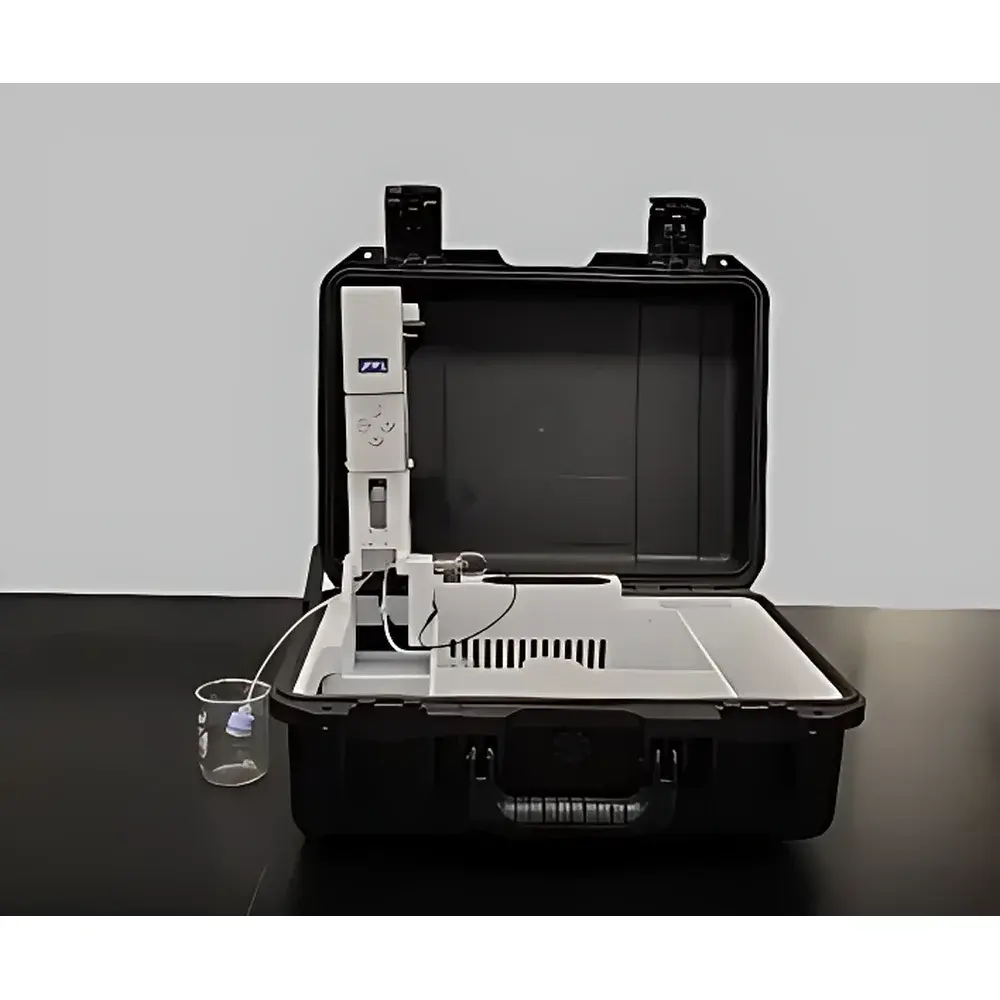
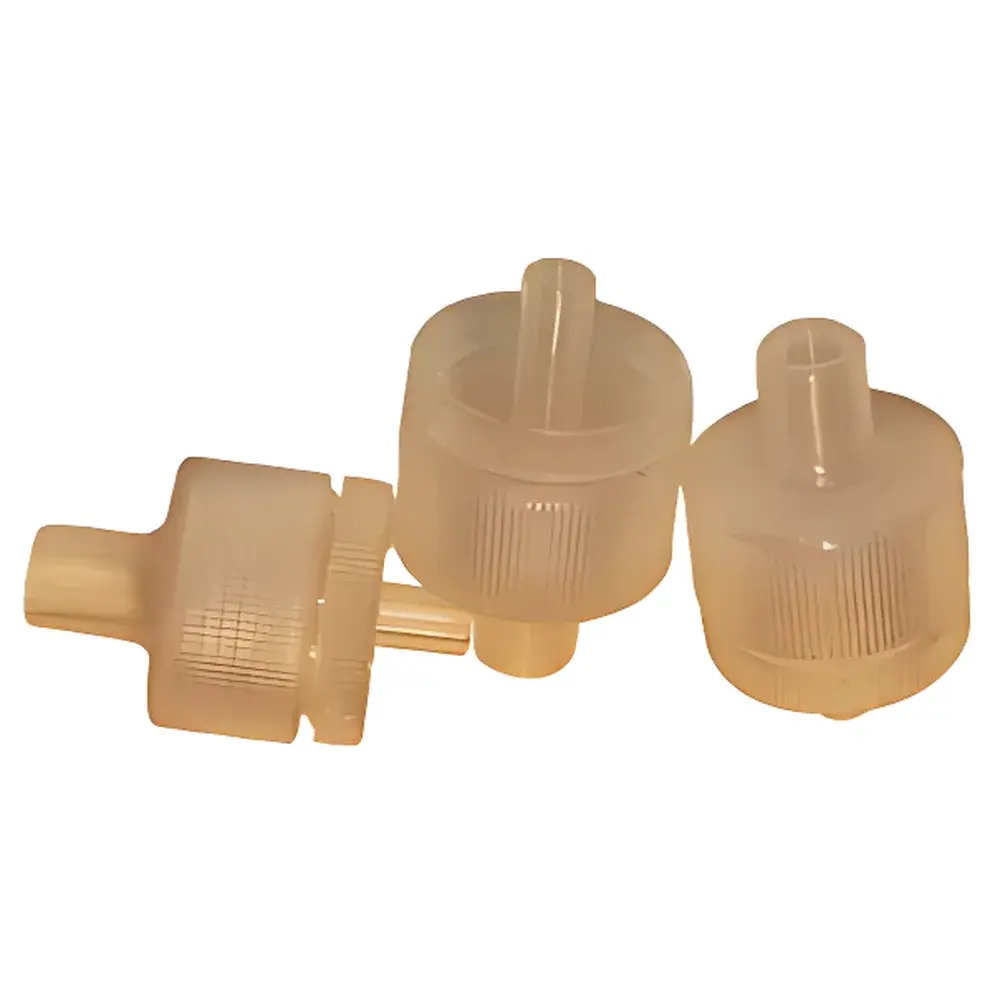
Anchor Wisdom HMET Automated Enrichment System
| Brand | Anchor Wisdom |
|---|---|
| Origin | Beijing, China |
| Manufacturer Type | Authorized Distributor |
| Country of Origin | China |
| Model | HMET Automated Enrichment System |
| Price Range | USD 7,000 – 14,000 |
Overview
The Anchor Wisdom HMET Automated Enrichment System is a dedicated sample pre-concentration module engineered for rapid, reagent-free trace metal analysis in aqueous environmental matrices. It operates on the principle of solid-phase electrochemical enrichment—utilizing controlled potential deposition onto a high-surface-area working electrode (e.g., mercury-film or bismuth-film modified carbon electrode) to selectively concentrate target heavy metals—including Pb, Cd, Cu, Zn, As, and Hg—from low-conductivity water samples. Designed exclusively as an integrated front-end component for the Anchor Wisdom PHECDA series of monochromatic wavelength-dispersive X-ray fluorescence (WDXRF) spectrometers, the HMET system eliminates manual handling, minimizes contamination risk, and enables end-to-end automation from sample loading to quantification. Its core function is not standalone elemental detection but quantitative pre-concentration to elevate sub-pptr (picogram per gram) analyte levels into the robust dynamic range of WDXRF measurement—where detection limits for heavy metals in water typically fall between 10–50 ng/L without enrichment. The entire workflow—including filtration (optional inline 0.45 µm membrane), enrichment (5–12 min), electrode rinsing, drying, and transfer to the PHECDA analyzer—is completed within ≤15 minutes per sample.
Key Features
- Reagent-free operation: No addition of acids, bases, chelating agents, internal standards, or redox mediators required—eliminates cross-contamination, reduces consumable costs, and simplifies field deployment.
- Minimal sample volume: Processes only 20 mL of unfiltered or filtered surface/ground/drinking water—ideal for emergency response where sample volume is constrained.
- Automated electrode conditioning and regeneration: Integrated cleaning cycles ensure high inter-run reproducibility (RSD < 4.5% for Cd at 50 ng/L, n = 12) and extend electrode service life beyond 200 analyses.
- Modular integration interface: Physically and electronically synchronized with PHECDA WDXRF systems via RS-485 and proprietary handshake protocol—enables automatic sample ID transfer, method recall, and status feedback.
- Environmental ruggedness: IP54-rated enclosure; operational ambient range 10–35 °C; compatible with portable power supplies (100–240 VAC, 50/60 Hz) for mobile lab or on-site deployment.
Sample Compatibility & Compliance
The HMET system accepts liquid samples with total dissolved solids (TDS) ≤ 500 mg/L and conductivity ≤ 2 mS/cm—covering natural waters, treated effluents, and potable sources. It complies with ASTM D3559 (lead in water), ISO 8288 (nickel and cobalt in water by electrothermal AAS), and supports alignment with EPA Method 200.8 (ICP-MS) and EPA Method 7000B (AAS) data quality objectives through equivalent detection sensitivity post-enrichment. While the HMET itself does not carry CE or FDA clearance (as it is a non-diagnostic, non-clinical accessory), its design adheres to IEC 61010-1 safety standards for laboratory equipment. All firmware logs—including enrichment time, applied potential, current response, and electrode status—are timestamped and stored locally for GLP-compliant audit trails.
Software & Data Management
Control and monitoring are managed via the PHECDA Suite v3.2 software platform, which provides a unified GUI for method setup, real-time current curve visualization, QC flagging (e.g., abnormal deposition current, open-circuit potential drift > ±15 mV), and automated report generation (PDF/CSV). Data files include raw chronoamperometric traces, enriched mass estimates (calculated via Faraday’s law), and final WDXRF quantitation results—all linked by unique sample ID and acquisition timestamp. Audit trail functionality meets FDA 21 CFR Part 11 requirements for electronic records, including user authentication, immutable event logging, and electronic signature support for QA/QC sign-off.
Applications
- Rapid screening of drinking water sources during contamination incidents (e.g., lead pipe leaching, mining runoff).
- Field-deployable monitoring for regulatory compliance under China’s GB 5749-2022 and EU Drinking Water Directive (2020/2184).
- Pre-concentration support for ultra-trace validation studies requiring matrix-matched calibration across heterogeneous water types.
- Method development for multi-element speciation workflows when coupled with sequential elution modules (custom integration available upon request).
FAQ
Is the HMET Automated Enrichment System sold separately from the PHECDA WDXRF spectrometer?
No—it is supplied exclusively as an integrated option for PHECDA systems and is not available as a standalone product.
Can the HMET process seawater or high-salinity brines?
Not without prior dilution or desalination; conductivity above 2 mS/cm causes unstable deposition and reduced recovery—users must pretreat such samples per ISO 5667-3 guidelines.
What electrode materials are supported?
Standard configuration uses bismuth-film carbon electrodes; mercury-film and gold-coated variants are available as configurable options for As(III)/As(V) differentiation or Au/Pt group element enrichment.
Does the system require daily calibration verification?
Yes—a certified multi-element standard (e.g., NIST SRM 1643e diluted to 100 ng/L) is recommended before each batch of up to 12 samples to confirm enrichment efficiency and instrument stability.
How is electrode fouling mitigated during long-term operation?
The system executes an automated electrochemical cleaning sequence (cyclic voltammetry in 0.1 M HNO₃) after every 10 analyses, validated against ASTM D7237 for electrode maintenance consistency.



