
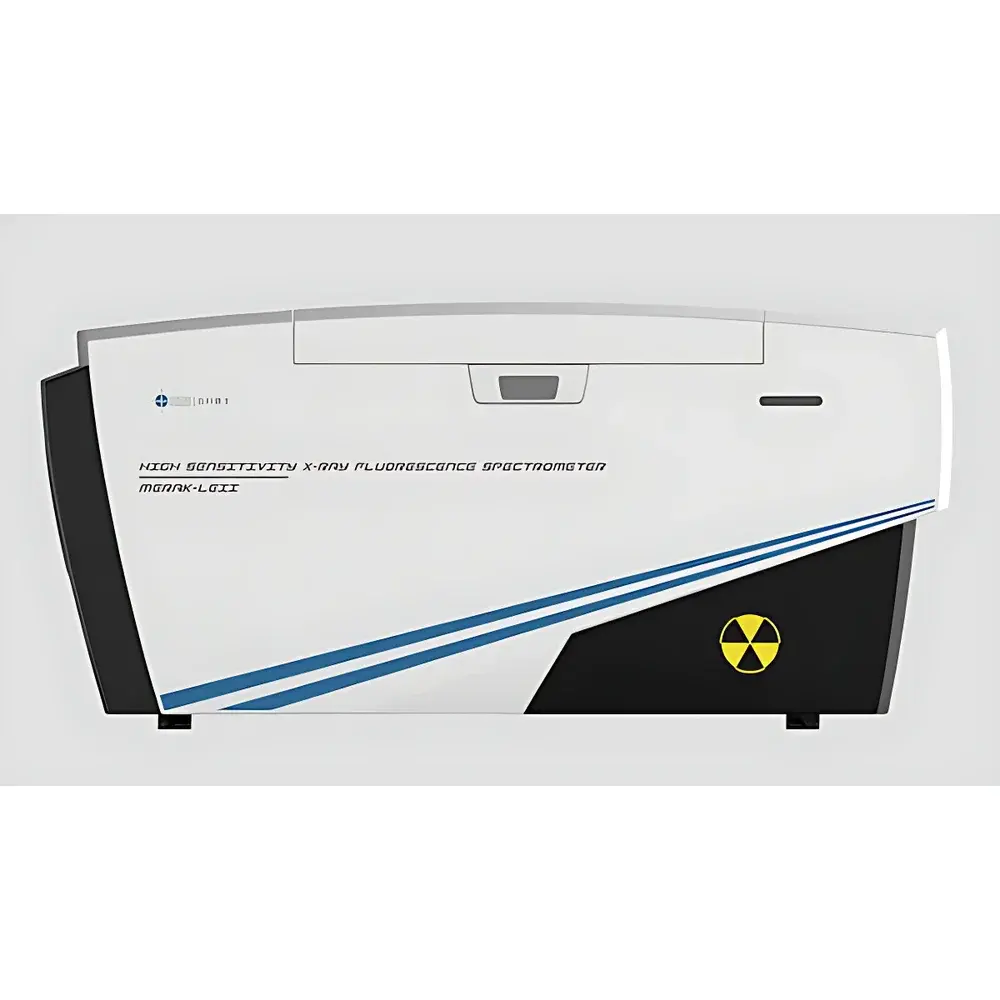
Anchor Wisdom MERAK-LEII Single-Wavelength X-Ray Fluorescence Spectrometer for Light Element Analysis
| Brand | Anchor Wisdom |
|---|---|
| Origin | Beijing, China |
| Model | MERAK-LEII |
| Detection Range | Na–Ti (extendable to C, N, O, F) |
| Light Element LLDs | S ≤ 0.2 ppm, Cl ≤ 0.1 ppm, Si ≤ 0.8 ppm |
| Excitation | Monochromatized Wavelength-Selective X-ray Beam via Focusing Polycapillary Optics |
| Optical Architecture | Fixed X-Ray Path System (XFS) |
| Sample Form | Solid, Liquid, or Powder in Disposable Cups/Membranes |
| Compliance | Designed for ASTM D2622, D4294, D7039, ISO 8754, IP 287, and USP <233> elemental impurity testing workflows |
Overview
The Anchor Wisdom MERAK-LEII is a purpose-built single-wavelength X-ray fluorescence (SW-XRF) spectrometer engineered for high-sensitivity quantitative analysis of light elements (Z = 6–22), with validated performance down to the sub-ppm level for sulfur, chlorine, silicon, phosphorus, and other critical low-Z analytes. Unlike conventional energy-dispersive (ED-XRF) or wavelength-dispersive (WD-XRF) systems—whose detection capabilities for elements below calcium are fundamentally limited by low fluorescence yield, high absorption losses, and overwhelming Bremsstrahlung background—the MERAK-LEII employs monochromatic excitation using a high-flux, full-focusing polycapillary optic coupled to a high-intensity X-ray tube. This architecture delivers a narrow-band, collimated beam tuned precisely to the absorption edge of target light elements, thereby maximizing photoionization cross-section while minimizing continuum background and matrix-induced scattering. The result is a peak-to-background ratio improved by up to two orders of magnitude over standard XRF configurations, enabling robust quantification in complex matrices such as gasoline, lubricants, pharmaceutical excipients, soil extracts, and polymer additives without vacuum pumping or helium purging.
Key Features
- Monochromatic Selective Excitation: Utilizes a doubly curved crystal (DCC) polycapillary optic to focus and monochromatize characteristic X-rays (e.g., Mo Kα or Ag Kα) into a high-brilliance microbeam (<100 µm spot size), selectively exciting only target elements while suppressing Compton and Rayleigh scatter.
- Sub-ppm Light Element Detection Limits: Achieves sulfur LLD ≤ 0.2 ppm, chlorine LLD ≤ 0.1 ppm, and silicon LLD ≤ 0.8 ppm under routine measurement conditions (1000 s counting time, standard sample cup geometry), verified per ISO 11885 and ASTM D7039 protocols.
- Integrated Multi-Element Quantification: Simultaneously quantifies Na–Ti elements—including S, Cl, Si, P, Al, Mg—in a single acquisition cycle; optional extension to C, N, O, and F enabled via ultra-thin polymer windows and optimized detector vacuum interface.
- X-Ray Fixed System (XFS): Fully rigidized optical path with kinematic mounting and epoxy-bonded alignment; factory-calibrated and sealed against thermal drift or mechanical displacement—no field realignment required over instrument lifetime.
- Minimal Operational Overhead: Operates at ambient pressure with no requirement for vacuum pumps, cryogenic cooling, pressurized gas supply, or replaceable beryllium windows; consumables limited to disposable polypropylene sample cups and ultrathin polyimide membranes (≤ 1 µm thickness).
Sample Compatibility & Compliance
The MERAK-LEII accepts liquid, solid, and powdered samples in standardized 32-mm diameter cups with optional sealing films. It supports direct analysis of fuels (gasoline, diesel, jet fuel), catalysts, environmental filter extracts, pharmaceutical tablets, and ceramic precursors without digestion or dilution. Method validation aligns with regulatory frameworks including ASTM D2622 (sulfur in petroleum), ASTM D4294 (sulfur in crude oil), ASTM D7039 (sulfur in middle distillates), ISO 8754 (sulfur in petroleum products), IP 287 (chlorine in hydrocarbons), and USP for elemental impurities in drug substances. Instrument design facilitates GLP-compliant operation through hardware-enforced audit trails, user-access logging, and electronic signature support compatible with FDA 21 CFR Part 11–configured LIMS integration.
Software & Data Management
Controlled via Anchor Wisdom’s proprietary SpectraLink v4.2 software, the system provides guided method setup, automated calibration curve generation (linear and quadratic), matrix-matched standardization, and uncertainty propagation reporting per ISO/IEC 17025 Annex A. All spectral acquisitions are timestamped and digitally signed; raw spectra, processed results, and instrument parameter logs are stored in vendor-neutral HDF5 format with embedded metadata (sample ID, operator, date/time, tube voltage/current, collimation settings). Software supports batch processing, statistical process control (SPC) charting, and export to CSV, XML, or LIMS-compatible ASTM E1382 templates.
Applications
Primary application domains include quality control of ultra-low-sulfur diesel (ULSD) and marine fuels per IMO 2020 regulations; chlorine contamination screening in semiconductor-grade solvents; silicon leaching assessment in medical device packaging polymers; phosphorus speciation in flame-retardant formulations; and sodium/potassium monitoring in lithium-ion battery cathode slurries. In environmental labs, it serves for rapid screening of airborne particulate matter (PM2.5) filters for crustal elements; in pharma, it enables ICH Q3D-aligned elemental impurity profiling without ICP-MS infrastructure.
FAQ
Does the MERAK-LEII require vacuum or helium purge for light element analysis?
No. Its monochromatic excitation and optimized detector window eliminate the need for vacuum or inert gas environments.
Can the instrument quantify carbon, nitrogen, or oxygen?
Yes—when equipped with the optional C/N/O/F analysis module, which includes a 500-nm-thick SiN membrane detector window and enhanced low-energy pulse processing algorithms.
What calibration standards are recommended for sulfur in fuel analysis?
Certified reference materials traceable to NIST SRM 2724b (diesel), CRM-101 (gasoline), or in-house matrix-matched spiked standards prepared per ASTM D7039 Annex A.
Is the system compliant with FDA 21 CFR Part 11 for electronic records?
Yes—SpectraLink v4.2 supports role-based access control, electronic signatures, and immutable audit trail generation when deployed on validated Windows Server environments.
How often does the instrument require recalibration or maintenance?
The XFS architecture ensures long-term stability; annual performance verification using check standards is recommended, but no optical realignment or source replacement is required within the first five years of operation.
Related Products





