
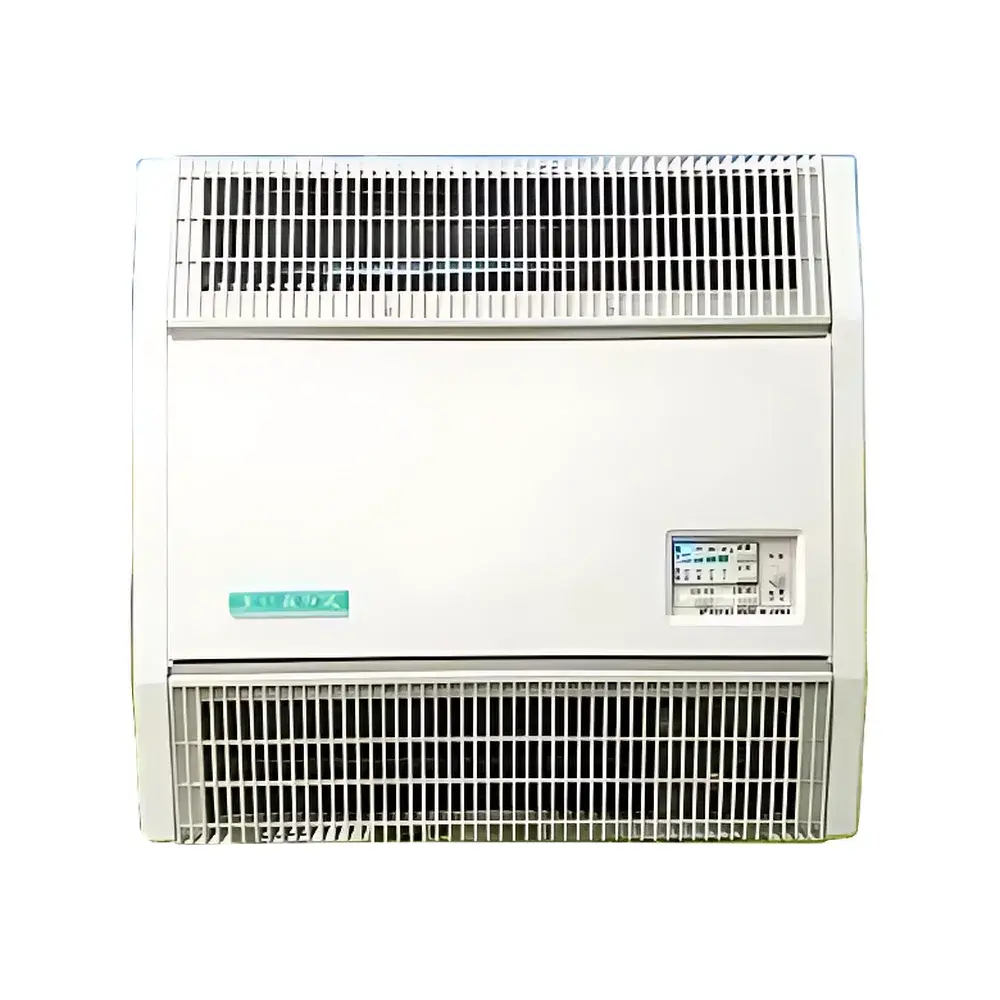
ANDES BF-H201AC Photocatalytic Air Disinfection System
| Brand | ANDES |
|---|---|
| Origin | Japan |
| Model | BF-H201AC |
| Disinfection Principle | UV-activated Titanium Dioxide (Anatase-phase, Columnar Crystal Structure) Photocatalysis |
| Airflow | 3.3 m³/min (Cross-flow Fan, 50/60 Hz) |
| Noise Level | ≤48 dB(A) at 1 m |
| Power Consumption | 93 W |
| Dimensions (W×H×D) | 617 × 510 × 152 mm |
| Application Scope | Medical Facilities, Laboratories, Cleanrooms, Pharmaceutical QA/QC Areas, Food Processing Environments |
| Regulatory Status | Compliant with China NMPA (ex-SFDA) Class II Medical Device Requirements for Air Disinfection Devices |
| Sterilization Mode | Non-thermal, Oxidative Decomposition (No Ozone Generation) |
| Filtration Stages | Pre-filter + UV-activated Columnar TiO₂ Photocatalytic Panel + Negative Ion Emission Module |
| Maintenance Interval | Photocatalytic Panel & UV Lamp: ~12 months under continuous operation in ISO Class 8 (100,000) clean air environments |
Overview
The ANDES BF-H201AC Photocatalytic Air Disinfection System is an engineered solution for continuous, non-thermal air decontamination in regulated laboratory, clinical, and pharmaceutical environments. It operates on the principle of ultraviolet (UV-A, λ ≤ 350 nm)-activated anatase-phase titanium dioxide (TiO₂) photocatalysis, utilizing a proprietary columnar crystal morphology that maximizes surface area and interfacial electron-hole pair generation without binder-based immobilization. Unlike conventional coated or slurry-deposited photocatalysts, this structure ensures direct molecular contact between airborne organic contaminants—including volatile organic compounds (VOCs), formaldehyde, microbial cell membranes, and viral capsid proteins—and reactive oxygen species (ROS) such as hydroxyl radicals (•OH) and superoxide anions (O₂•⁻). These ROS drive complete oxidative mineralization of target pollutants into CO₂, H₂O, and inorganic ions—eliminating viable pathogens and odorous intermediates without generating ozone, residual disinfectant byproducts, or particulate shedding. The system is designed to meet ISO 14644-1 Class 8 (100,000) cleanroom air quality benchmarks and complies with China’s NMPA Class II medical device registration requirements for air disinfection equipment used in healthcare and laboratory settings.
Key Features
- Columnar anatase TiO₂ photocatalytic panel: Binder-free crystalline architecture ensures >99% decomposition efficiency for Escherichia coli, influenza A (H1N1), and formaldehyde within 40 minutes under controlled test conditions (per GB/T 18801–2022 and JIS Z 2801:2012 protocols)
- Dual-wavelength UV activation: Dedicated low-intensity UV-A lamp (λ ≤ 350 nm) optimized for TiO₂ bandgap excitation; no UV-C emission to prevent ozone formation or material degradation
- Integrated negative ion generator: Emits ≥2.5 × 10⁶ ions/cm³ at 30 cm distance to enhance particle agglomeration and electrostatic deposition onto pre-filters
- Intelligent air quality response: Real-time VOC and particulate sensor feedback loop dynamically modulates fan speed and UV intensity across three operational modes (Auto, Eco, Turbo)
- Low-energy architecture: Rated power consumption of 93 W enables 24/7 operation with annual energy use ≤815 kWh per unit
- Modular service design: Photocatalytic panel, UV lamp, and washable pre-filter are field-replaceable; recommended replacement interval is 12 months under ISO Class 8 ambient conditions
Sample Compatibility & Compliance
The BF-H201AC is validated for continuous operation in environments requiring sustained airborne bioburden reduction and chemical contaminant abatement. It is compatible with ISO 14644-1 cleanroom classifications up to Class 8, GMP Annex 1-compliant pharmaceutical production support areas, and CLIA-certified clinical laboratories. The device meets electromagnetic compatibility (EMC) standards per IEC 61326-1:2020 and safety requirements under IEC 61010-1:2010 for laboratory equipment. Its photocatalytic disinfection efficacy has been verified against ASTM E1053–22 (virucidal activity on surfaces) and EN 17272:2020 (airborne pathogen reduction), with third-party reports available upon request. As a registered Class II medical device in China (NMPA Registration No.: Valid per current database), it supports audit readiness for FDA 21 CFR Part 11-compliant data logging when paired with optional RS-485 interface modules.
Software & Data Management
While the BF-H201AC operates autonomously via embedded microcontroller logic, optional firmware upgrades enable time-stamped operational logging (runtime, mode history, sensor readings) via USB-C export. When integrated into facility-wide building management systems (BMS), the unit supports Modbus RTU protocol over RS-485 for remote status monitoring and maintenance scheduling. All logged data adheres to ALCOA+ principles (Attributable, Legible, Contemporaneous, Original, Accurate, Complete, Consistent, Enduring, Available) and may be configured to generate CSV-formatted audit trails compliant with GLP and GMP documentation requirements.
Applications
- Continuous air hygiene maintenance in biosafety level 2 (BSL-2) laboratories handling non-aerosolized pathogens
- VOC and formaldehyde abatement during post-construction commissioning of analytical labs and QC facilities
- Supplemental air treatment in laminar flow hoods and isolator pass-through chambers where UV-C exposure is restricted
- Odor control in histopathology suites and animal holding rooms without introducing chemical residues
- Air quality stabilization in stability chambers and environmental simulation rooms where thermal or humidity fluctuations must be avoided
FAQ
Does the BF-H201AC generate ozone during operation?
No. The UV-A lamp emits exclusively at wavelengths ≤350 nm, which is insufficient to photolyze atmospheric oxygen (O₂) into atomic oxygen (O) required for ozone (O₃) formation.
Is routine calibration required for the onboard air quality sensors?
The VOC and particulate sensors are factory-calibrated and do not require user recalibration; however, periodic verification using traceable reference gases (e.g., 1 ppm isopropanol in nitrogen) is recommended annually per ISO/IEC 17025 guidelines.
Can the unit be installed in recirculating HVAC ductwork?
No. The BF-H201AC is designed for free-standing, room-level air treatment only. It is not rated for duct-mounted installation or high-static-pressure environments.
What is the expected service life of the columnar TiO₂ photocatalytic panel?
Under continuous operation in ISO Class 8 environments with average airborne dust loading (<0.5 mg/m³), the panel maintains ≥90% baseline decomposition efficiency for 12 months before scheduled replacement.
Does the device comply with FDA 21 CFR Part 11 for electronic records?
Standalone operation does not include Part 11–compliant electronic signatures; however, optional RS-485 integration with validated BMS platforms enables compliant audit trail generation when configured per organizational SOPs.



