
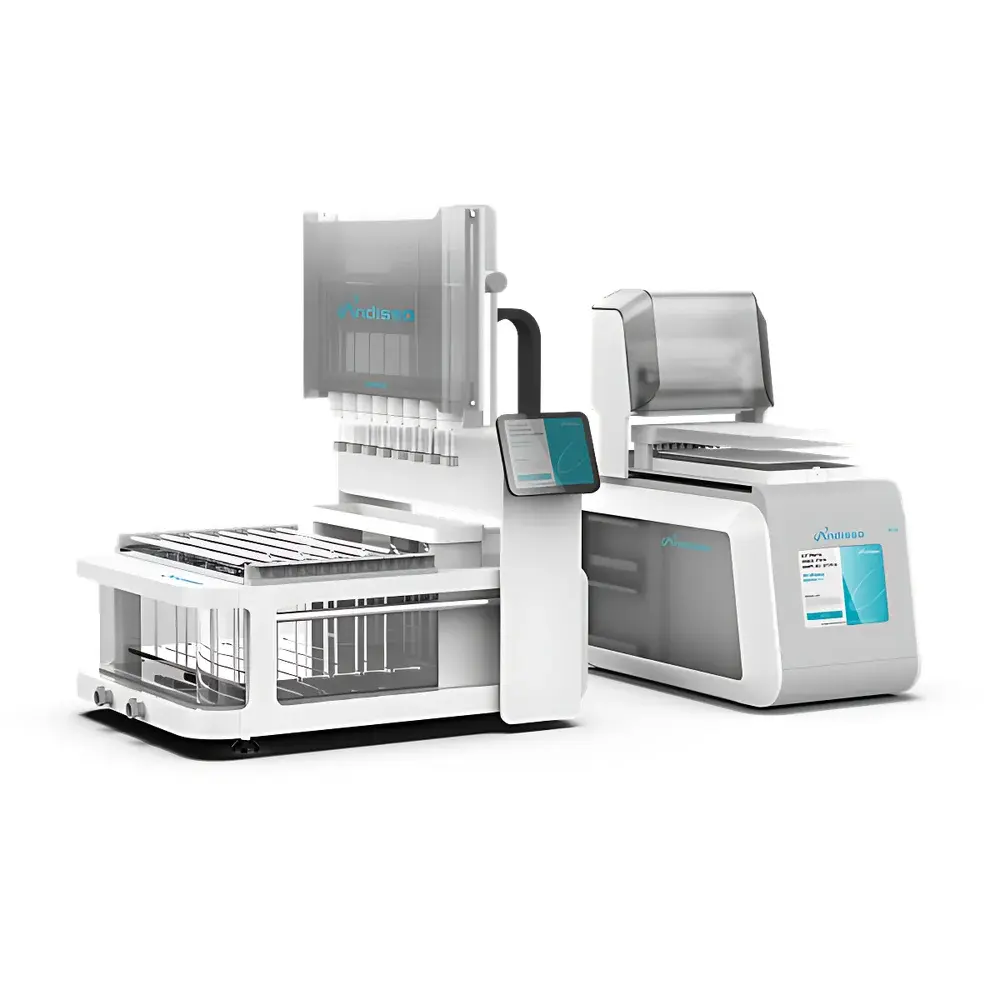
ANDISSO R3000 PRO Reciprocating Cylinder Dissolution Tester
| Brand | ANDISSO |
|---|---|
| Origin | Shanghai, China |
| Manufacturer Type | Authorized Distributor |
| Origin Category | Domestic (China) |
| Model | R3000 PRO |
| Instrument Type | Offline Dissolution System |
| Vessel Configuration | 7-position × 6-row cylinder rack |
| Temperature Range | Ambient to 50 °C |
| Temperature Accuracy | ±0.2 °C |
Overview
The ANDISSO R3000 PRO Reciprocating Cylinder Dissolution Tester is a precision-engineered offline dissolution system designed specifically for pharmaceutical development and quality control laboratories requiring rigorous evaluation of extended-release, enteric-coated, and controlled-release dosage forms. It implements the reciprocating cylinder method—defined in USP , Ph. Eur. 2.9.3, and ChP 2020 —which provides physiologically relevant hydrodynamic conditions by simulating the mechanical agitation and transit dynamics encountered by solid oral dosage forms along the gastrointestinal tract. Unlike paddle or basket apparatuses, the reciprocating cylinder method subjects dosage units to repeated vertical immersion and withdrawal through defined volumes of dissolution medium, enabling controlled exposure to sequential pH environments and facilitating robust assessment of release kinetics under dynamic physiological stress.
Key Features
- Modular 7 × 6 cylinder rack accommodates up to 42 reciprocating cylinders simultaneously, supporting high-throughput method development and comparative release profiling.
- Programmable reciprocation stroke length (1–10 cm), frequency (1–30 cycles/min), and dwell time per position, allowing precise emulation of gastric emptying intervals and intestinal transit velocities.
- Independent temperature control across all cylinder positions with real-time monitoring; maintains setpoint stability within ±0.2 °C over ambient to 50 °C range—critical for thermosensitive formulations and pH-shift studies.
- Integrated medium exchange capability: enables automated sequential replacement of dissolution media (e.g., simulated gastric fluid → simulated intestinal fluid) without manual intervention, supporting biphasic and multi-pH release testing per ICH Q5C and Q8(R2) guidelines.
- Corrosion-resistant stainless-steel frame and PTFE-coated cylinder guides ensure long-term mechanical reproducibility and compliance with ISO 9001-certified manufacturing practices.
Sample Compatibility & Compliance
The R3000 PRO is validated for use with capsules, tablets, pellets, and multiparticulate systems intended for oral administration. Its design conforms to regulatory requirements outlined in ChP 2020 , USP , and Ph. Eur. 2.9.3 for reciprocating cylinder methodology. All mechanical parameters—including cylinder diameter (22.6 mm standard), stroke amplitude, and immersion depth—are traceable to NIST-calibrated reference standards. The system supports GLP-compliant operation when paired with audit-trail-enabled software (see Software & Data Management), and its hardware architecture meets mechanical safety requirements per IEC 61010-1 for laboratory equipment.
Software & Data Management
The R3000 PRO operates via optional PC-based control software compliant with FDA 21 CFR Part 11. The software provides full electronic recordkeeping including user authentication, parameter lockout during run execution, time-stamped event logs, and immutable audit trails for all method changes, sampling events, and temperature deviations. Raw data export is supported in CSV and XML formats compatible with LIMS integration and statistical process control (SPC) platforms. All calibration records, preventive maintenance logs, and IQ/OQ documentation templates are supplied as part of the vendor’s validation support package.
Applications
- Development and optimization of pH-dependent release profiles for enteric-coated tablets and granules.
- Comparative dissolution testing of generic extended-release products against reference listed drugs (RLDs).
- Stability-indicating release method development under forced degradation conditions (e.g., oxidative, acidic, alkaline stress).
- Biorelevant dissolution modeling using FaSSGF/FaSSIF/FeSSIF media sequences to predict in vivo performance.
- Support for regulatory submissions requiring demonstration of discriminatory power, robustness, and intermediate precision per ICH Q2(R2).
FAQ
Is the R3000 PRO compliant with USP and Ph. Eur. 2.9.3?
Yes—the mechanical configuration, cylinder dimensions, stroke parameters, and temperature control specifications fully satisfy the apparatus requirements specified in both monographs.
Can the system perform automated pH transitions during a single test cycle?
Yes—via programmable medium exchange modules, the system can sequentially introduce up to six different dissolution media with defined pH values at pre-set time points.
What is the maximum allowable deviation in cylinder vertical alignment per regulatory guidance?
Per USP , cylinder axis deviation must not exceed ±0.5° from true vertical; the R3000 PRO includes integrated bubble-level indicators and adjustable leveling feet to ensure conformance.
Does the system support 21 CFR Part 11-compliant electronic signatures?
Yes—when operated with the optional validated software suite, it supports role-based access control, electronic signatures, and full audit trail generation.
Are calibration certificates provided with the instrument?
Yes—NIST-traceable temperature calibration certificates and mechanical alignment verification reports are included upon delivery and annually thereafter as part of the service agreement.




