
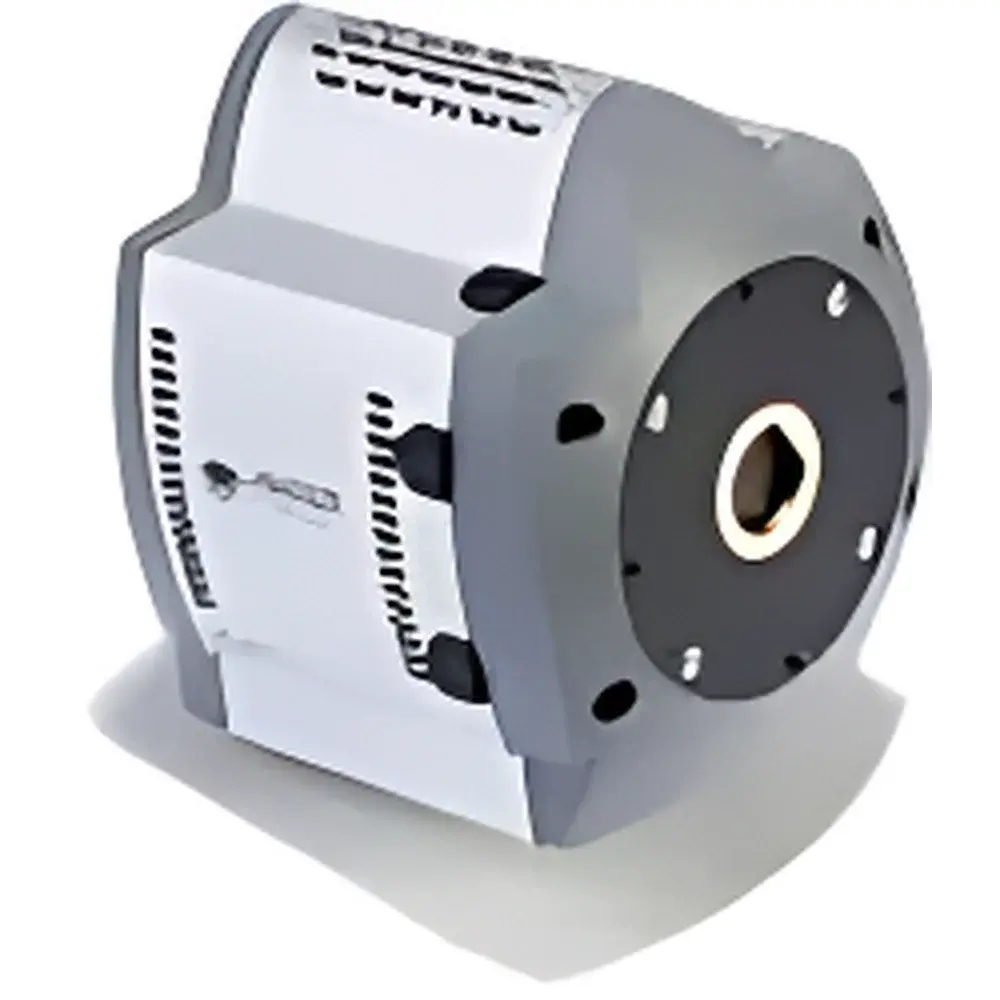
Andor iXon+ DU860 & DU885 High-Speed Electron-Multiplying CCD Cameras
| Brand | Andor |
|---|---|
| Origin | United Kingdom |
| Model | iXon+ DU860 / iXon+ DU885 |
| Sensor Type | Frame Transfer EMCCD |
| Cooling | Thermoelectric (TE) to –100 °C (DU860) / –95 °C (DU885) |
| Quantum Efficiency | >90% (back-illuminated, DU860) / >65% (Virtual Phase, DU885) |
| Readout Speed | Up to 10 MHz (DU860) / Up to 35 MHz (DU885) |
| Frame Rate | 515 full frames/s (DU860, 128 × 128) |
| Sensor Format | 128 × 128 (DU860), 1004 × 1002 (DU885) |
Overview
The Andor iXon+ DU860 and iXon+ DU885 are high-performance electron-multiplying charge-coupled device (EMCCD) cameras engineered for ultra-low-light scientific imaging where single-photon sensitivity must be combined with temporal resolution. Both models operate on the principle of on-chip electron multiplication—via a specialized gain register—enabling photon-limited detection without compromising frame rate. The DU860 employs a 128 × 128 back-illuminated frame-transfer sensor, optimized for maximum quantum efficiency (>90% peak QE) and speed (up to 515 full frames per second), making it ideal for time-resolved fluorescence lifetime imaging (FLIM), rapid calcium signaling assays, or pump-probe microscopy requiring sub-millisecond kinetics. In contrast, the DU885 integrates a larger 1004 × 1002 Virtual Phase frame-transfer sensor, delivering higher spatial fidelity while maintaining high-speed readout (up to 35 MHz) and robust EM gain linearity. Both platforms leverage thermoelectric cooling to –100 °C (DU860) or –95 °C (DU885), drastically suppressing dark current and enabling integration times from milliseconds to minutes without significant thermal noise accumulation.
Key Features
- RealGain™ Technology: Provides linear, quantitative, and repeatable electron multiplication gain control across the full dynamic range—essential for calibrated intensity measurements in quantitative fluorescence or bioluminescence applications.
- UltraVac™ Vacuum Housing: Maintains long-term vacuum integrity without periodic re-pumping, ensuring stable sensor temperature, minimal outgassing, and consistent low-noise performance over years of operation under GLP/GMP-compliant laboratory conditions.
- Minimal Clock-Induced Charge (CIC): Engineered readout architecture reduces spurious charge generation during pixel transfer—critical for single-molecule localization microscopy (SMLM), PALM, or STORM where false-positive events compromise localization accuracy.
- Cropped Sensor Mode: Enables region-of-interest (ROI) readout at sub-millisecond temporal resolution (e.g., <100 µs per frame for small ROIs), supporting high-speed kinetic studies such as voltage-sensitive dye imaging or fast ion channel dynamics.
- Enhanced Baseline Clamp: Stabilizes analog signal baseline across frames and gain settings, improving measurement reproducibility and reducing drift-related artifacts in long-duration time-series acquisitions.
- EMCAL™ Calibration Suite: Allows users to perform in-lab EM gain calibration using controlled illumination sources—supporting traceable, audit-ready workflows compliant with ISO/IEC 17025 and FDA 21 CFR Part 11 requirements for electronic records and signatures.
Sample Compatibility & Compliance
The iXon+ series is compatible with standard C-mount optical interfaces and integrates seamlessly into inverted and upright microscopes, spectrographs, and custom optical setups. Its mechanical and electrical design conforms to CE, RoHS, and UKCA directives. Data acquisition protocols support metadata embedding (including exposure time, gain, temperature, and calibration timestamps) required for ISO 13485–aligned medical device R&D and USP / environmental monitoring validation. The cameras’ deterministic EM gain behavior and low CIC meet the technical prerequisites for ASTM E1317–22 (Standard Test Method for Performance Verification of Fluorescence Microscopes) and IEC 61000-6-3 (EMC emissions).
Software & Data Management
Controlled via Andor’s SDK (C/C++, Python, MATLAB APIs) and fully integrated with Solis® software, the iXon+ platform supports hardware-synchronized triggering, multi-camera acquisition, and real-time histogram analysis. All acquired data are saved in vendor-neutral, self-describing formats (e.g., TIFF with embedded EXIF/XMP metadata or HDF5), ensuring compatibility with third-party analysis pipelines (Fiji/ImageJ, Python scikit-image, or commercial packages like Imaris or Huygens). Audit trails—including user login, parameter changes, and calibration events—are logged in encrypted binary logs, satisfying FDA 21 CFR Part 11 requirements for electronic records and electronic signatures when deployed in regulated environments.
Applications
- Single-molecule fluorescence imaging and tracking (smFRET, co-localization)
- Live-cell calcium and voltage imaging with high temporal fidelity
- Time-resolved spectroscopy and ultrafast luminescence decay analysis
- Quantitative bioluminescence imaging (BLI) in preclinical models
- Low-light adaptive optics wavefront sensing
- High-speed particle image velocimetry (PIV) in microfluidic systems
- Photon-starved Raman mapping and tip-enhanced Raman spectroscopy (TERS)
FAQ
What distinguishes the DU860 from the DU885 in terms of application suitability?
The DU860 prioritizes speed and single-photon sensitivity with its small, back-illuminated sensor—ideal for experiments demanding >500 fps and maximal QE. The DU885 trades some QE for spatial resolution and flexibility, supporting wide-field imaging at high frame rates without binning.
Is RealGain™ compatible with automated acquisition scripts?
Yes—RealGain™ gain values are programmatically addressable via Andor’s SDK and Solis API, enabling closed-loop gain adjustment based on real-time signal statistics in adaptive exposure workflows.
How does UltraVac™ impact long-term maintenance requirements?
UltraVac™ eliminates the need for external vacuum pumps or periodic re-evacuation; the sealed housing sustains operational vacuum for >10 years under normal lab conditions, reducing downtime and service costs.
Can cropped sensor mode be used with external hardware triggering?
Yes—Cropped mode supports TTL-triggered acquisition with jitter <100 ns, enabling synchronization with pulsed lasers, shutters, or electrophysiology stimulators.
Does EMCAL™ calibration require NIST-traceable light sources?
While not mandatory, using a calibrated photodiode or NIST-traceable LED source during EMCAL™ execution improves inter-instrument comparability and supports metrological traceability in accredited laboratories.




