
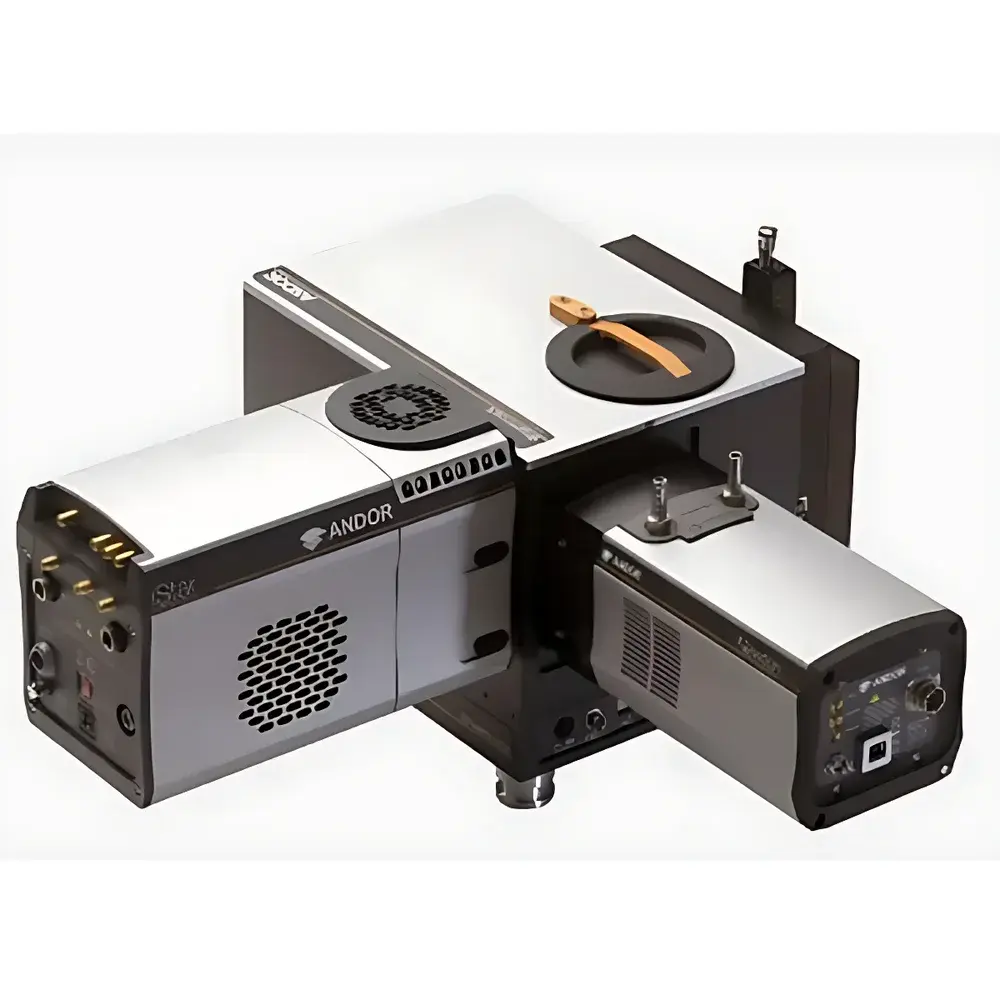
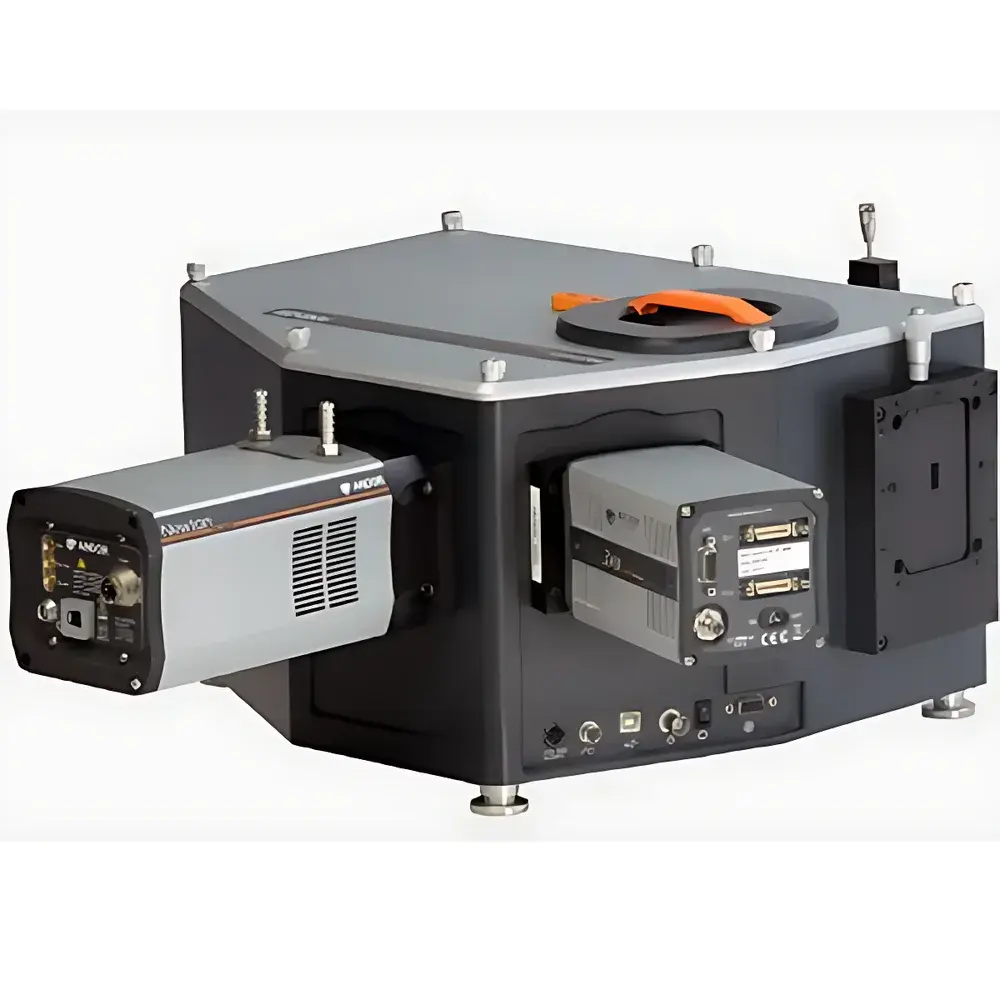
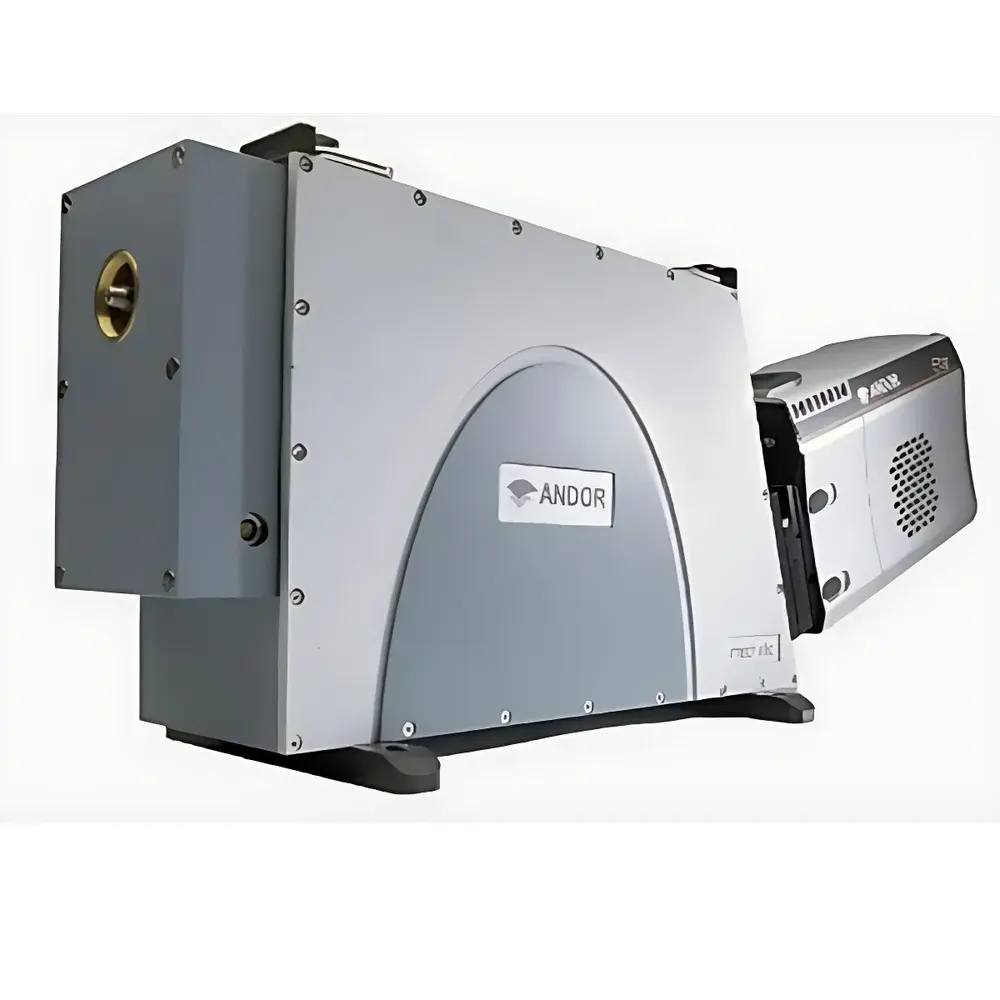
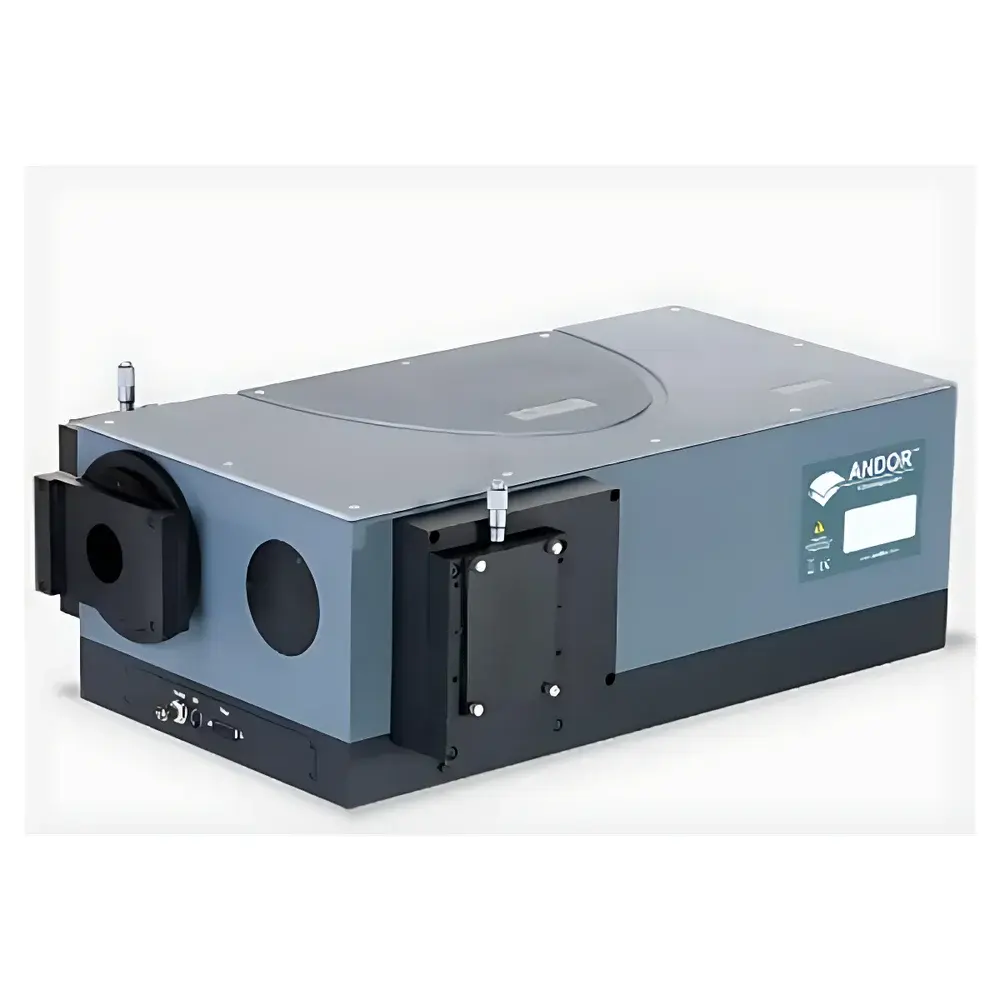
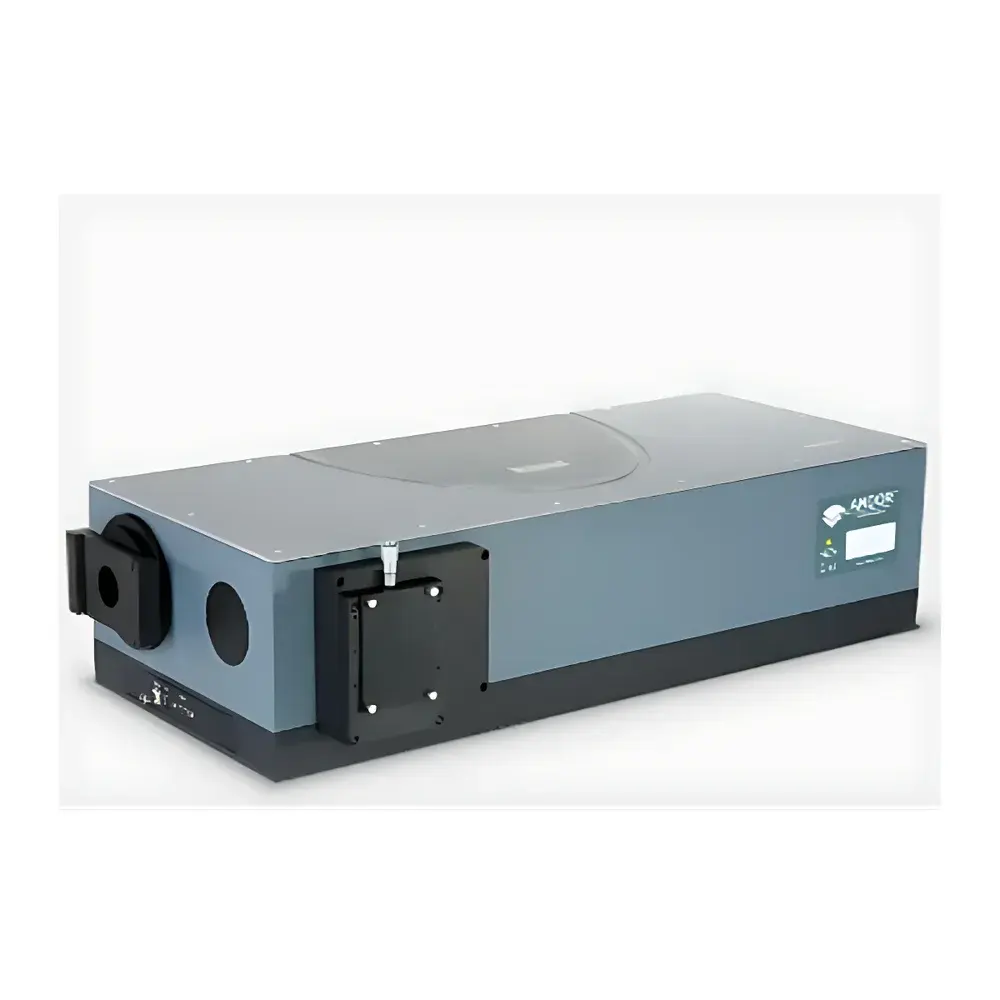
Andor Kymera, Shamrock, and Mechelle UV-NIR-SWIR Spectrometers
| Brand | Andor |
|---|---|
| Origin | United Kingdom |
| Model Series | Kymera 193i, Kymera 328i, Shamrock 500i, Shamrock 750, Mechelle 5000 |
| Spectral Resolution | 0.02 nm (Shamrock 750) |
| Imaging Resolution | 6000 (Mechelle 5000) |
| Optical Design | Czerny-Turner or Echelle |
| Configuration | Filter-based spectroscopy |
| Platform Compatibility | Ground- and airborne deployment |
| Detector Interface | Dual-input/dual-output architecture |
| Focal Length Range | 193 mm to 750 mm |
| Aperture Range | f/3.6 to f/9.7 |
Overview
Andor’s Kymera, Shamrock, and Mechelle series represent a family of research-grade, modular spectrometers engineered for high-fidelity spectral acquisition across the ultraviolet (UV), visible (VIS), near-infrared (NIR), and short-wave infrared (SWIR) spectral ranges (190–2500 nm). These instruments employ either Czerny-Turner or Echelle optical architectures—selected based on application-specific trade-offs between resolution, throughput, and spectral coverage. The Kymera platform emphasizes adaptive focusing and dual-output flexibility for time-resolved or multi-channel experiments; the Shamrock series delivers high-resolution dispersion with scalable focal lengths (193 mm to 750 mm), enabling sub-0.03 nm resolution in optimized configurations; the Mechelle 5000 leverages cross-dispersed Echelle design to achieve resolving powers up to R = 6000 while maintaining broad simultaneous spectral bandwidth—ideal for plasma diagnostics, astronomical spectroscopy, and rapid process monitoring where both resolution and acquisition speed are critical.
Key Features
- TruRes™ Technology: Proprietary calibration and optical alignment methodology ensuring long-term spectral accuracy and repeatability across temperature and mechanical drift.
- Adaptive Focusing (Patented): Motorized real-time refocusing compensates for thermal expansion and wavelength-dependent focal shift—particularly critical for broadband scanning and multi-laser excitation setups.
- Modular Input/Output Architecture: Dual input slits and dual output ports support simultaneous detection with multiple sensors (e.g., back-illuminated sCMOS + InGaAs array), beam splitting, or reference channel integration.
- Thermally Stabilized Optomechanics: Precision-machined aluminum housings with integrated Peltier cooling and active temperature feedback loops minimize thermal lensing and wavelength drift (< ±0.005 nm/°C).
- Low-Stray-Light Optical Design: Optimized baffling, black-anodized internal surfaces, and patented low-crosstalk Echelle optics (Mechelle 5000) suppress out-of-band signal contamination to < 1×10⁻⁵ relative intensity.
- Field-Deployable Robustness: Vibration-damped mounts, MIL-STD-810G compliant enclosure options, and sealed optical paths enable stable operation in airborne platforms, industrial cleanrooms, and remote observatories.
Sample Compatibility & Compliance
The Kymera/Shamrock/Mechelle systems interface seamlessly with Andor’s iXon, Zyla, and Balor detector families—including deep-cooled back-illuminated CCDs, scientific CMOS, and extended-range InGaAs arrays—supporting photon-counting sensitivity down to single-photon levels and temporal resolution to 1 ns via external gating. All models comply with CE marking requirements for electromagnetic compatibility (EMC Directive 2014/30/EU) and low-voltage safety (LVD Directive 2014/35/EU). Software drivers and firmware adhere to IEEE 1789-2015 guidelines for flicker-free operation in synchronized acquisition environments. For regulated environments, Andor Solis and OEM SDKs support audit trail logging, electronic signatures, and 21 CFR Part 11-compliant user access control when deployed with validated IT infrastructure.
Software & Data Management
Control and analysis are performed via Andor’s Solis software suite (v6.10+), which provides real-time spectral visualization, multi-region-of-interest (ROI) extraction, dark/bias/flat-field correction, and automated wavelength calibration using Hg/Ar/Ne lamp libraries. The SDK supports Python (PyAndor), MATLAB, LabVIEW, and C/C++ integration for custom automation in GLP/GMP workflows. Raw data is saved in vendor-neutral HDF5 format with embedded metadata (wavelength axis, slit width, grating ID, exposure time, detector gain, temperature), ensuring FAIR (Findable, Accessible, Interoperable, Reusable) compliance. Time-series and hyperspectral cube acquisition modes include trigger synchronization with external devices (pulse lasers, delay generators, motion stages) at ≤10 ns jitter.
Applications
- Raman spectroscopy (including resonance Raman and surface-enhanced Raman scattering)
- Luminescence lifetime imaging (FLIM) and time-resolved photoluminescence
- Absorption, transmission, and diffuse reflectance measurements in materials science
- Laser-induced breakdown spectroscopy (LIBS) for elemental mapping in geoscience and metallurgy
- Optical emission spectroscopy (OES) for plasma diagnostics and combustion analysis
- Hyperspectral microscopy for label-free tissue phenotyping and pharmaceutical crystallinity assessment
- Astronomical spectroscopy (stellar classification, exoplanet atmospheric retrieval)
- In-line process monitoring in semiconductor fabrication and chemical synthesis
FAQ
What optical designs are used across the Kymera, Shamrock, and Mechelle series?
Kymera and Shamrock models use optimized Czerny-Turner configurations with interchangeable gratings and motorized slits; Mechelle 5000 employs a cross-dispersed Echelle design for high-resolution, wide-band simultaneous detection.
Can these spectrometers be integrated into vacuum or purged environments?
Yes—custom flange-mounted versions (CF-63, KF-40) and nitrogen-purged optical paths are available for UV-VIS applications requiring oxygen absorption mitigation below 200 nm.
Is spectral calibration traceable to NIST standards?
All factory calibrations are performed using NIST-traceable Hg/Ar/Ne emission line sources, with certificate of calibration provided per unit; field recalibration tools are included in Solis software.
How does the adaptive focusing system maintain focus across wavelength sweeps?
A closed-loop piezoelectric actuator repositions the camera mount in real time based on pre-characterized focal plane curvature maps stored in non-volatile memory—no user intervention required.
Are OEM integration options available for custom hardware interfaces?
Yes—Andor provides full SDK documentation, FPGA register maps, and reference designs for PCIe, USB3, and Camera Link integration into turnkey analytical systems.
Related Products






