
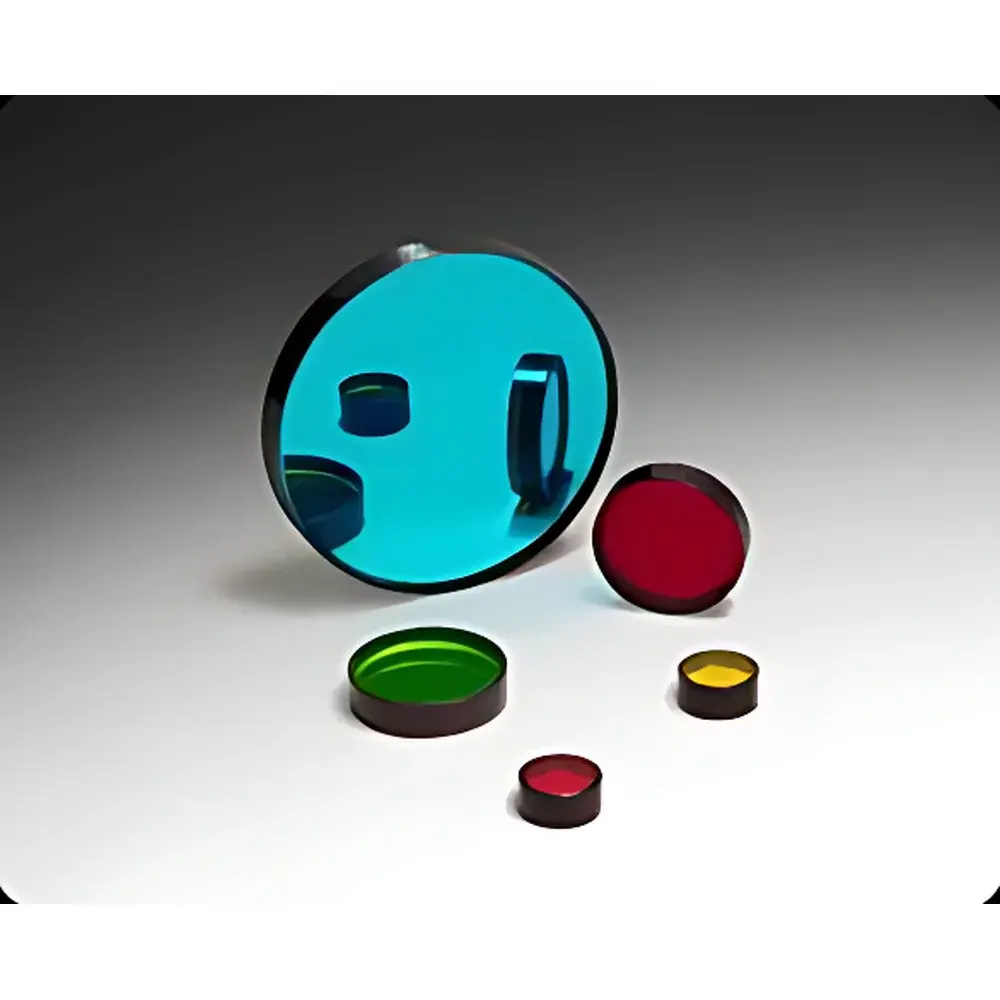
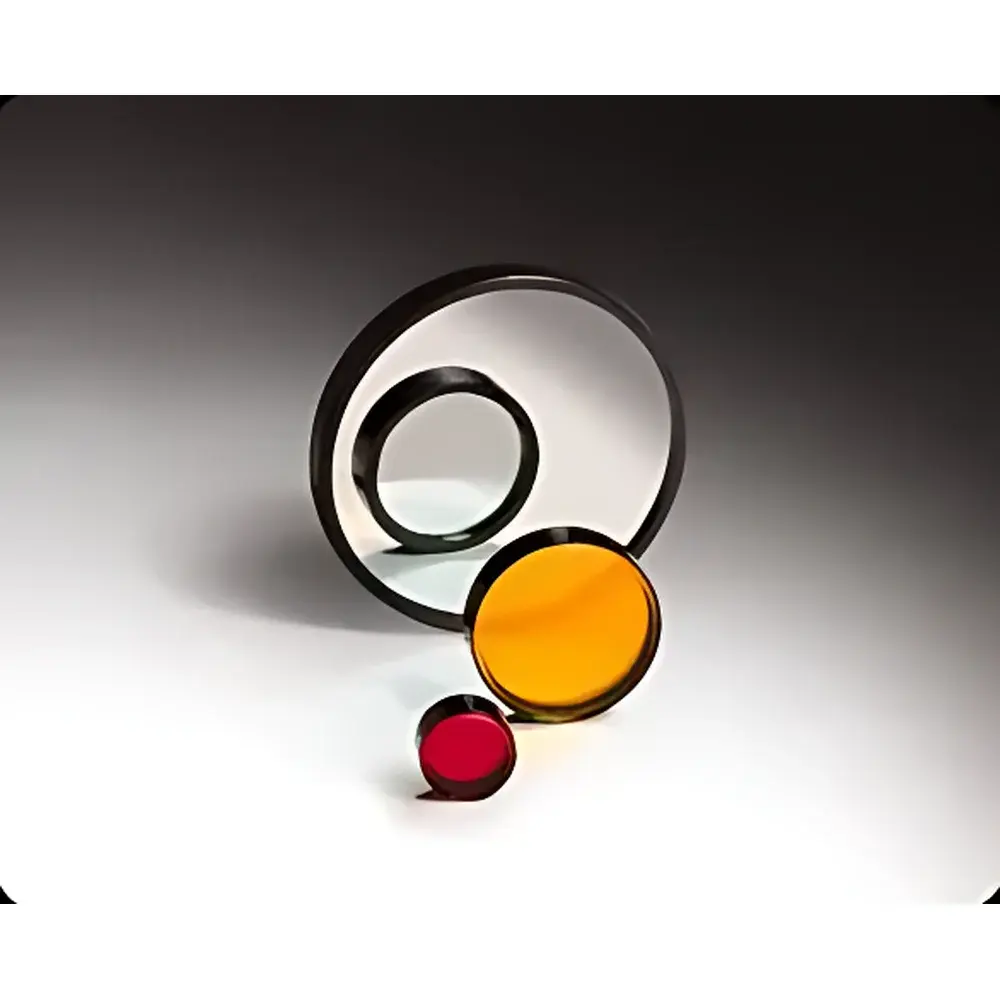
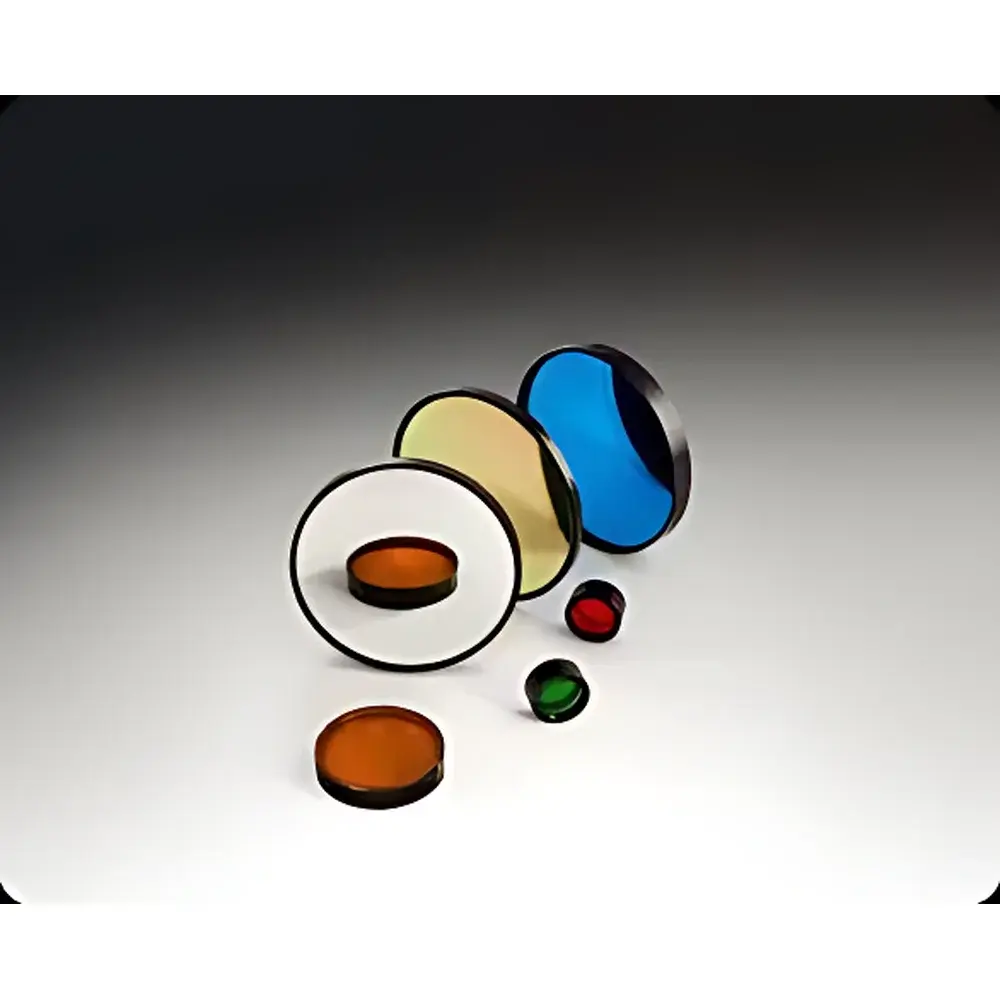
Andover 193–299 nm Standard Bandpass Optical Filters
| Brand | Andover |
|---|---|
| Origin | USA |
| Model | 193–299 nm |
| Component Category | Optical Element |
| Diameter Tolerance | +0/−0.25 mm |
| Usable Aperture | ≥9.0 mm (12.5 mm dia), ≥21.0 mm (25 mm dia), ≥45.0 mm (50 mm dia) |
| Surface Quality | 80–50 (per MIL-PRF-13830B) |
| Optical Quality | Commercial instrumentation grade |
| Out-of-Band Blocking | Avg. OD ≥4 (1×10⁻⁴ transmission) from X-ray to FIR |
| Max. Survival Temp Range | −50°C to +50°C (CW/L 214–380 nm) |
| Humidity Resistance | Per MIL-C-48497A |
| Mechanical Mounting | Anodized aluminum ring |
Overview
Andover 193–299 nm Standard Bandpass Optical Filters are precision thin-film interference filters engineered for high spectral selectivity in the deep ultraviolet (DUV) and near-UV spectral regions. These filters operate on the principle of constructive and destructive interference within multilayer dielectric coatings deposited onto high-purity fused silica or calcium fluoride substrates—optimized specifically for transmission stability below 300 nm. Designed for rigorous optical metrology applications, they deliver narrow passbands with steep cut-on/cut-off edges, minimal wavefront distortion, and exceptional out-of-band rejection—critical for isolating atomic emission lines (e.g., Hg 253.7 nm, HeCd 325 nm, N₂ 337.1 nm) and suppressing broadband background radiation in demanding photonic systems.
Key Features
- UV-Optimized Substrate & Coating Architecture: Utilizes low-OH fused silica or CaF₂ substrates with proprietary hard-coat multilayer stacks resistant to environmental degradation and laser-induced damage—validated per MIL-C-48497A humidity exposure protocols.
- Precision Spectral Control: Center wavelength (CWL) tolerance ±0.5–3.0 nm and full width at half maximum (FWHM) options from 3 nm to 40 nm enable tailored resolution for spectroscopic line isolation, fluorescence excitation, or plasma diagnostics.
- High Transmission Efficiency: Peak transmittance (Tmax) ≥70% typical across the 193–299 nm range; optimized cavity designs (e.g., MDM/712, MDM/820, MDM/920) balance bandwidth, blocking depth, and angular sensitivity.
- Mechanically Robust Packaging: All standard filters are permanently mounted in black anodized aluminum rings with kinematic edge registration—ensuring repeatable alignment in filter wheels, monochromators, and beam delivery optics without stress-induced birefringence.
- Traceable Metrological Compliance: Each lot undergoes spectral verification using NIST-traceable UV-VIS spectrophotometry; certified data sheets include CWL, FWHM, peak T%, blocking OD spectrum, and surface quality inspection reports per MIL-PRF-13830B.
Sample Compatibility & Compliance
These filters are compatible with standard optical mounts (SM1, SM2, C-mount) and integrate seamlessly into vacuum-compatible and UHV-rated optical tables when specified with optional custom mounting. They meet critical industry compliance benchmarks including ASTM E275 (Standard Practice for Describing and Measuring Performance of UV-Vis-NIR Spectrophotometers), ISO 9022-3 (Environmental testing—Optical instruments—Part 3: Damp heat, steady state), and USP light-scattering requirements for particulate matter detection. For regulated environments (e.g., clinical IVD platforms, pharmaceutical QC labs), filters support GLP/GMP documentation packages—including raw material traceability, coating process logs, and calibration certificate archives aligned with FDA 21 CFR Part 11 audit trail requirements.
Software & Data Management
Andover provides comprehensive spectral characterization datasets in standardized formats (CSV, SPC, and XML) compatible with common optical design and analysis software including Zemax OpticStudio, CODE V, FRED, and MATLAB-based spectral modeling toolchains. Filter performance parameters—including angle-dependent transmission shift (±0.1 nm/degree incidence), polarization sensitivity (s/p ratio <1.05 over ±5°), and thermal drift coefficients (<0.005 nm/°C)—are embedded in metadata headers. Integration with LabVIEW and Python (via PyAndover SDK) enables automated filter selection in adaptive spectroscopy systems, supporting real-time spectral library matching and dynamic bandpass switching in multi-wavelength diagnostic platforms.
Applications
- Spectral Radiometry: Calibration transfer standards for UV radiometers (e.g., NIST SRM 2032 traceable setups) and irradiance reference sources operating in the 193–299 nm range.
- Medical Diagnostics: Excitation filtering in UV fluorescence endoscopy, DNA quantification assays (e.g., 260 nm absorbance), and phototherapy dose control systems requiring precise 254 nm or 280 nm isolation.
- Chemical & Plasma Analysis: Line identification in ICP-OES, LIBS, and hollow-cathode lamp spectroscopy—particularly for Zn (213.9 nm), Cd (228.8 nm), Ni (232.0 nm), Co (238.9 nm), and Hg (253.7 nm, 296.7 nm) emission bands.
- Laser Safety & Characterization: Harmonic separation in frequency-doubled Nd:YAG (266 nm), KrF excimer (248 nm), and ArF excimer (193 nm) systems; used in beam profiling, power monitoring, and M² measurement setups.
- Space & Astronomy Instrumentation: Stray-light suppression and spectral channel definition in EUV/DUV solar telescopes and planetary atmospheric sensors where out-of-band rejection >OD 4 is mandatory.
FAQ
What substrate materials are used for the 193–299 nm filters, and why?
Fused silica is standard for 200–299 nm operation; calcium fluoride (CaF₂) is employed below 200 nm (e.g., 193 nm) due to its superior transmission and lower absorption coefficient in the deep UV.
Can these filters be used at non-normal incidence?
Yes—but CWL shifts to shorter wavelengths with increasing angle; angular tuning curves and polarization-dependent transmission data are provided in the technical datasheet for each part number.
Are custom sizes or coatings available beyond the listed diameters?
Custom diameters (e.g., Ø10 mm, Ø75 mm), rectangular formats (e.g., 25 × 36 mm), and bespoke CWL/FWHM specifications are available under Andover’s OEM engineering program—with lead times and qualification protocols aligned to ISO 9001 manufacturing controls.
How is out-of-band blocking verified, and what is the spectral coverage?
Blocking is measured from 0.1 nm (X-ray) to 1000 µm (far-IR) using calibrated FTIR and synchrotron-based UV reflectometers; average transmission is ≤1×10⁻⁴ across all rejected regions, with no measurable ghost peaks or coating defects.
Do these filters comply with RoHS and REACH directives?
Yes—all thin-film materials (Ta₂O₅, SiO₂, MgF₂, LaF₃) and substrate grades are fully compliant with EU RoHS 2015/863 and REACH SVHC Annex XIV restrictions; full material declarations are supplied upon request.



