Angle of Attack Sensor Model 4239
| Brand | — |
|---|---|
| Origin | Beijing, China |
| Manufacturer Type | Authorized Distributor |
| Country of Origin | China |
| Model | 4239 |
| Pricing | Upon Request |
Overview
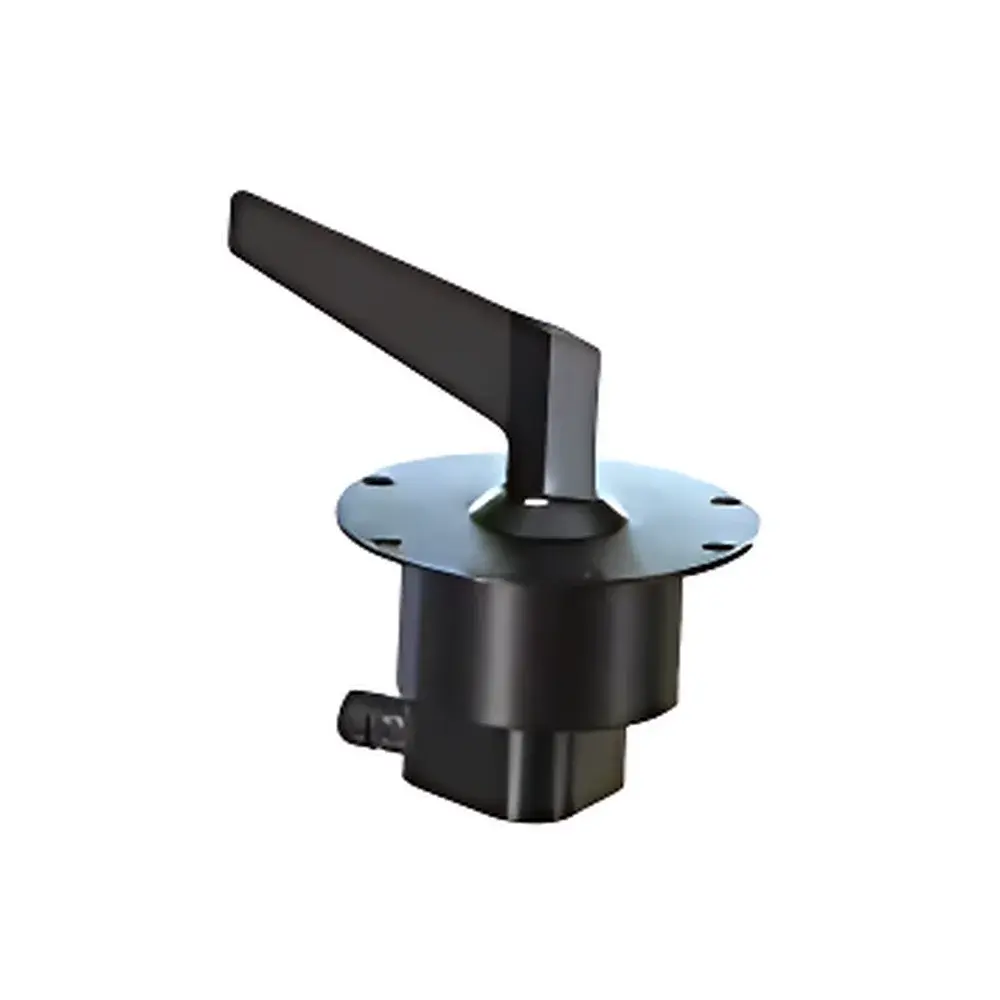
The Angle of Attack (AOA) Sensor Model 4239 is a precision aerodynamic sensing instrument engineered for real-time measurement of aircraft angle of attack (AOA) and angle of sideslip (AOS). It operates on the proven vane-based mechanical sensing principle—utilizing a freely rotating airfoil-shaped vane mounted on low-friction bearings—to detect local airflow direction relative to the aircraft’s longitudinal and lateral axes. The sensor converts angular displacement into standardized analog output signals (e.g., 0–5 VDC or 4–20 mA), fully compliant with ARINC 429 or MIL-STD-1553B interface options upon configuration. Designed for integration into flight control systems, stall warning systems, and flight data acquisition units, the Model 4239 delivers high repeatability under dynamic atmospheric conditions and supports both heated and unheated configurations for operation across diverse environmental envelopes.
Key Features
- Vane-type sensing architecture with stainless steel airfoil and precision ceramic bearing assembly for long-term stability and minimal hysteresis
- Compact form factor: 3.06 × 4.1 in (77.72 × 104.14 mm) footprint; total vane mass: 1.00 oz (0.454 kg) to minimize inertial lag
- Calibrated for nominal maximum calibrated airspeed (CAS) up to 450 knots—validated per DO-160 Section 21 (Environmental Conditions and Test Procedures for Airborne Equipment)
- Integrated heating element option (115 VAC or 28 VDC) meeting RTCA/DO-160G Section 22 (Icing) requirements for anti-ice functionality
- Separate total pressure (Pt) and static pressure (Ps) ports for concurrent air data acquisition; compatible with standard pitot-static plumbing interfaces
- Hermetically sealed housing rated IP65 for protection against dust ingress and water jets; operating temperature range: −40 °C to +70 °C
Sample Compatibility & Compliance
The Model 4239 is optimized for installation on small- to medium-class fixed-wing aircraft—including general aviation platforms, unmanned aerial systems (UAS), and light business jets—where structural integration constraints and weight budgets are critical. Its mechanical design conforms to FAA AC 20-152A guidance for AOA system certification and supports compliance pathways under EASA CS-23 Amendment 5 and Part 23 Subpart B. The sensor meets electromagnetic compatibility (EMC) requirements per DO-160G Sections 15–20 and is suitable for use in systems requiring traceable calibration per ISO/IEC 17025-accredited laboratories. Documentation includes full dimensional drawings (CAD files in STEP and IGES formats), mounting templates, and a technical specification sheet outlining calibration traceability to NIST standards.
Software & Data Management
While the Model 4239 is an analog-output sensor requiring external signal conditioning, it is fully interoperable with industry-standard avionics data acquisition systems—including Honeywell EDU, Collins FMS-3000, and generic DAQ platforms supporting analog input scaling and linearization. Configuration and validation workflows align with DO-178C Level C software considerations when integrated into certified flight control architectures. Raw AOA/AOS outputs may be logged via ARINC 717-compliant flight data recorders (FDRs) or processed in real time by onboard health monitoring systems. All calibration reports include audit trails, uncertainty budgets, and revision-controlled metadata—supporting GLP/GMP-aligned maintenance records and regulatory review during FAA Form 8110-3 or EASA Form 1 submissions.
Applications
- Stall margin monitoring and stick-shaker activation logic in primary flight displays (PFD)
- Flight envelope protection in fly-by-wire and augmented stability systems
- Real-time aerodynamic coefficient estimation (e.g., CLα, CYβ) during flight test campaigns
- Wind tunnel model attitude feedback for closed-loop pitch/yaw control
- Post-flight analysis of maneuver performance using synchronized AOA, airspeed, and inertial navigation data
- Integration into UAV autopilot stacks (e.g., Pixhawk-based platforms with custom analog ADC firmware)
FAQ
What is the typical calibration interval recommended for the Model 4239?
Calibration is recommended every 24 months or after any impact event, structural modification, or exposure to severe icing conditions—consistent with FAA Advisory Circular 43.13-1B guidelines.
Does the sensor support dual AOA/AOS output simultaneously?
Yes—the Model 4239 provides independent analog channels for AOA and AOS, each with user-configurable scaling and zero-offset adjustment.
Can the Model 4239 be used in rotorcraft applications?
It is not certified for helicopter main rotor inflow measurement due to unsteady wake interference; however, it has been successfully deployed on tiltrotor transition flight test instrumentation packages with localized flow shielding.
Is NIST-traceable calibration documentation included with shipment?
A full calibration certificate—traceable to NIST Standard Reference Materials (SRMs) and including expanded uncertainty at k=2—is provided with each unit.
What mounting hardware is supplied?
Standard delivery includes stainless steel mounting brackets, vibration-damping isolation pads, and torque-spec fasteners compliant with NASM1312-7 requirements.