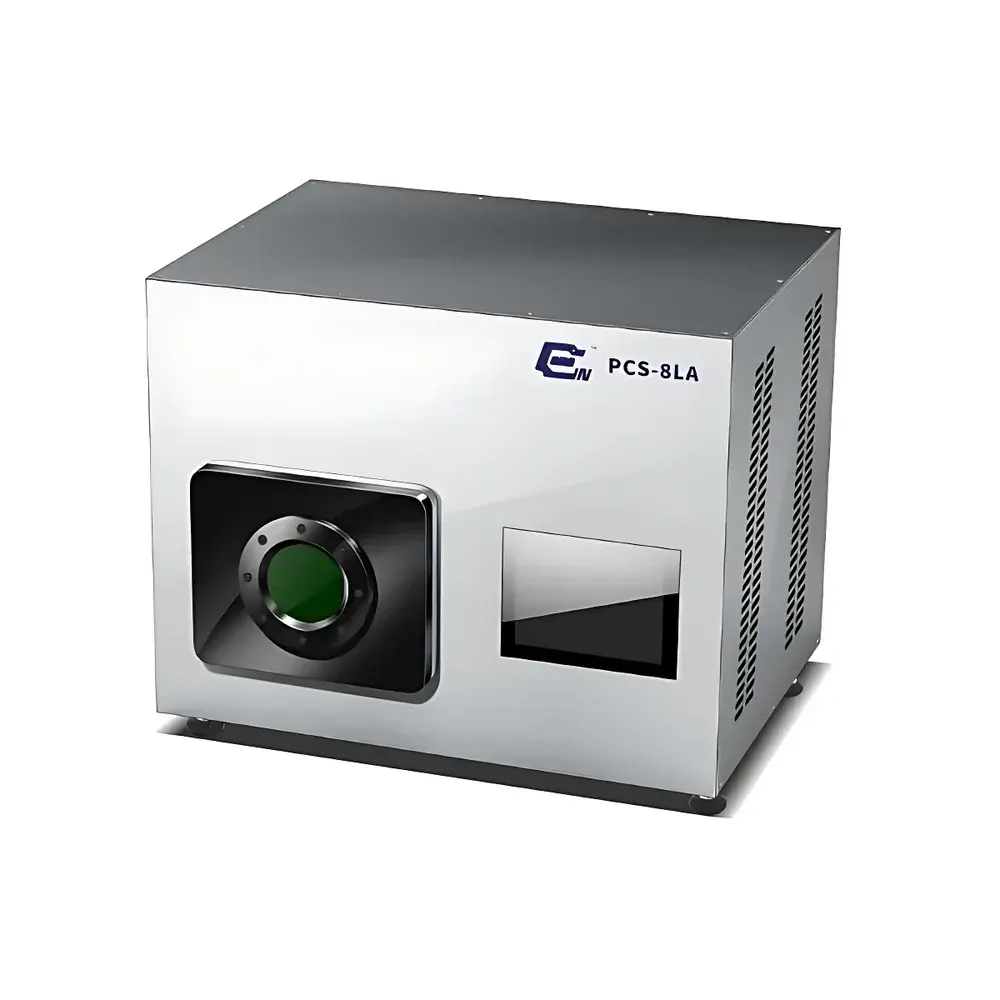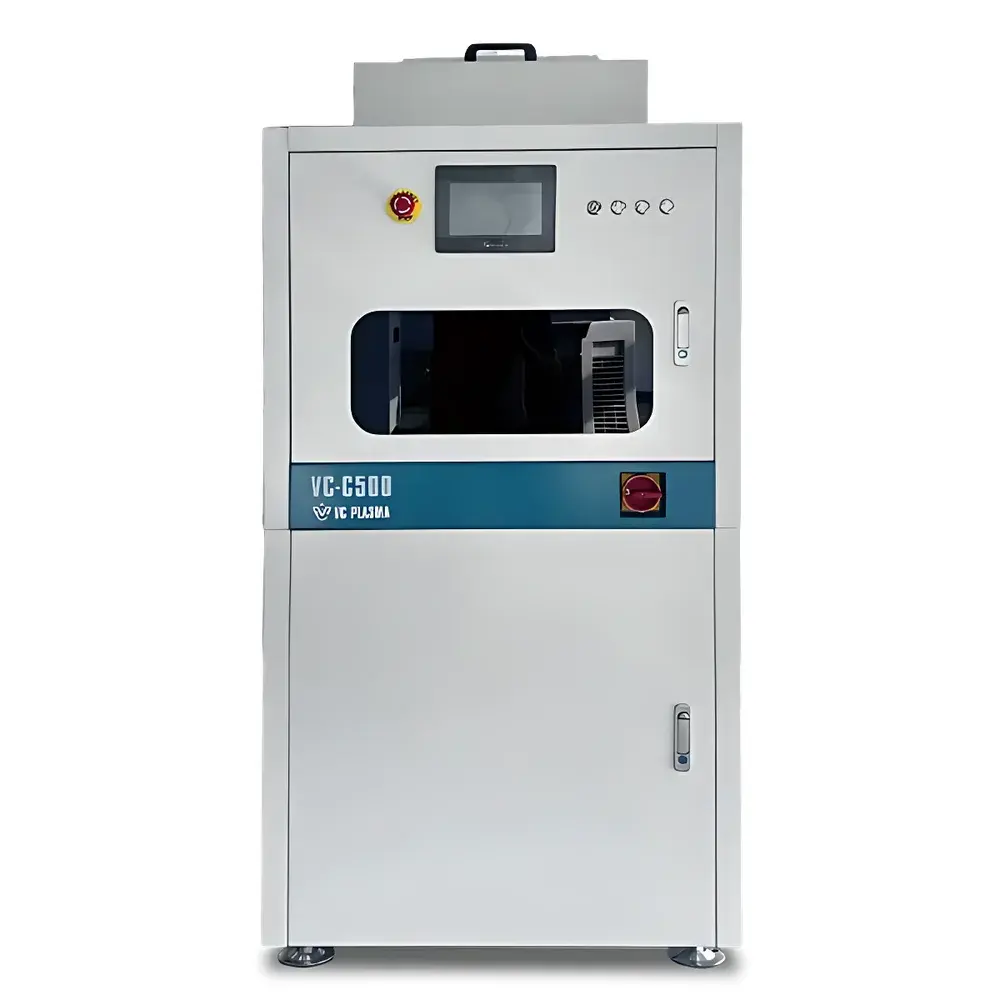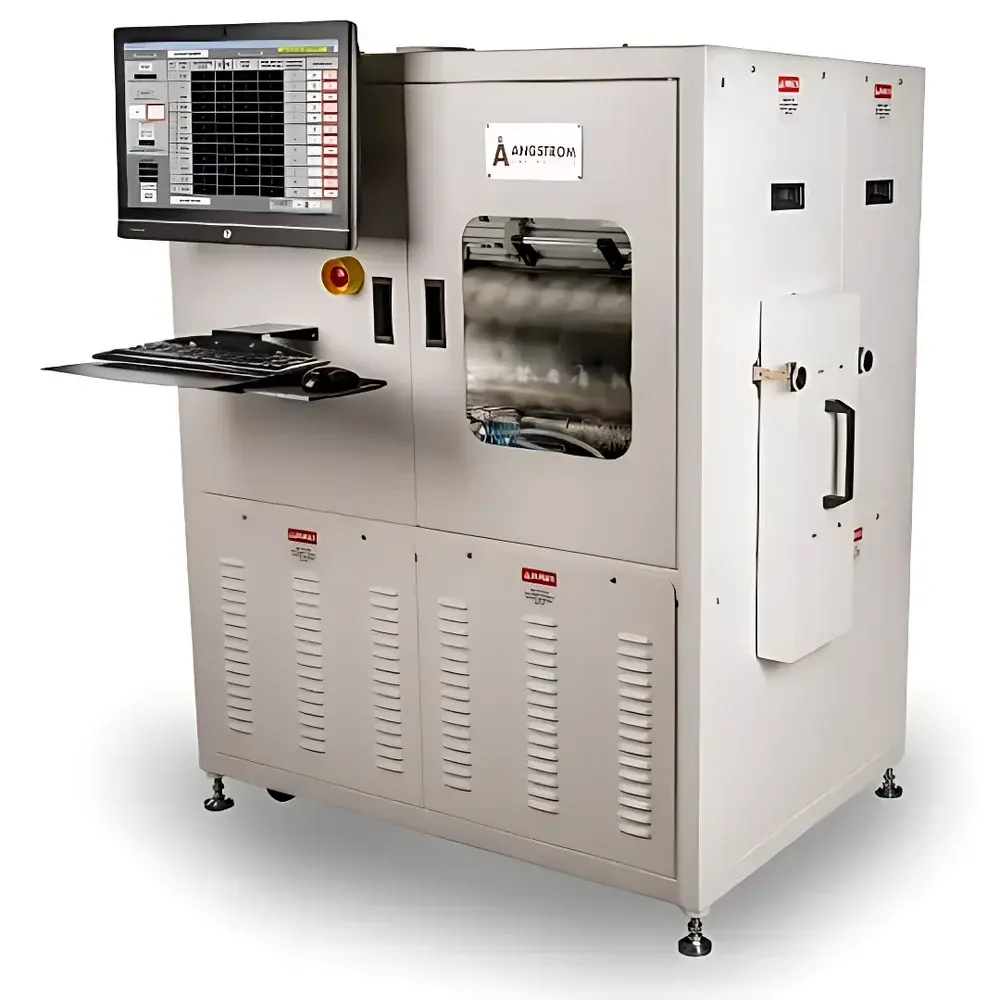
Angstrom Customized-23 LPCVD System
| Brand | Angstrom |
|---|---|
| Model | customized-23 |
| Chamber Diameter | 200 mm (quartz) |
| Maximum Substrate Diameter | 150 mm |
| Furnace | Triple-zone resistive heating |
| Uniform Temperature Zone | 150 mm |
| Max Temperature | 1000 °C |
| Pressure Control Range | 50–500 mTorr (downstream, VAT throttle butterfly valve) |
| Vacuum Pump | Ebara ESA25-D dry pump (8 CFM) |
| Application Domain | Semiconductor thin-film fabrication, MEMS, optoelectronics, graphene & CNT research |
Overview
The Angstrom Customized-23 LPCVD System is a precision-engineered low-pressure chemical vapor deposition platform designed for reproducible, high-uniformity thin-film synthesis under controlled thermal and gaseous environments. Operating in the 50–500 mTorr pressure range, the system leverages reduced gas-phase collision frequency to enhance precursor diffusion, minimize parasitic reactions, and promote conformal, stoichiometric film growth on substrates up to 150 mm in diameter. Its triple-zone resistive furnace delivers a 150 mm axial uniformity zone with stability ≤±1 °C at 1000 °C—critical for process transfer across R&D, pilot-line, and low-volume production environments. The quartz reaction chamber (200 mm ID) features modular internal tube design for rapid maintenance and residue-free cleaning—essential for multi-material processing without cross-contamination.
Key Features
- Triple-Zone Resistive Furnace: Independently controllable heating zones enable precise thermal profiling across the substrate stack, supporting ramp-and-soak, gradient annealing, and rapid thermal processing (RTP)-compatible protocols.
- Downstream Pressure Regulation: VAT throttle-type butterfly valve provides stable, hysteresis-free pressure control from 50 to 500 mTorr—optimized for silane-based, ammonia-based, and metalorganic precursors requiring precise residence time management.
- High-Capacity Dry Vacuum System: Ebara ESA25-D dry scroll pump (8 CFM) ensures oil-free, particle-free base pressure <1×10⁻³ mTorr, eliminating hydrocarbon contamination risks in gate dielectric or passivation layer deposition.
- Modular Quartz Chamber Architecture: Internally segmented quartz tube allows tooling-level access to hot-zone components; no disassembly of furnace insulation required for routine cleaning or quartz replacement.
- Thermal Stability & Repeatability: Achieves ±0.5 °C temperature stability over 4-hour dwell periods at 950 °C—validated per ASTM E220 calibration traceability protocols.
Sample Compatibility & Compliance
The system accommodates standard semiconductor wafers (up to 150 mm), SOI substrates, silicon carbide (SiC) wafers, fused silica optics, and MEMS device carriers. It supports deposition of polycrystalline silicon (poly-Si), silicon nitride (Si₃N₄), silicon dioxide (SiO₂), phosphosilicate glass (PSG), borophosphosilicate glass (BPSG), amorphous silicon (a-Si), and refractory metal silicides (e.g., TiSi₂, CoSi₂). All wetted surfaces are quartz or high-purity alumina; no stainless steel gas lines contact reactive precursors. The system architecture complies with SEMI S2/S8 safety guidelines and meets mechanical integrity requirements for Class 100 cleanroom integration. Optional documentation packages support GLP/GMP audit readiness—including full traceability of calibration records, preventive maintenance logs, and software validation reports aligned with FDA 21 CFR Part 11 principles.
Software & Data Management
Integrated touchscreen HMI runs on a real-time Linux OS with deterministic I/O response (<10 ms loop cycle). Process recipes store temperature ramps, gas sequencing (up to 6 MFC-controlled lines), pressure setpoints, and purge cycles with timestamped execution logs. All operational data—including thermocouple readings, pressure transducer outputs, and valve position feedback—are streamed to onboard NVMe storage at 10 Hz sampling rate. Export formats include CSV and HDF5; optional OPC UA server enables direct integration into factory MES platforms (e.g., Siemens Opcenter, Applied Materials EnduraConnect). Audit trail functionality records user login/logout events, recipe modifications, and alarm acknowledgments with SHA-256 hashing—fully compliant with electronic record retention requirements per ISO 9001:2015 Clause 7.5.3.
Applications
- Semiconductor Front-End Processing: Growth of gate oxides (thermal SiO₂), hard masks (Si₃N₄), stress-tuning layers (tensile/compressive nitride), and sacrificial oxidation layers for STI formation.
- Power Device Fabrication: Deposition of high-k dielectrics on SiC and GaN substrates; conformal passivation of trench-gate MOSFETs and JBS diodes.
- Optoelectronic Thin Films: Low-absorption SiO₂/Si₃N₄ waveguide stacks for integrated photonics; graded-index antireflection coatings on laser diode facets.
- 2D Materials Research: High-temperature, rapid-cool capability (≥100 °C/min) enables controlled nucleation and domain alignment of graphene and carbon nanotubes on catalytic metal foils.
- MEMS Structural Layers: Stress-engineered poly-Si films for resonant sensors; low-stress Si₃N₄ membranes for pressure transducers and microphones.
FAQ
What vacuum level can the system achieve prior to process initiation?
Base pressure is typically <1×10⁻³ mTorr after 60-minute pump-down using the Ebara ESA25-D dry pump and optimized chamber bake-out protocol.
Is the system compatible with chlorine-based precursors such as SiCl₄ or TiCl₄?
Yes—quartz chamber and alumina furnace components exhibit excellent resistance to halogenated chemistries; optional Hastelloy gas delivery manifolds are available for extended service life with aggressive precursors.
Can the system be upgraded to support in-situ ellipsometry or optical emission spectroscopy?
The chamber includes two 25 mm CF flanged optical viewports (300–1100 nm transmission) and provisions for feedthroughs to accommodate OEM-compatible in-situ metrology modules.
Does the controller support recipe cloning and inter-tool transfer?
Yes—recipe files are XML-based and portable across Angstrom LPCVD systems; process parameter tolerances and interlock logic are preserved during import/export.
What maintenance intervals are recommended for the dry pump and pressure control valve?
Ebara ESA25-D requires oil-free bearing inspection every 5,000 operating hours; VAT butterfly valve actuator calibration is recommended annually or after 10,000 open/close cycles.