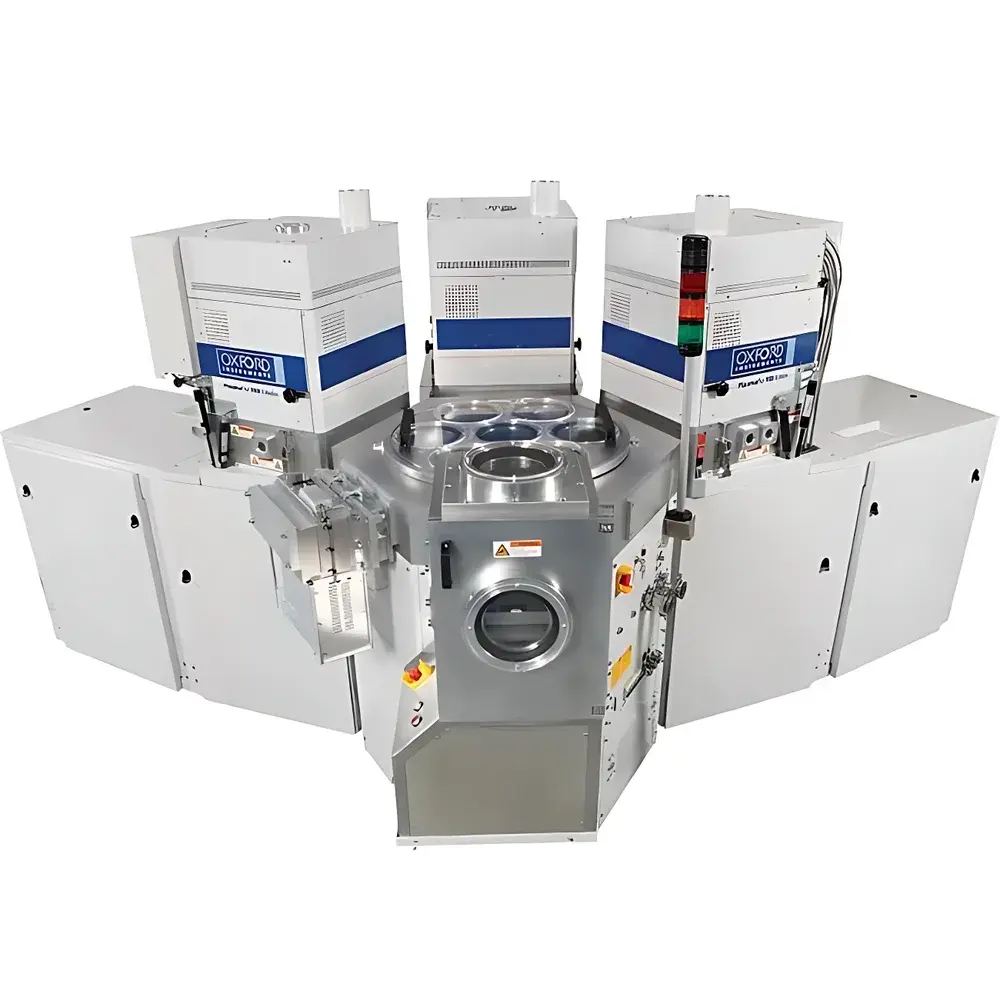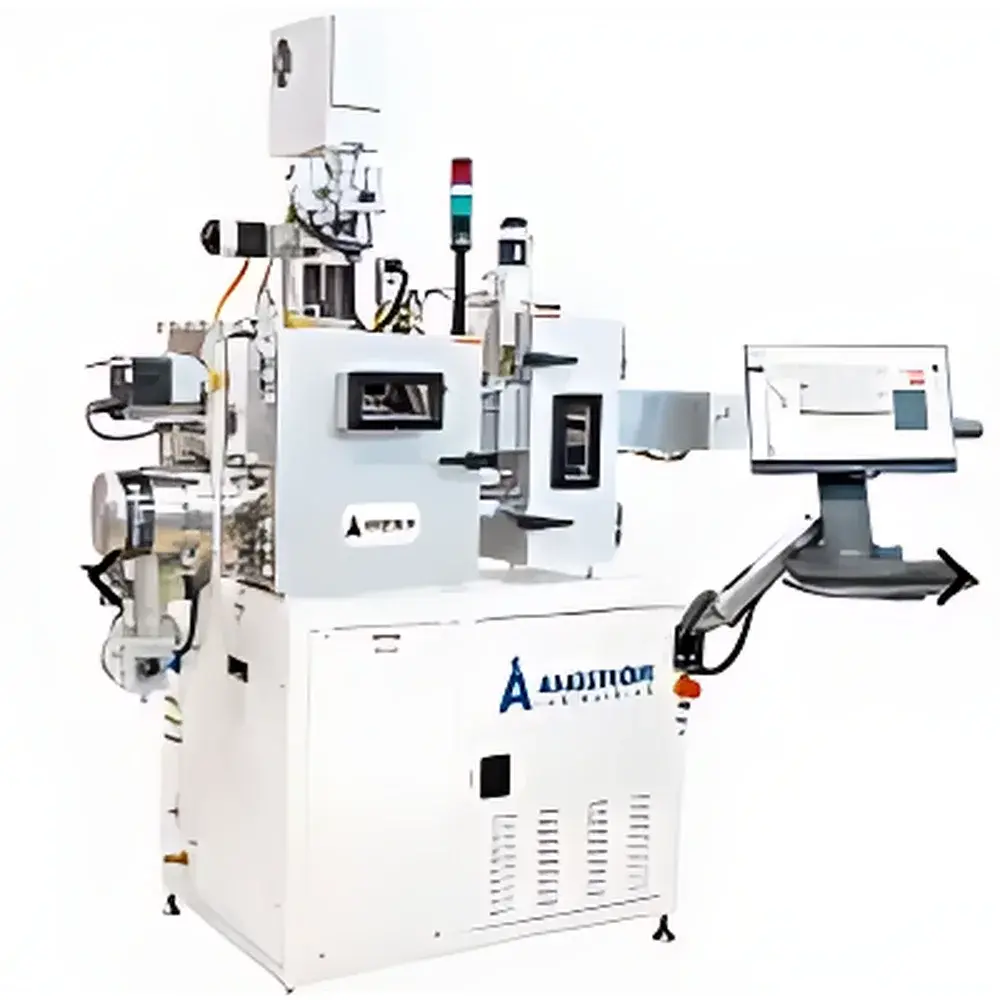
Angstrom Engineering Amod PVD Platform
| Brand | Angstrom Engineering |
|---|---|
| Origin | Canada |
| Model | Amod |
| Base Plate Size | 500 mm × 500 mm |
| Max. Source Capacity | 8 |
| Vacuum Capability | UHV-compatible (≤1×10⁻⁹ Torr base pressure) |
| Deposition Methods | DC/RF/Pulsed DC/HIPIMS Sputtering, Thermal Evaporation, E-beam Evaporation, Reactive Sputtering, Plasma & Ion Beam Surface Treatment |
| Substrate Handling Options | Heated/Cooled Stages, Variable-Angle Rotation, Planetary Motion, Dome & Masking Fixtures, Substrate Biasing |
| Control System | Aeres™ Software with Recipe Management, Real-time Rate Monitoring, and Torque-Sensing Crucible Indexing |
Overview
The Angstrom Engineering Amod PVD Platform is a modular, high-vacuum physical vapor deposition system engineered for research-grade thin-film synthesis and process development in microelectronics, advanced optics, and functional materials science. Operating on core PVD principles—including thermal evaporation, magnetron sputtering, electron beam evaporation, and plasma-assisted surface modification—the Amod platform enables precise stoichiometric control, nanoscale thickness uniformity, and reproducible interfacial engineering across diverse substrate classes. Its UHV-capable architecture (base pressure <1×10⁻⁹ Torr) minimizes residual gas contamination—critical for oxide, nitride, and multilayer heterostructure fabrication where oxygen partial pressure, water vapor, or hydrocarbon adsorption directly impact film crystallinity, resistivity, and interfacial defect density. Designed for integration into cleanroom environments (Class 100–1000), the system supports both R&D prototyping and pre-production process transfer under GLP-aligned operational protocols.
Key Features
- Modular chamber design with 500 mm × 500 mm substrate platen—accommodates wafers up to 200 mm, custom substrates, and multi-sample carriers.
- Eight-source compatibility: configurable mix of sputter targets (circular, linear, cylindrical), thermal evaporation sources (boat, filament, crucible), e-beam guns, and ion/plasma sources within a single vacuum envelope.
- Multi-mode sputtering capability: DC, RF, pulsed DC, HIPIMS, and reactive sputtering—enabling deposition of metals, insulators (e.g., Al₂O₃, SiO₂), and compound semiconductors (e.g., ITO, ZnO, MoS₂) with controlled oxidation/nitridation kinetics.
- Thermal evaporation system with auto-tuned rate control, integrated quartz crystal microbalance (QCM) feedback, and programmable shutter sequencing for bilayer/multilayer growth.
- E-beam evaporation subsystem featuring multiple gun positions, programmable raster scanning, real-time beam current monitoring, and torque-sensing crucible indexing to detect material clogging or depletion.
- In-situ plasma and ion beam modules: glow discharge cleaning, ion-assisted deposition (IAD), and post-deposition ion etching—enhancing adhesion, density, and stress control in optical and barrier films.
- Advanced substrate manipulation: temperature-controlled stage (−100 °C to +600 °C), variable-angle tilt (0–90°), planetary rotation, dome fixtures for conformal coating, and RF/DC substrate biasing for ion energy tuning.
Sample Compatibility & Compliance
The Amod platform accommodates rigid and flexible substrates—including silicon, GaAs, sapphire, fused silica, polymer foils (e.g., PET, PI), and metallic foils—without requiring chamber reconfiguration. Substrate clamping mechanisms support flat, curved, and patterned geometries. All vacuum components comply with ISO 10100 (vacuum technology — terminology) and ASTM F1473 (standard guide for evaluating vacuum system cleanliness). The system’s hardware architecture and software logging functions are structured to support audit readiness per FDA 21 CFR Part 11 requirements when configured with electronic signature and audit trail modules. Process recipes, sensor logs, and vacuum history are timestamped and exportable in CSV or XML formats for traceability in ISO/IEC 17025-accredited laboratories.
Software & Data Management
Control and automation are managed through Angstrom’s proprietary Aeres™ software platform—a Windows-based, real-time operating environment with deterministic I/O response (<10 ms loop time). Aeres provides full recipe-driven operation, including synchronized source activation, shutter timing, gas flow ramping (MFC-controlled Ar, O₂, N₂), pressure regulation, and substrate motion sequencing. Integrated data acquisition captures QCM deposition rates, thermocouple readings, ion gauge pressures, RF forward/reflected power, and e-beam gun parameters at user-defined intervals. All datasets are stored locally with optional network backup; raw logs include metadata tags for operator ID, chamber condition, and calibration timestamps. Export formats support third-party analysis tools (MATLAB, Python pandas, OriginLab) and LIMS integration via OPC UA or REST API adapters.
Applications
- Semiconductor device fabrication: deposition of gate dielectrics (HfO₂, Al₂O₃), metal electrodes (TiN, TaN), diffusion barriers (TaN, TiW), and seed layers (Cu, Ru) for advanced node interconnects.
- Optoelectronic thin films: high-LIDT anti-reflective (MgF₂/TiO₂ stacks), high-reflectance mirrors (Ag/Al multilayers), and transparent conductive oxides (ITO, AZO) for OLEDs and photovoltaic cells.
- Hard coatings & tribological surfaces: wear-resistant CrN, TiAlN, and DLC films on MEMS actuators, micro-gears, and aerospace turbine components.
- 2D materials & heterostructures: van der Waals epitaxy of transition metal dichalcogenides (MoS₂, WS₂) and topological insulators (Bi₂Se₃) using low-energy ion assistance and substrate heating synchronization.
- Biofunctional coatings: plasma-cleaned and ion-treated TiO₂ or diamond-like carbon (DLC) layers on orthopedic implants to enhance osseointegration and corrosion resistance per ISO 10993-15.
FAQ
What vacuum level can the Amod achieve, and how is it maintained?
The Amod platform achieves base pressures ≤1×10⁻⁹ Torr using a combination of turbomolecular pumps, cryogenic panels (optional), and all-metal sealing. Pressure stability is actively monitored via Bayard-Alpert and capacitance manometer gauges, with automated vent/pump-down sequences logged in Aeres.
Can the system be upgraded for in-situ characterization?
Yes—integrated ports support retrofitting with RHEED, XRD, or ellipsometry viewports. Angstrom offers OEM-compatible flange kits and motion feedthroughs for external probe integration without chamber modification.
Is remote operation supported?
Aeres supports secure remote access via TLS-encrypted VNC or RDP sessions. Full control—including recipe execution and emergency stop—is available with role-based authentication and session logging.
How is process repeatability ensured across different operators?
All deposition parameters are encapsulated in version-controlled recipes. Aeres enforces parameter validation (e.g., max RF power limits, min cooling time between runs) and requires digital sign-off before execution—aligning with GMP documentation practices.
What maintenance intervals are recommended for critical subsystems?
Sputter target lifetimes are tracked per recipe; thermal source boats are replaced after 50–100 cycles depending on material volatility. Turbopump oil replacement is scheduled every 12 months or 8,000 operating hours, with vacuum integrity verified via helium leak testing quarterly.
Related Products