
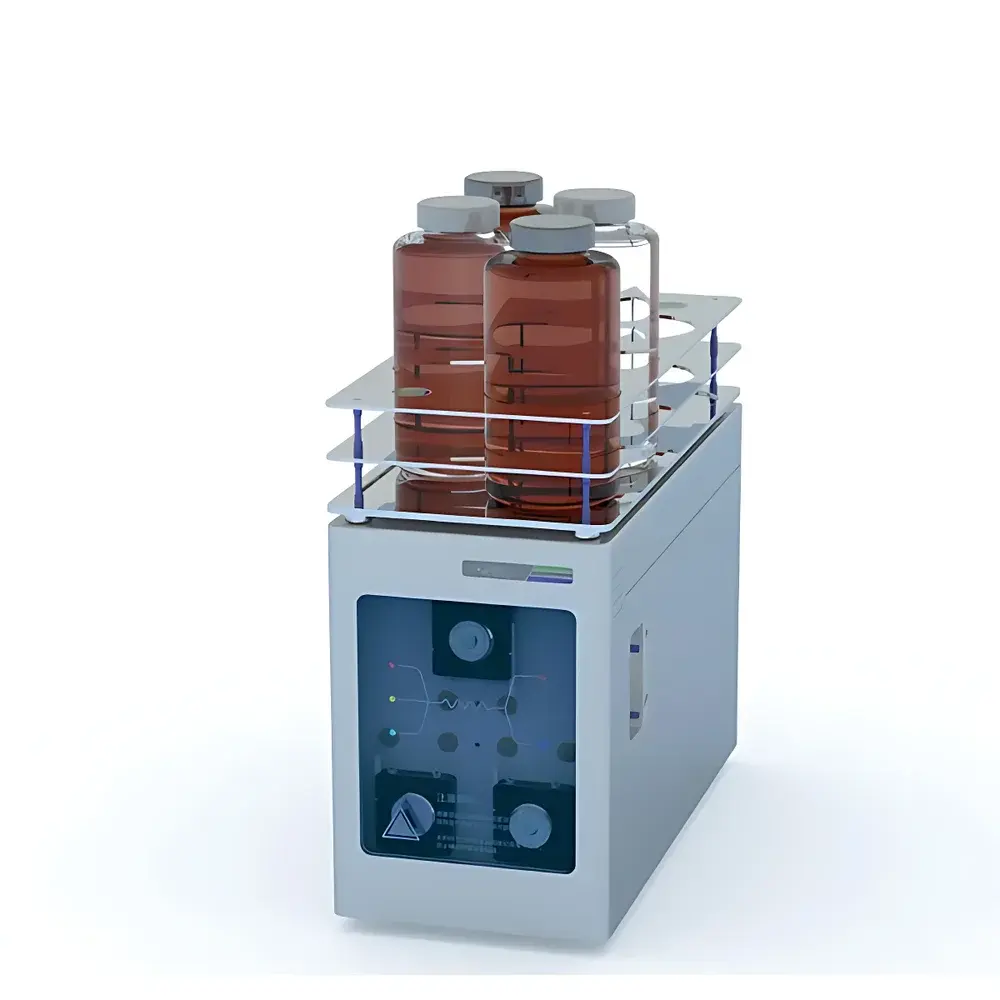
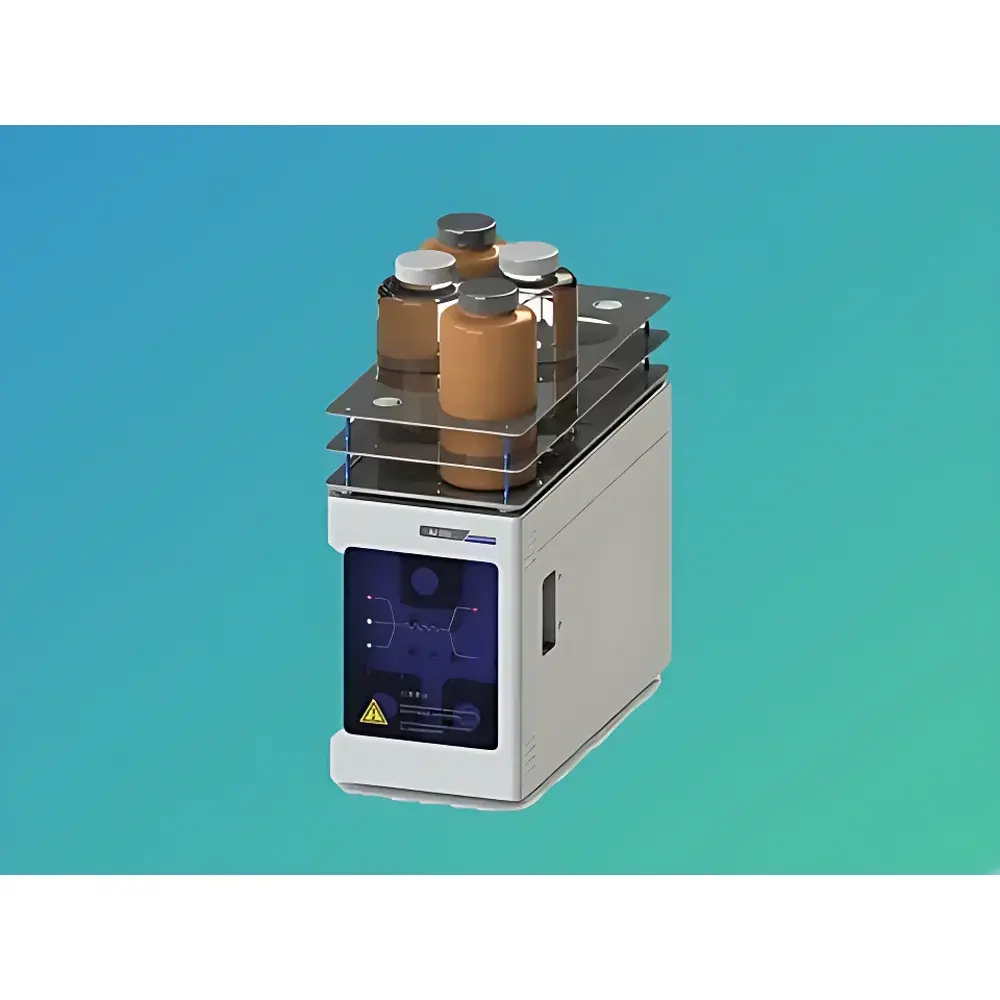
ANJIE AJ-200 UV Continuous Digestion System for Total Nitrogen Analysis
| Brand | ANJIE |
|---|---|
| Origin | Shanghai, China |
| Manufacturer Type | Authorized Distributor |
| Country of Origin | China |
| Model | AJ-200 (0102) |
| Pricing | Available Upon Request |
| Digestion Principle | UV-Catalyzed Ambient-Pressure Oxidation |
| Sample Throughput | ≤2.5 min per sample |
| Dilution Capability | Automated 1–40× dilution for high-concentration samples |
| Integration | Compatible with AJ-3700 series analyzers |
| Fluidic Architecture | Clamp-free peristaltic tubing system |
| Reagent Management | Modular reagent rack support included |
| Compliance | Designed to support ISO 11905-1, EPA Method 351.2, and GB/T 11894–1989 workflows |
Overview
The ANJIE AJ-200 UV Continuous Digestion System is a dedicated ambient-pressure digestion module engineered for the accurate and reproducible conversion of organic and inorganic nitrogen species—including Kjeldahl nitrogen, nitrate, nitrite, and refractory organonitrogen compounds—into measurable nitrate prior to quantification by UV spectrophotometry or ion chromatography. Unlike sealed-vessel microwave or high-pressure autoclave digestion methods, the AJ-200 employs low-pressure, UV-C (254 nm) photochemical oxidation in conjunction with persulfate activation under controlled thermal conditions (typically 95–105 °C). This approach eliminates explosion hazards associated with pressurized systems while maintaining high oxidation efficiency (>98% recovery for casein, glycine, and potassium nitrate reference standards per ISO 11905-1 validation protocols). The system operates on a continuous-flow principle: liquid samples are metered into a coiled quartz digestion reactor where simultaneous UV irradiation and thermal activation drive complete nitrogen mineralization. Reaction products exit directly into downstream detection modules—enabling true walk-away automation for laboratories processing 20–120 samples per day.
Key Features
- UV-catalyzed ambient-pressure digestion architecture eliminates safety risks inherent in high-pressure systems and reduces routine maintenance demands.
- Continuous-flow design ensures consistent residence time and thermal/photonic exposure across all samples, supporting high inter-run reproducibility (RSD < 2.5% for certified reference materials).
- Clamp-free peristaltic fluidic path prevents tube deformation, occlusion, or calibration drift caused by mechanical valve fatigue—extending tubing service life and minimizing recalibration frequency.
- Integrated automated dilution module enables dynamic 1× to 40× on-the-fly dilution of high-TN samples (e.g., wastewater influent, digestate, or fertilizer extracts), preserving linear detector response without manual intervention.
- Modular reagent rack system accommodates up to six standardized reagent bottles (500 mL or 1 L), with labeled mounting slots, drip trays, and secure locking mechanisms for GLP-compliant reagent tracking.
- Flexible deployment options: functions as an embedded digestion stage within the AJ-3700 total nitrogen analyzer platform or operates independently when paired with an optional XYZ autosampler and ANJIE Digestion Control Software v3.x.
Sample Compatibility & Compliance
The AJ-200 accepts aqueous liquid matrices with suspended solids ≤20 mg/L (pre-filtered through 0.45 µm membrane), including drinking water, surface water, wastewater effluent/influent, soil leachates, and biological digester supernatants. It is validated for use with saline matrices up to 15 g/L NaCl without performance degradation. Regulatory alignment includes method equivalency with ISO 11905-1 (Water quality — Determination of total nitrogen — Part 1: Catalytic high-temperature oxidation method), EPA Method 351.2 (Total Kjeldahl Nitrogen in Wastewater), and Chinese national standard GB/T 11894–1989. The system’s audit trail–enabled software mode supports 21 CFR Part 11–compliant electronic records when deployed with qualified IT infrastructure and user access controls.
Software & Data Management
When operated in standalone mode, the AJ-200 interfaces via RS-232 or Ethernet with ANJIE Digestion Control Software, which provides method scheduling, real-time digestion temperature/UV intensity monitoring, automatic dilution log generation, and CSV-exportable digestion metadata (sample ID, start time, dilution factor, UV lamp hours, error codes). All method parameters—including UV dwell time, heating setpoint, pump speed, and dilution ratio—are password-protected and version-controlled. Raw data files include embedded timestamps and operator IDs, satisfying GLP documentation requirements for environmental testing laboratories.
Applications
- Environmental monitoring labs performing routine TN analysis on municipal and industrial wastewater streams.
- Drinking water utilities requiring compliance with WHO and EU Drinking Water Directive TN limits (< 0.5 mg/L).
- Research institutions studying nitrogen cycling in aquatic ecosystems or evaluating denitrification efficiency in bioreactors.
- Agrochemical QA/QC labs quantifying total nitrogen content in fertilizers, composts, and hydroponic nutrient solutions.
- Academic teaching labs seeking a safe, transparent, and maintenance-resilient digestion platform for undergraduate analytical chemistry curricula.
FAQ
Does the AJ-200 require external cooling water or compressed air?
No. The system uses passive air-cooled UV lamp housings and integrated Peltier-based thermal regulation—no ancillary utilities are needed.
Can the digestion efficiency be verified without running full calibration standards daily?
Yes. Built-in QC check routines allow periodic verification using a stable nitrate spike (e.g., 5 mg/L N as NO₃⁻) processed alongside blanks; recovery deviation > ±5% triggers alert logging.
Is the quartz digestion coil replaceable by the end user?
Yes. The reactor coil is field-replaceable via two captive screws and requires no optical realignment—typical replacement time is <8 minutes with standard lab tools.
What is the expected lifetime of the UV-C lamp under continuous operation?
Rated at 5,000 hours (≈12 months at 12 h/day); output intensity is monitored continuously and reported in software; lamps are automatically flagged for replacement at 85% initial irradiance.
Does the system support unattended overnight runs?
Yes. With autosampler integration and valid method configuration, the AJ-200 executes pre-scheduled batches with automatic shutdown, blank flushing, and lamp cooldown sequences.



