
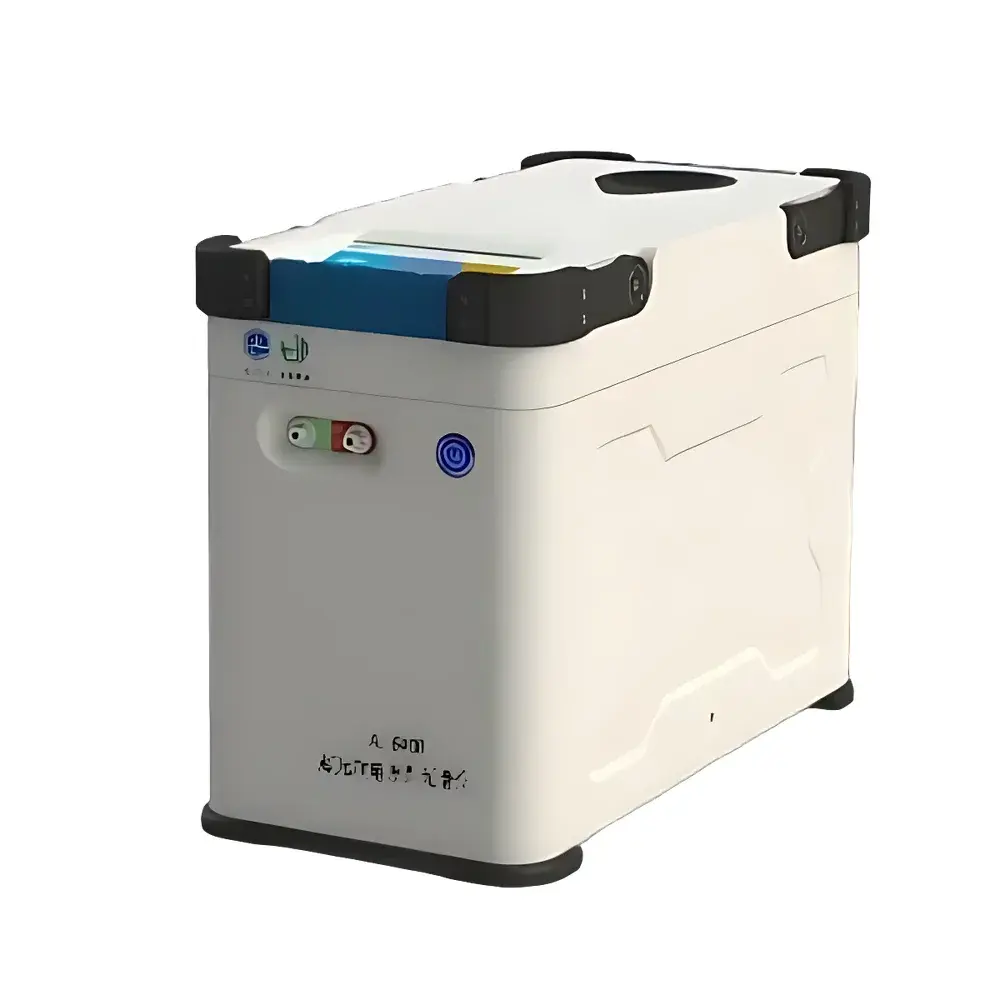
Anjie AJ-6400 Automated Glow Discharge Atomic Emission Spectrometer
| Brand | Anjie |
|---|---|
| Origin | Shanghai, China |
| Model | AJ-6400 |
| Target Analytes | Thallium (Tl), Lithium (Li) |
| Response Time | ≤2 min |
| Power Supply | Integrated Rechargeable Li-ion Battery (≥12 h continuous operation) |
| Operating Pressure | Ambient Atmospheric Pressure |
| Sample Introduction | Direct Liquid Injection (No Pretreatment Required) |
| Data Storage Capacity | >2000 Records with Real-time Spectral Display |
| Connectivity | USB for Data Export & Firmware Update |
| Compliance | Designed for Field Deployment under ISO/IEC 17025-aligned QA/QC Practices |
Overview
The Anjie AJ-6400 Automated Glow Discharge Atomic Emission Spectrometer is a field-deployable analytical instrument engineered for rapid, on-site quantification of thallium (Tl) and lithium (Li) in aqueous environmental and industrial samples. It employs liquid cathode glow discharge atomic emission spectroscopy (LC-GD-AES), a low-power, atmospheric-pressure plasma excitation technique that generates stable microplasma directly within the sample solution. Unlike conventional graphite furnace or ICP-based methods, LC-GD-AES eliminates the need for nebulization, plasma gas supply, high-voltage RF generators, or vacuum systems—enabling robust, battery-powered operation in uncontrolled field environments. The system operates without chemical reagents beyond minimal acid stabilization (if required), and delivers quantitative results within two minutes per sample, making it uniquely suited for emergency response, routine surveillance, and high-frequency monitoring in resource-constrained settings.
Key Features
- Atmospheric-pressure liquid cathode glow discharge source: No external gas cylinders, no vacuum pumps, no high-frequency power supplies—reducing logistical burden and operational complexity.
- Integrated rechargeable lithium-ion battery: Supports ≥12 hours of continuous analysis on a single charge; enables true off-grid deployment in remote or disaster-affected zones.
- Touchscreen-driven embedded operating system: Fully autonomous operation—no external PC required for measurement initiation, calibration, or result interpretation.
- Direct liquid sampling: Aqueous samples introduced via syringe or capillary; no digestion, filtration, or dilution necessary for most matrices (e.g., surface water, leachates, process effluents).
- Pre-loaded calibration libraries: Factory-established calibration curves for Tl and Li; user-configurable curve generation using standard addition or multi-point calibration protocols.
- Real-time spectral visualization: On-device display of emission peaks at characteristic wavelengths (e.g., Tl I 377.57 nm, Li I 670.78 nm), supporting immediate spectral validation and interference assessment.
- Embedded data management: Stores >2000 measurement records—including intensity values, peak area integrals, calibration metadata, and timestamped spectral snapshots—with CSV export via USB interface.
Sample Compatibility & Compliance
The AJ-6400 is validated for use with unpreserved or nitric-acid-preserved water samples (pH 2–8) from municipal wastewater, mining runoff, battery recycling streams, electroplating baths, and metallurgical process waters. It complies with fundamental performance expectations outlined in EPA Method 200.7 (for ICP-AES comparability) and ASTM D5673 (Standard Guide for Determination of Metals in Water by Optical Emission Spectrometry), though its LC-GD-AES architecture falls outside the scope of formal method certification due to its novel platform classification. Instrument design adheres to IEC 61326-1 (EMC for laboratory equipment) and IEC 61010-1 (safety requirements for electrical equipment). Data integrity safeguards—including immutable timestamps, operator ID logging, and audit-trail-capable firmware—support alignment with GLP and ISO/IEC 17025 documentation requirements during field audits.
Software & Data Management
The embedded firmware provides a deterministic, menu-driven interface with role-based access control (operator/admin modes). All calibration parameters, measurement logs, and spectral files are stored in a write-protected internal flash memory partition. USB connectivity supports secure bulk export of structured CSV datasets containing analyte concentration, integration window, background correction mode, and raw intensity ratios. Firmware updates are delivered as signed binary packages; rollback capability ensures traceable version control. Remote diagnostic telemetry (enabled via optional cellular modem module) transmits non-sensitive operational metrics—such as plasma stability index, battery health status, and lamp lifetime counters—to authorized service portals, facilitating predictive maintenance and minimizing downtime.
Applications
- Emergency response: Rapid screening of Tl contamination following industrial spills or illicit waste dumping—critical given Tl’s acute toxicity (EPA IRIS oral RfD = 0.0001 mg/kg/day).
- Battery manufacturing QC: In-line monitoring of Li concentration in electrolyte recovery loops and cathode slurry wash waters.
- Mining and smelting compliance: Field verification of Tl/Li discharge limits per local regulatory frameworks (e.g., China’s GB 3838-2002 Class III standards; EU WFD priority substance thresholds).
- Resource recovery optimization: Quantitative tracking of Li extraction efficiency in brine processing or spent LIB leaching solutions.
- Academic and method development labs: Platform for fundamental studies of solution-phase plasma–analyte interaction kinetics and spectral line broadening mechanisms under ambient conditions.
FAQ
Does the AJ-6400 require carrier gas or compressed air?
No. The liquid cathode glow discharge operates stably at ambient pressure using only the conductive properties of the aqueous sample itself.
Can it measure other elements beyond Tl and Li?
Currently, the optical path and firmware are optimized for Tl and Li emission lines. Future firmware releases may support additional alkali/alkaline earth elements (e.g., Na, K, Ca) pending validation studies.
What sample volume is required per analysis?
A minimum of 1.5 mL of homogenized liquid sample is sufficient for three replicate measurements.
Is method validation documentation available?
Yes—Anjie provides a Technical Validation Report detailing LOD/LOQ (Tl: 0.08 µg/L; Li: 0.12 µg/L), precision (RSD < 5% at 10× LOD), and matrix spike recovery (85–112%) across 12 representative water matrices.
How is calibration verified during extended field use?
Built-in check standards (certified reference solutions) can be run at user-defined intervals; drift compensation algorithms adjust quantification based on internal standard intensity normalization where applicable.







