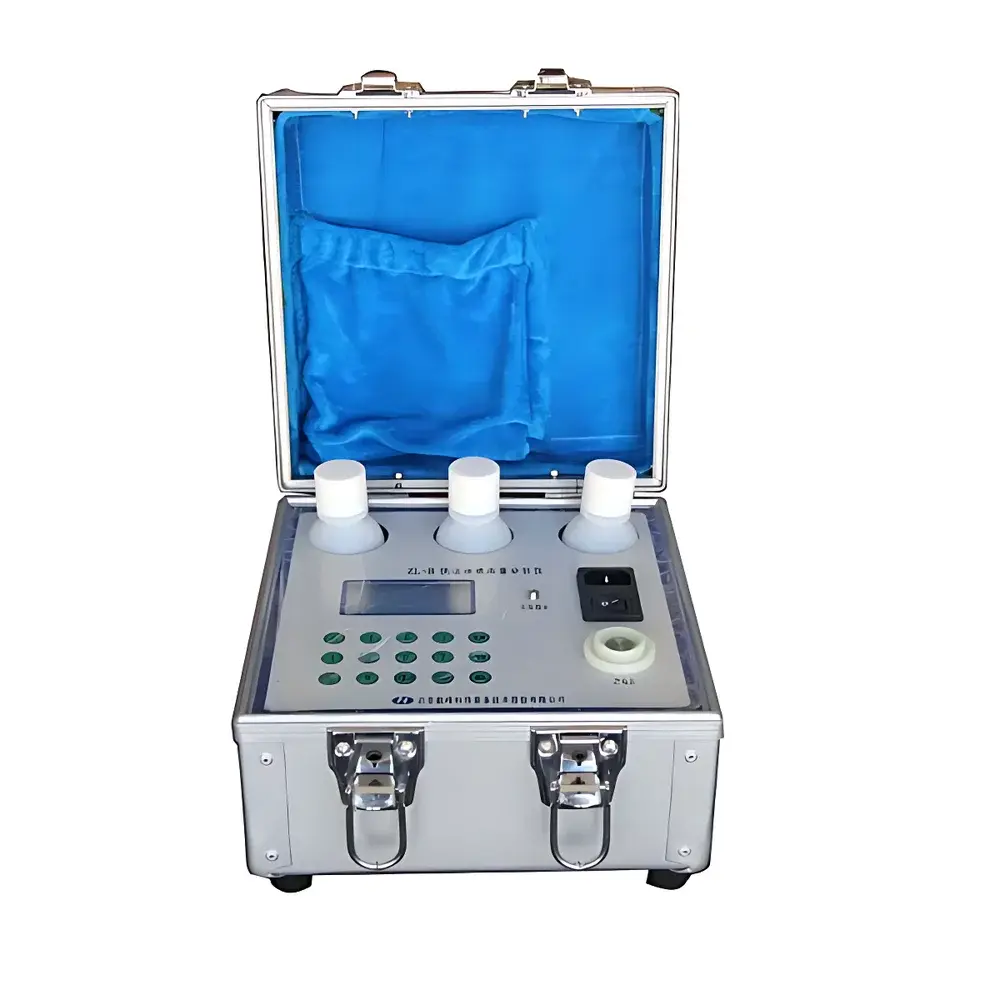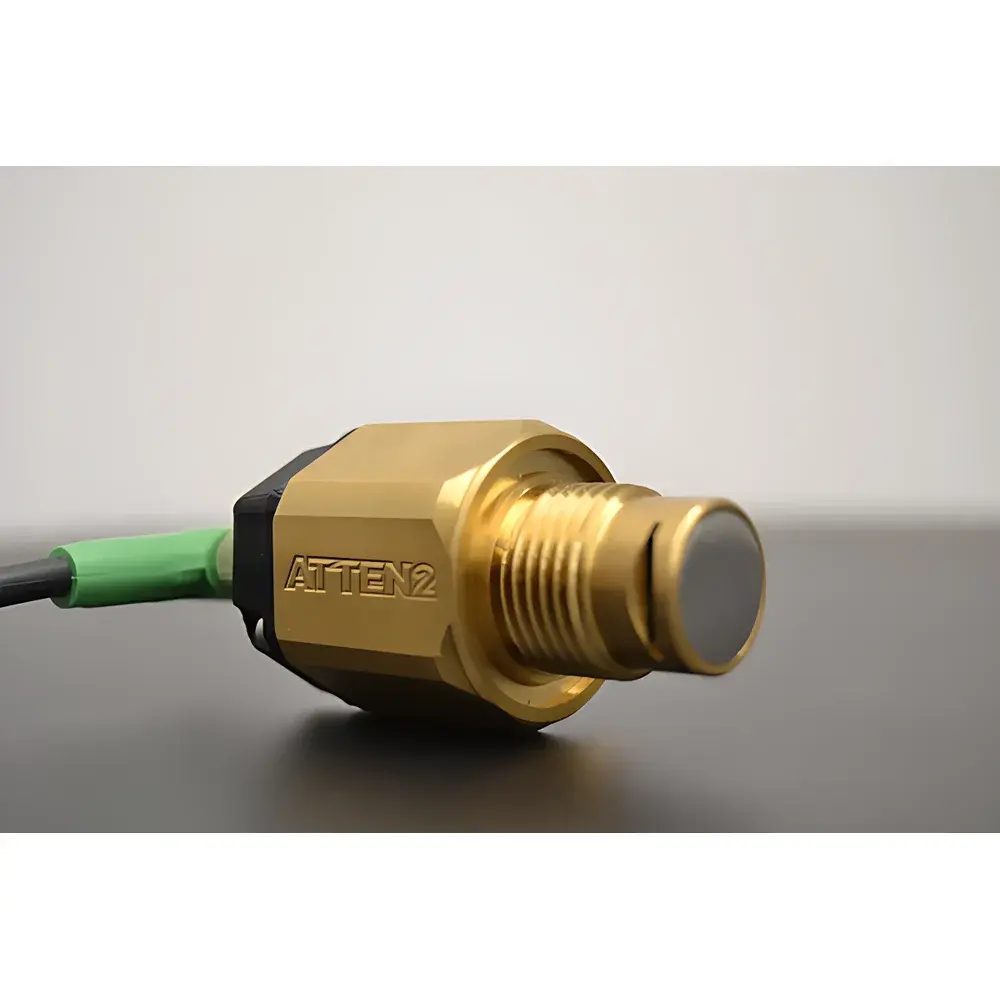
Ankersmid OilHealth Probe Online Lubricant Health Monitor
| Brand | Ankersmid |
|---|---|
| Origin | Germany |
| Model | OilHealth Probe |
| Type | Online Instrument |
| Application | Lubricating Oil Condition Monitoring |
| Core Technology | Multi-parameter Spectroscopic Analysis (FTIR + Electrochemical RULER + Viscosity Correlation) |
| Compliance Context | Designed for ISO 4406, ASTM D7883 (RULER), ASTM E2412 (FTIR), and OEM lubricant life extension protocols |
Overview
The Ankersmid OilHealth Probe is an industrial-grade, permanently installed online lubricant health monitoring system engineered for continuous, real-time assessment of in-service oil condition in critical rotating equipment—including gas turbines, gearboxes, hydraulic systems, and compressors. Unlike single-parameter sensors, the OilHealth Probe integrates three complementary analytical modalities: Fourier Transform Infrared (FTIR) spectroscopy for oxidation and nitration product quantification; electrochemical RULER (Remaining Useful Life Evaluation Routine) for antioxidant depletion profiling; and algorithmic viscosity trend correlation derived from dielectric and thermal response signatures. These data streams converge within a proprietary fusion engine to compute a dimensionless Oil Health Index (OHI), normalized from 0 (fully degraded) to 100 (baseline new oil), enabling objective, quantitative tracking of lubricant aging kinetics. The system operates without oil extraction or laboratory intervention, delivering measurement updates at user-configurable intervals (1–24 hours), and is designed for integration into plant-wide CMMS and predictive maintenance platforms.
Key Features
- True online operation: No sample extraction, no bypass loops—direct in-line installation compatible with standard ½” NPT or DIN 259/2999 process connections.
- Multi-physical sensing architecture: Simultaneous acquisition of FTIR absorbance spectra (4000–600 cm⁻¹), RULER oxidation induction time (OIT) equivalents, and dynamic viscosity proxies via capacitive-dielectric coupling.
- Oil Health Index (OHI) algorithm: Patented multivariate regression model trained on >12,000 field-collected oil samples across mineral, PAO, and ester-based formulations; validated per ISO 17359:2014 for condition monitoring instrumentation.
- Ruggedized industrial design: IP66-rated stainless-steel housing (AISI 316L), operating temperature range −20 °C to +80 °C, and pressure rating up to 10 bar (gauge).
- Embedded diagnostics and self-calibration: Onboard reference cell verification, spectral drift compensation, and automatic moisture interference correction per ASTM D664 methodology.
- Secure data interface: Dual-output architecture supporting Modbus TCP (for PLC/SCADA) and MQTT over TLS 1.2 (for cloud-based analytics); optional OPC UA server module available.
Sample Compatibility & Compliance
The OilHealth Probe is validated for use with turbine oils (ISO VG 32, 46, 68), hydraulic fluids (HL, HM, HVLP), gear oils (CLP, GL-5), and synthetic compressor lubricants (polyalkylene glycols, diesters). It does not require fluid-specific calibration kits—its adaptive baseline learning mode accommodates formulation shifts during oil top-up or partial drain events. Regulatory and standards alignment includes support for ISO 23775 (condition-based maintenance), ISO 12176 (oil analysis reporting), and compliance-ready audit trails meeting GLP/GMP documentation requirements. While not a standalone replacement for accredited lab testing, it satisfies the “continuous trending” requirement under ISO 55001 Asset Management and supports root-cause analysis workflows aligned with ISO 14224 for reliability data collection.
Software & Data Management
The system ships with OilHealth Insight™ Desktop Suite (Windows 10/11), providing time-series OHI visualization, spectral overlay comparison, degradation rate forecasting (linear and exponential models), and automated alerting (email/SNMP) upon threshold breach (e.g., OHI 0.8 units/week). Raw sensor outputs—including full interferograms, RULER peak integrals, and dielectric permittivity logs—are exportable in CSV and HDF5 formats for third-party statistical process control (SPC) or machine learning pipelines. All software modules adhere to FDA 21 CFR Part 11 requirements: electronic signatures, role-based access control, immutable audit logs, and revision-controlled firmware update history.
Applications
- Predictive maintenance scheduling for wind turbine gearboxes, where oil change intervals are extended from 12 to 24+ months based on OHI decay kinetics rather than fixed calendar time.
- Early detection of micro-dieseling in high-pressure hydraulic systems through nitration trend acceleration, preceding varnish formation by ≥300 operational hours.
- OEM warranty compliance monitoring for gas turbine packages, satisfying GEK 32568 and Siemens TL-10002 lubricant health reporting mandates.
- Refinery lube blending unit QC: real-time validation of additive package stability during storage and transfer.
- Marine propulsion systems: corrosion risk assessment via combined acid number proxy and oxidation index deviation patterns.
FAQ
Does the OilHealth Probe replace laboratory oil analysis?
No—it complements scheduled lab testing by providing high-frequency trending data. ASTM D7918 recommends hybrid monitoring strategies: online sensors for early anomaly detection, and periodic lab analysis (e.g., elemental spectroscopy, PQ index) for root-cause confirmation.
Can it be installed on used equipment with existing oil?
Yes. The probe performs automatic baseline adaptation during the first 72 hours of operation and requires no pre-conditioning or oil flush.
What maintenance does the sensor itself require?
Zero routine maintenance. The optical window is self-cleaning via ultrasonic vibration (activated weekly), and the electrochemical cell has a service life exceeding 5 years under typical industrial duty cycles.
Is cybersecurity certification available?
The device holds IEC 62443-4-2 SL2 certification for embedded device security and undergoes annual penetration testing per NIST SP 800-82 guidelines.
How is accuracy verified in-field?
Via traceable reference oil challenges (Ankersmid Calibration Kit CK-OH-01) and cross-validation against paired offline FTIR/RULER instruments per ISO 17025-accredited laboratories.