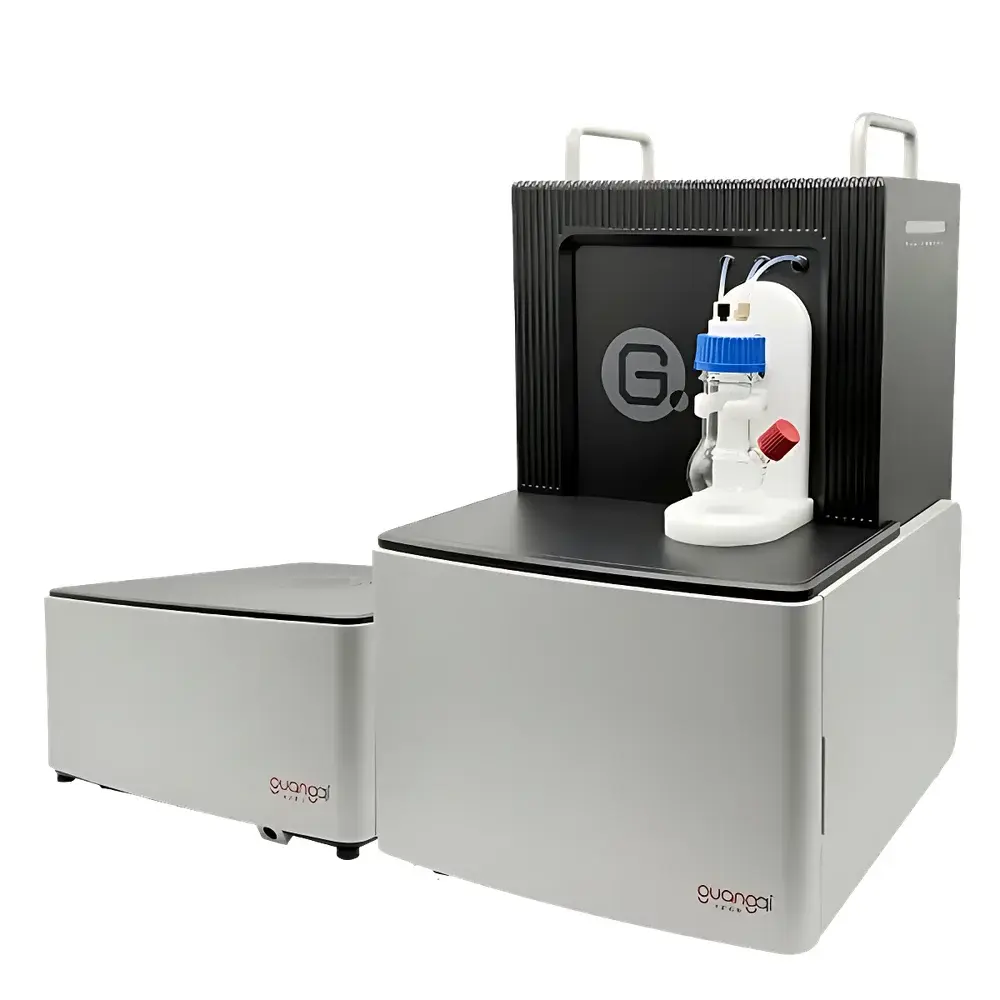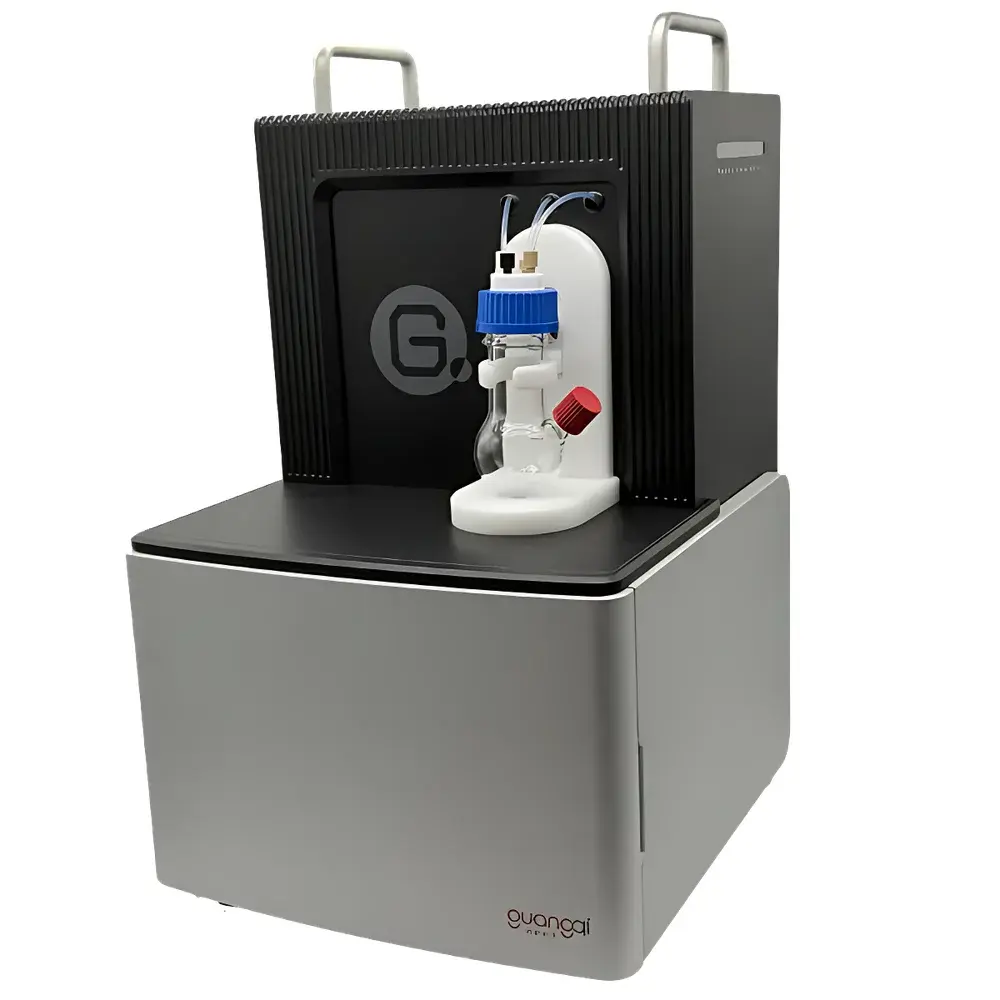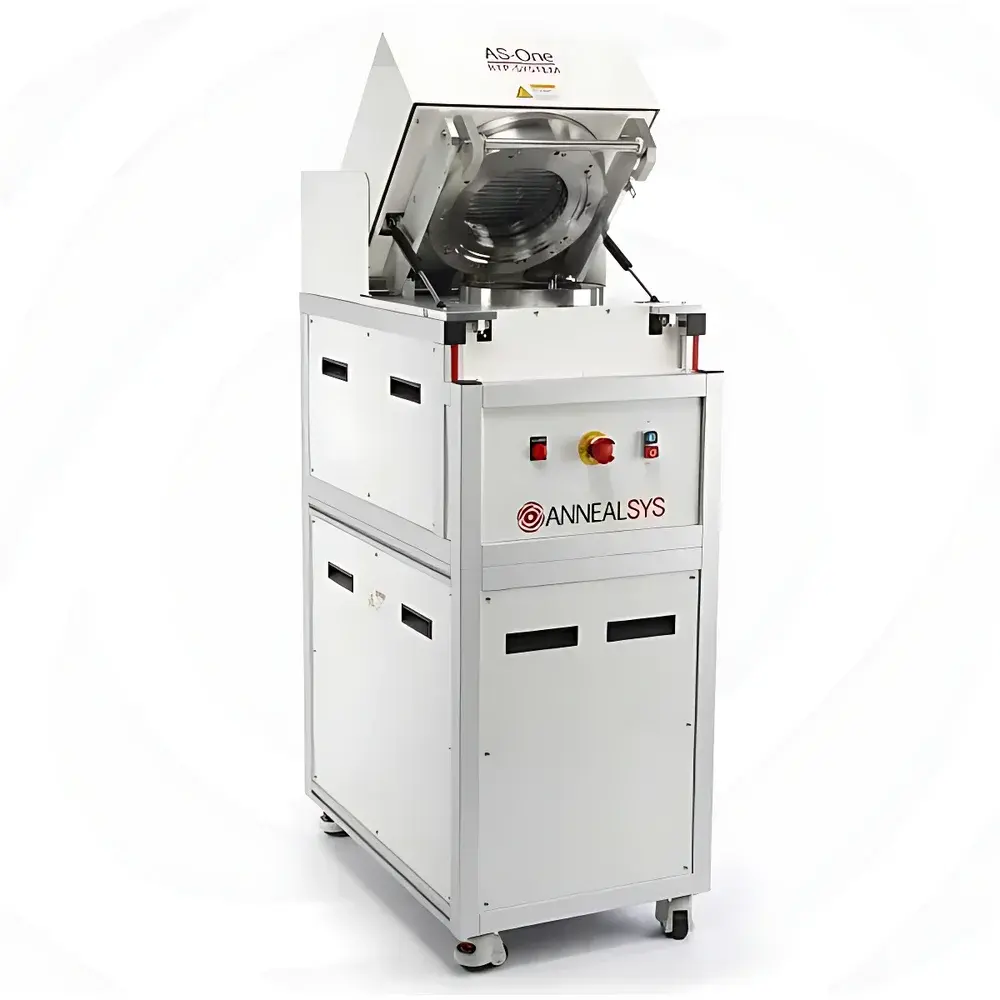
Annealsys AS-ONE 150 High-Vacuum Rapid Thermal Annealing Furnace
| Brand | Annealsys |
|---|---|
| Origin | France |
| Model | AS-ONE 150 |
| Instrument Type | High-Vacuum Rapid Thermal Annealing Furnace |
| Maximum Sample Diameter | 150 mm (6-inch wafers) |
| Temperature Range | Up to 1200 °C (standard), up to 1300 °C (optional high-temp configuration) |
| Max Heating Rate | 160 K/s |
| Max Cooling Rate | 240 K/s |
| Temperature Accuracy | ±1% of setpoint |
| Temperature Uniformity | ±1% across wafer surface |
| Vacuum Base Pressure | 1 × 10⁻⁶ Torr (with turbomolecular pump) |
| Process Gas Control | 5-channel MFC system |
| Lamp Configuration | 18 high-power infrared lamps (34 kW total) |
| Chamber Dimensions | Ø200 mm × 25 mm |
| Temperature Sensing | Dual-range pyrometry (400–1100 °C and 400–1500 °C) + K-type thermocouple |
| Control System | Digital PID with real-time thermal profiling |
| Compliance | Designed for ISO/IEC 17025-compliant labs |
Overview
The Annealsys AS-ONE 150 is a high-vacuum rapid thermal annealing (RTA) furnace engineered for precision semiconductor process development and R&D in academic, government, and industrial cleanroom environments. Based on resistive infrared heating with optimized lamp-array geometry and dynamic thermal feedback, the system delivers controlled, repeatable thermal cycles under ultra-low-pressure conditions (down to 1 × 10⁻⁶ Torr). Its core architecture enables transient thermal processing—critical for dopant activation, silicide formation, oxide growth, and 2D material synthesis—without inducing wafer warpage or interfacial diffusion commonly observed in conventional tube furnaces. The AS-ONE 150 supports 150 mm (6-inch) diameter substrates, making it suitable for both legacy device fabrication and emerging applications such as graphene CVD, carbon nanotube nucleation, and perovskite crystallization.
Key Features
- High-power infrared lamp array: 18 individually controllable lamps delivering up to 34 kW total radiant power, enabling heating rates up to 160 K/s and cooling rates up to 240 K/s.
- Dual-mode temperature monitoring: Integrated broadband pyrometer (400–1500 °C range) complemented by K-type thermocouple for cross-validated thermal profiling and closed-loop control.
- Modular vacuum architecture: Standard configuration includes dry scroll pump (10⁻² Torr base) and optional turbomolecular pumping system (10⁻⁶ Torr base), fully compatible with bake-out protocols and residual gas analysis integration.
- Precision gas delivery: Five independent mass flow controllers (MFCs) support sequential or simultaneous introduction of inert (N₂, Ar), reactive (O₂, NH₃, H₂), or dopant precursor gases beneath quartz viewport—enabling RTP, RTO, nitridation, sulfidation, and selenization processes.
- Thermal uniformity engineering: Optimized lamp spatial distribution and reflective cavity design ensure ±1% temperature uniformity across full 150 mm wafers at steady state and during ramp phases.
- Digital PID controller with real-time waveform editing: Enables user-defined thermal recipes—including multi-step ramps, plateaus, and dwell times—with sub-second temporal resolution and data logging at 10 Hz.
Sample Compatibility & Compliance
The AS-ONE 150 accommodates standard 150 mm (6-inch) silicon, SiC, GaN, sapphire, quartz, and metal-coated wafers. Substrate thickness ranges from 200 µm to 1.5 mm are supported without mechanical modification. The chamber’s quartz viewport allows in-situ optical monitoring and optional integration with ellipsometers or reflectometers. From a regulatory standpoint, the system is designed to meet mechanical safety requirements per EN 61000-6-2/6-4 and electromagnetic compatibility standards. When operated with validated software modules (e.g., optional FDA 21 CFR Part 11-compliant firmware), it supports audit-ready electronic records, user access control, and change-tracking logs required for GLP and GMP environments. It is routinely deployed in laboratories adhering to ISO/IEC 17025 accreditation frameworks for materials characterization and process validation.
Software & Data Management
The furnace operates via Annealsys’ proprietary RTAControl™ software suite, running on Windows-based industrial PCs. The interface provides real-time visualization of temperature profiles, lamp power distribution, vacuum pressure trends, and gas flow dynamics. All process parameters—including ramp rate, hold time, ambient pressure, and atmosphere composition—are stored in structured SQLite databases with timestamped metadata. Export formats include CSV, XML, and HDF5 for post-processing in MATLAB, Python (NumPy/Pandas), or JMP. Optional API support enables integration into factory automation systems (SECS/GEM) and MES platforms. For quality-critical applications, an upgrade path exists to 21 CFR Part 11-compliant operation, including electronic signatures, role-based permissions, and immutable audit trails.
Applications
- Rapid thermal annealing (RTA) for dopant activation in CMOS, FinFET, and nanowire devices.
- Rapid thermal oxidation (RTO) of ultrathin gate oxides with precise stoichiometric control.
- Formation of low-resistance metal silicides (NiSi, CoSi₂, TiSi₂) and germanosilicides.
- Nitridation and oxynitridation of high-k dielectrics (e.g., HfO₂, Al₂O₃) for interface trap passivation.
- Sulfidation and selenization of transition metal dichalcogenides (MoS₂, WSe₂) and perovskite precursors.
- Graphene synthesis via thermal decomposition of SiC or catalytic CVD on Cu/Ni foils.
- Crystallization of amorphous silicon, IGZO, and phase-change memory (PCM) alloys.
- Densification of sol-gel derived thin films and ALD-seeded nanoporous layers.
FAQ
What vacuum level can the AS-ONE 150 achieve?
With the standard dry pump, base pressure reaches ≤1 × 10⁻² Torr; with the optional turbomolecular pump package, ultimate pressure is ≤1 × 10⁻⁶ Torr.
Is the system compatible with ozone or chlorine-containing process gases?
Yes—quartz-lined gas manifolds and corrosion-resistant MFCs allow safe handling of O₃, Cl₂, and NF₃ when used with appropriate exhaust scrubbing and safety interlocks.
Can I perform in-situ optical measurements during annealing?
Yes—the fused silica viewport (UV-VIS-NIR transparent) supports integration with spectroscopic ellipsometers, reflectometers, or PL imaging systems.
Does the AS-ONE 150 support automated recipe transfer between tools?
Yes—RTAControl™ supports import/export of thermal profiles in industry-standard XML format, enabling cross-platform reproducibility across AS-ONE series tools.
What maintenance intervals are recommended for lamp arrays and vacuum components?
Lamp lifetime exceeds 2,000 hours under typical RTA cycling; vacuum pumps require oil changes every 3,000 operating hours (dry pump) or annual bearing inspection (turbopump).