
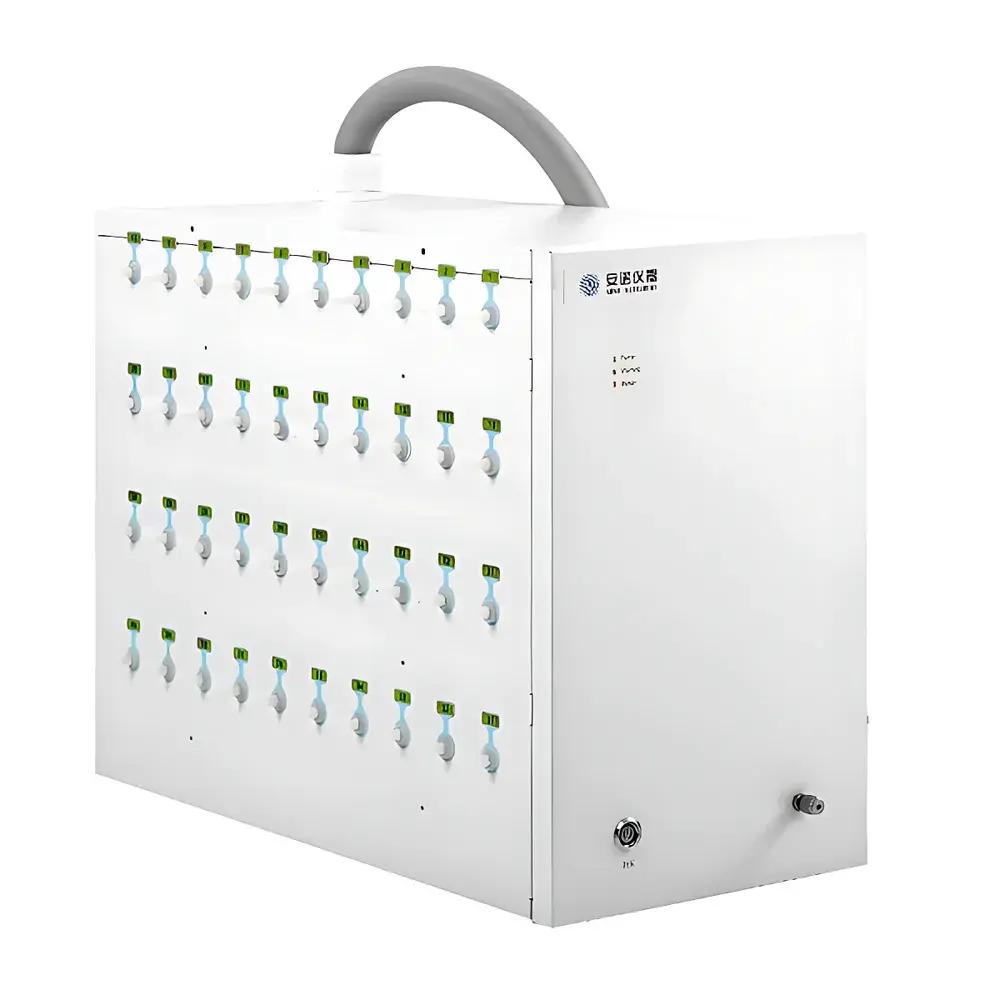
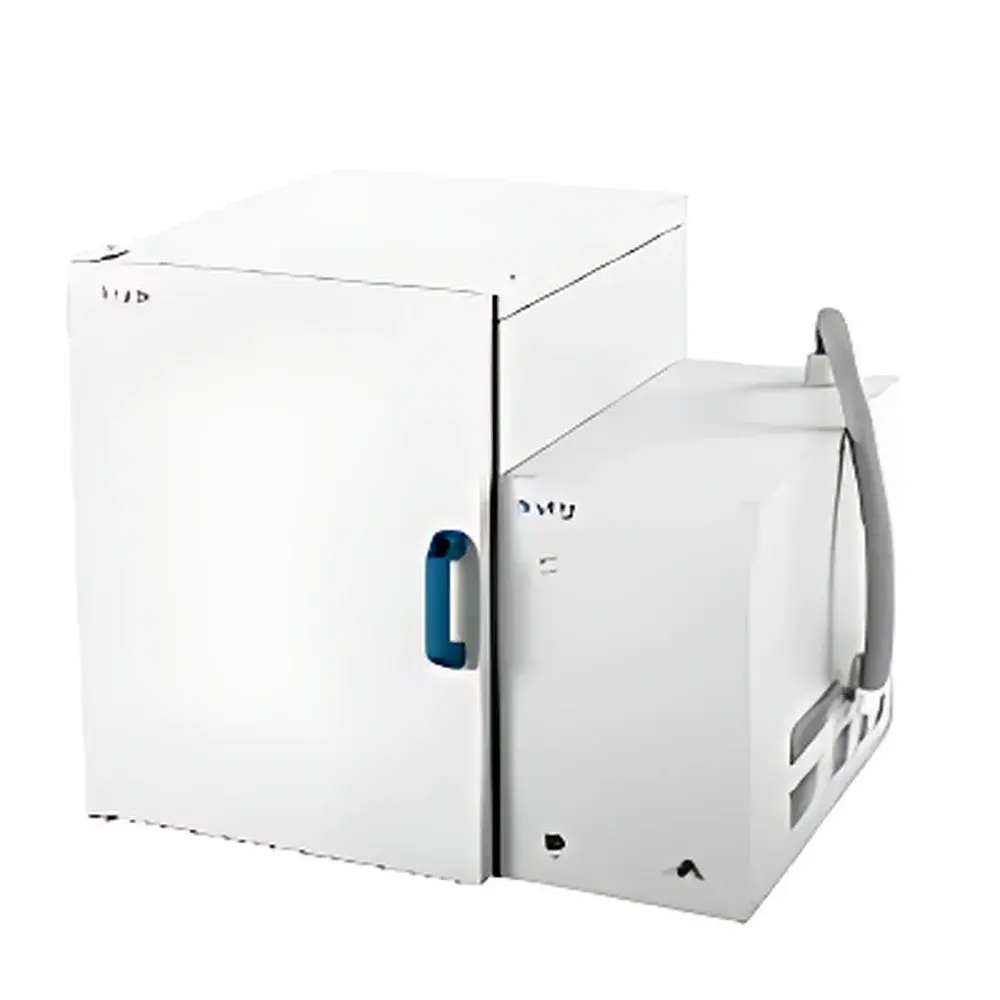
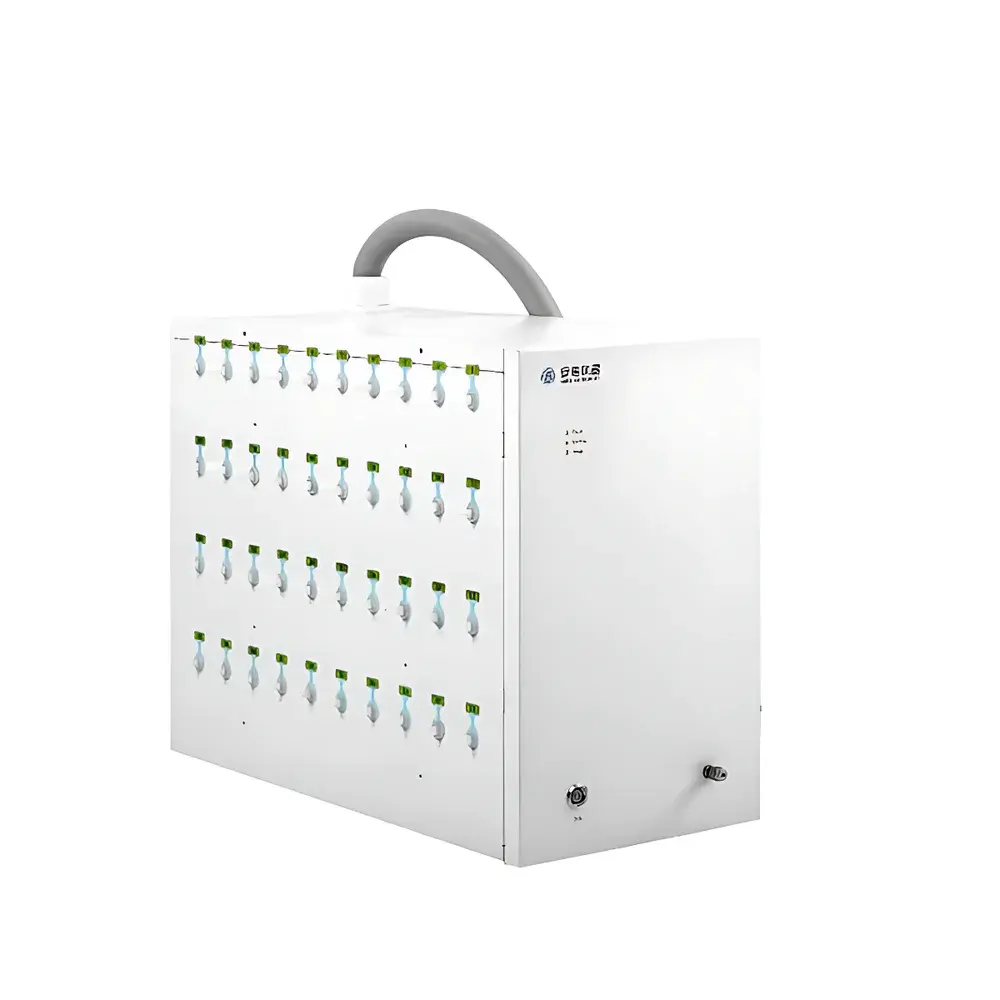
Annuo GAS-3519-XS Automated Gas Bag Autosampler
| Brand | Annuo |
|---|---|
| Origin | Henan, China |
| Manufacturer Type | Authorized Distributor |
| Product Category | Domestic |
| Model | GAS-3519-XS |
| Instrument Type | Gas Chromatography (GC) Gas Bag Autosampler |
| Maximum Sample Volume | 5 mL |
| Minimum Sample Volume | 1 mL |
| Quantitative Loop Volume Range | 0.05–5 mL |
| Positioning Accuracy | RSD < 0.5% for total hydrocarbon and methane peak areas across 10 consecutive injections |
| Control Method | PC-based host software control |
| Needle/Line Cleaning | Integrated pneumatic line purge with inert gas |
| Repeat Injection Count | 1–99 times per sample |
| Sample Tray Capacity | 11 / 28 / 40 positions (expandable to 88) |
| Quantitative Loop & Line Heating Range | Ambient to 150 °C |
| Sample & Standard Dilution Ratio | Up to 1:200 (customizable) |
| Sampling Pump | Max flow 6 L/min |
| Sampling Time Parameters | Max draw time 99 s, max equilibration time 99 s, max purge time 600 s |
| Tubing Material | PTFE |
| Valve Actuator | PEEK body with PI (polyimide) rotor |
| Data Interfaces | USB, Ethernet (RJ45), RS-232 |
Overview
The Annuo GAS-3519-XS is a fully automated, thermally controlled gas bag autosampler engineered for precise, reproducible introduction of gaseous samples into gas chromatography (GC) systems. It operates on a quantitative loop injection principle—drawing sample from flexible gas sampling bags or syringes, conditioning the entire fluidic path via active heating, and delivering metered volumes into the GC inlet with minimal carryover. Designed specifically for environmental air monitoring, landfill gas analysis, biogas composition profiling, and industrial emissions testing, the GAS-3519-XS eliminates manual handling of volatile organic compounds (VOCs), total hydrocarbons (THC), methane (CH₄), and non-methane hydrocarbons (NMHC). Its architecture integrates pneumatic actuation, closed-loop thermal management, and deterministic valve sequencing to ensure compliance with method requirements such as EPA Method TO-15, ASTM D6420, and ISO 16017-1.
Key Features
- Thermally managed quantitative loop and sample lines (ambient to 150 °C), preventing condensation and adsorption losses for high-boiling-point analytes.
- Independent, programmable purge cycles for each sample port using inert carrier gas—eliminating cross-contamination between sequential analyses.
- Integrated standard dilution module enabling on-the-fly preparation of calibration standards at ratios up to 1:200, supporting multi-level calibration without manual intervention.
- High-integrity fluidic path constructed entirely from PTFE tubing and PEEK/PI rotary valves—resistant to corrosion, permeation, and degradation by reactive gases including H₂S, SO₂, and halogenated VOCs.
- Modular tray design supporting 11-, 28-, or 40-position configurations, scalable to 88 positions via expansion modules—optimized for unattended overnight operation in regulated QC/QA laboratories.
- Intelligent over-concentration detection: automatically suspends injection, triggers GC oven ramping and column bake-out protocols upon detecting signal saturation—preventing column contamination and preserving analytical integrity.
- Multi-mode GC synchronization: supports interval-triggered, external TTL signal-controlled, and full PC-hosted operation via USB/Ethernet/RS-232 interfaces.
Sample Compatibility & Compliance
The GAS-3519-XS accepts standard gas sampling media including 0.5 L and 1 L Tedlar® or FlexFoil® bags, as well as 100 mL glass or stainless-steel syringes. All wetted surfaces meet U.S. EPA Compendium Method TO-15 material compatibility guidelines and conform to ISO 16017-1 specifications for VOC stability during storage and transfer. The system’s thermal control profile (±0.5 °C stability across 0–150 °C range) satisfies GLP/GMP traceability requirements when paired with validated instrument qualification protocols. Optional audit trail logging and electronic signature support align with FDA 21 CFR Part 11 readiness when integrated with compliant LIMS or chromatography data systems (CDS).
Software & Data Management
The included Windows-based host software provides intuitive workflow configuration—including sample position mapping, dilution factor assignment, injection sequence scheduling, and real-time status monitoring. It supports batch import/export of sample metadata via CSV and exports injection logs with timestamps, loop temperature, purge duration, and dilution settings. Raw acquisition parameters are stored in human-readable XML format for long-term archival and regulatory review. Software validation documentation (IQ/OQ/PQ templates) is available upon request for laboratory accreditation purposes (e.g., ISO/IEC 17025, CAP, CLIA).
Applications
- Regulatory air quality monitoring (ambient, stack, fugitive emissions)
- Landfill and wastewater treatment plant biogas composition analysis (CH₄, CO₂, H₂S, NH₃, siloxanes)
- Indoor air quality (IAQ) assessment per ISO 16000 series
- Process gas verification in petrochemical, semiconductor, and pharmaceutical manufacturing
- Method development and validation for GC-FID, GC-TCD, and GC-MS applications requiring sub-ppb sensitivity
- Automated calibration curve generation with dynamic standard dilution
FAQ
What gas sampling bags are compatible with the GAS-3519-XS?
Standard 0.5 L and 1 L Tedlar®, FlexFoil®, or aluminum-laminated gas bags with septum-sealed ports are supported. Syringe sampling (up to 100 mL) is also enabled via optional adapter.
Can the system be integrated with third-party GC instruments?
Yes—the GAS-3519-XS features universal TTL trigger input/output, analog voltage interface, and software-controllable relay outputs compatible with Agilent, Thermo Fisher, Shimadzu, PerkinElmer, and other major GC platforms.
Is the quantitative loop volume adjustable during runtime?
Loop volume selection is hardware-defined per installed loop (0.05, 0.1, 0.5, 1, 2, or 5 mL); however, software-controlled dilution allows effective delivery of sub-loop-volume equivalents (e.g., injecting 1 mL of 1:100 diluted sample yields 10 µL equivalent).
Does the system support 21 CFR Part 11 compliance?
While the base unit does not include embedded electronic signatures, its software architecture supports integration with validated CDS platforms that provide full Part 11 functionality—including role-based access control, audit trail generation, and secure electronic records.
What maintenance intervals are recommended for long-term reliability?
Valve rotor replacement is advised every 250,000 cycles; PTFE tubing should be inspected quarterly and replaced annually under continuous use. Full system performance verification (injection precision, thermal uniformity, leak integrity) is recommended semiannually per ISO/IEC 17025 Clause 6.4.10.




