
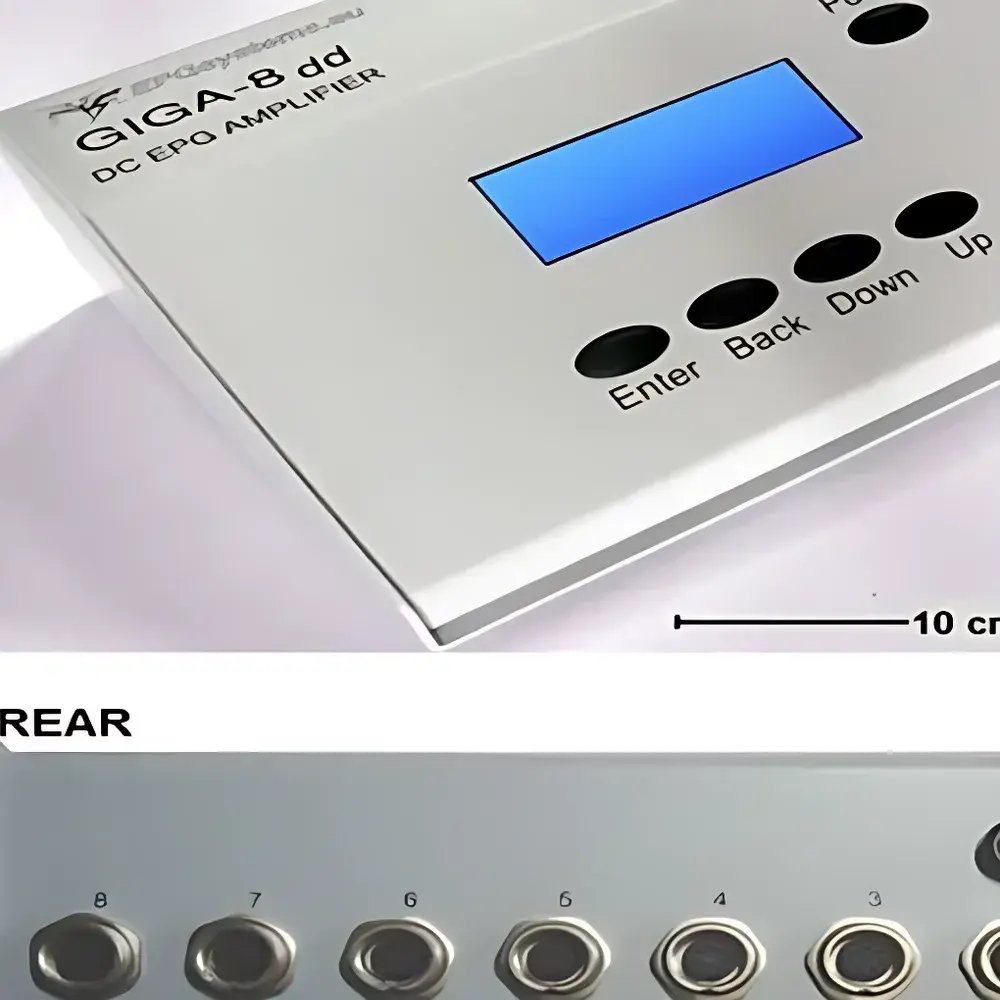
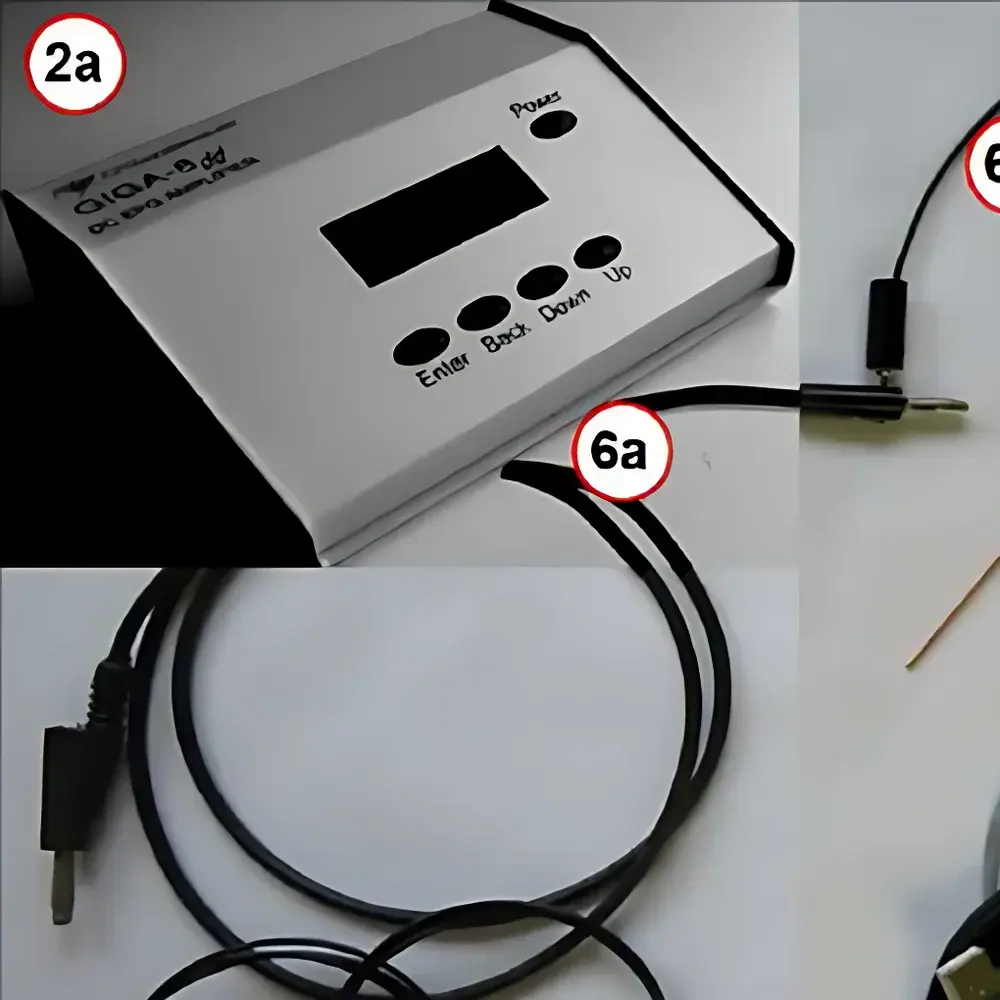
Anoxomat GIGA-8dd Eight-Channel Electrical Penetration Graph (EPG) System
| Brand | Anoxomat |
|---|---|
| Origin | Netherlands |
| Model | GIGA-8dd |
| Input Impedance | 1 GΩ |
| Input Current | <1 pA |
| Signal Gain | 50× to 100× |
| Calibration Pulse | −50 mV |
| Adjustable DC Offset Range | ±0.5 V |
| Maximum Output Voltage | ±5 V |
| Sampling Rate | 100 Hz |
| ADC Resolution | 14-bit |
| Power Supply | 220 VAC / ±8 VDC |
| Interface | USB-connected analog-to-digital converter |
Overview
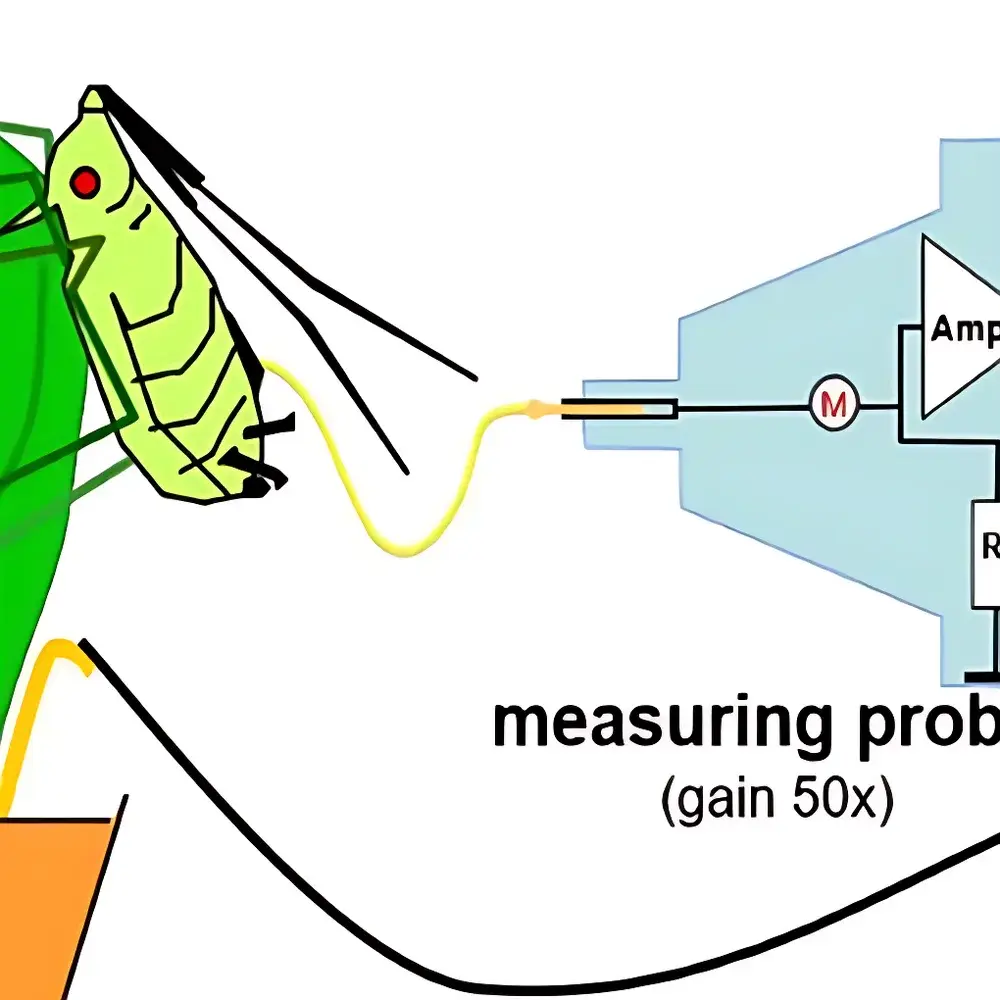
The Anoxomat GIGA-8dd Eight-Channel Electrical Penetration Graph (EPG) System is a precision electrophysiological measurement platform engineered for real-time, high-fidelity recording of stylet penetration and feeding behavior in phloem- and xylem-feeding hemipteran insects—particularly aphids, whiteflies, planthoppers, and psyllids. Based on the principle of direct electrical coupling between insect stylets and plant vascular tissues, the system detects minute voltage fluctuations generated during stylet insertion, salivation, ingestion, and pathway activities. Each channel operates independently with galvanically isolated amplification, enabling concurrent monitoring of up to eight individual insects on separate host plants under controlled environmental conditions. The GIGA-8dd adheres to the standardized EPG methodology first established by Tjallingii and is widely cited in peer-reviewed entomological and plant resistance literature as a gold-standard tool for quantifying insect–plant interaction dynamics at the cellular level.
Key Features
- Eight fully independent, electrically isolated channels—eliminating crosstalk and enabling true parallel acquisition
- Ultra-high-input-impedance preamplifiers (1 GΩ) with sub-picoampere input bias current (<1 pA), preserving signal integrity during low-current biological events
- Adjustable gain per channel (50× to 100×) and DC offset (±0.5 V), permitting fine-tuned optimization for diverse plant–insect combinations
- Integrated calibration pulse generator (−50 mV) for daily system verification and inter-laboratory data comparability
- Dedicated plant electrode interface with per-channel voltage regulation and shielded output routing to minimize electromagnetic interference
- USB-enabled 14-bit analog-to-digital conversion at 100 Hz sampling rate—sufficient temporal resolution to resolve waveform features such as E (phloem salivation), G (phloem ingestion), and H (xylem ingestion) waveforms
- Robust front-panel controls including channel selection, gain adjustment, calibration activation, and plant voltage tuning—designed for reproducible manual operation in growth chambers or greenhouse settings
Sample Compatibility & Compliance
The GIGA-8dd is validated for use with intact seedlings and mature plants across multiple families—including Brassicaceae, Solanaceae, Poaceae, and Fabaceae—supporting both detached leaf assays and whole-plant experiments. Insect subjects must be securely mounted using standard tungsten or platinum–iridium EPG probes affixed via conductive silver paint or low-resistance dental wax. The system complies with ISO/IEC 17025 general requirements for the competence of testing and calibration laboratories when operated within documented standard operating procedures (SOPs). While not inherently FDA 21 CFR Part 11–compliant, raw EPG waveform files (binary or ASCII) can be archived with full metadata (timestamp, channel ID, gain setting, calibration status) to support GLP/GMP-aligned experimental traceability in regulatory crop protection studies.
Software & Data Management
Data acquisition is performed via proprietary Windows-compatible software that supports real-time waveform visualization, synchronized multi-channel playback, and event annotation using standardized EPG waveform nomenclature (e.g., C, E1, E2, G, F, H). Export formats include .txt (tab-delimited), .csv, and .epg (binary), facilitating downstream analysis in MATLAB, R, or Python-based signal processing pipelines. The software logs all hardware parameter changes—including gain, offset, and calibration triggers—with timestamped audit trails. No cloud synchronization or remote access functionality is included; all data reside locally to ensure compliance with institutional data sovereignty policies and biosecurity protocols governing genetically modified or quarantine-regulated plant material.
Applications
- Phenotyping plant resistance mechanisms—including antibiosis, antixenosis, and tolerance—via quantitative analysis of non-probing duration, pathway phase frequency, and sustained phloem ingestion periods
- Evaluating transgenic or CRISPR-edited crop lines for altered sieve-element occlusion responses or phloem sap composition effects
- Characterizing mode-of-action of systemic insecticides and RNAi-based biopesticides on stylet navigation and feeding initiation
- Investigating vector competency of hemipterans for plant pathogens (e.g., luteoviruses, phytoplasmas) by correlating specific EPG waveform patterns with inoculation efficiency
- Supporting IPM program development through empirical validation of trap crop efficacy, reflective mulch interference, or semiochemical disruption of probing behavior
FAQ
What insect species are compatible with the GIGA-8dd system?
The system is optimized for Hemiptera with piercing–sucking mouthparts, especially Aphididae (e.g., Myzus persicae, Rhopalosiphum padi), Aleyrodidae, Cicadellidae, and Delphacidae. Non-hemipteran species require custom probe design and validation.
Is the GIGA-8dd suitable for xylem-feeding insects such as spittlebugs?
Yes—its wide DC offset range (±0.5 V) and high input impedance allow stable recording of high-resistance xylem potentials, though waveform interpretation requires species-specific reference libraries.
Can I integrate the GIGA-8dd with environmental control systems (e.g., climate chambers)?
Yes—the ±8 VDC auxiliary power input enables direct integration with chamber-mounted regulated DC supplies; all signal paths are shielded and grounded to suppress thermal and humidity-induced noise.
Does the system support automated event detection?
No—waveform classification remains manual or semi-automated via third-party tools (e.g., Stylet+ or EPG-Calc); the GIGA-8dd delivers raw, unprocessed electrophysiological signals to preserve analytical flexibility.
What maintenance is required for long-term reliability?
Annual verification of amplifier offset drift and input impedance using certified test fixtures is recommended; probe cleaning with ethanol and storage in desiccated environments prevents silver sulfide formation on electrode surfaces.




