
ANPRO SKJ-IA-01 Mycotoxin Rapid Quantitative Analyzer
| Brand | ANPRO |
|---|---|
| Origin | Sichuan, China |
| Manufacturer Type | Direct Manufacturer |
| Product Category | Domestic |
| Model | SKJ-IA-01 |
| Instrument Class | Multi-Mycotoxin Immunoassay Analyzer |
| Detection Principle | Colloidal Gold-Based Lateral Flow Immunoassay (Quantitative) |
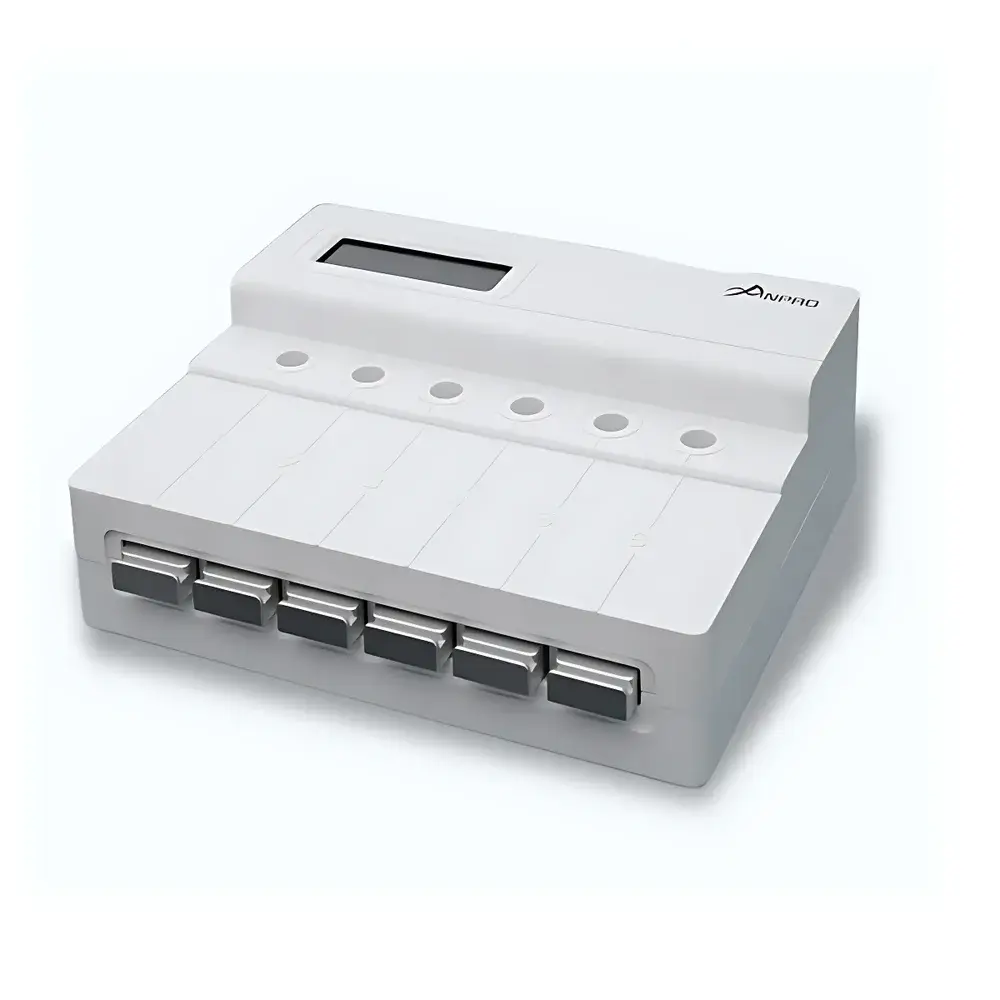
| Throughput | 6 samples per run |
| Assay Time per Sample | ≤10 min |
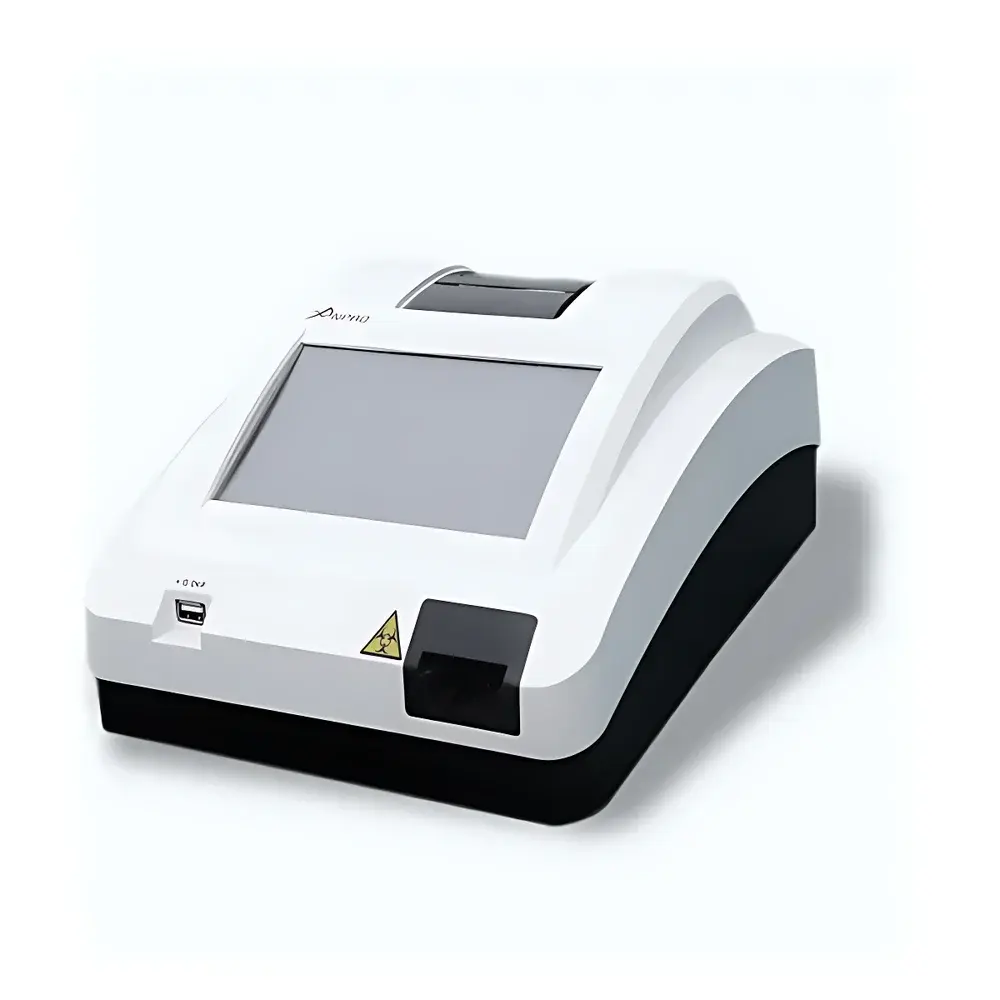
| Display | 7-inch capacitive touchscreen |
| Integrated Thermal Printer | Yes |
| Data Connectivity | Wi-Fi / USB / Optional 4G module |
| Regulatory Validation | Official evaluation reports issued by the State Grain Administration (China) for AFB1, DON, ZEN, and OTA |
Overview
The ANPRO SKJ-IA-01 Mycotoxin Rapid Quantitative Analyzer is an integrated, field-deployable immunoassay platform engineered for precise, on-site quantification of six major mycotoxins in cereals, oilseeds, feedstuffs, and raw agricultural commodities. Leveraging patented colloidal gold conjugate stabilization technology, the system overcomes traditional limitations of lateral flow assays—namely batch-to-batch variability and signal drift—enabling reproducible quantitative results with analytical performance validated against reference HPLC-FLD and LC-MS/MS methods. Unlike qualitative strip readers, the SKJ-IA-01 employs optical densitometry calibrated against pre-loaded, lot-specific calibration curves stored in encrypted firmware, eliminating manual standard handling and minimizing operator-induced error. Its core measurement principle relies on competitive inhibition immunoassay architecture: analyte in the sample competes with immobilized hapten-conjugates for binding sites on anti-mycotoxin antibodies labeled with colloidal gold nanoparticles. Signal intensity at the test line is inversely proportional to analyte concentration, enabling accurate quantitation across defined dynamic ranges without solvent extraction or derivatization.
Key Features
- Simultaneous quantification of six regulated mycotoxins: Aflatoxin B1 (AFB1), Deoxynivalenol (DON), Zearalenone (ZEN), Ochratoxin A (OTA), Fumonisin B1 (FB1), and T-2 toxin
- Complete assay cycle ≤10 minutes per sample—including incubation, strip insertion, and result generation
- Integrated 7-inch capacitive touchscreen interface with intuitive icon-driven workflow navigation
- Built-in thermal printer supporting GLP-compliant report generation with timestamp, location metadata (GPS-enabled optional), and instrument ID
- Onboard data storage (≥10,000 test records) with export via USB or secure wireless transmission to centralized food safety management platforms
- Pre-programmed, non-editable calibration curves for AFB1, DON, ZEN, and OTA—certified by the State Grain Administration of China (SGA)
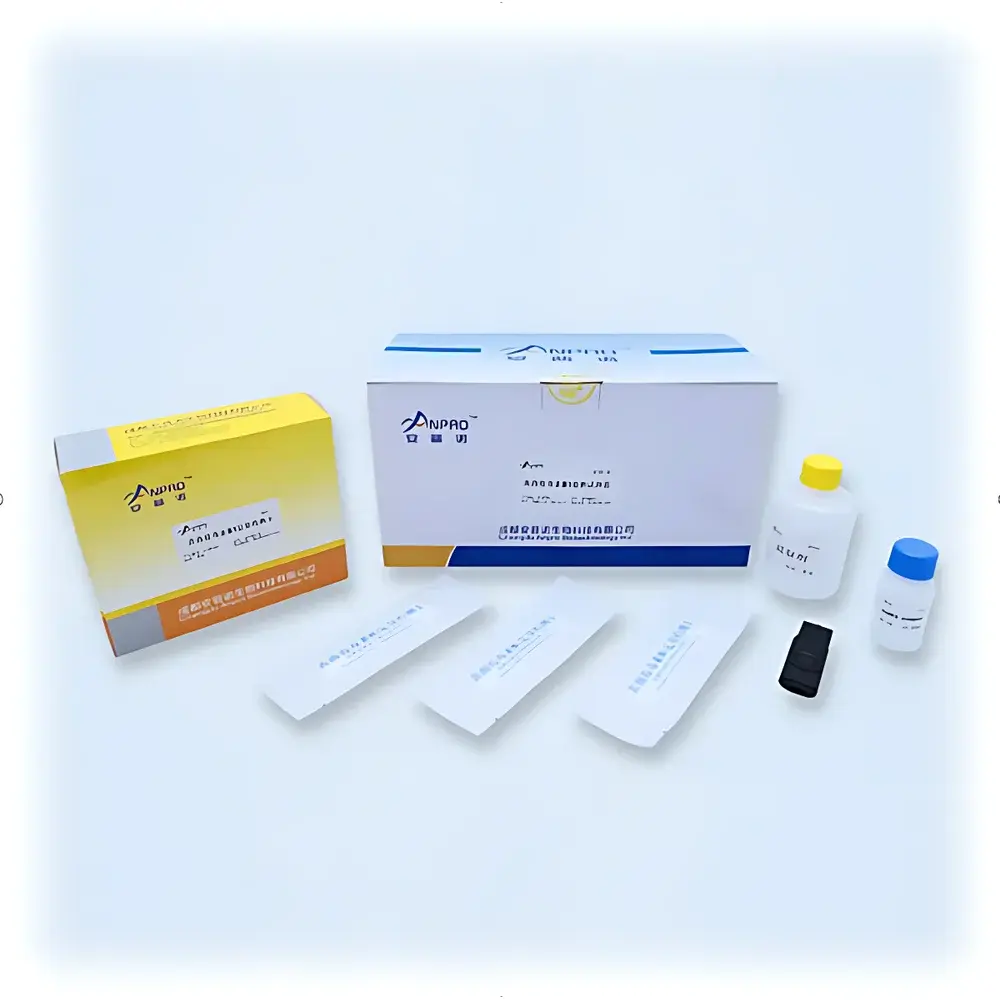
- Single-use, individually foil-packed test cassettes; stable at ambient temperature (15–30 °C) for ≥18 months
- No requirement for refrigerated reagents, organic solvents, or trained analytical chemists
Sample Compatibility & Compliance
The SKJ-IA-01 is validated for use with ground grain (corn, wheat, barley, rice), soybean meal, DDGS, peanut meal, and compound feed matrices following standardized extraction protocols (e.g., AOAC 2005.08, GB 5009.22–2016). Each assay meets minimum performance criteria established under ISO/IEC 17025-accredited verification procedures conducted by national grain testing laboratories. While not FDA 510(k)-cleared or CE-IVD marked, the system supports compliance with internal food safety programs aligned with GMP, HACCP, and FSMA Preventive Controls requirements. Test cassette manufacturing adheres to ISO 13485 quality management standards. All quantitative outputs include uncertainty estimation derived from inter-lot precision studies (CV ≤12% at mid-range concentrations).
Software & Data Management
Firmware v3.2+ supports audit-trail functionality compliant with ALCOA+ principles: all user actions (login, test initiation, result review, data export) are time-stamped and logged with immutable digital signatures. Data synchronization utilizes TLS 1.2 encryption for cloud upload to ANPRO’s FoodTrace™ interoperability gateway—a RESTful API-compatible hub enabling integration with ERP systems (e.g., SAP QM), LIMS platforms, and government food surveillance networks (e.g., China’s National Food Safety Risk Monitoring System). Raw optical density values, calibration status, and environmental sensor logs (ambient temperature/humidity) are retained alongside final concentration outputs.
Applications
- Port-of-entry screening for imported grains and oilseeds
- In-plant QC release testing at feed mills and flour mills
- Field-level monitoring by agricultural cooperatives and grain elevators
- Regulatory inspection teams conducting unannounced site audits
- Contract laboratories performing rapid triage prior to confirmatory LC-MS analysis
- Research applications requiring high-throughput mycotoxin profiling during breeding trials or storage stability studies
FAQ
Does the SKJ-IA-01 require external calibration or daily standardization?
No. Calibration curves are factory-loaded and cryptographically locked per test cassette lot number. The instrument auto-detects cassette type and applies the corresponding curve.
Can test results be exported in CSV or PDF format for regulatory submission?
Yes. Reports include sample ID, matrix type, detected concentration, LOD/LOQ flags, pass/fail status relative to Codex or national limits, and digital signature—exportable via USB or encrypted email.
Is GPS geotagging mandatory for data capture?
Geolocation is optional but enabled by default; it may be disabled in settings for facilities with strict IT policies.
What is the shelf life of unused test cassettes?
18 months when stored at 15–30 °C in original foil packaging; no refrigeration required.
How does the system handle matrix interference from highly pigmented or fatty samples?
Extraction protocols include dilution and cleanup steps specified in the operator manual; validation data demonstrate <15% recovery deviation across spiked fortified corn, wheat, and soy matrices.





