
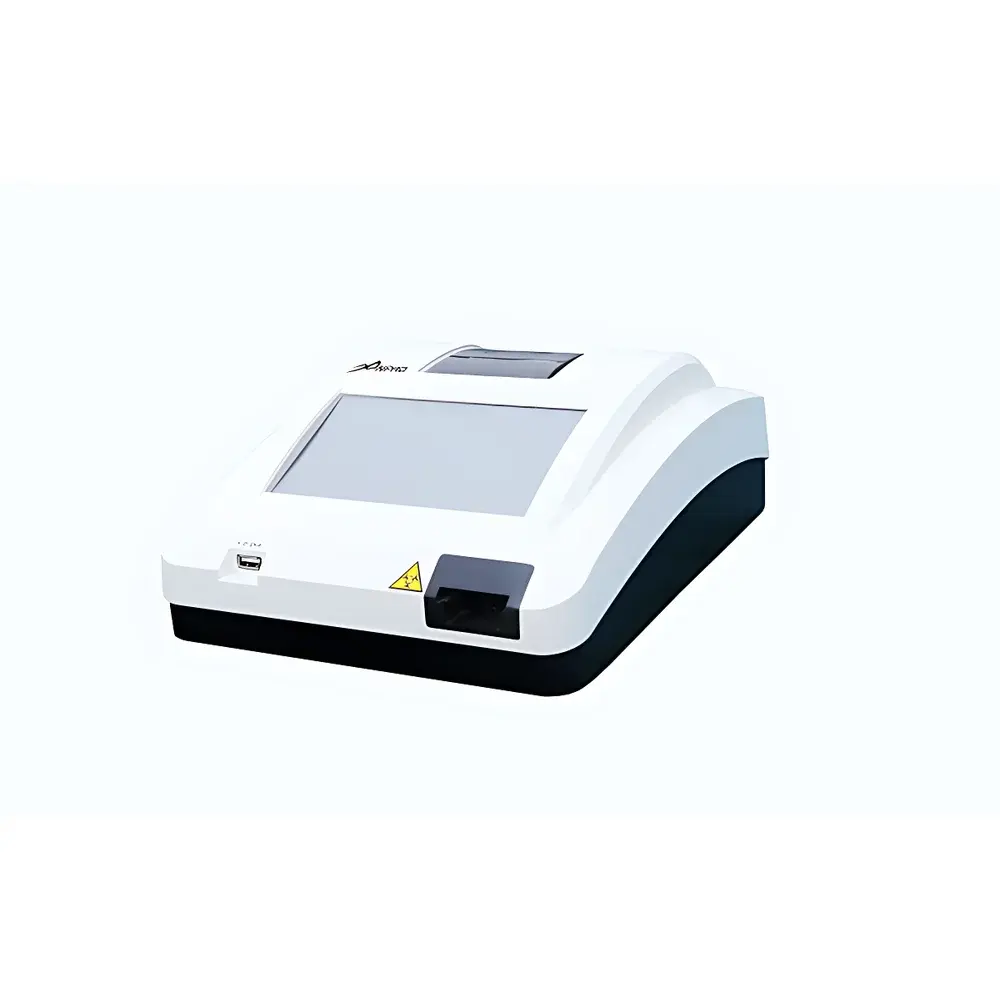
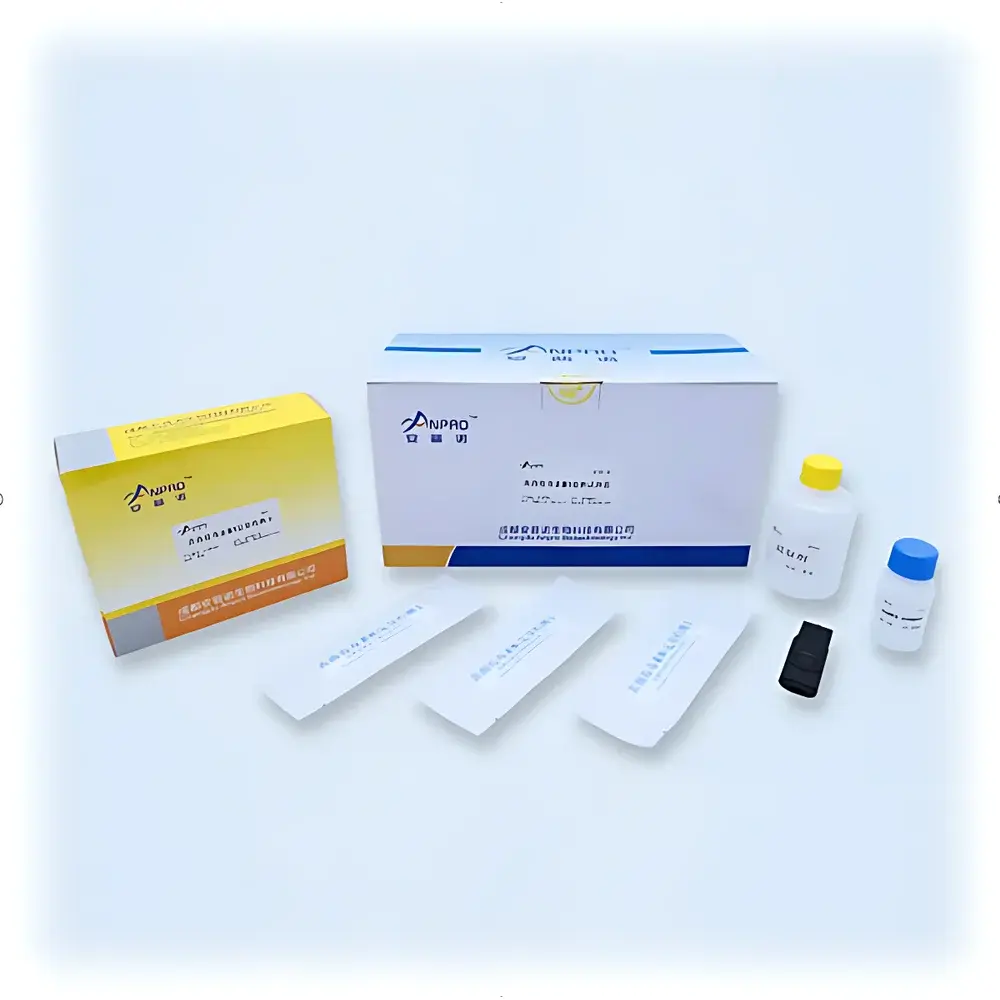
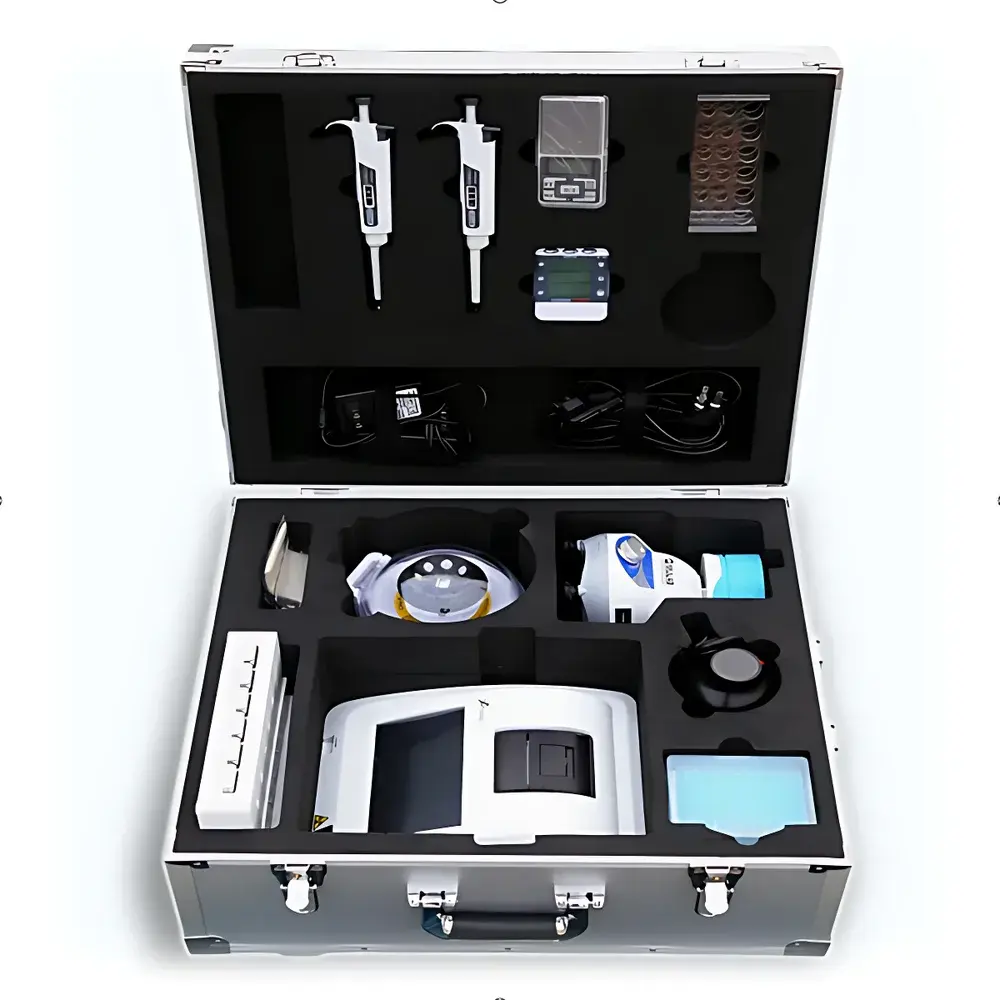
ANPRO SKJ-IA/01 Mycotoxin Rapid Quantitative Analyzer (Deoxynivalenol & Multi-Mycotoxin)
| Brand | ANPRO |
|---|---|
| Origin | Sichuan, China |
| Manufacturer Type | Direct Manufacturer |
| Country of Origin | China |
| Model | SKJ-IA/01 |
| Instrument Category | Multi-Mycotoxin Immunoassay Analyzer |
| Detection Principle | Lateral Flow Immunoassay with Colloidal Gold Quantification |
| Sample Throughput | 6 samples per run |
| Assay Time | 8–10 min per test |
| Display | 7-inch capacitive touchscreen |
| Integrated Thermal Printer | Yes |
| Data Connectivity | USB, Wi-Fi, Ethernet |
| Regulatory Validation | Verified by National Grain Administration Quality Inspection Center (China) for AFB1, DON, ZEN, OTA |
| Storage | Ambient (no refrigeration required for test strips) |
| Test Strip Format | Individually sealed single-use cassettes |
Overview
The ANPRO SKJ-IA/01 Mycotoxin Rapid Quantitative Analyzer is an integrated, field-deployable immunoassay platform engineered for the precise, on-site quantification of major mycotoxins—including deoxynivalenol (DON), aflatoxin B1 (AFB1), zearalenone (ZEN), ochratoxin A (OTA), fumonisin B1 (FB1), and T-2 toxin—in cereals, milled grains, feedstuffs, and raw agricultural commodities. It operates on the principle of lateral flow immunoassay (LFIA) enhanced by colloidal gold nanoparticle labeling and optical reflectance densitometry. Unlike conventional qualitative strip tests, the SKJ-IA/01 employs a calibrated photometric reader to measure signal intensity at the test and control lines, converting optical density into concentration values via pre-loaded, matrix-matched calibration curves. This eliminates manual interpretation and standard curve preparation, enabling traceable, operator-independent quantification compliant with ISO/IEC 17025-aligned laboratory practices. The system is designed for routine use in grain receiving labs, feed mills, regulatory inspection units, and third-party testing facilities where rapid turnaround, minimal infrastructure dependency, and audit-ready data integrity are essential.
Key Features
- Quantitative multi-mycotoxin detection in 8–10 minutes per sample—no HPLC or LC-MS/MS instrumentation required
- Simultaneous analysis of up to six independent samples in a single run, with automatic result calculation and unit conversion (ppb, ppm)
- Pre-validated, lot-specific calibration curves embedded in each test cassette—eliminates need for external standards or pipetting of reference materials
- 7-inch high-resolution capacitive touchscreen interface with intuitive icon-driven workflow; supports multilingual UI (English, Spanish, Portuguese, Arabic)
- Onboard thermal printer for immediate hard-copy reporting including sample ID, timestamp, operator ID, instrument serial number, and QC flag status
- Integrated data management: stores ≥10,000 test records locally with time/date stamp, GPS coordinates (optional module), and operator login audit trail
- Network-ready connectivity via Wi-Fi, Ethernet, or USB—supports HL7, CSV, and XML export for integration with LIMS, ERP, or national grain safety monitoring platforms
- Test strips supplied in individual aluminum pouches; stable for ≥18 months at 4–30°C—no cold chain logistics required
Sample Compatibility & Compliance
The SKJ-IA/01 is validated for use with extracted samples from maize, wheat, barley, oats, soybean meal, corn gluten meal, DDGS, and compound feed formulations. Extraction protocols follow AOAC Official Method 2013.02 (for DON) and GB/T 5009.22–2016 (Chinese national standard for AFB1), with optional method adaptation support for ISO 15141 (zearalenone) and EN 14123-1 (ochratoxin A). All quantitative claims for AFB1 (0–150 ppb), DON (0–6 ppm), ZEN (0–1500 ppb), OTA (0–150 ppb), FB1 (0–60 ppm), and T-2 toxin (0–5 ppm) are substantiated by inter-laboratory validation studies conducted under supervision of the National Grain Administration Quality Inspection Center (NGAQIC), China. The instrument’s firmware and data handling architecture support ALCOA+ principles (Attributable, Legible, Contemporaneous, Original, Accurate, Complete, Consistent, Enduring, Available) and may be configured to meet 21 CFR Part 11 requirements for electronic records and signatures when deployed in GLP/GMP-regulated environments.
Software & Data Management
The embedded ANPRO AnalyzeSuite™ software provides full lifecycle data governance: user role-based access control (admin/operator/viewer), electronic signature capability, automated backup to external storage or cloud server, and configurable report templates (PDF, Excel). Audit logs record all critical events—including calibration updates, user logins, result edits, and instrument self-diagnostics—with immutable timestamps. Raw optical density values, background subtraction metrics, and curve-fitting residuals are retained alongside final concentration outputs. Optional API integration enables real-time push notifications to central food safety dashboards or government early-warning systems (e.g., China’s National Grain Monitoring Platform).
Applications
- Grain elevator intake screening: rapid rejection/acceptance decisions at point-of-delivery
- Feed mill quality assurance: batch release verification prior to pelleting or mixing
- Regulatory field inspections: mobile deployment during harvest season or border controls
- Contract laboratory triage: prioritization of samples requiring confirmatory LC-MS/MS analysis
- Research applications: longitudinal mycotoxin exposure studies in animal nutrition trials
- Supplier certification programs: standardized, portable testing across geographically dispersed vendors
FAQ
What regulatory standards does the SKJ-IA/01 comply with?
The instrument and associated test cassettes have undergone formal evaluation by the National Grain Administration Quality Inspection Center (NGAQIC) and conform to GB 2761–2017 (Chinese mycotoxin limits) and AOAC performance-tested methods for DON and AFB1.
Can the analyzer be used without internet connectivity?
Yes—full functionality, including calibration, measurement, printing, and local data storage, operates offline. Network connectivity is optional and used only for data synchronization or remote diagnostics.
Is method validation documentation available for international accreditation?
Comprehensive validation reports—including precision (repeatability, intermediate precision), linearity, LOD/LOQ, and matrix interference studies—are provided upon request and support ISO/IEC 17025 method inclusion.
How often does the instrument require recalibration?
No routine recalibration is required. Each test cassette contains its own lot-specific calibration; the instrument performs daily self-checks using internal optical references and prompts maintenance only if photometric drift exceeds ±2% over 30 days.
Are consumables compatible with other brands of readers?
No—ANPRO test cassettes incorporate proprietary barcode encoding and optical signature patterns; they are designed exclusively for use with SKJ-series analyzers to ensure metrological traceability and result integrity.





