
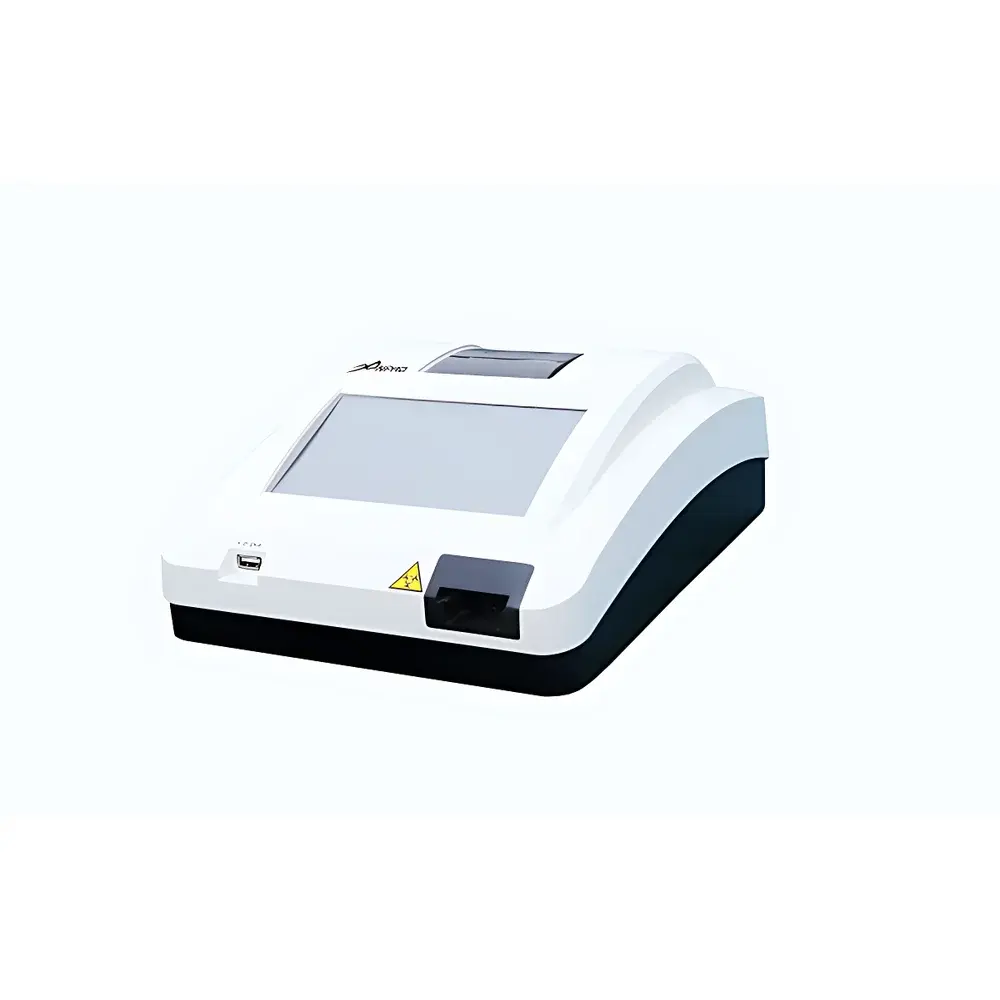
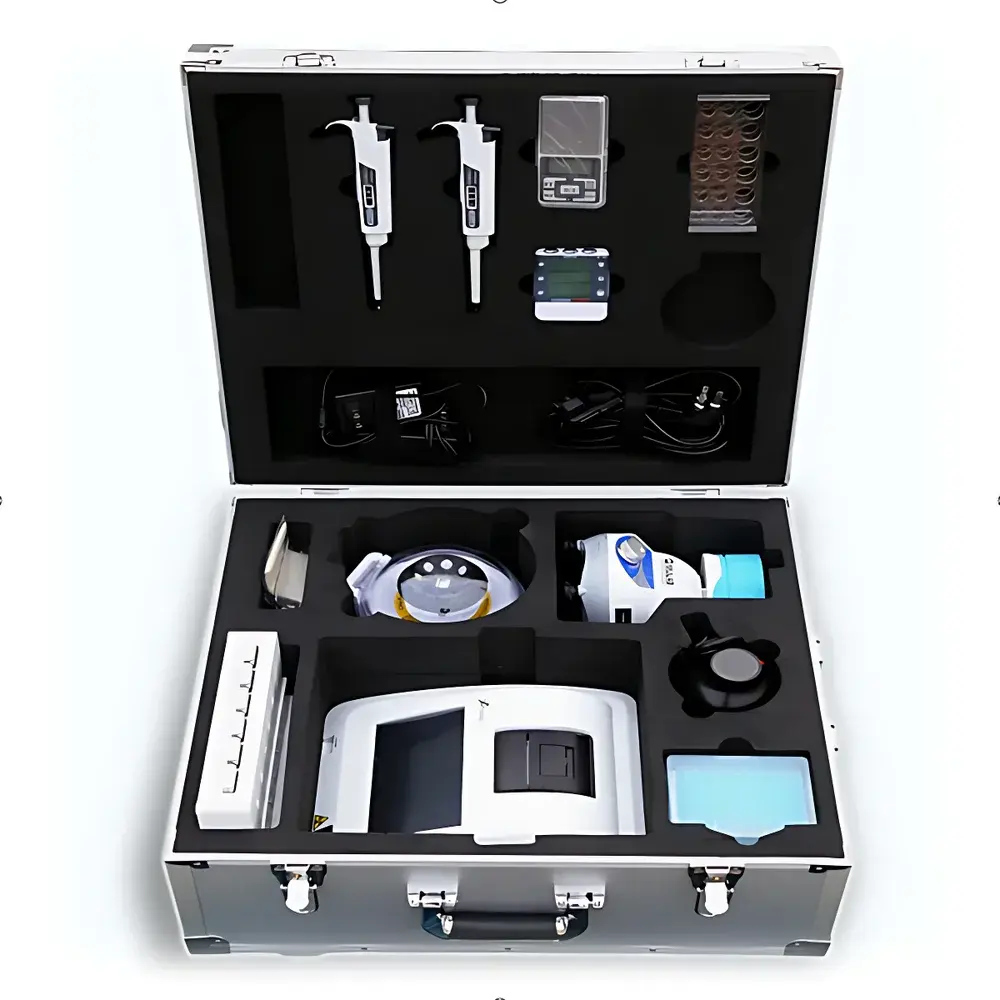
ANPRO SKJ-IA/02 Mycotoxin Rapid Quantitative Analyzer for Aflatoxin B1
| Brand | ANPRO |
|---|---|
| Origin | Sichuan, China |
| Manufacturer Type | Direct Manufacturer |
| Region of Origin | Domestic (China) |
| Model | SKJ-IA/02 |
| Instrument Category | Aflatoxin B1 Analyzer |
| Detection Principle | Immunochromatographic Colloidal Gold Quantification |
| Sample Throughput | 6 samples per run |
| Detection Time per Sample | ≤10 min |
| Display | 7-inch capacitive touchscreen |
| Integrated Thermal Printer | Yes |
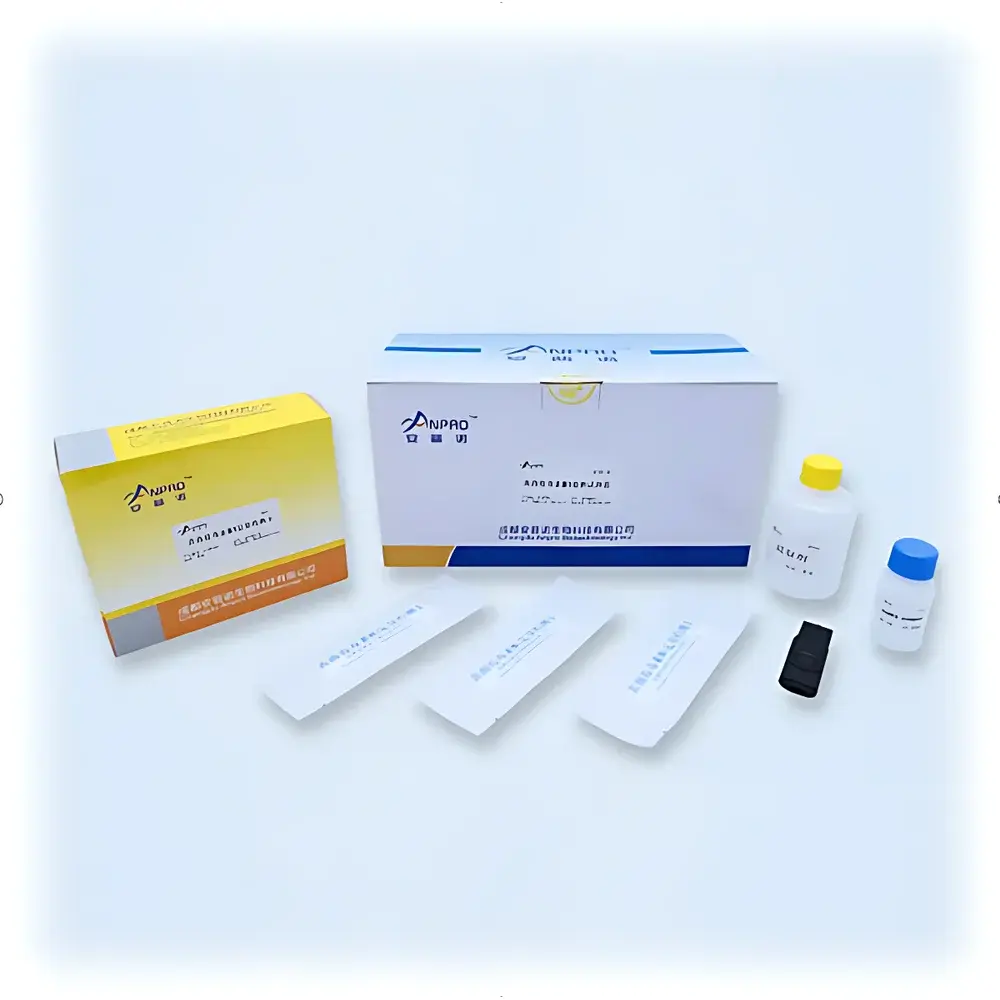
| Test Strip Format | Individually packaged lateral flow strips, ambient storage stable |
| Regulatory Validation | Certified by the National Grain and Oils Quality Inspection Center (China) for AFB1, DON, ZEN, OTA, FB1, and T-2 toxin |
| Data Connectivity | Cloud-ready |
| Quantitation Range (AFB1) | 0–150 ppb |
Overview
The ANPRO SKJ-IA/02 Mycotoxin Rapid Quantitative Analyzer is a dedicated benchtop immunoassay platform engineered for field-deployable, laboratory-grade quantification of aflatoxin B1 (AFB1) and five additional regulated mycotoxins—including deoxynivalenol (DON), zearalenone (ZEN), ochratoxin A (OTA), fumonisin B1 (FB1), and T-2 toxin—in complex food and feed matrices. Built upon a validated colloidal gold-based immunochromatographic assay principle, the system converts traditional qualitative lateral flow strips into a precision quantitative tool through integrated optical densitometry, calibrated signal processing, and embedded algorithmic curve fitting. Unlike conventional visual readout methods, the SKJ-IA/02 performs real-time reflectance measurement at the test and control lines, applying a four-parameter logistic (4PL) calibration model pre-loaded with NGLQC-verified standard curves. This eliminates manual standard handling, reduces inter-operator variability, and delivers traceable, repeatable results compliant with ISO/IEC 17025-aligned internal quality control protocols.
Key Features
- High-throughput analysis: Simultaneous quantification of up to six independent samples per assay cycle, with total turnaround time ≤10 minutes per sample—including strip insertion, incubation, and result generation.
- Quantitative accuracy and reproducibility: Demonstrated correlation coefficient (r²) ≥0.995 vs. HPLC-FLD reference methods across AFB1 concentrations (0–150 ppb); intra-assay CV <8%, inter-assay CV <12% (n=30, across three lots).
- Regulatory-grade validation: All six targeted mycotoxin assays have undergone formal evaluation by the National Grain and Oils Quality Inspection Center (NGLQC), China’s authoritative grain safety accreditation body—meeting performance criteria outlined in GB/T 5009.22–2016 (AFB1), GB/T 5009.111–2003 (DON), and GB/T 30957–2014 (ZEN).
- Operator-independent operation: Intuitive touch interface guides users stepwise through sample loading, strip insertion, and result review; no pipetting or reagent preparation required beyond sample extraction.
- Integrated data infrastructure: On-device thermal printer provides immediate hardcopy reports with timestamp, GPS coordinates (optional), and batch ID; encrypted Wi-Fi/Ethernet connectivity enables direct transmission to central databases, ERP systems, or cloud-based food safety dashboards via RESTful API.
- Stable consumables architecture: Pre-packaged, individually sealed lateral flow strips maintain functional integrity at 4–30 °C for ≥18 months; no cold chain logistics required.
Sample Compatibility & Compliance
The SKJ-IA/02 supports validated extraction protocols for cereals (corn, wheat, rice), oilseeds (peanuts, cottonseed), animal feed, herbal medicines, and tea leaves. Sample preparation follows AOAC Official Method 2005.08–compliant dilution schemes, requiring only centrifugation and filtration prior to assay. The instrument itself conforms to IEC 61010-1:2010 for electrical safety in laboratory equipment and meets EMC requirements per EN 61326-1:2013. While not FDA 21 CFR Part 11–certified out-of-the-box, audit trails, user access logs, and electronic signature support can be enabled via firmware update to meet GLP/GMP documentation standards during third-party validation.
Software & Data Management
Firmware v3.2+ includes embedded data management tools: automatic CSV export, customizable report templates (PDF/Excel), and configurable data retention policies (local storage: 10,000 records). All measurements are timestamped and tagged with operator ID, instrument serial number, and strip lot number. Audit trail functionality records every critical event—including calibration updates, result edits, and user logins—with immutable SHA-256 hashing. Integration with enterprise food safety platforms (e.g., Safefood360, Intertek Assure, SGS Food Vision) is supported via standardized HL7 or JSON payloads.
Applications
This analyzer serves as a primary screening tool at grain elevators, feed mills, contract laboratories, and regulatory inspection points where rapid, quantitative decisions are required prior to release or rejection. It is routinely deployed for incoming raw material verification, in-process quality checkpoints, and post-harvest surveillance programs aligned with EU Commission Regulation (EC) No 1881/2006, US FDA Action Levels (20 ppb AFB1 in human food), and China’s GB 2761–2023 limits. Its portability and battery option (optional external power bank) further enable use in mobile inspection units and rural extension services.
FAQ
Does the SKJ-IA/02 require daily calibration?
No—factory-calibrated optical sensors and pre-programmed, NGLQC-validated standard curves eliminate routine calibration. Users perform a single strip-based system check before each batch using included control strips.
Can the device store historical calibration data?
Yes—firmware maintains full calibration history, including date/time, operator ID, and deviation metrics relative to factory baseline, accessible via “Service Log” menu.
Is method validation support available for regulatory submissions?
ANPRO provides complete validation documentation packages—including specificity, linearity, LOD/LOQ, ruggedness, and matrix interference studies—for all six mycotoxins, aligned with AOAC Performance Tested Methods (PTM) and SANTE/11813/2017 guidelines.
What happens if network connectivity is lost during data upload?
All results are cached locally and automatically synchronized upon reconnection; no data loss occurs due to built-in transactional queueing.
Are third-party lateral flow strips compatible?
No—the SKJ-IA/02 is optimized exclusively for ANPRO-manufactured, barcoded assay strips to ensure optical alignment, binding kinetics consistency, and algorithmic curve matching.






