
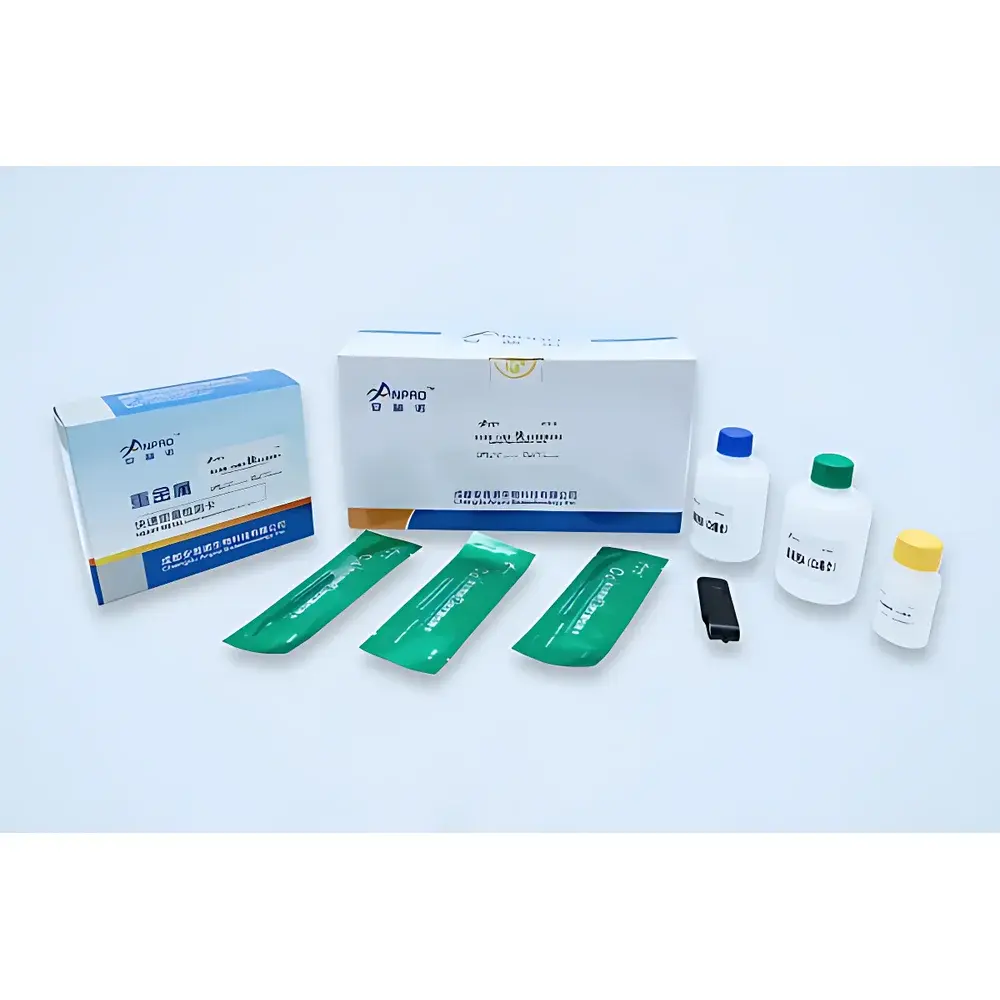
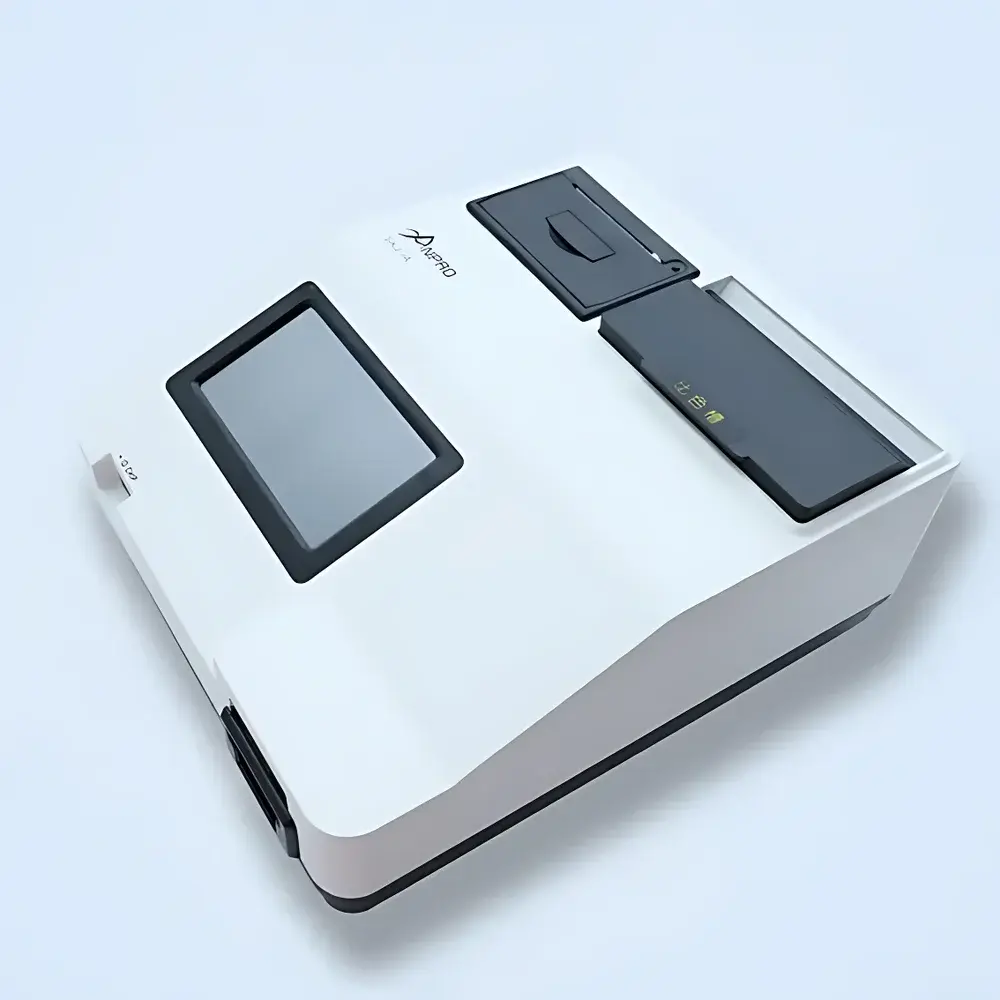
ANPRO SKJ-IA-III Food Safety Tri-Function Rapid Analyzer for Cadmium, Lead, Mycotoxins & Pesticide Residues
| Brand | ANPRO |
|---|---|
| Origin | Sichuan, China |
| Manufacturer Type | Manufacturer |
| Regional Category | Domestic (China) |
| Model | SKJ-IA-III |
| Function Type | Multi-Analyte (Heavy Metals, Mycotoxins, Pesticides) |
| Sample Compatibility | Universal (Grains, Feed, Fruits, Vegetables, Dairy, Tea) |
| Optical Detection Wavelength | 410 nm |
| Assay Time per Sample | ≤18 minutes |
| Coefficient of Variation (CV) | ≤0.2% |
| Detection Channels | 6 parallel optical channels |
Overview
The ANPRO SKJ-IA-III Food Safety Tri-Function Rapid Analyzer is an integrated, field-deployable immunoassay platform engineered for simultaneous quantitative detection of three major food contaminant classes: heavy metals (Cd, Pb), mycotoxins (e.g., AFB₁, DON, ZEN, OTA, FB₁, T-2), and pesticide residues (e.g., chlorpyrifos, carbendazim, acetamiprid, pyrethroids). It leverages colloidal gold immunochromatographic assay (CGIA) technology—optimized via proprietary surface stabilization and signal amplification protocols—to deliver reliable quantitative results without laboratory infrastructure. Unlike conventional qualitative lateral flow strips, the SKJ-IA-III employs calibrated reflectance photometry at 410 nm to measure test line intensity, converting optical density into concentration values traceable to reference standards. Its architecture supports both CGIA-based quantification (for metals and mycotoxins) and enzyme inhibition–based spectrophotometric analysis (for organophosphate and carbamate pesticides), enabling dual-method validation where required. Designed for regulatory screening compliance, it meets the functional requirements of preliminary hazard assessment under national food safety monitoring programs.
Key Features
- Tri-functional detection capability: single-instrument quantification of heavy metals, mycotoxins, and pesticides—eliminating cross-platform calibration drift and inter-device variability.
- Six independent optical detection channels enable parallel processing of up to six samples or multi-target assays per run, improving throughput in high-volume screening environments.
- Pre-loaded calibration curves stored onboard eliminate manual standard handling; operators are not exposed to certified reference materials during routine use—enhancing occupational safety and reducing procedural error.
- Compact, ruggedized design with integrated battery power, hand-carry handle, and telescopic trolley option ensures full operational readiness in mobile labs, grain silos, border inspection points, and rural agro-processing units.
- Quantitative repeatability validated at ≤0.2% CV across instrument lifetime, confirmed through third-party verification reports aligned with ISO/IEC 17025-accredited laboratories.
- Minimal sample prep: standardized extraction protocols require only centrifugation and dilution—no HPLC, GC-MS, or ELISA plate washers needed.
Sample Compatibility & Compliance
The SKJ-IA-III is validated for use with cereals (wheat, rice, corn, barley), milled grain products, animal feed and feed ingredients, fresh and dried fruits, leafy vegetables, tea leaves, and liquid dairy matrices. All assay kits supplied with the system are manufactured under documented quality control procedures compliant with Good Manufacturing Practice (GMP) for diagnostic reagents. Detection limits and linear ranges conform to China’s GB 2762–2022 (contaminants), GB 2761–2023 (mycotoxins), and GB 2763–2021 (pesticide MRLs); method performance data are compatible with AOAC Official Method validation criteria for rapid screening tools. While not a replacement for confirmatory LC-MS/MS, the system satisfies Tier-1 screening requirements defined in national food surveillance frameworks and supports GLP-aligned recordkeeping when paired with its audit-trail-enabled software.
Software & Data Management
The embedded firmware supports real-time data acquisition, automatic curve fitting, and concentration calculation using Lot-specific calibration files. Results are timestamped, instrument-ID tagged, and exportable in CSV or PDF formats via USB or Bluetooth. The optional ANPRO CloudLink™ portal enables centralized data aggregation from multiple field units, geotagging of sampling locations, trend analysis across batches or regions, and automated alerting when results exceed predefined action thresholds. Audit logs record user login events, calibration updates, and result modifications—supporting 21 CFR Part 11–compliant electronic records where local regulatory adoption permits. No cloud upload is mandatory; all processing occurs locally unless explicitly enabled by the user.
Applications
- Pre-harvest and post-harvest grain quality assurance in storage facilities and cooperatives.
- Routine screening of imported feed ingredients at port-of-entry quarantine labs.
- On-site verification of pesticide application compliance on orchards and vegetable farms.
- Emergency response testing during foodborne illness investigations or contamination incidents.
- Contract laboratory support for small-to-midsize food processors requiring cost-effective QC without capital-intensive instrumentation.
- Educational use in food science curricula for hands-on immunoassay methodology training.
FAQ
What regulatory standards does the SKJ-IA-III comply with?
It aligns with Chinese national standards GB 2762, GB 2761, and GB 2763 for screening-level detection. Performance characteristics meet AOAC Performance Tested Methods™ criteria for rapid assays.
Can the instrument be used for official regulatory reporting?
Yes—as a primary screening tool within national food safety monitoring systems; confirmatory analysis by reference methods (e.g., ICP-MS, LC-MS/MS) is required for enforcement decisions.
Is method validation documentation available?
Full validation reports—including specificity, sensitivity, accuracy, precision, and robustness—are provided upon request and conform to ISO 5725 and SANTE/11813/2017 guidelines.
How often must calibration curves be updated?
Each kit lot includes a unique QR-coded calibration file; curves are loaded automatically upon kit insertion and remain valid for the kit’s shelf life.
Does the system support LIMS integration?
Yes—via CSV export or REST API (available in CloudLink™ Enterprise edition) for bidirectional data exchange with existing Laboratory Information Management Systems.
Related Products





