
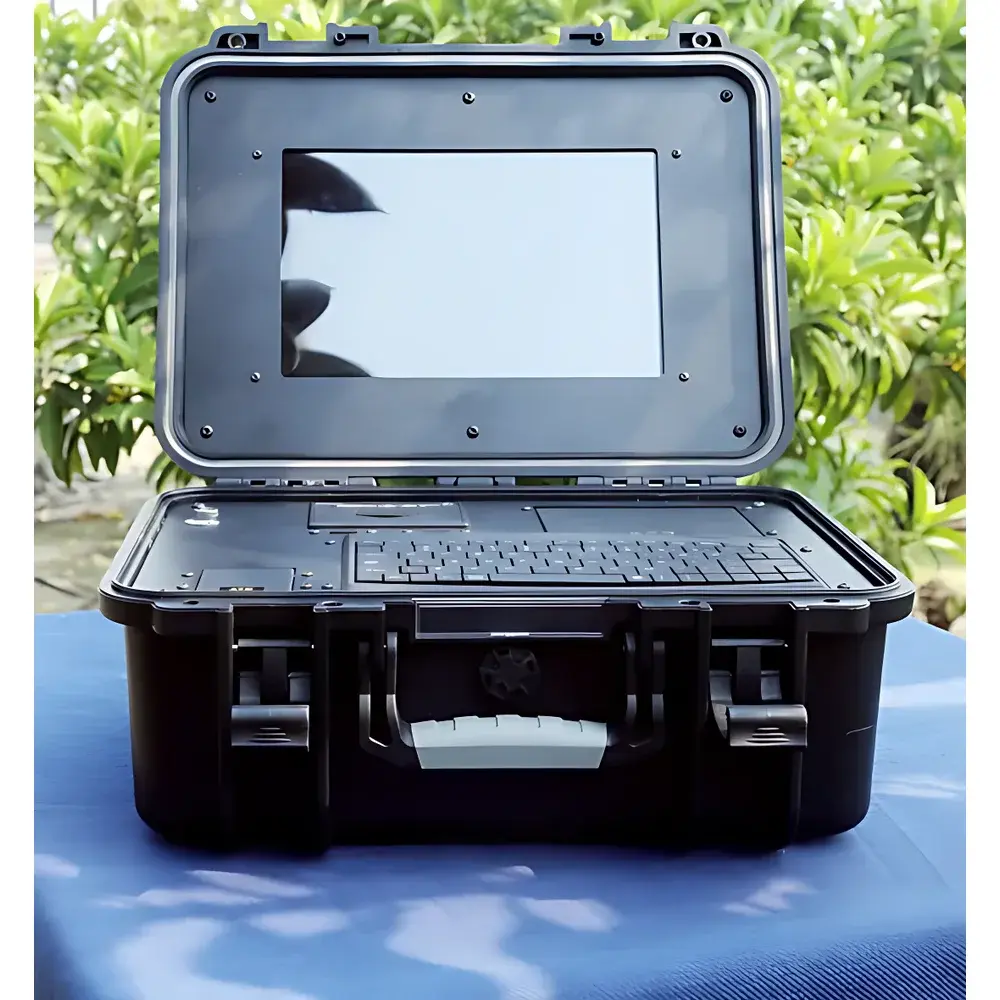

ANPRO SKJ-IIIA Portable Integrated Food Safety Rapid Detection System
| Brand | ANPRO |
|---|---|
| Origin | Sichuan, China |
| Manufacturer Type | Manufacturer |
| Origin Category | Domestic |
| Model | SKJ-IIIA |
| Price | USD 11,200 (approx.) |
| Function Type | Multi-analyte Detection Platform |
| Sample Compatibility | Universal for Solid, Liquid, and Semi-solid Food Matrices |
| Optical Wavelengths | 410 nm, 538 nm, 630 nm |
| Detection Time per Assay | ≤ 30 min |
| Photometric Repeatability (CV) | ≤ 1% |
| Detection Channels | 10 independent optical channels |
Overview
The ANPRO SKJ-IIIA Portable Integrated Food Safety Rapid Detection System is an engineered field-deployable analytical platform designed for on-site or near-laboratory screening of food safety hazards. It operates on a multi-modal optical detection architecture—integrating reflectance photometry (for colorimetric assays), lateral-flow immunoassay signal quantification (for colloidal gold-based rapid tests), fluorescence intensity measurement (for fluorophore-labeled targets), and digital densitometry (for thin-layer chromatography [TLC] band analysis). This convergence enables simultaneous method-specific validation across diverse analyte classes without hardware reconfiguration. The system is purpose-built for regulatory field officers, food processing QA/QC teams, and third-party inspection agencies requiring GLP-aligned traceability in decentralized environments. Its modular optical engine supports standardized wavelength selection at 410 nm (optimized for nitrite, formaldehyde, and chromogenic enzyme substrates), 538 nm (ideal for colloidal gold strip quantification and certain mycotoxin conjugates), and 630 nm (used for hemoglobin-based assays and select heavy metal chelation complexes).
Key Features
- 10-channel independent optical detection module with synchronized acquisition and auto-zeroing calibration per channel
- Integrated embedded Linux-based operating system with touchscreen GUI (8-inch capacitive LCD, 1280×800 resolution) supporting multilingual UI (English default)
- Onboard data management: local storage (32 GB eMMC) with encrypted SQLite database; automatic timestamping, operator ID tagging, and audit trail logging
- Ruggedized IP65-rated enclosure with shock-absorbing molded polymer chassis, integrated waterproof gasket, and drop-tested to MIL-STD-810G standards
- Multi-assay workflow engine: preloaded assay protocols for >180 target analytes—including organophosphate pesticides (e.g., parathion, dichlorvos), veterinary drug residues (chloramphenicol, enrofloxacin), mycotoxins (aflatoxin B1, deoxynivalenol), heavy metals (Pb, Cd, Hg, As), adulterants (melamine, formaldehyde), and pathogen biomarkers (E. coli O157:H7 antigen)
- Quantitative reporting with linear dynamic range spanning 2–3 orders of magnitude per assay, validated against ISO/IEC 17025 reference methods
Sample Compatibility & Compliance
The SKJ-IIIA accepts homogenized food extracts, centrifuged supernatants, filtered water samples, and swab eluates without dilution or derivatization for most listed analytes. It complies with national food safety standard GB 5009 series (China), aligns with AOAC Official Methods® for rapid screening criteria, and supports FDA BAM Chapter-specific verification workflows. All assay cartridges and reagent kits are manufactured under ISO 13485-certified conditions. Data export formats (CSV, PDF, XML) conform to FAO/WHO Codex Alimentarius traceability guidelines and enable seamless integration with provincial-level food safety surveillance platforms via HTTPS RESTful API.
Software & Data Management
The proprietary ANPRO FoodScan™ software provides full lifecycle data governance: real-time result visualization, statistical process control (SPC) charts, batch-level trend analysis, and automated outlier flagging based on user-defined control limits. Audit logs record every instrument action—including calibration events, assay initiation, result modification (with justification field), and report generation—with immutable SHA-256 hashing. The system supports 21 CFR Part 11-compliant electronic signatures when deployed in regulated GMP environments. Data synchronization occurs over Wi-Fi or optional 4G LTE module, enabling cloud backup to secure AWS-hosted instances with TLS 1.3 encryption.
Applications
- Frontline surveillance at farmers’ markets, cold-chain logistics hubs, and border inspection posts
- In-process quality verification during meat processing, dairy production, and grain milling
- Emergency response screening during foodborne outbreak investigations (e.g., Salmonella, Staphylococcal enterotoxin A)
- Contract laboratory pre-screening prior to confirmatory LC-MS/MS or ELISA testing
- Training and capacity building for regional food safety authorities in resource-constrained settings
FAQ
Does the SKJ-IIIA require external calibration standards for routine operation?
No—each assay cartridge includes integrated calibration references; onboard photometric self-check occurs at startup and before each run.
Can raw data files be exported for third-party statistical analysis?
Yes—CSV exports include absorbance/fluorescence raw values, time stamps, operator IDs, and environmental sensor readings (temperature/humidity).
Is the system compatible with international reference materials (e.g., CRM from IRMM or NIST)?
Yes—method validation reports include recovery data using certified reference materials per ISO Guide 35 and EURACHEM guidelines.
What is the recommended maintenance interval?
Optical alignment verification every 6 months; LED source lifetime exceeds 10,000 hours; no consumable optics require replacement within first 3 years of typical use.
How is firmware updated in offline field deployments?
Via USB 3.0 host interface using signed firmware packages; update integrity verified via embedded ECDSA signature check.
Related Products





