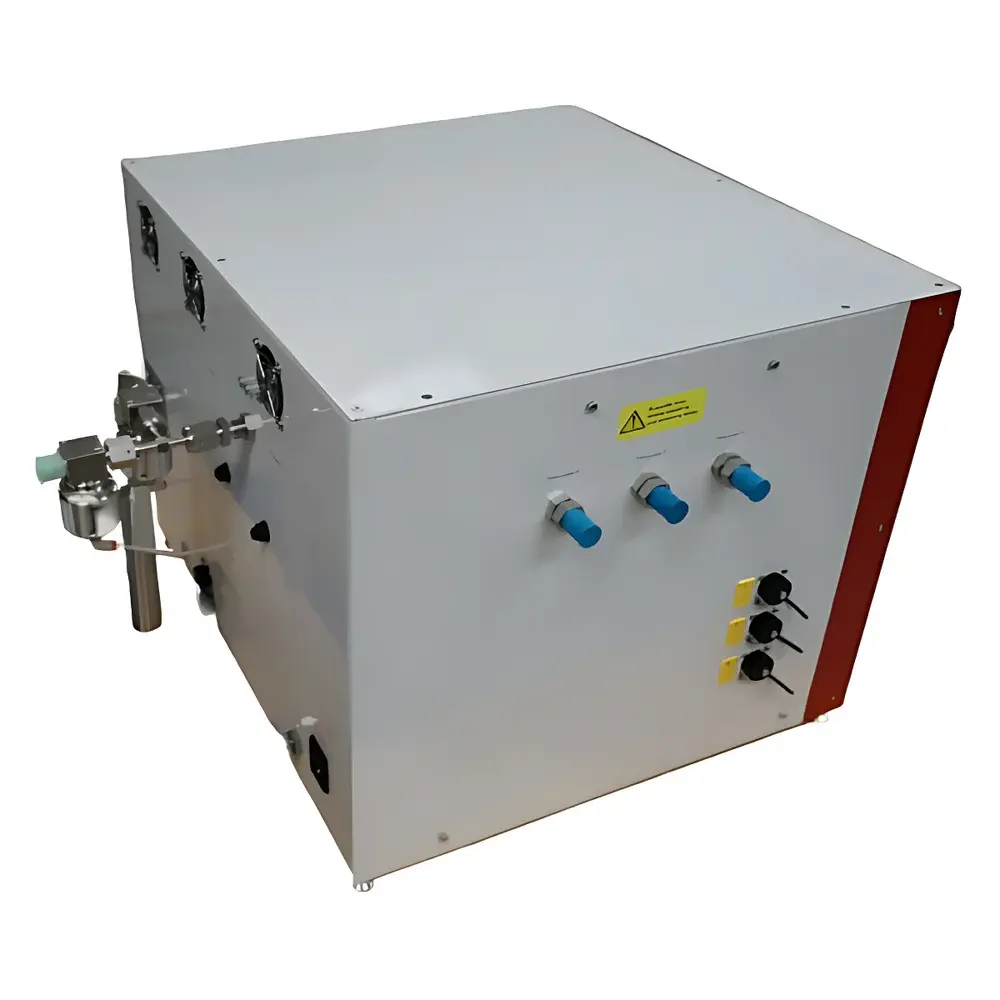
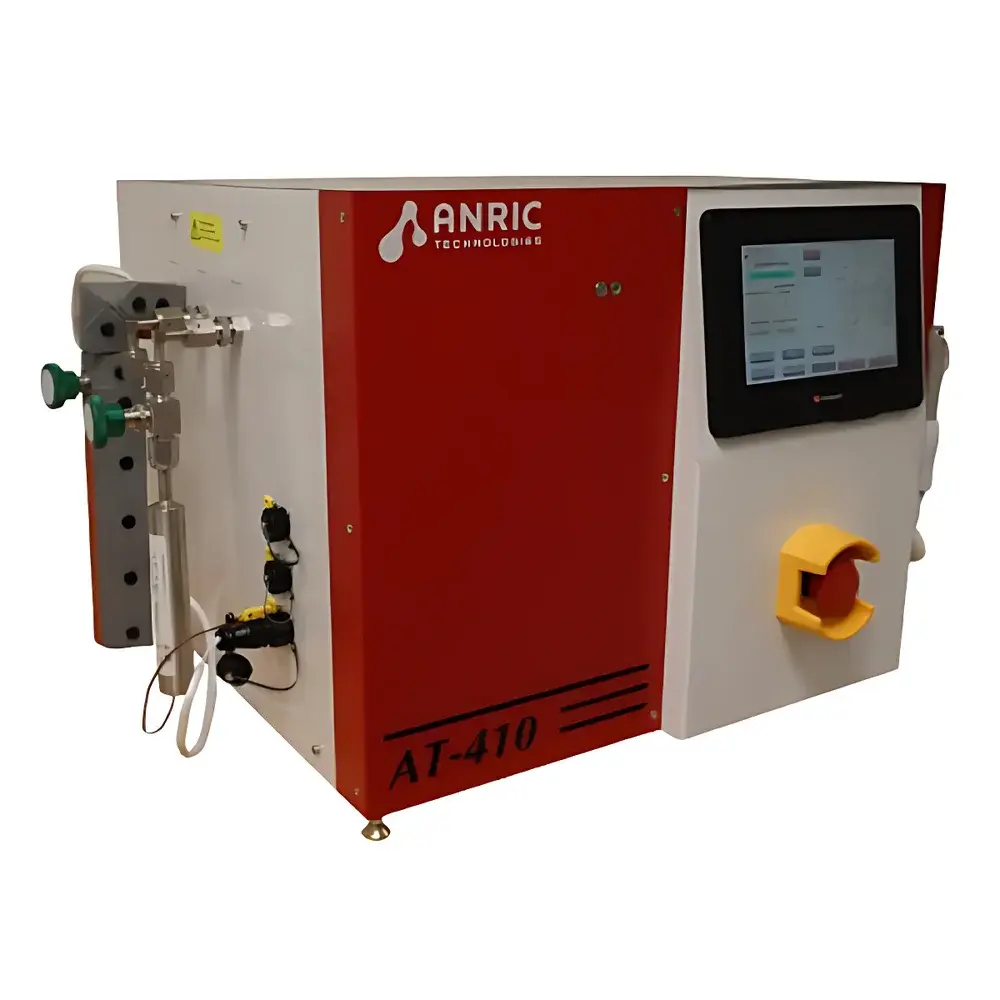
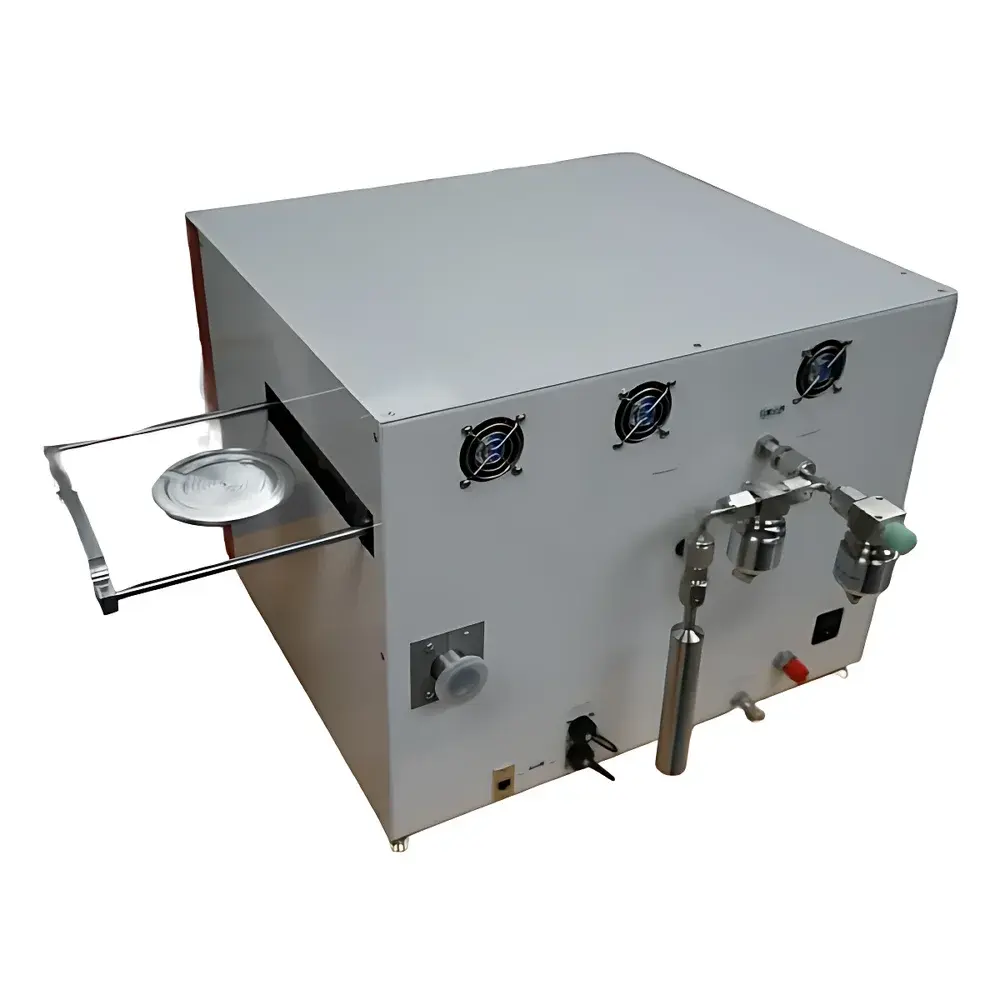
ANRIC AT410 Benchtop Atomic Layer Deposition System
| Brand | ANRIC |
|---|---|
| Origin | USA |
| Manufacturer Type | Authorized Distributor |
| Origin Category | Imported |
| Model | AT410 |
| Pricing | Upon Request |
Overview
The ANRIC AT410 Benchtop Atomic Layer Deposition System is a compact, semiconductor-grade ALD platform engineered for precision thin-film synthesis in R&D, pilot-line fabrication, and quality assurance environments. Operating on the self-limiting surface reaction principle—sequential, saturative exposure of gaseous precursors separated by inert purge steps—the AT410 enables atomic-level thickness control, exceptional conformality (≥95% step coverage on high-aspect-ratio trenches), and reproducible stoichiometry across substrates up to 100 mm (4-inch) diameter. Its fully aluminum, metal-sealed chamber—fabricated from semiconductor-grade 6061-T6 anodized aluminum—supports process temperatures from ambient to 320 °C ±1 °C, while integrated heating extends precursor delivery lines and valves to 180 °C ±2 °C. Designed for cleanroom compatibility (Class 100–1000), the system occupies <0.15 m³ (2.5 ft²), eliminating floor space constraints without compromising vacuum integrity or thermal stability.
Key Features
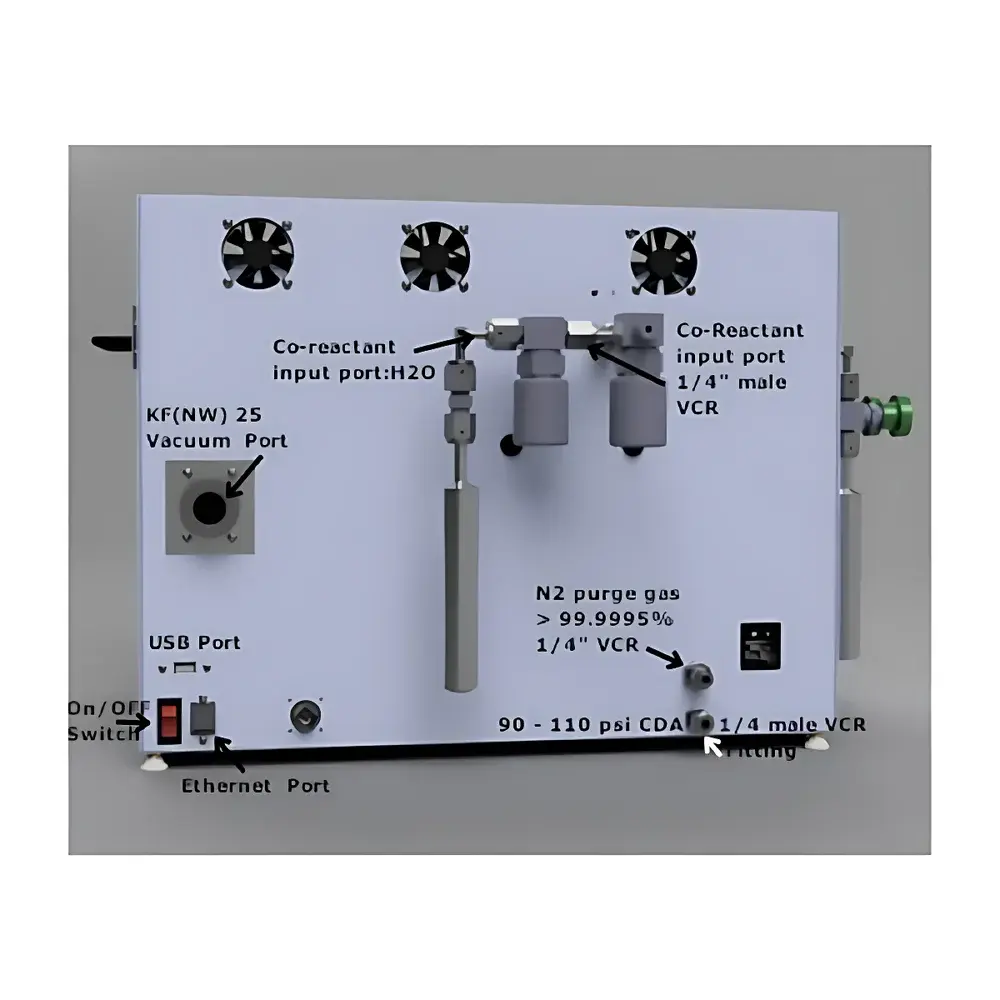
- Benchtop footprint (<0.15 m³) with full metal-sealed architecture and NW25 (KF25) vacuum interface
- High-speed pulsed ALD valves with ultra-fast mass flow controllers (MFCs) and integrated inert-gas purging for sub-second precursor switching
- 7-inch industrial-grade touchscreen HMI PLC controller—standalone operation; no external PC required
- Heated delivery lines throughout (precursor sources → injection nozzles → chamber), preventing condensation and ensuring vapor-phase consistency
- Four-inch circular chuck with customizable geometry (e.g., square, micro-patterned, multi-sample fixtures); optional high-temp chuck up to 450 °C
- Support for three organic-metallic precursors (up to 180 °C) and up to three reactive co-reactants (e.g., H₂O, O₃, NH₃, plasma-activated species)
- Full hardware and software interlocks compliant with IEC 61508 SIL2 requirements for multi-user lab safety
- Lifetime software updates included; 1-year comprehensive warranty covering parts and labor
Sample Compatibility & Compliance
The AT410 accommodates wafers (≤100 mm), diced dies, optical substrates, MEMS devices, porous anodic alumina (PAA), and nanostructured electrodes. Its low-volume chamber (≈1.8 L) ensures rapid pump-down (<60 s to 10⁻² mbar) and efficient precursor utilization—critical for expensive or air-sensitive precursors (e.g., trimethylaluminum, tetrakis(dimethylamido)titanium). All wetted surfaces meet SEMI F57 standards for metallic purity. The system supports GLP-compliant operation via audit-trail-enabled recipe logging, timestamped parameter records, and user-access-level controls—fully aligned with FDA 21 CFR Part 11 data integrity requirements when paired with optional external PC linkage. Optional ozone generator (ATOzone) and real-time ozone monitor enable low-temperature (<60 °C), high-k Al₂O₃ and HfO₂ deposition meeting ASTM F3011-16 specifications for gate dielectrics.
Software & Data Management
The embedded PLC-based control firmware provides intuitive, menu-driven programming of ALD cycles—including sub-cycle timing, pulse duration (10 ms–30 s), purge duration (0.1–10 s), temperature ramp profiles, and multi-step sequences for nanolaminates (e.g., Al₂O₃/TiO₂) or ternary oxides (e.g., Al-doped ZnO). A built-in recipe database includes validated processes for Al₂O₃, TiO₂, SiO₂, HfO₂, and Pt films. Real-time monitoring displays chamber pressure, precursor line temperatures, MFC setpoints vs. actuals, and cycle progress. Optional external PC integration enables remote scheduling, SPC charting (via CSV export), and integration into factory MES systems using Modbus TCP or OPC UA protocols. All logs are stored locally on industrial-grade SD card with SHA-256 checksum verification.
Applications
- Deposition of high-k gate oxides (Al₂O₃, HfO₂) and passivation layers for CMOS and GaN power devices
- Conformal encapsulation of perovskite solar cells and OLED emitters against moisture/oxygen ingress
- Functionalization of battery electrode scaffolds (e.g., LiCoO₂, Si anodes) with ultrathin Li-ion conducting interphases
- Surface modification of medical implants (Ti-6Al-4V, PEEK) with bioactive Ca-P or antimicrobial Ag films
- R&D of memristive oxides (NiO, Ta₂O₅) and ferroelectric Hf₀.₅Zr₀.₅O₂ for neuromorphic computing
- Low-temperature ALD of catalytic nanoparticles (Pt, Ir) on carbon nanotube or MOF supports
FAQ
What vacuum pump specifications are required?
A minimum 12 cfm dry scroll or diaphragm pump with PTFE-compatible fluid (e.g., Fomblin Y06/6) is required. For optimal throughput and base pressure (<5×10⁻³ mbar), a 19.5 cfm pump is recommended.
Is ozone generation supported natively?
Yes—optional ATOzone module integrates seamlessly and is qualified for Al₂O₃, SiO₂, and HfO₂ deposition at ≤60 °C. An optional ozone safety monitor provides continuous ambient detection per OSHA PEL limits.
Can the system be integrated into a nitrogen glovebox?
Yes—standardized VCR inlet/outlet ports and modular feedthroughs allow direct integration with Class 1000 gloveboxes for air-sensitive precursors (e.g., alkyl phosphines, silanes).
What level of process repeatability can be expected?
Based on internal qualification runs, thickness uniformity is ≤±1.2% (1σ) across 100 mm wafers for Al₂O₃ at 100 °C; growth per cycle (GPC) stability is maintained within ±0.8% over 50 consecutive cycles.
Are third-party precursor delivery modules supported?
Yes—the system’s open I/O architecture accepts analog/digital signals from external bubblers or liquid injectors. Optional IGPA (Inert Gas Pressure Assist) module enables controlled delivery of low-vapor-pressure precursors (e.g., metal amidinates).