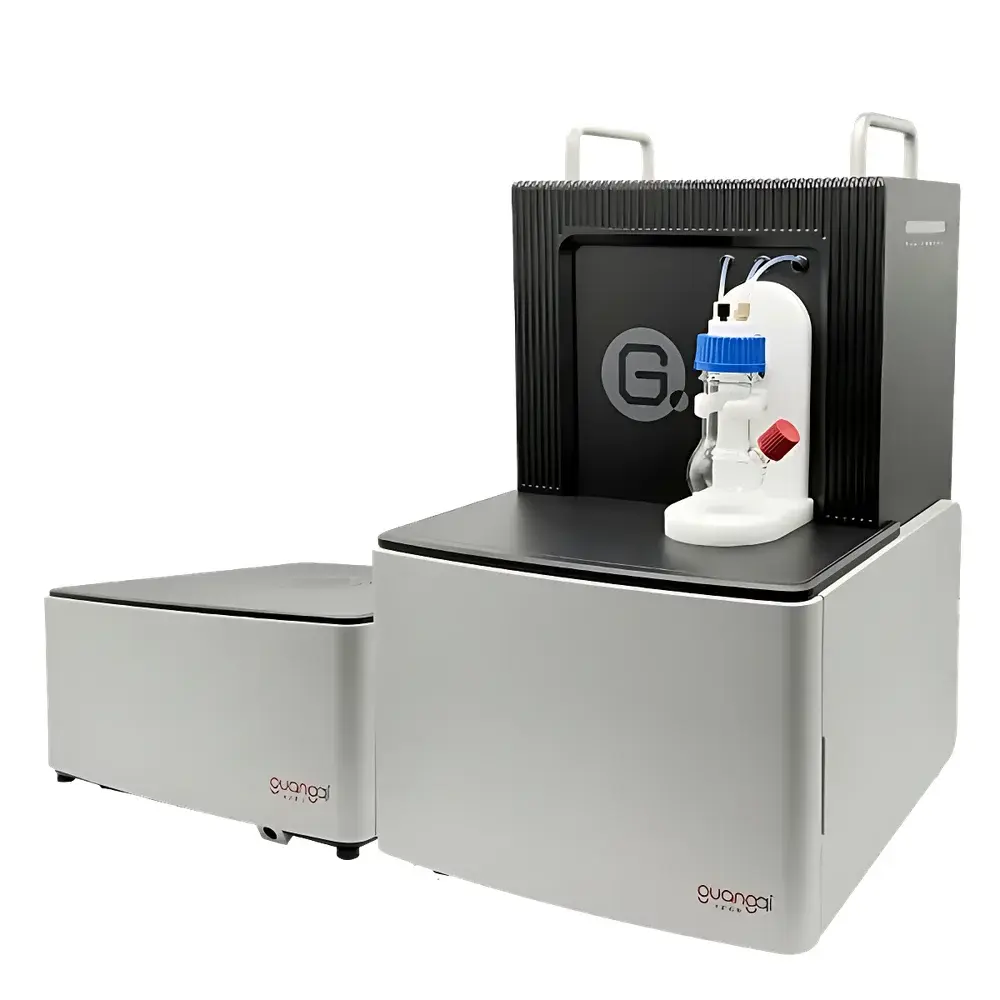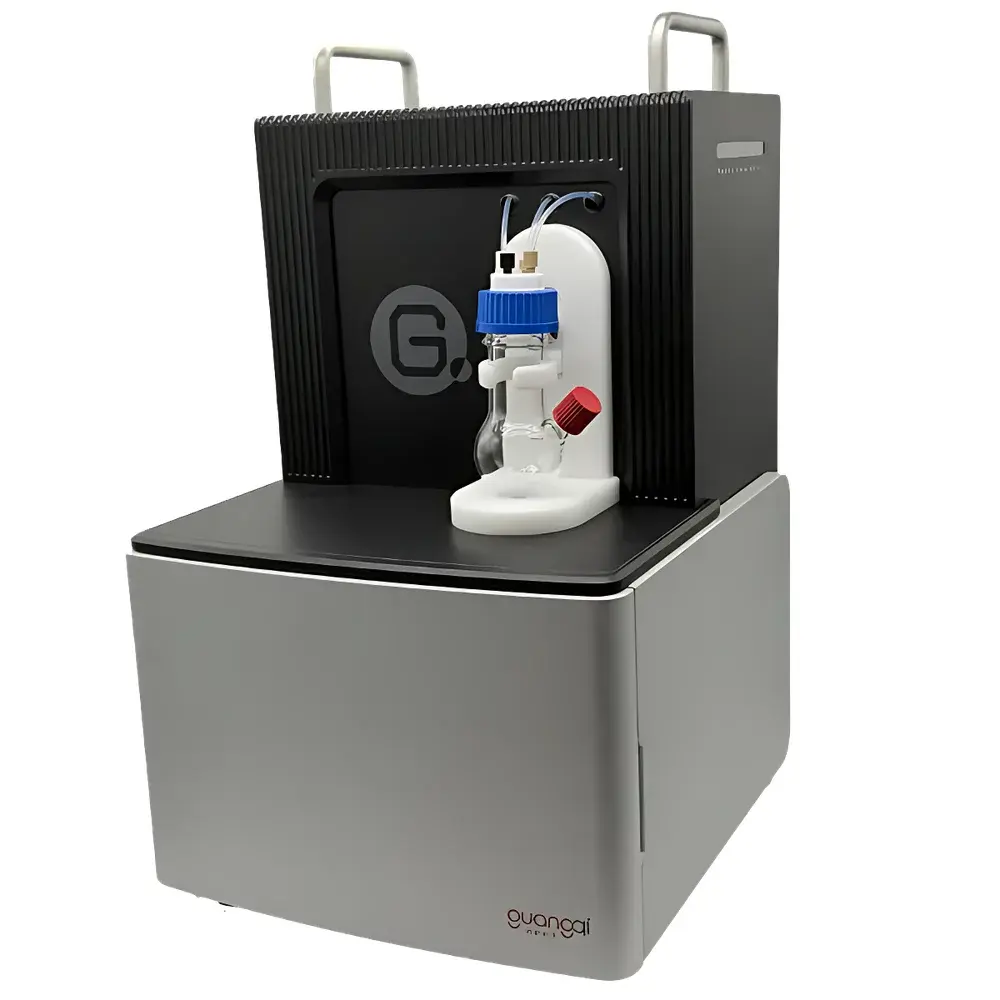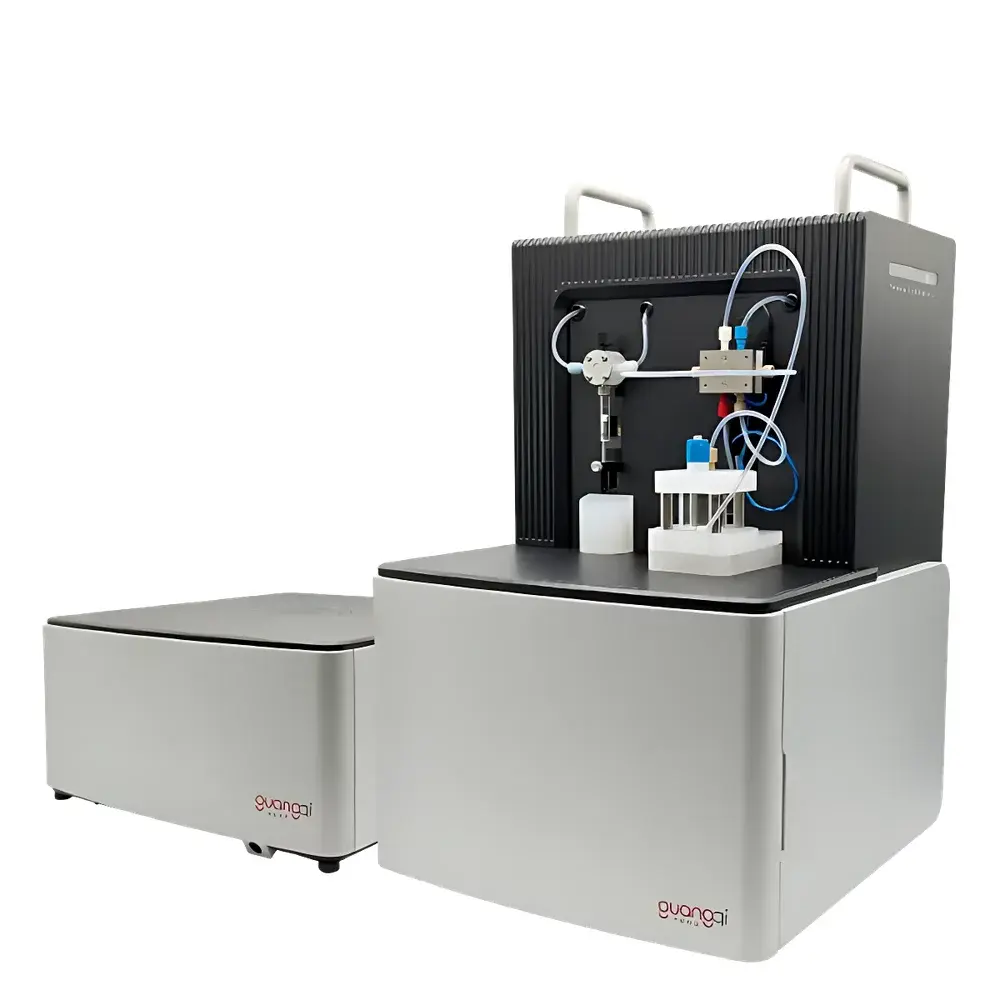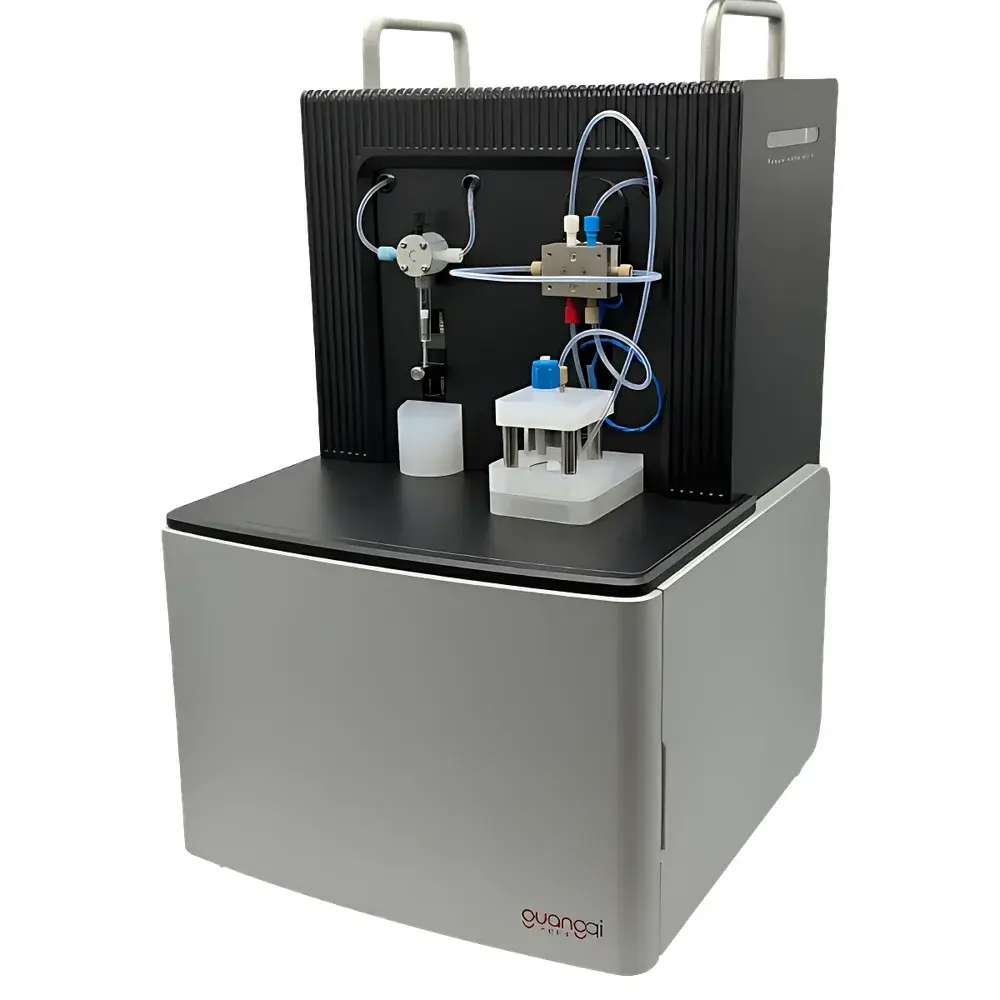
Anric AT Desktop Atomic Layer Deposition System
| Brand | Anric |
|---|---|
| Model | AT |
| Type | Desktop Atomic Layer Deposition (ALD) System |
| Origin | USA |
| Chamber Temperature Range | RT–350 °C |
| Precursor Source Temperature Range | RT–150 °C |
| Process Pressure Range | 0.1–1.5 Torr |
| Maximum Precursor Sources | 5 |
| Substrate Compatibility | Up to 4″ wafers (expandable to 6″) |
| Cycle Time | 6–10 cycles per minute |
| Control Interface | Touchscreen PLC |
| Chamber Architecture | Compact, R&D-Optimized |
Overview
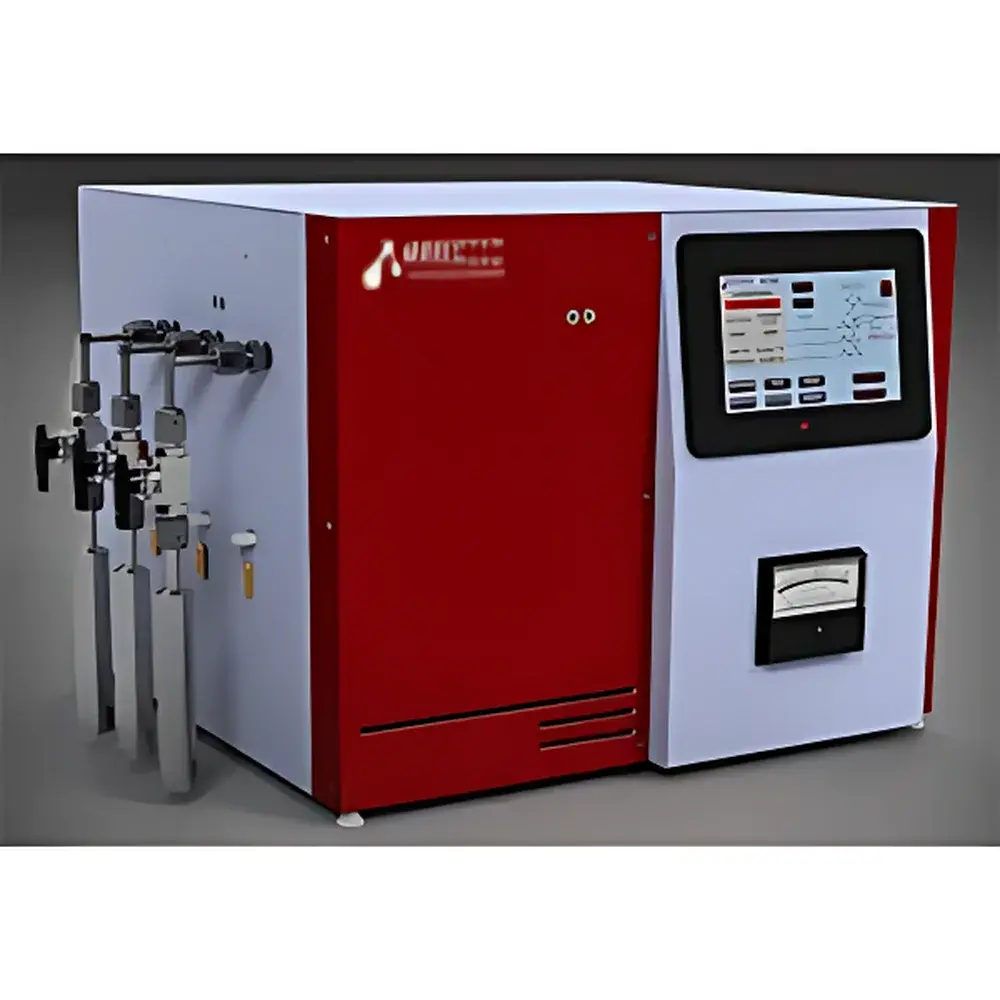
The Anric AT Desktop Atomic Layer Deposition System is an engineered solution for precision thin-film synthesis in academic research laboratories, semiconductor process development labs, and advanced materials R&D facilities. Utilizing sequential, self-limiting surface reactions—governed by the fundamental principles of atomic layer deposition—the AT system enables monolayer-level control over film thickness, exceptional conformality on high-aspect-ratio structures, and atomic-scale uniformity across substrates up to 4 inches in diameter (with optional 6-inch upgrade). Designed specifically for low-footprint integration, the AT features a compact vacuum chamber optimized for rapid thermal stabilization, precise precursor dosing, and minimal gas-phase parasitic reactions. Its modular architecture supports both thermal ALD and ozone-assisted ALD processes, making it suitable for oxide, nitride, metal, and compound semiconductor film growth under controlled inert or reactive atmospheres.
Key Features
- R&D-optimized stainless-steel reaction chamber with integrated heating and temperature uniformity <±2 °C across full substrate area
- Independent, PID-controlled heating zones for chamber wall (RT–350 °C) and up to five precursor sources (RT–150 °C)
- High-reproducibility pneumatic valve manifold with sub-second actuation timing and <10 ms pulse resolution
- Process pressure regulation from 0.1 to 1.5 Torr via feedback-controlled throttle valve and capacitance manometer
- Touchscreen-based PLC controller with real-time parameter logging, recipe versioning, and user-access level management
- Preloaded library of validated ALD recipes for Al₂O₃, HfO₂, TiN, SiN, ZnO, and Ru—each calibrated for stoichiometry, refractive index, and film density
- Glovebox-compatible flange interface (CF-40 or KF-40 options) enabling air-sensitive precursor handling and oxygen/moisture-free loading
- Optional integrated ozone generator (10–150 g/h output) for enhanced oxidation kinetics in metal oxide deposition
- Modular gas panel design compliant with SEMI S2/S8 safety standards and compatible with standard 1/4″ VCR fittings
Sample Compatibility & Compliance
The AT system accommodates rigid planar substrates including silicon, sapphire, quartz, glass, and III–V wafers (e.g., GaAs, InP), as well as MEMS devices, nanoporous templates, and pre-patterned nanostructures. Substrate holders support flat, tilted, or rotating configurations (optional add-on) to enhance step coverage on non-planar geometries. All wetted materials—including valves, lines, and chamber internals—are electropolished 316L stainless steel or ceramic-coated to prevent catalytic decomposition and metal contamination. The system meets CE marking requirements for electromagnetic compatibility (EMC Directive 2014/30/EU) and low-voltage safety (LVD Directive 2014/35/EU). Process data logging complies with GLP audit trail requirements, supporting 21 CFR Part 11–ready software upgrades upon request.
Software & Data Management
The embedded control firmware records all process parameters—including pulse durations, purge times, temperatures, pressures, and valve states—at 100 Hz resolution. Raw logs are exported in CSV and HDF5 formats for post-processing in MATLAB, Python (Pandas/NumPy), or JMP. Recipe files include metadata fields for operator ID, calibration date, and instrument configuration hash—enabling traceability across multi-user environments. Remote monitoring is supported via Ethernet (TCP/IP) with secure SSH access; no cloud dependency or vendor-hosted infrastructure is required. Audit logs retain user actions, parameter modifications, and emergency stop events for ≥12 months without manual intervention.
Applications
- Semiconductor fabrication: High-κ gate dielectrics (HfO₂, Al₂O₃), diffusion barriers (TiN, TaN), capacitor dielectrics (SrTiO₃), and MIM stack formation for memory devices
- Advanced packaging: Conformal passivation layers on TSVs and redistribution layers (RDLs)
- MEMS/NEMS: Anti-stiction coatings (SiO₂, Al₂O₃), hydrophobic functionalization (fluorinated ALD), and piezoelectric seed layers (AlN)
- Energy devices: Solid-electrolyte interphase (SEI) mimics for solid-state batteries, photoanode coatings for perovskite solar cells, and catalyst support functionalization
- Nanophotonics: Sub-10 nm spacer layers in plasmonic cavities, tunable metamaterial unit cells, and quantum dot encapsulation
- Biomedical interfaces: Bio-inert TiO₂ or ZrO₂ coatings on implantable sensors and neural probes
FAQ
What substrate sizes does the AT system support?
Standard configuration accommodates 4-inch wafers; optional chamber retrofit enables 6-inch wafer processing with recalibrated gas flow dynamics and thermal uniformity mapping.
Can the system deposit metallic films such as Cu or Ru?
Yes—using thermally activated precursors (e.g., Cu(hfac)TMVS, RuO₄, or Ru(EtCp)₂) and appropriate reducing co-reactants (H₂, NH₃, or plasma assistance via optional RF module).
Is ozone integration mandatory for oxide deposition?
No—thermal ALD routes (e.g., TMA + H₂O for Al₂O₃) are fully supported; ozone is an optional enhancement for lower-temperature oxide growth and improved film density.
How is process repeatability verified?
Each system undergoes factory calibration using witness wafers and ellipsometry cross-validation; users receive a certificate of conformance detailing thickness uniformity (<±1.2% 1σ across 4″ Si), refractive index stability, and cycle-to-cycle dose linearity.
Does the AT comply with ISO 9001 or ISO 14644 cleanroom requirements?
The hardware itself is ISO 14644 Class 5 compatible when installed in a certified cleanroom environment; full ISO 9001 certification applies to Anric’s manufacturing and documentation control procedures—not the end-user installation site.