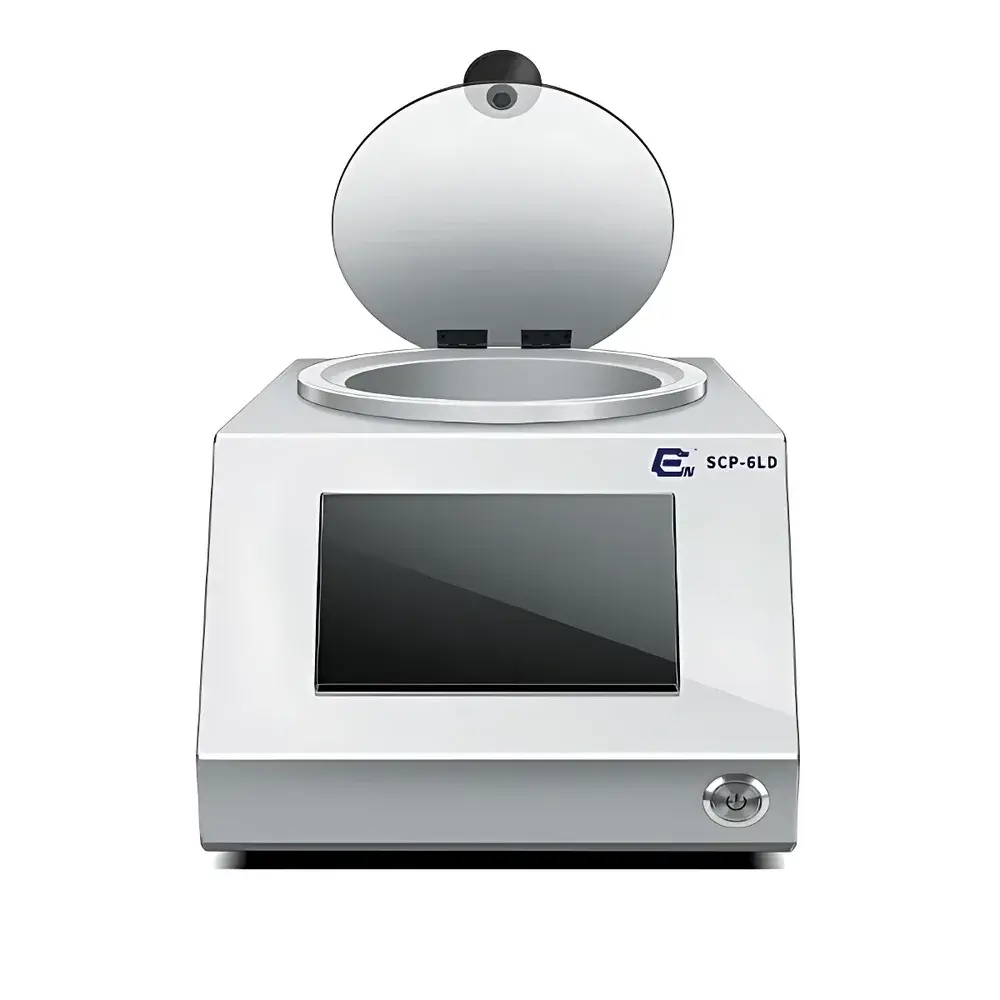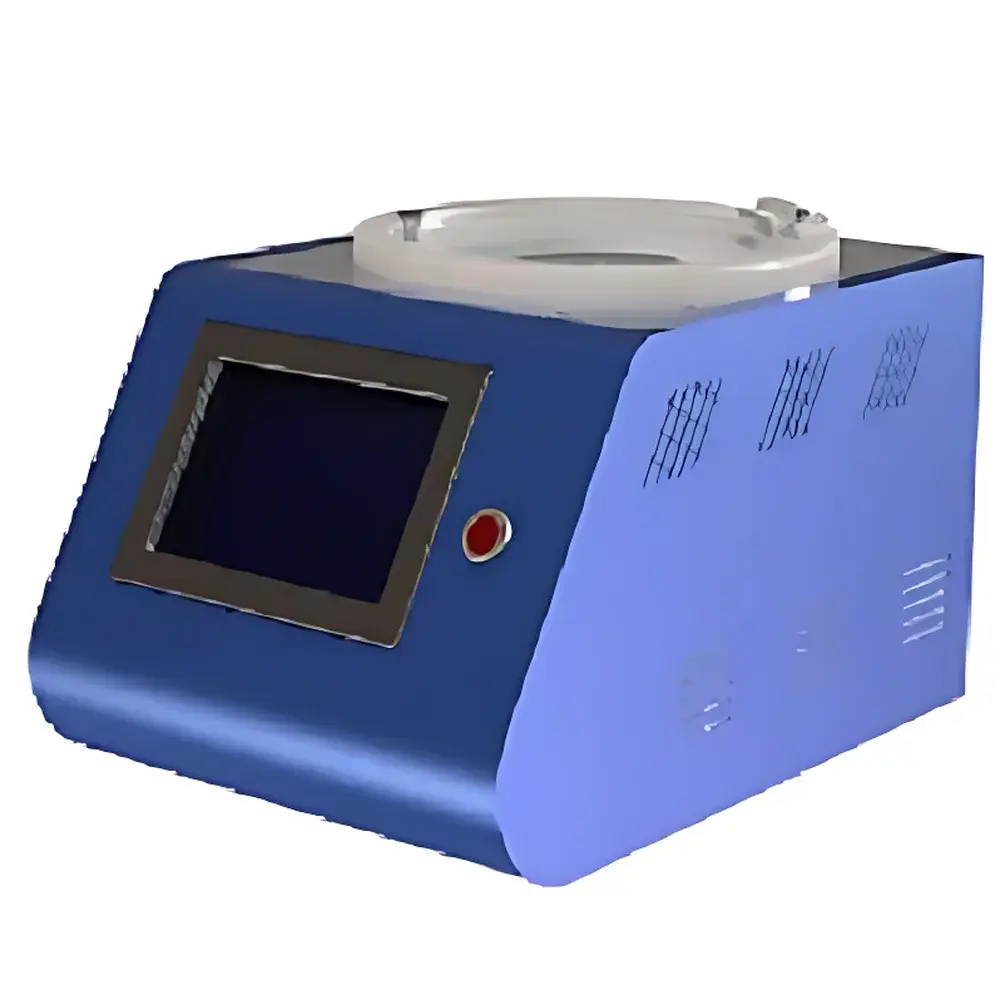
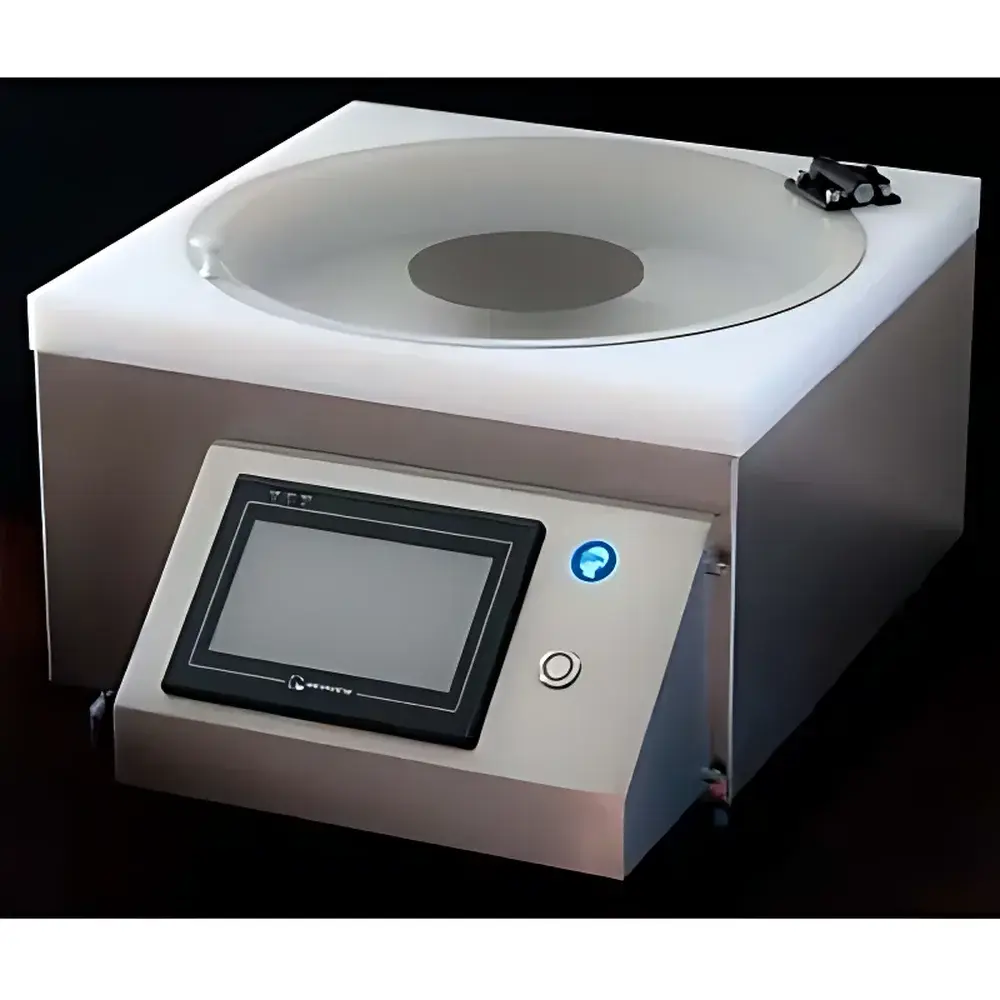
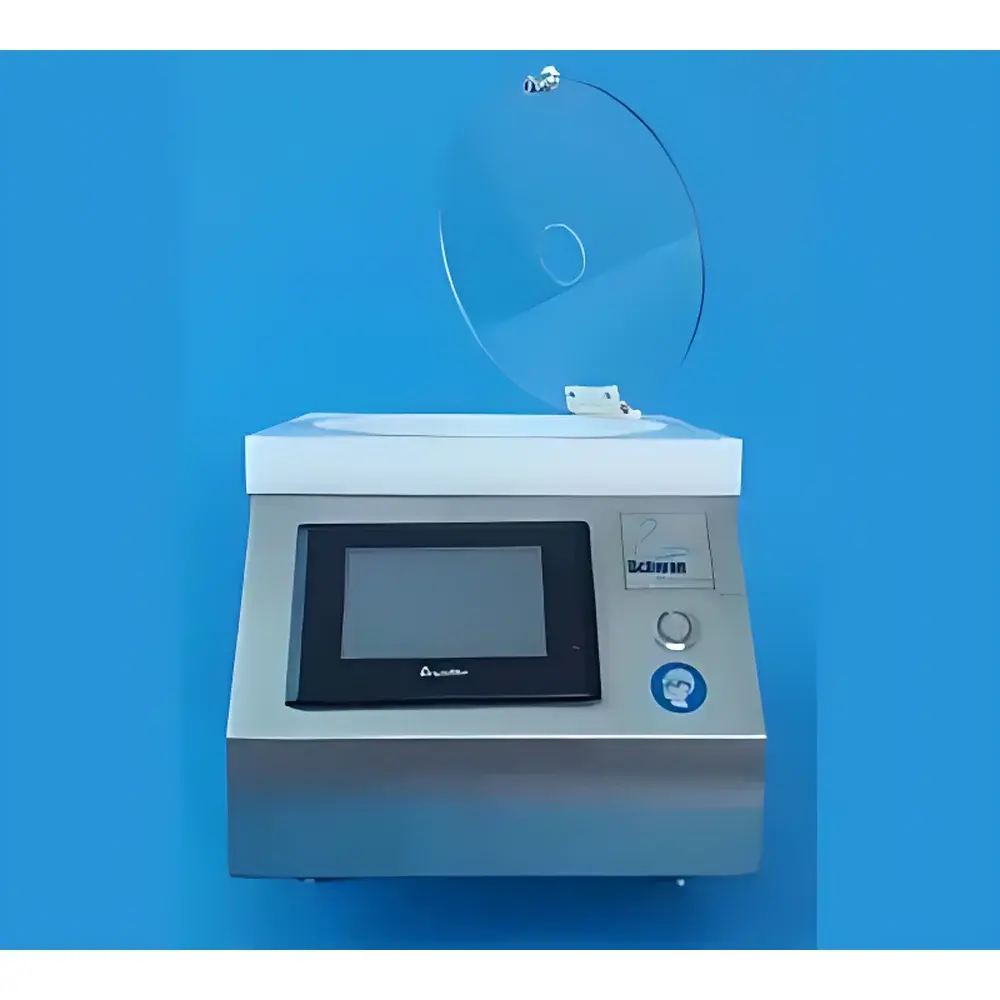
Ansys EZH-S Temperature-Controlled Spin Coater
| Origin | Beijing, China |
|---|---|
| Manufacturer Type | Distributor |
| Origin Category | Domestic |
| Model | EZH-S |
| Price Range | USD 2,800 – 7,000 |
| Max. Rotation Speed | 5000 rpm |
| Speed Resolution | 1 rpm |
| Max. Acceleration | 50000 rpm/s |
| Substrate Diameter | 50 mm (2") |
| Chamber Diameter | 180 mm |
| Heating Plate Diameter | Φ30 mm (customizable) |
| Temperature Range | Ambient to 150 °C |
| Temp. Resolution | 0.1 °C |
| Temp. Stability | ±0.5 °C (steady-state), ±2 °C (during spin-up/down) |
| Programmable Steps | 100 steps × 100 programs |
| Dispense Port | 1-channel auto-dosing |
| Power Input | AC 220 V, 5 A |
| Heating Power | 200 W |
| Motor Power | 200 W |
| Weight | 15 kg |
Overview
The Ansys EZH-S Temperature-Controlled Spin Coater is an engineered solution for precision thin-film deposition in semiconductor R&D, photovoltaics, and advanced materials laboratories. Unlike conventional spin coaters with external hotplates or post-spin bake stages, the EZH-S integrates direct-contact resistive heating into the rotating chuck—enabling simultaneous rotation and temperature-controlled substrate processing. This design leverages Peltier-free resistive heating embedded within a high-thermal-conductivity aluminum chuck, ensuring rapid thermal response and uniform heat distribution across the substrate surface during dynamic spin conditions. The system operates on the principle of centrifugal force-driven solvent evaporation and film leveling, while active thermal regulation modulates viscosity, solvent volatility, and polymer chain mobility—critical parameters in perovskite precursor films, sol-gel oxides, photoresists, and conductive polymer coatings. Its architecture supports process reproducibility under controlled thermal transients, making it suitable for GLP-compliant process development and DOE-based optimization of temperature-dependent coating kinetics.
Key Features
- Integrated heated chuck with direct substrate contact—eliminates thermal lag between spin initiation and target temperature
- Precision temperature control from ambient to 150 °C, with 0.1 °C resolution and ±0.5 °C steady-state accuracy
- High-speed motor delivering 100–5000 rpm at ±1 rpm speed resolution and up to 50,000 rpm/s acceleration
- Programmable multi-step protocols: up to 100 programs, each containing 100 sequential steps with independent speed, acceleration, dwell time (0.1–3000 s), and temperature setpoints
- Single-channel automated dispensing port synchronized with spin start/stop timing
- 2-inch (50 mm) vacuum-suction aluminum chuck with optimized thermal mass and surface flatness (λ/4 over active area)
- Modular chuck design supporting custom substrate diameters (e.g., 76 mm, 100 mm) via interchangeable chucks with matched thermal interface geometry
- Low-power, high-efficiency heating (200 W) and drive motor (200 W) enabling stable operation in standard lab electrical infrastructure
Sample Compatibility & Compliance
The EZH-S accommodates rigid planar substrates including silicon wafers, glass slides, ITO-coated quartz, and metal foils—provided they meet flatness tolerances ≤10 µm and surface cleanliness standards compatible with vacuum chuck adhesion. Substrates must be non-magnetic and electrically insulating or grounded to prevent electrostatic interference with vacuum hold-down. The system conforms to IEC 61000-6-3 (EMC emission limits) and IEC 61010-1 (safety requirements for laboratory equipment). While not certified for ISO 9001 production environments, its programmable logging, parameter locking, and step-wise audit trail support alignment with GLP documentation workflows and internal SOP validation. Temperature and speed calibration certificates traceable to NIST standards are available upon request for method qualification in academic and industrial R&D settings.
Software & Data Management
The EZH-S operates via a dedicated embedded controller with a 5.7″ TFT LCD touchscreen interface. All process parameters—including real-time RPM, chuck temperature, elapsed time per step, and vacuum status—are displayed and logged internally with timestamped records (CSV export via USB). No proprietary PC software is required; however, optional RS-232/USB-to-serial interface enables integration with LabVIEW, Python-based automation frameworks, or LIMS systems for centralized protocol management. Audit trails include operator ID entry (optional password lock), program version stamping, and automatic detection of parameter out-of-spec events (e.g., temperature deviation >±3 °C). Data retention supports FDA 21 CFR Part 11 compliance when deployed with supplementary electronic signature and access-control modules (sold separately).
Applications
- Perovskite solar cell fabrication: thermal-assisted crystallization of MAPbI3 and FA-based precursors during spin-on deposition
- Photoresist coating for maskless lithography: viscosity tuning via substrate pre-heating to improve edge bead removal and thickness uniformity
- Sol-gel derived metal oxide films (TiO2, ZnO, SiO2): controlled hydrolysis/condensation kinetics through in-situ thermal activation
- Conductive polymer thin films (PEDOT:PSS, PANI): enhanced interchain ordering and conductivity via thermally assisted phase separation
- Microfluidic channel patterning: localized thermal curing of UV-curable resins immediately after spin coating
- Academic thin-film research requiring DOE-based mapping of temperature–speed–thickness correlations
FAQ
What is the maximum recommended substrate thickness for reliable vacuum adhesion?
Standard 50 mm chucks support substrates 0.1–2.0 mm thick. Thicker or warped samples require custom chuck surface profiling and may necessitate auxiliary mechanical clamping.
Can the EZH-S operate under inert atmosphere or low-pressure conditions?
The chamber is not sealed or rated for vacuum/gas purging. For inert processing, users must integrate the unit into a glovebox or use external purge enclosures with compatible viewport and feedthrough configurations.
Is temperature calibration performed at rotation or static conditions?
Calibration is validated both statically (chuck idle) and dynamically (at 3000 rpm, 100 °C), with compensation algorithms correcting for rotational-induced convective cooling effects.
Does the system support third-party dispense pumps?
Yes—the single-channel dispense port provides TTL-level trigger output and accepts 0–10 V analog input for synchronization with external syringe or peristaltic pumps meeting ISO 8536-4 fluid compatibility guidelines.
What maintenance intervals are recommended for long-term accuracy?
Vacuum pump oil replacement every 6 months; chuck surface cleaning with IPA weekly; annual verification of temperature sensor drift and speed encoder linearity using calibrated reference instruments.