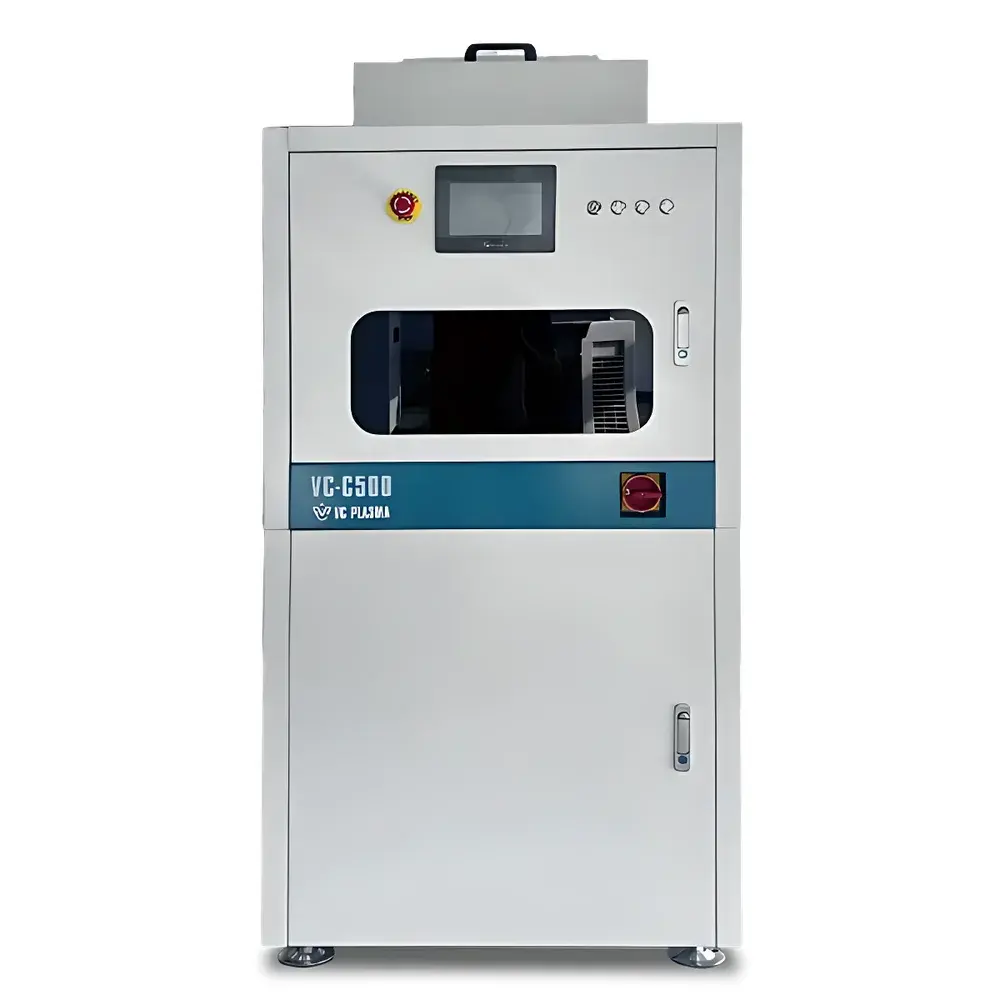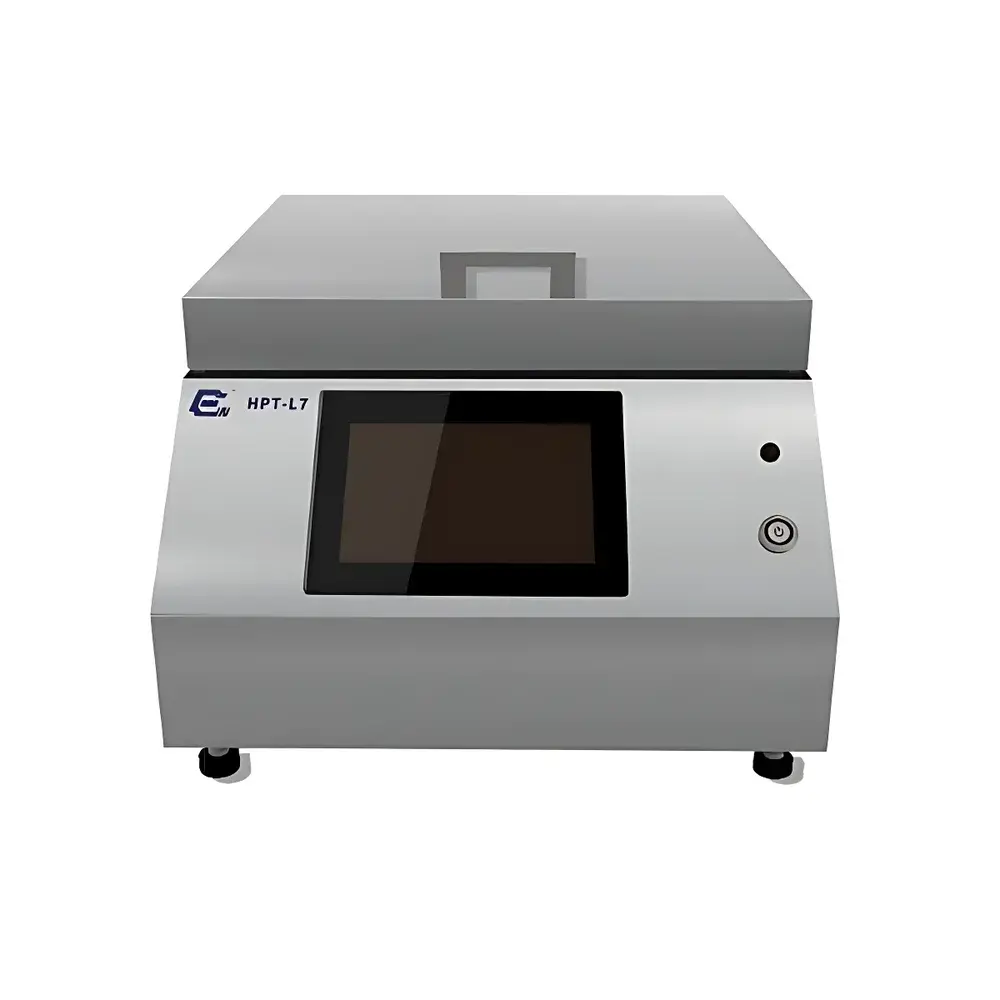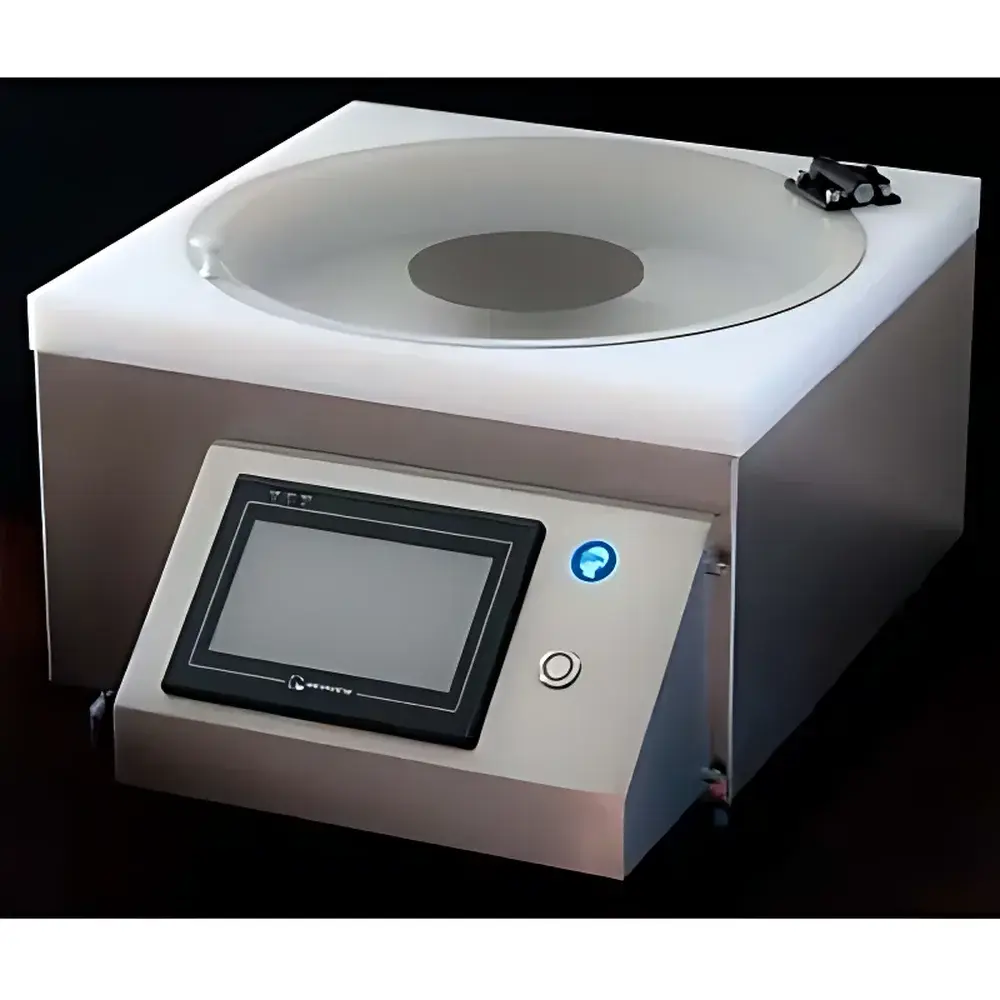
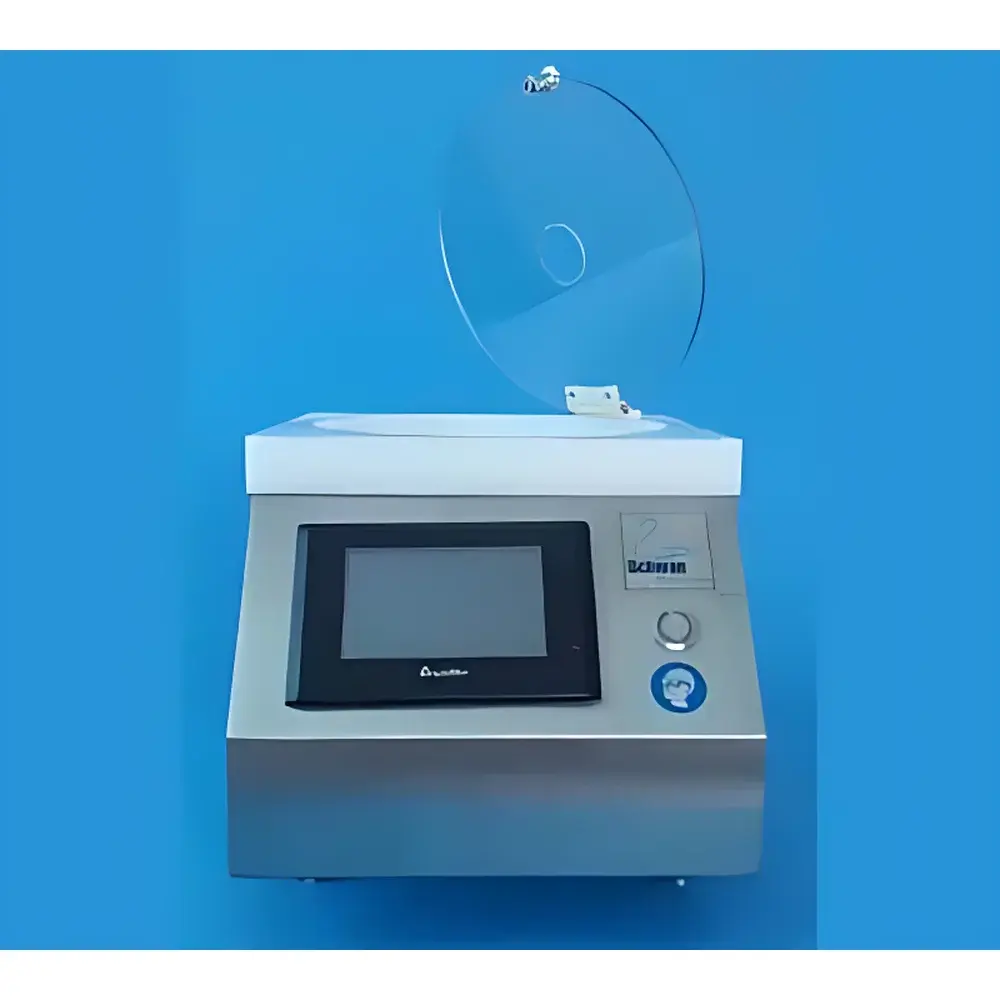
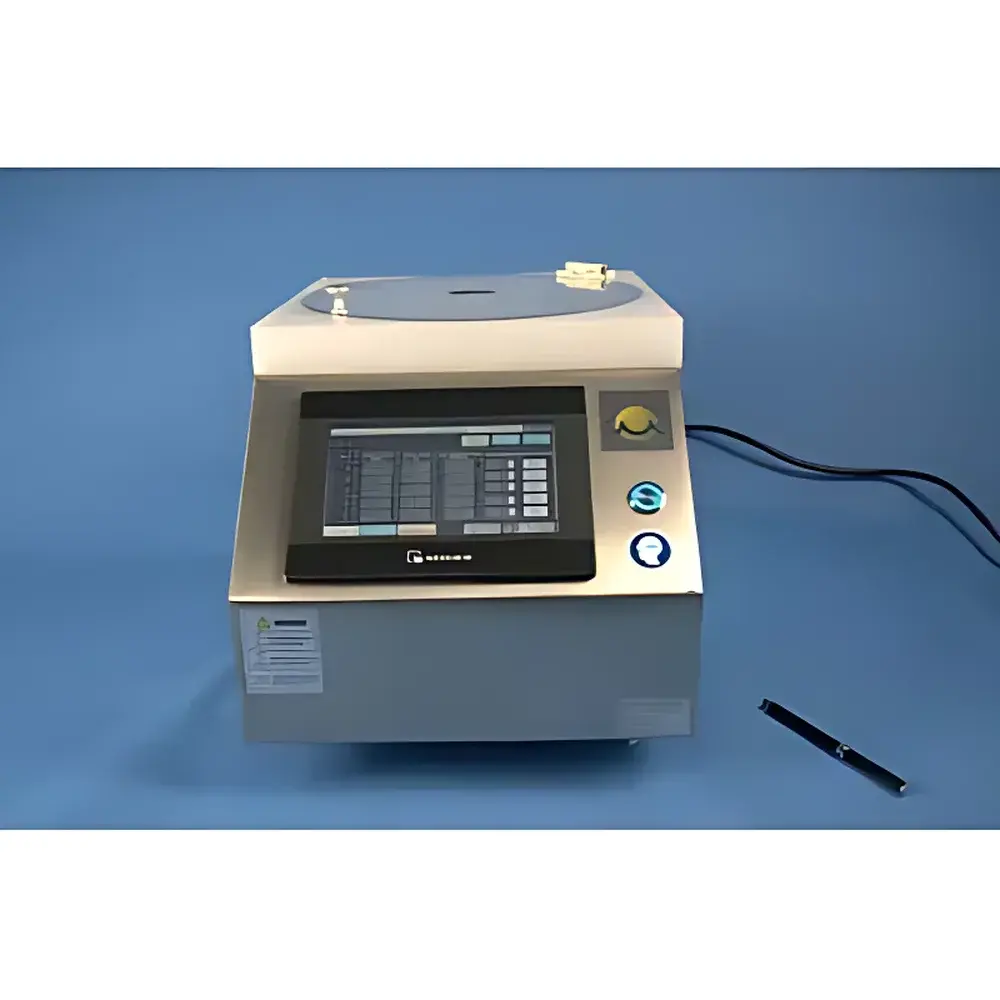
Ansys SC200-SE Precision Spin Coater for 12-inch Wafers
| Origin | Beijing, China |
|---|---|
| Manufacturer Type | Distributor |
| Origin Category | Domestic |
| Model | SC200-SE |
| Price Range | USD 7,000 – 14,000 (FOB) |
| Max Rotation Speed | 0–5000 rpm |
| Speed Resolution | 1 rpm/s |
| Max Acceleration | 10,000 rpm/s |
| Substrate Diameter | 304.8 mm (12″) |
| Chamber Diameter | 440 mm |
| Speed Stability | < ±1 rpm |
| Time Resolution | 0.1 s/step |
| Programs | 100 × 100 steps |
| Uniformity | < ±3% (6″ measurement area, edge exclusion of 3 mm) |
| Motor | 400 W industrial servo motor |
| Enclosure Material | Electropolished stainless steel (316L-grade compatible) |
| Chamber Lining | PTFE-coated or polyethylene bowl |
| Control Interface | 7″ capacitive touchscreen HMI |
| Exhaust Location | Bottom-mounted, integrated with chuck base |
| Dimensions (W×D×H) | 463 × 613 × 306 mm |
Overview
The Ansys SC200-SE Precision Spin Coater is an engineered solution for high-fidelity photoresist and functional thin-film deposition on semiconductor wafers up to 304.8 mm (12 inches) in diameter. Based on centrifugal fluid dynamics principles, the system delivers controlled, repeatable film thickness through precise regulation of rotational kinematics—speed, acceleration, dwell time, and dispensing synchronization. Unlike benchtop units relying on brushed DC motors or open-loop controllers, the SC200-SE integrates a 400 W industrial servo motor with closed-loop feedback, enabling sub-rpm speed stability (< ±1 rpm) and programmable acceleration profiles up to 10,000 rpm/s. Its architecture mirrors key design elements found in full-track lithography systems—including bottom-mounted exhaust routing, chemically inert chamber lining, and electropolished stainless-steel housing—thereby bridging the performance gap between R&D spin coaters and production-grade process tools.
Key Features
- Electropolished 316L stainless-steel enclosure resistant to HF, TMAH, organic solvents, and plasma etch byproducts—ensuring long-term integrity and compliance with cleanroom ISO Class 5 maintenance protocols.
- 7-inch capacitive touchscreen HMI with intuitive workflow navigation, real-time parameter monitoring, and on-device program editing (up to 100 programs, each with 100 independently timed steps).
- PTFE-lined or polyethylene “sealed bowl” chamber design minimizes cross-contamination and supports aggressive chemistries including SU-8, PMMA, AZ series resists, and metal-organic precursors.
- Bottom-integrated exhaust port aligned with the chuck centerline optimizes laminar airflow extraction—reducing aerosol dispersion and improving edge uniformity across full 12″ wafers.
- Hermetically sealed, chemically resistant transparent lid with positive-pressure purge interface (optional) prevents resist splatter, volatile organic compound (VOC) leakage, and ambient particulate ingress during spin.
- Programmable dispense synchronization logic allows coordinated timing between valve actuation, spin ramp initiation, and acceleration profiling—critical for multi-layer bilayer resist stacks and hybrid polymer-inorganic films.
Sample Compatibility & Compliance
The SC200-SE accommodates substrates from 25 mm (1″) to 304.8 mm (12″) diameter, including silicon, SiC, GaN, fused silica, glass, and flexible polymer foils. Chuck vacuum ports support flatness-sensitive substrates (e.g., warped SOI or thin-film PV wafers) with adjustable suction pressure (0–80 kPa). All wetted surfaces comply with SEMI F57-0201 standards for semiconductor process equipment materials compatibility. The system meets CE machinery directive (2006/42/EC), RoHS 2011/65/EU, and IEC 61000-6-2/6-4 electromagnetic compatibility requirements. Optional audit-trail logging and user-access controls align with GLP/GMP documentation frameworks per FDA 21 CFR Part 11 when integrated with validated networked data capture.
Software & Data Management
Onboard firmware supports USB export of full process logs—including timestamped speed, acceleration, torque, chamber temperature (optional sensor), and step completion status—in CSV format compliant with JMP, MATLAB, and MES integration pipelines. Remote operation via Ethernet TCP/IP enables centralized fleet management and script-based recipe deployment using standard SCPI command syntax. Audit trail functionality (enabled via optional license) records operator ID, parameter changes, program execution history, and system error events with SHA-256 hash integrity verification—supporting traceability for ISO 9001:2015 internal audits and customer qualification reports.
Applications
- Photolithography process development for advanced nodes (28 nm to 5 nm logic, 1x nm DRAM) requiring sub-5 nm thickness repeatability.
- Spin-on dielectric (SOD) and spin-on carbon (SOC) film deposition for BEOL integration and CMP planarization studies.
- Perovskite, quantum dot, and 2D material precursor coating for optoelectronic and flexible electronics R&D.
- MEMS packaging layer spin-coating (e.g., BCB, polyimide) under controlled nitrogen purge environments.
- Calibration and validation of ellipsometry, reflectometry, and profilometry metrology workflows on reference wafers.
FAQ
What wafer sizes does the SC200-SE support?
The system handles substrates from 25 mm (1″) to 304.8 mm (12″) diameter, with dedicated chucks available for 100 mm, 150 mm, 200 mm, and 300 mm formats.
Is vacuum chuck pressure adjustable?
Yes—vacuum level is software-controlled from 0 to 80 kPa, with real-time feedback and overpressure protection.
Can the system be integrated into a cleanroom automation line?
Standard Ethernet (TCP/IP) and optional SECS/GEM interfaces enable SECS-II message exchange and factory host communication per SEMI E30/E37 standards.
Does the SC200-SE meet ISO 14644-1 Class 5 particle requirements?
When operated with HEPA-filtered purge gas and maintained per Ansys Cleanroom Maintenance Protocol v2.1, the unit contributes < 3,520 particles/m³ ≥ 0.5 µm at 1 m/s face velocity.
What is the maximum allowable resist viscosity for stable spin coating?
With optimized acceleration ramping and dispense timing, the system achieves uniform films up to 500 cP (e.g., diluted SU-8 2005); higher viscosities require custom chuck geometry and extended spin durations.