
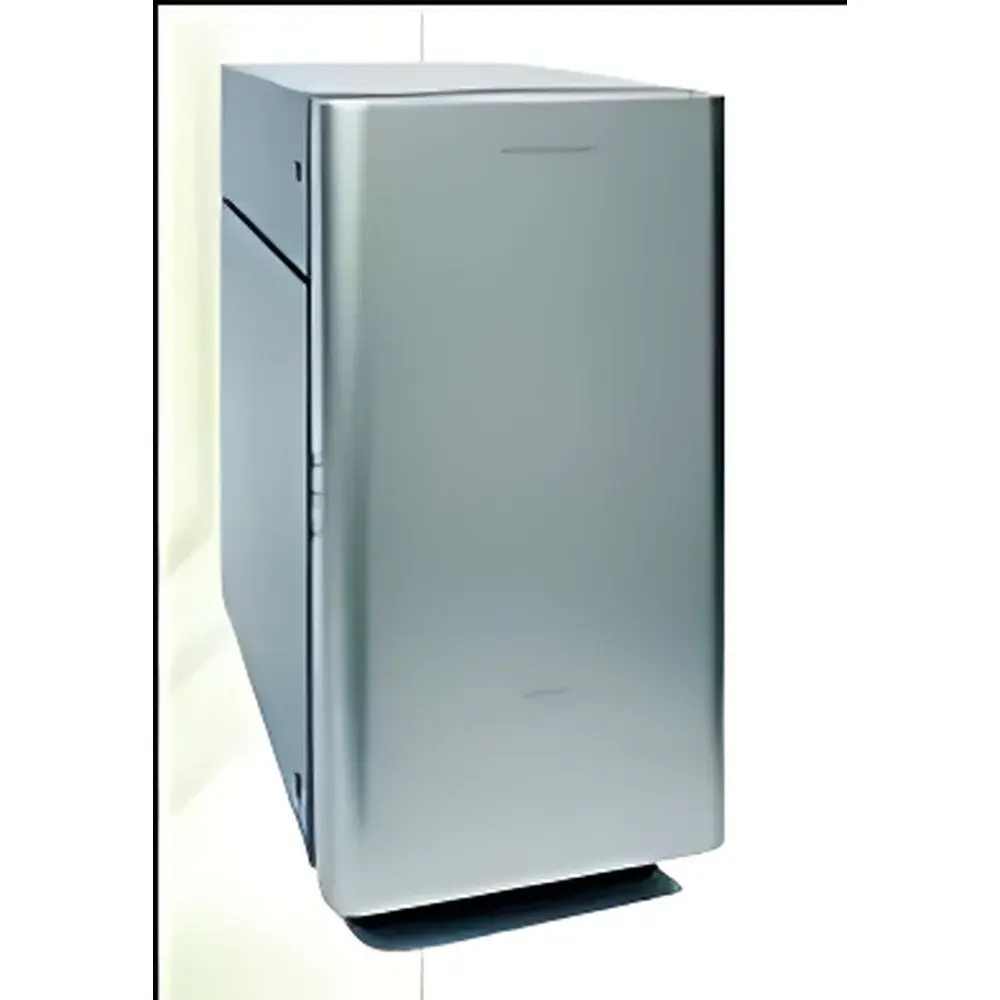
Antec DECADE II SDC Electrochemical Detector
| Brand | Antec |
|---|---|
| Origin | Netherlands |
| Model | DECADE II SDC |
| Detector Type | Electrochemical Detector (ECD) |
| Operating Modes | DC Amperometry with Advanced Digital Filtering (ADF) |
| Filter Frequency Range | 0.5–0.001 Hz (decade steps: 1, 2, 5) |
| Potential Range | ±2.00 V |
| Faraday Column Oven Dimensions | Height 37 cm |
| Temperature Range | Ambient +7 °C to 45 °C |
| Temperature Stability | ±0.1 °C |
| Flow Cell Types | Central-jet wall-type electrode (compatible with standard & capillary HPLC columns) and conventional thin-layer electrode |
| Electrode Configurability | Interchangeable working and reference electrodes (e.g., glassy carbon, gold, platinum, Ag/AgCl) |
Overview
The Antec DECADE II SDC Electrochemical Detector is a high-precision, research-grade amperometric detection system engineered for integration with high-performance liquid chromatography (HPLC) and ultra-high-performance liquid chromatography (UHPLC) platforms. Designed on the principles of controlled-potential amperometry, the DECADE II SDC measures current generated by oxidation or reduction reactions occurring at the surface of a working electrode under applied potential—enabling selective, sensitive, and quantitative detection of electroactive analytes including catecholamines, nitroaromatics, phenols, thiols, and pharmaceutical metabolites. Its architecture reflects over two decades of dedicated development in electrochemical chromatography by Antec, a Netherlands-based specialist recognized globally for robust ECD hardware, application-driven design, and deep integration with both standalone and hyphenated workflows—including online coupling with mass spectrometry (EC-MS) via the ROXY™ platform.
Key Features
- Advanced Digital Filtering (ADF): A proprietary real-time digital signal processing algorithm operating between 0.5 Hz and 0.001 Hz (in 1–2–5 decade increments), significantly suppressing low-frequency noise while preserving analyte peak integrity and improving limit of detection (LOD) by up to 3× compared to analog filtering alone.
- Integrated Faraday Column Oven: A thermally stabilized enclosure (37 cm height) maintaining column and flow cell at precise temperatures from ambient +7 °C to 45 °C (±0.1 °C stability), minimizing thermal drift, baseline fluctuation, and redox kinetics variability—critical for reproducible retention time and response factor alignment.
- Dual-Geometry Flow Cell Architecture: Supports two interchangeable electrode configurations—central-jet wall-type cells optimized for high-efficiency mass transport and compatibility with both standard-bore (4.6 mm) and capillary (0.3–0.5 mm) columns; and traditional thin-layer cells offering rapid electrode exchange for method development or multi-analyte screening.
- Modular Electrode System: Fully configurable working electrodes (glassy carbon, gold, platinum) paired with stable reference electrodes (Ag/AgCl, Pd/H₂), enabling method optimization across diverse redox potentials and matrix conditions without hardware modification.
- Universal Chromatographic Compatibility: Fully software-controlled via RS-232/USB interface; accepts TTL trigger signals and supports synchronized acquisition with third-party HPLC systems (Waters, Agilent, Thermo Fisher, Shimadzu) without proprietary data acquisition lock-in.
Sample Compatibility & Compliance
The DECADE II SDC is routinely deployed in regulated and non-regulated laboratories for trace-level quantification of electroactive compounds in biological matrices (plasma, urine, cerebrospinal fluid), environmental samples (groundwater, wastewater), food extracts, and pharmaceutical formulations. It meets foundational requirements for GLP-compliant operation—including audit-trail-enabled parameter logging, user-access controls, and electronic signature support when used with compliant chromatography data systems (CDS). While not intrinsically 21 CFR Part 11 certified, its deterministic analog-to-digital conversion, timestamped raw current output, and deterministic filter coefficients ensure full traceability and support validation per ICH Q2(R2), USP , and ASTM D7213 (for catecholamine analysis in clinical labs).
Software & Data Management
Control and acquisition are managed through Antec’s Decade Software Suite (v5.x), a Windows-based application supporting real-time potential programming, multi-channel amperometric scanning, and post-run deconvolution of overlapping redox peaks. Raw current data (nA scale, 16-bit resolution, 100 Hz sampling) is exported in ASCII or .CDF format for import into third-party tools (e.g., Chromeleon, Empower, MATLAB). The software maintains a complete metadata log—including applied potential, filter settings, oven temperature, and acquisition timestamps—enabling full reconstruction of analytical conditions. Optional API integration allows automation within LIMS environments and scheduled calibration verification protocols.
Applications
- Neurotransmitter profiling: Simultaneous quantification of dopamine, norepinephrine, serotonin, and their metabolites in microdialysates with sub-picomolar LODs.
- Pharmaceutical stability testing: Monitoring oxidative degradation products (e.g., quinones, hydroperoxides) in APIs under accelerated stress conditions.
- Environmental monitoring: Detection of nitrobenzene, anilines, and chlorophenols in drinking water per EPA Method 525.3 derivatization alternatives.
- Food safety analysis: Quantitative assessment of polyphenol antioxidants (e.g., epicatechin, rutin) in plant extracts and functional beverages.
- EC-MS method development: Coupling with ROXY™ interface for real-time electrochemical reaction product identification and mechanistic studies of redox pathways.
FAQ
Is the DECADE II SDC compatible with UHPLC systems operating above 1000 bar?
Yes—the central-jet flow cell design accommodates backpressures up to 1200 bar and features low dead-volume (<100 nL) connections compatible with 0.12 mm ID capillaries.
Can multiple working electrodes be controlled independently within one run?
No—the DECADE II SDC operates with a single defined working electrode per analysis; however, sequential runs with different electrodes can be automated via script-driven software control.
Does the Faraday oven support gradient elution without thermal lag?
Yes—its PID-controlled heating element and insulated chamber achieve <2-minute stabilization after setpoint changes, ensuring consistent column and detector temperature during solvent gradient programs.
What electrochemical validation standards does Antec recommend?
Antec provides NIST-traceable calibration solutions (e.g., 1 µM dopamine in 0.1 M phosphate buffer, pH 7.4) and recommends quarterly verification using certified reference materials per ISO/IEC 17025 internal quality control guidelines.
Is firmware upgrade support available for legacy DECADE units?
Yes—Antec maintains backward-compatible firmware updates through registered customer portals, including enhanced ADF coefficient libraries and improved USB enumeration stability for Windows 10/11 environments.






