
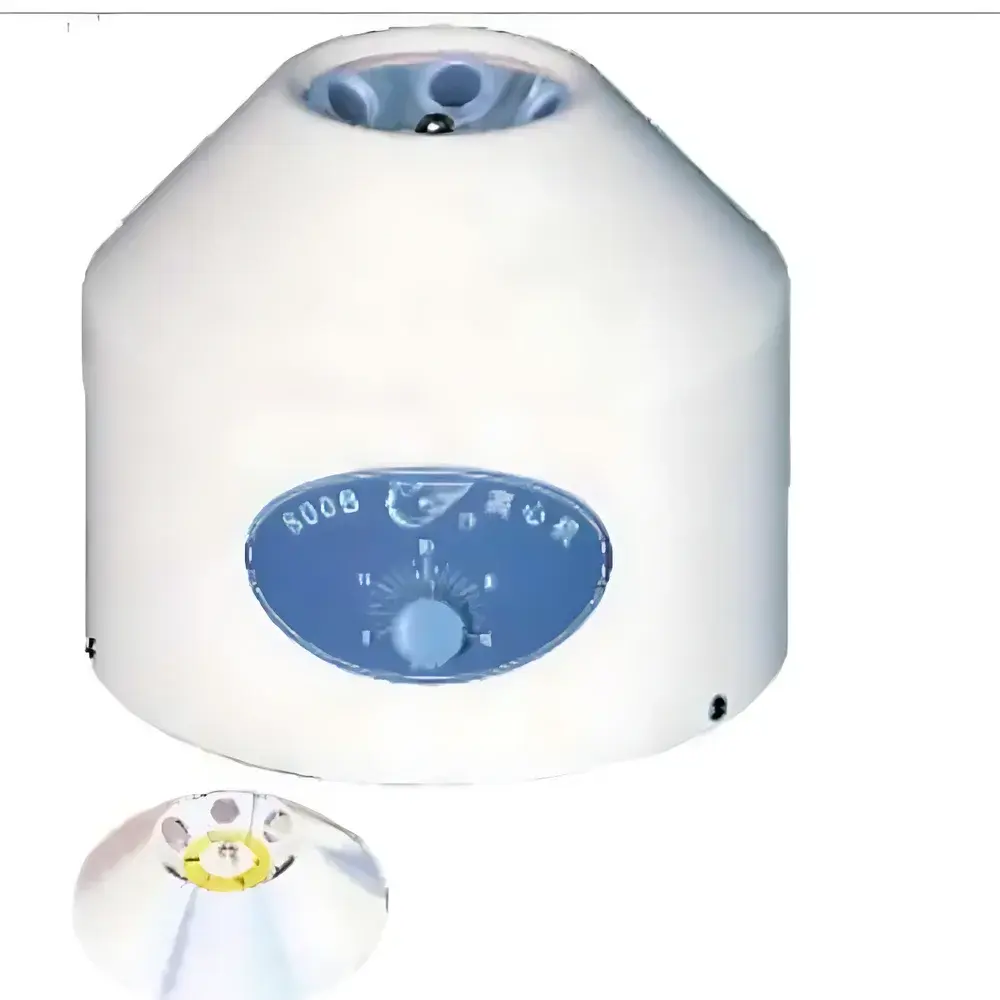
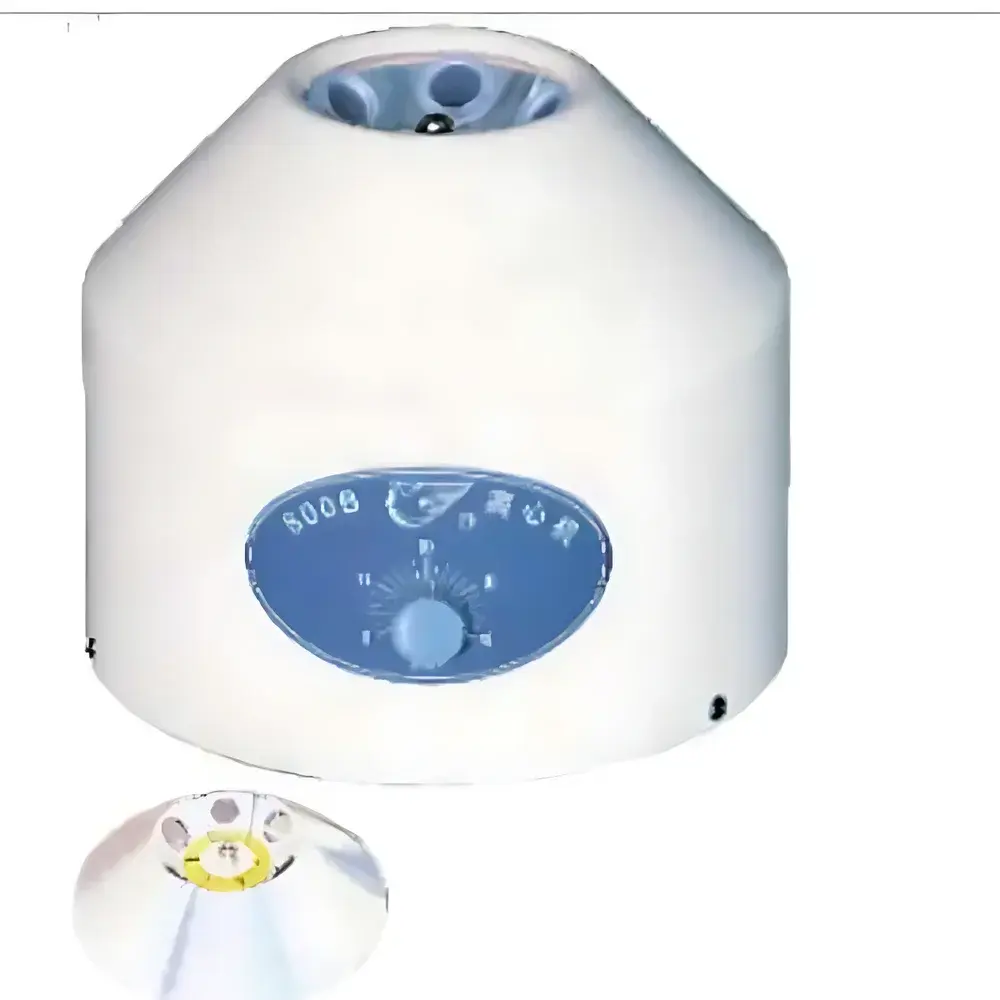
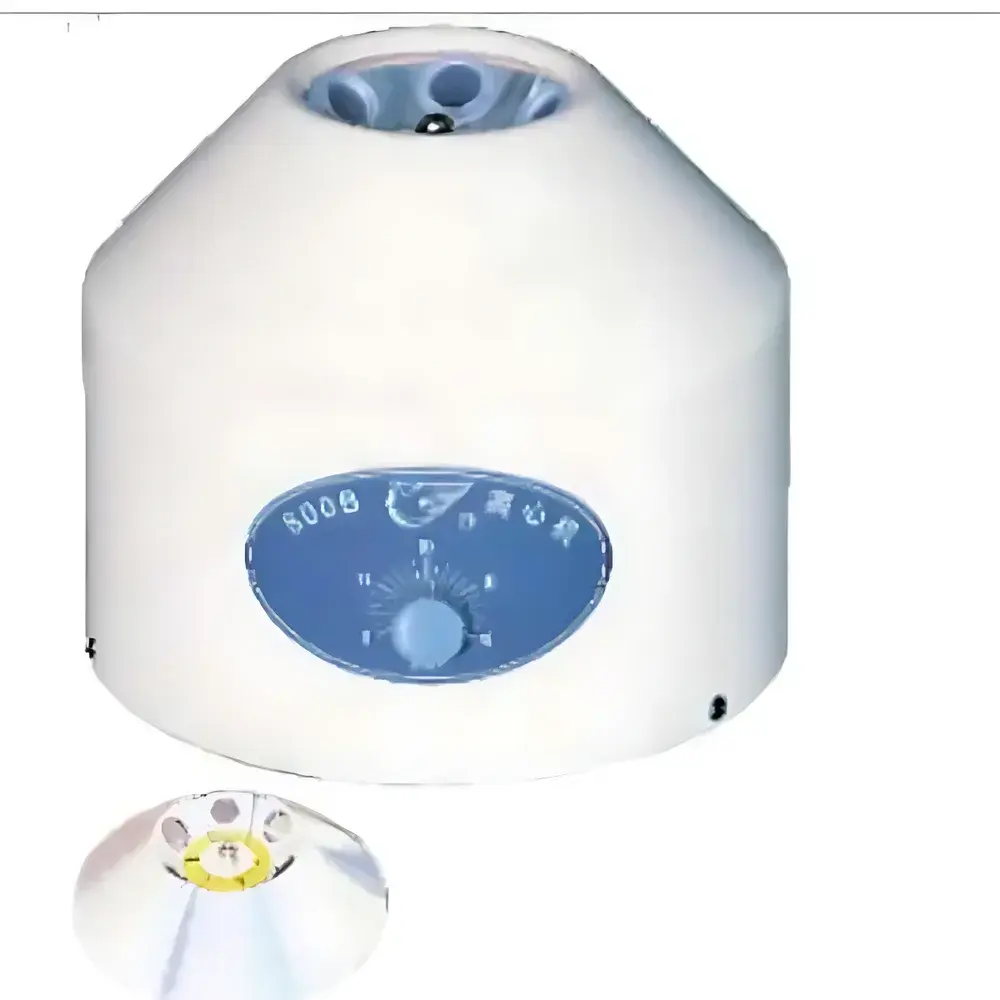
AnTing 800B Benchtop Low-Speed Centrifuge
| Brand | AnTing |
|---|---|
| Origin | Shanghai, China |
| Model | 800B |
| Type | Benchtop Centrifuge |
| Speed Range | Up to 4000 rpm |
| Max RCF | 1430 × g |
| Rotor Capacity | 6 × 20 mL (angle rotor) |
| Power Supply | 220 V, 50 Hz, 40 W |
| Dimensions (D×H) | 245 mm × 210 mm |
| Weight | 4 kg |
| Construction | High-strength engineering plastic housing |
| Safety | Electronic lid lock |
| Application Class | General-purpose low-speed separation |
Overview
The AnTing 800B Benchtop Low-Speed Centrifuge is a compact, lightweight, and operationally stable centrifugation system engineered for routine sample separation in academic laboratories, quality control environments, and small-scale production facilities. Designed according to fundamental sedimentation principles governed by relative centrifugal force (RCF), the instrument operates within a controlled speed range up to 4000 rpm—sufficient to pellet cells, precipitate macromolecules, clarify suspensions, and separate phase-separated aqueous-organic mixtures without inducing excessive shear or thermal stress. Its fixed-angle rotor configuration ensures consistent orientation of sample tubes during acceleration and deceleration, minimizing run-to-run variability in pelleting efficiency. The unit complies with IEC 61010-1 safety standards for laboratory electrical equipment and incorporates mechanical and electronic safeguards—including an interlocked lid mechanism that halts rotation immediately upon lid opening—to meet GLP-aligned operational requirements.
Key Features
- Robust construction using high-strength engineering-grade thermoplastic housing, delivering structural integrity while maintaining a low mass (4 kg) for enhanced portability and benchtop footprint minimization.
- Electronically actuated lid lock system providing fail-safe rotational inhibition when the chamber is not fully secured—critical for operator safety and regulatory compliance in audited environments.
- Precision-machined aluminum angle rotor supporting six 20 mL conical or round-bottom tubes (e.g., 15–20 mL Falcon-style or glass centrifuge tubes), optimized for uniform radial distribution and minimal vibration at rated speeds.
- Brushless DC motor drive ensuring low-noise operation (<55 dB(A)), extended service life, and consistent torque delivery across the full speed range (0–4000 rpm).
- Integrated digital display showing real-time rpm and elapsed time; no programmable ramp/deceleration profiles or timer-based auto-stop—consistent with its role as a manually operated general-purpose instrument.
- Low power consumption (40 W nominal) enables continuous use without significant thermal load accumulation, supporting ambient-temperature centrifugation protocols required for heat-sensitive biological samples.
Sample Compatibility & Compliance
The 800B accommodates standard tube formats including polypropylene, polycarbonate, and borosilicate glass centrifuge tubes ranging from 5 to 20 mL. It is routinely employed in applications involving whole blood fractionation (serum/plasma separation), yeast/bacterial cell harvesting, particulate removal from reagent stocks, and clarification of crude enzyme extracts. While not certified to ISO 13485 or FDA 21 CFR Part 11, its mechanical design and operational consistency align with foundational QA/QC practices outlined in ISO/IEC 17025 for testing laboratories. Users performing regulated work should validate performance per internal SOPs, particularly regarding rotor balance tolerance (±0.1 g per position) and periodic verification of speed accuracy using an external tachometer traceable to national standards.
Software & Data Management
The AnTing 800B is a standalone electromechanical device with no embedded microprocessor, network interface, or data logging capability. All operational parameters are set manually via front-panel controls, and no software driver, PC connectivity, or audit trail functionality is provided. This architecture eliminates cybersecurity concerns associated with connected instruments and simplifies qualification under GxP frameworks where deterministic, non-programmable behavior is preferred. For laboratories requiring electronic record retention, manual entry of run parameters (speed, duration, rotor ID, date/time) into ELN systems or paper-based logbooks remains the recommended practice.
Applications
- Routine serum and plasma separation from clotted or anticoagulated blood specimens in clinical support labs.
- Harvesting microbial biomass (e.g., E. coli, S. cerevisiae) prior to lysis or storage at –80 °C.
- Clarifying cell lysates and tissue homogenates prior to filtration or chromatographic analysis.
- Removing insoluble aggregates from antibody or protein formulations during early-stage bioprocessing.
- Separating precipitated nucleic acid pellets following ethanol or isopropanol precipitation steps.
- Conditioning calibration standards and reference materials used in analytical chemistry workflows.
FAQ
What is the maximum tube volume supported by the 800B?
The instrument accepts up to six 20 mL tubes in its fixed-angle rotor; overfilling beyond manufacturer-specified limits may compromise balance and increase vibration risk.
Is the rotor autoclavable?
No—the aluminum rotor is not designed for steam sterilization; cleaning is performed with 70% ethanol or mild detergent followed by air drying.
Can this centrifuge be used for density gradient separations?
Not recommended; the absence of variable acceleration/deceleration control and lack of swing-out rotor options limit its suitability for delicate gradient-based protocols such as sucrose or Percoll separations.
Does the 800B include a refrigeration system?
No—it is a non-refrigerated unit; users requiring temperature-controlled runs must pre-chill samples and operate in climate-controlled rooms.
How often should speed calibration be verified?
Annually—or after any impact event or maintenance intervention—as part of a laboratory’s preventive maintenance schedule aligned with ISO/IEC 17025 Clause 6.4.10.



