
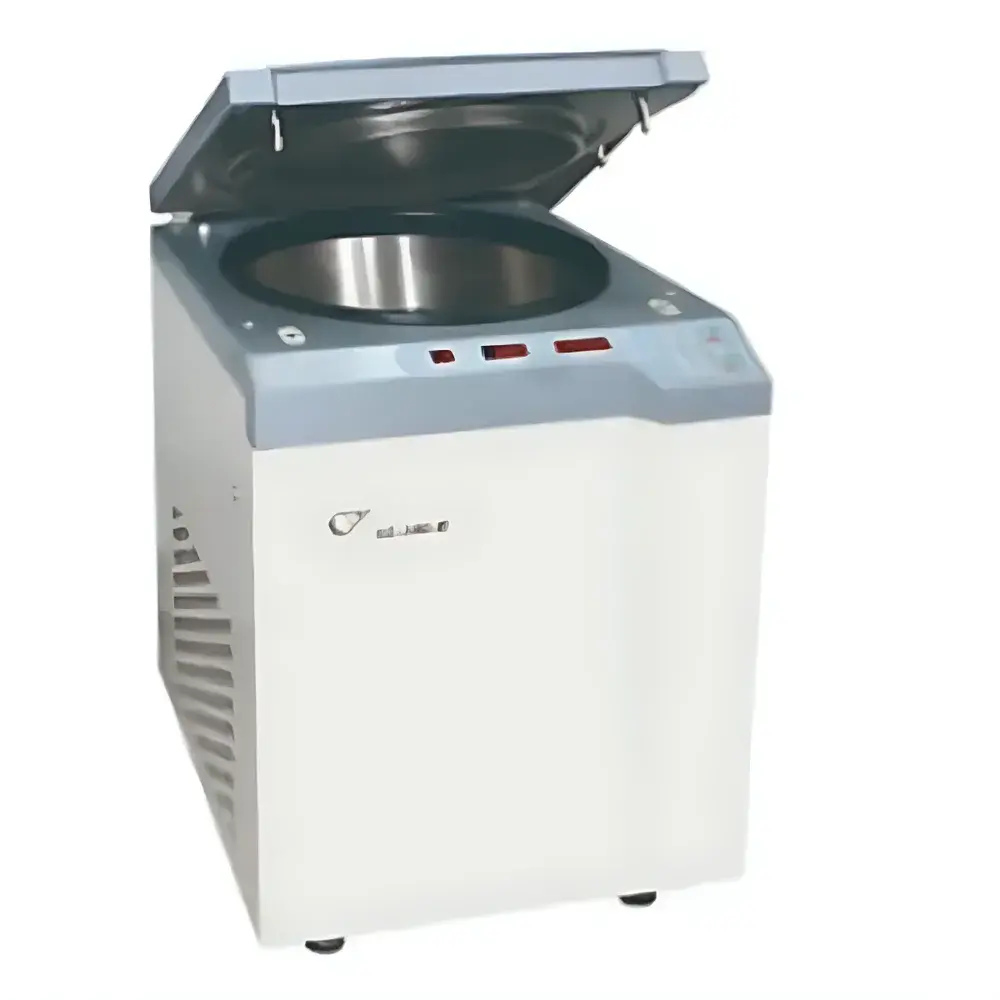
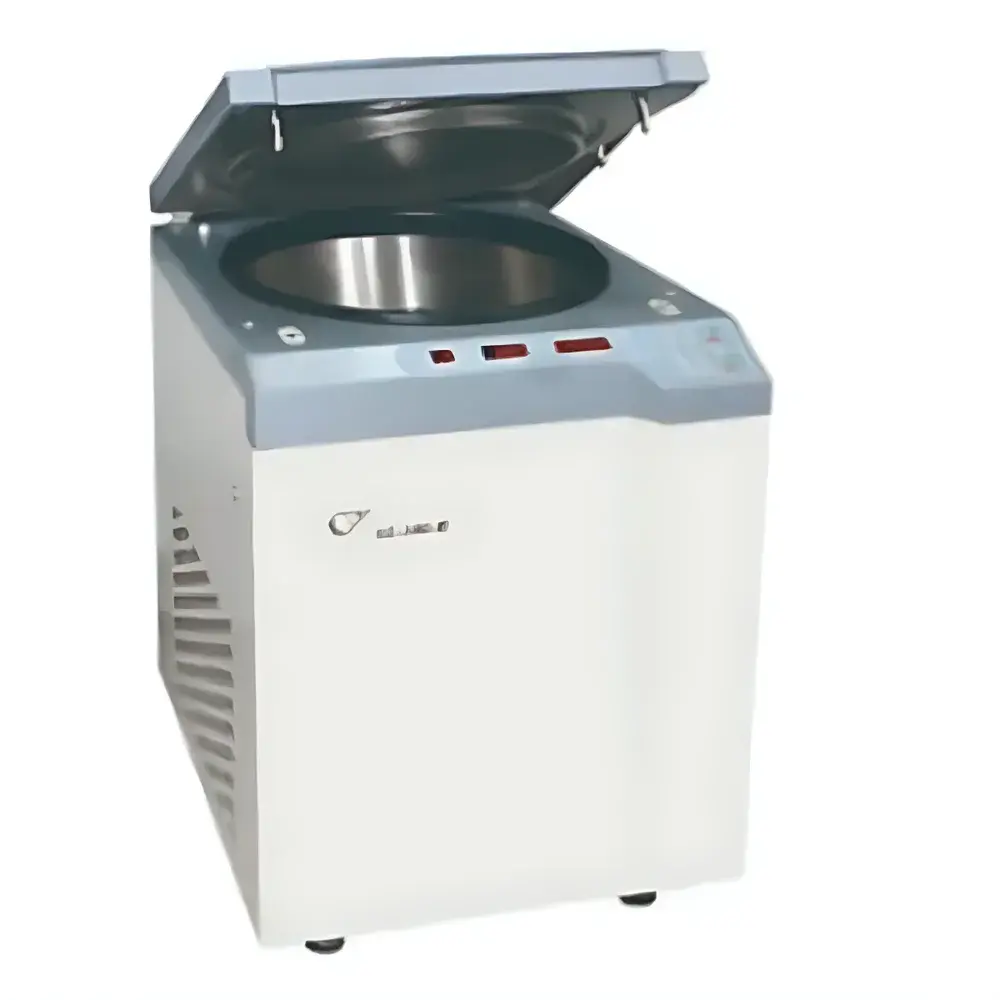
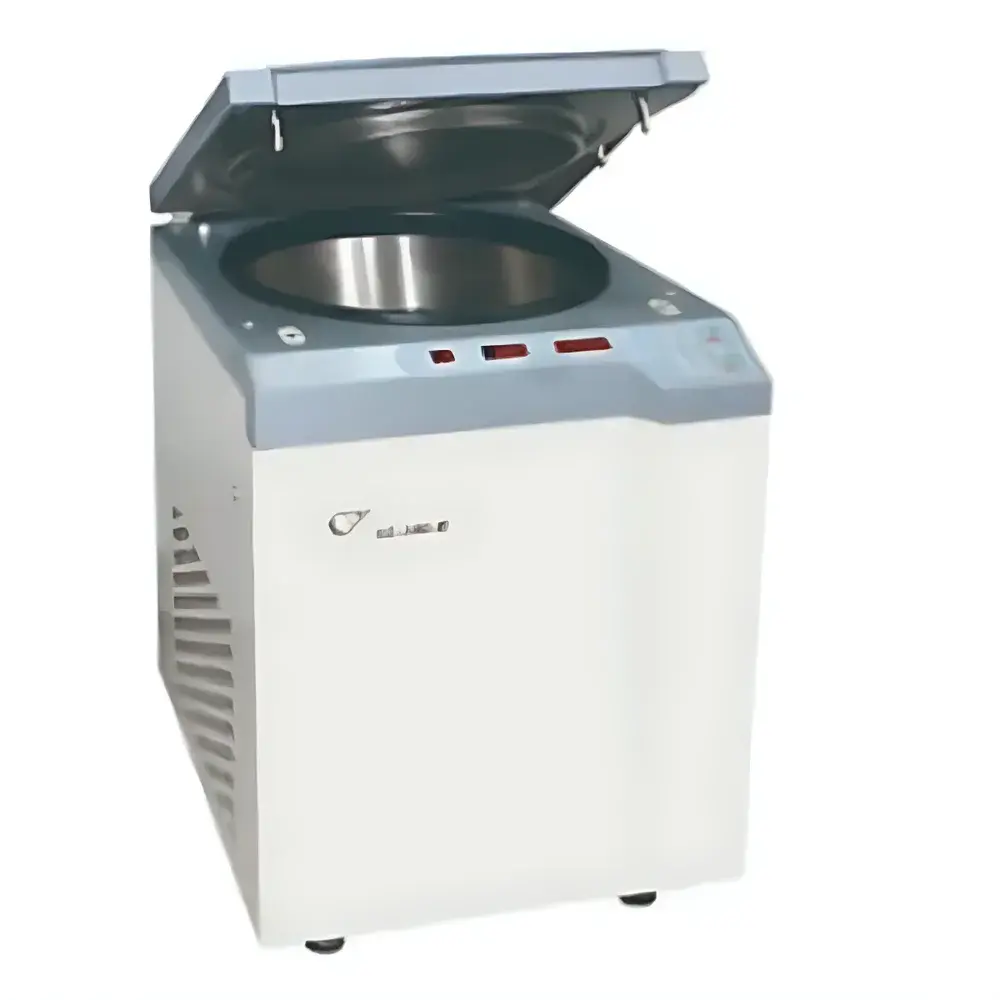
AnTing DL-5000B Low-Speed Refrigerated Centrifuge
| Brand | AnTing |
|---|---|
| Origin | Shanghai, China |
| Model | DL-5000B |
| Type | Benchtop Refrigerated Centrifuge |
| Max Speed | 5000 rpm |
| Max RCF | 6000 ×g |
| Max Capacity | 1200 mL × 6 (with No.1 swing rotor) |
| Temperature Range | −20 °C to +30 °C |
| Temp. Accuracy | ±2 °C |
| Timer Range | 0–99 min |
| Noise Level | <70 dB(A) |
| Power Supply | 220 V, 50 Hz, 3 kW |
| Dimensions (L×W×H) | 860 mm × 750 mm × 955 mm |
| Weight | 337 kg |
| Rotor Configuration | Dual swing-out rotors (No.1: 1200 mL × 6 at 4000 rpm |
| No.2 | options include 500 mL × 6 / 50 mL × 24 / 10 mL × 72, all rated up to 5000 rpm) |
| Safety | Electronic door interlock system |
| Construction | Reinforced polymer housing with vibration-damping base |
Overview
The AnTing DL-5000B is a benchtop low-speed refrigerated centrifuge engineered for routine separation tasks requiring precise temperature control and high sample throughput in clinical laboratories, biotechnology QC environments, and academic research settings. It operates on the principle of sedimentation under controlled gravitational force—generating up to 6000 ×g at 5000 rpm—to separate heterogeneous mixtures such as whole blood, cell suspensions, culture supernatants, and precipitated proteins. Unlike high-speed or ultracentrifuges, the DL-5000B prioritizes operational stability, thermal uniformity, and ergonomic accessibility over extreme g-force generation, making it particularly suitable for applications where sample integrity—especially heat-labile biological components—must be preserved during prolonged runs. Its refrigeration system maintains chamber temperatures between −20 °C and +30 °C with ±2 °C accuracy, ensuring consistent density gradient formation and minimizing enzymatic degradation or phase separation artifacts.
Key Features
- Reinforced polymer chassis with integrated vibration-damping base for enhanced mechanical stability and reduced operational noise (<70 dB[A])
- Dual-swing rotor compatibility: No.1 rotor supports 1200 mL × 6 tubes at 4000 rpm; No.2 rotor offers flexible configurations—including 500 mL × 6, 50 mL × 24, or 10 mL × 72—all rated to 5000 rpm
- Microprocessor-controlled refrigeration system with real-time temperature monitoring and automatic pre-cooling function
- Electronic door interlock mechanism compliant with IEC 61010-2-020 safety standards for centrifuge-specific hazards
- Intuitive digital interface with rotary encoder and LCD display showing speed, RCF, time, temperature, and error codes
- Three-phase asynchronous motor with brushless design ensures long service life, minimal maintenance, and consistent torque delivery across speed ranges
Sample Compatibility & Compliance
The DL-5000B accommodates standard polypropylene, polycarbonate, and glass centrifuge tubes ranging from 10 mL to 400 mL, including conical-bottom and round-bottom formats. Its swing-out rotor geometry enables gentle pelleting of sensitive cells (e.g., lymphocytes, platelets, bacterial cultures) without shear-induced lysis. The unit meets CE marking requirements under the EU Machinery Directive 2006/42/EC and Low Voltage Directive 2014/35/EU. While not certified for ISO 13485 or FDA 21 CFR Part 11 out-of-the-box, its electronic timer, door lock status logging, and non-volatile parameter memory support GLP-aligned documentation practices when integrated into validated laboratory workflows.
Software & Data Management
The DL-5000B operates via embedded firmware without external PC dependency. All run parameters—including speed, time, temperature setpoint, and rotor ID—are stored in non-volatile memory and recalled upon power-up. The system logs last-run conditions and displays fault diagnostics (e.g., imbalance detection, refrigeration failure, lid open during operation). Though no proprietary software suite is provided, exported data can be manually recorded into LIMS-compatible spreadsheets or ELN platforms. Optional RS-232 serial output (available on request) allows integration with centralized lab automation systems for audit-trail generation in GMP-regulated environments.
Applications
- Clinical hematology: Separation of plasma, serum, and buffy coat from whole blood using standardized protocols aligned with CLSI H18-A3 guidelines
- Cell biology: Harvesting adherent and suspension mammalian cells prior to lysis or cryopreservation
- Food & beverage QA: Clarification of juice, dairy emulsions, and fermentation broths per AOAC 984.27 and ISO 707:2019
- Environmental testing: Concentration of suspended solids and microorganisms from water samples (EPA Method 1603)
- Veterinary diagnostics: Processing serum and CSF specimens under cold-chain conditions to preserve analyte stability
FAQ
What is the maximum allowable imbalance tolerance for the DL-5000B?
The unit features automatic imbalance detection and will halt rotation if mass asymmetry exceeds ±5 g per bucket in paired positions.
Can the DL-5000B operate continuously at −20 °C?
Yes—the compressor and airflow system are rated for sustained operation at minimum setpoint; however, ambient room temperature should remain below 28 °C to ensure thermal load management.
Is rotor calibration required before first use?
No factory calibration is needed; however, users must verify rotor identification and confirm correct speed-to-RCF conversion using the built-in calculator prior to validation runs.
Does the electronic door lock comply with any international safety standards?
Yes—it conforms to IEC 61010-2-020 Annex BB, mandating mechanical and electrical redundancy to prevent accidental opening during operation.
How often should the condenser coil be cleaned?
Biannual cleaning with compressed air or soft brush is recommended; more frequent maintenance may be necessary in high-dust or high-humidity environments.
Related Products



