
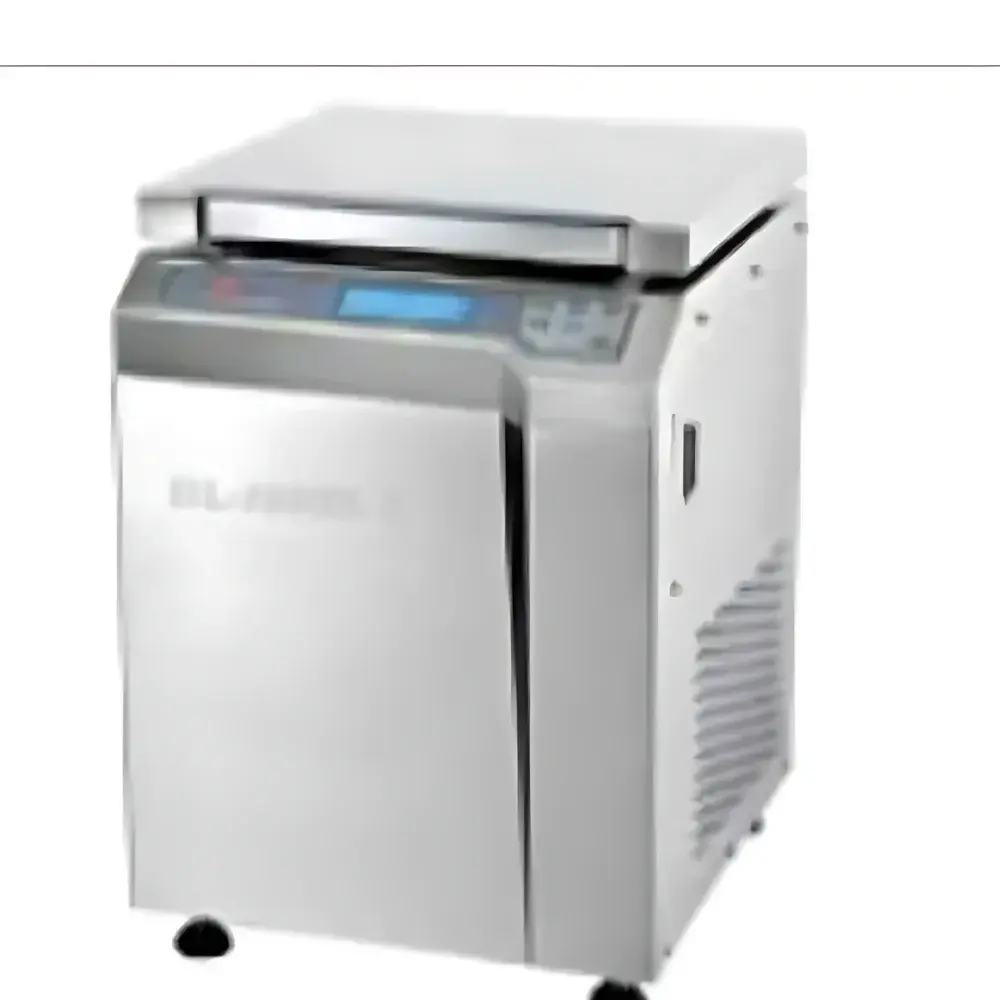
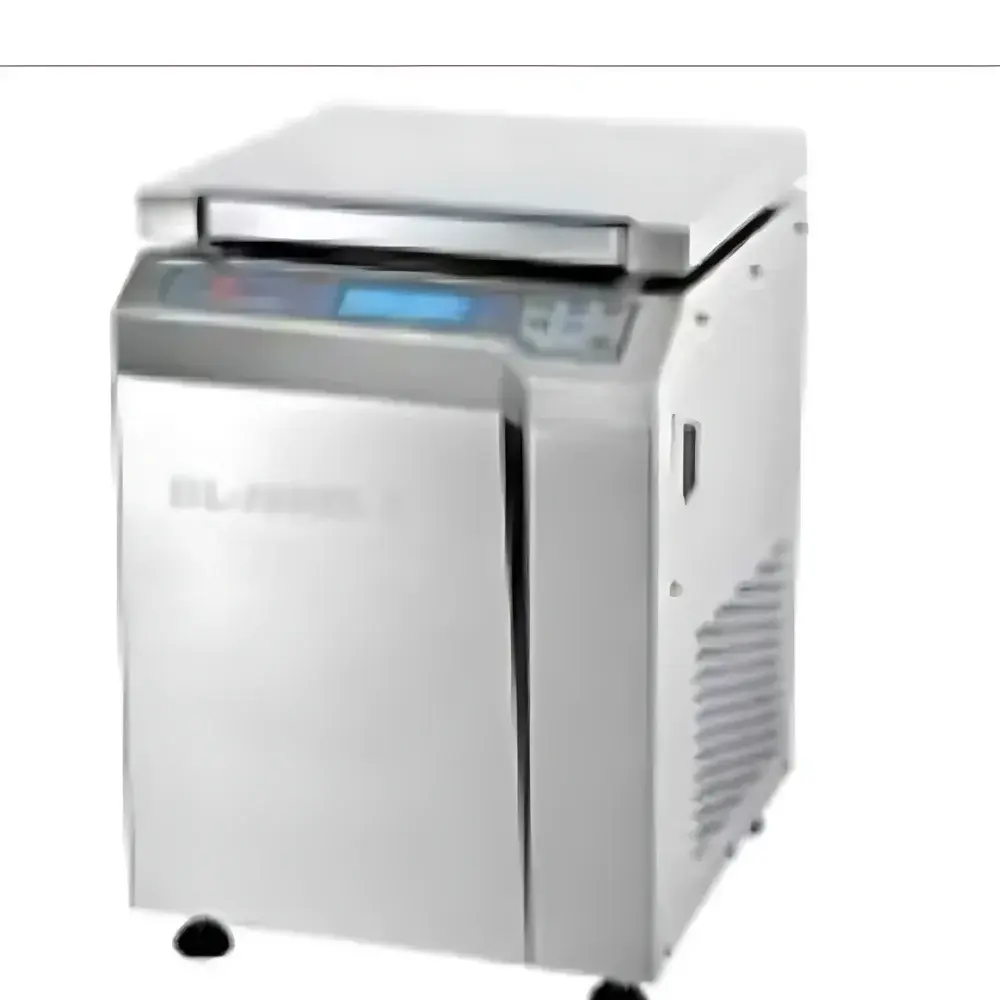
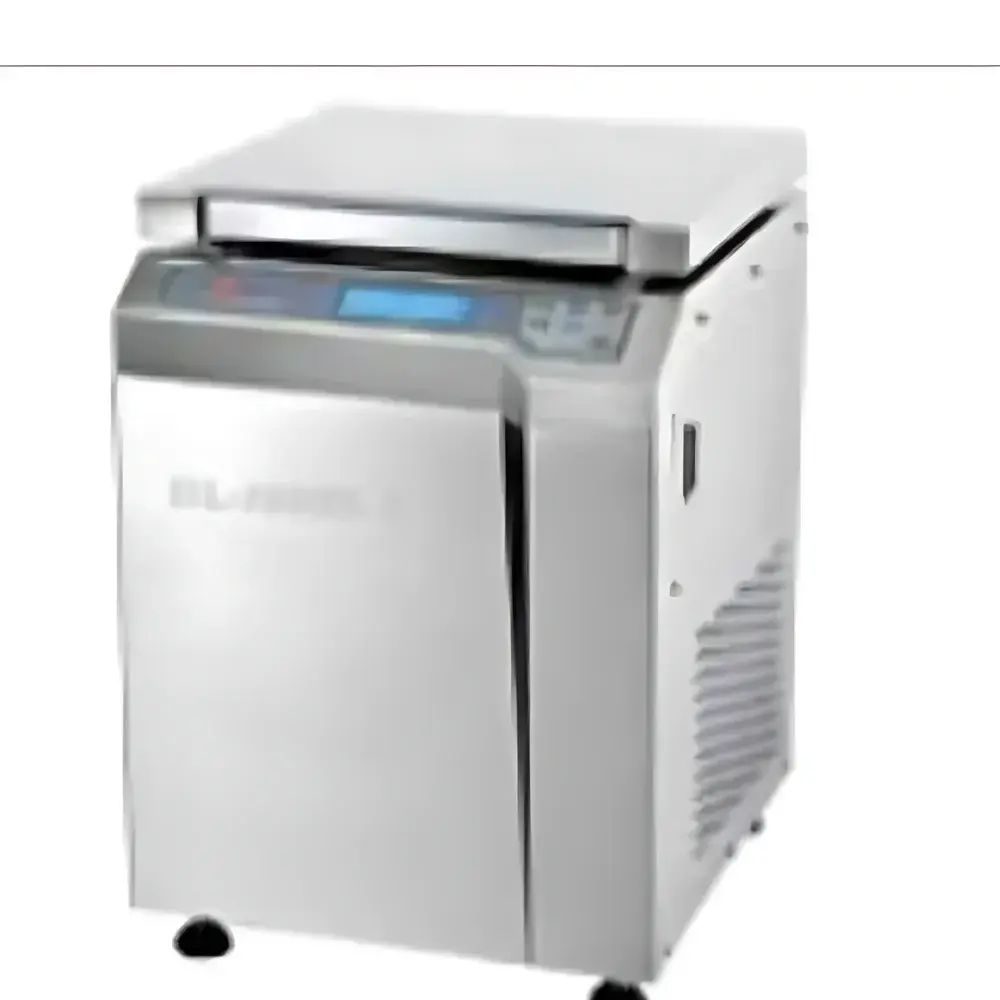
AnTing DL-5C Low-Speed High-Capacity Benchtop Centrifuge
| Brand | AnTing |
|---|---|
| Origin | Shanghai, China |
| Model | DL-5C |
| Type | Benchtop Centrifuge |
| Speed Range | 0–5000 rpm |
| Max RCF | 4500 × g |
| Max Capacity | 250 mL × 4 (horizontal rotor) |
| Rotor Configurations | Horizontal rotors for 6×96-well plates (6 mL × 96), 15 mL × 32, 25 mL × 56, 50 mL × 16, 10 mL × 36, 15 mL × 16, 50 mL × 8, 250 mL × 4 |
| Timer Range | 0–99 min |
| Power Supply | 220 V, 50 Hz, 400 W |
| Dimensions (L×W×H) | 660 mm × 460 mm × 415 mm |
| Net Weight | 90 kg |
| Construction | Full stainless-steel housing with reinforced polymer structural components |
| Drive System | Frequency-converter-controlled brushless DC motor |
| Safety | Electronic door interlock, imbalance detection, automatic rotor recognition (via preset rotor profiles) |
Overview
The AnTing DL-5C is a benchtop low-speed high-capacity centrifuge engineered for reproducible, large-volume sedimentation in clinical, pharmaceutical, and industrial laboratory environments. It operates on the principle of sedimentation under gravitational force augmentation—utilizing controlled rotational acceleration to separate heterogeneous mixtures based on particle density, size, and shape. With a maximum speed of 5000 rpm and a peak relative centrifugal force (RCF) of 4500 × g, the DL-5C delivers stable, low-vibration performance ideal for pelleting cells, precipitating macromolecules, clarifying suspensions, and processing blood derivatives. Its robust architecture—including a full stainless-steel chassis, precision-machined horizontal rotors, and frequency-converter-driven motor—ensures long-term mechanical stability and thermal consistency during extended operation cycles.
Key Features
- Frequency-converter-controlled brushless DC motor for precise speed regulation (0–5000 rpm in 10 rpm increments) and enhanced torque delivery at low speeds
- Electronic door interlock system compliant with IEC 61010-2-020 safety standards, preventing operation when lid is unlatched or improperly sealed
- Automatic rotor identification via pre-programmed rotor profiles—reduces user input error and enforces safe speed/RCF limits per rotor configuration
- Imbalance detection algorithm that halts operation within 0.5 seconds if mass asymmetry exceeds ±5 g across opposing buckets
- Stainless-steel rotor chamber and external housing resistant to corrosion from common solvents, disinfectants, and saline solutions
- Dual-mode timer (manual and countdown) with 1-minute resolution and auto-stop functionality; memory retention after power interruption
- Low-noise design (<65 dB(A) at 1 m) achieved through dynamic balancing of rotor assemblies and vibration-damping base mount
Sample Compatibility & Compliance
The DL-5C supports a broad range of sample containers including polypropylene conical tubes (10–250 mL), glass centrifuge bottles, and standardized microplate carriers. Its horizontal rotor configurations accommodate both routine clinical workflows (e.g., whole blood separation into serum/plasma and packed cells) and specialized applications such as radioimmunoassay (RIA) using the dedicated 6 mL × 96 well rotor. The instrument conforms to ISO 13485:2016 requirements for medical device manufacturing environments and meets essential safety criteria outlined in EN 61010-1 and EN 61010-2-020. While not certified for GLP/GMP audit trails out-of-the-box, its deterministic timer logging and non-volatile rotor parameter storage support traceability when integrated with validated LIMS or ELN systems.
Software & Data Management
The DL-5C employs embedded firmware with no external PC dependency. All operational parameters—including speed, time, RCF, rotor ID, and run history—are stored in non-volatile memory (retains ≥10,000 cycle logs). The front-panel LCD displays real-time rpm, elapsed time, remaining time, and active rotor code. Though it lacks USB/Ethernet connectivity or remote control capability, its parameter locking function prevents unauthorized modification of critical settings—a feature aligned with FDA 21 CFR Part 11 principles for basic electronic record integrity in regulated labs. Optional calibration reports (traceable to NIM, China) are available upon request for metrological validation.
Applications
- Clinical diagnostics: Separation of serum, plasma, and buffy coat from whole blood specimens (e.g., 250 mL × 4 batches for biobanking)
- Pharmaceutical QC: Clarification of fermentation broths, suspension stabilization studies, and excipient particle settling analysis
- Food & beverage testing: Fat separation in milk homogenates, yeast harvesting in brewing, and starch granule isolation
- Environmental labs: Sedimentation of suspended solids in wastewater effluent and soil extract suspensions
- Academic research: Preliminary fractionation prior to ultracentrifugation, cell culture harvest (adherent and suspension lines), and organelle enrichment protocols
FAQ
What is the maximum tube capacity supported by the standard horizontal rotor?
The primary horizontal rotor accepts four 250 mL bottles (total 1 L), or alternatively up to thirty-six 10 mL tubes, sixteen 50 mL tubes, or ninety-six 6 mL tubes depending on the configured bucket assembly.
Does the DL-5C support refrigerated operation?
No—the DL-5C is a non-refrigerated unit. For temperature-sensitive samples, users must precondition specimens and employ pre-chilled rotors and tubes; ambient lab temperature should be maintained ≤25°C during extended runs.
Is rotor calibration required before first use?
Yes. Each rotor carries a unique mass and radius profile. Users must select the correct rotor code from the menu prior to run initiation to ensure accurate RCF calculation and speed limitation enforcement.
Can the timer be paused mid-run?
No—once started, the timer executes continuously. However, the unit can be safely stopped at any point using the emergency stop button; restart requires re-entry of all parameters.
What maintenance intervals are recommended for optimal performance?
Visual inspection and cleaning of the rotor chamber every 50 hours of operation; full rotor balance verification and bearing lubrication every 500 hours or annually—whichever occurs first—by authorized service personnel.



