
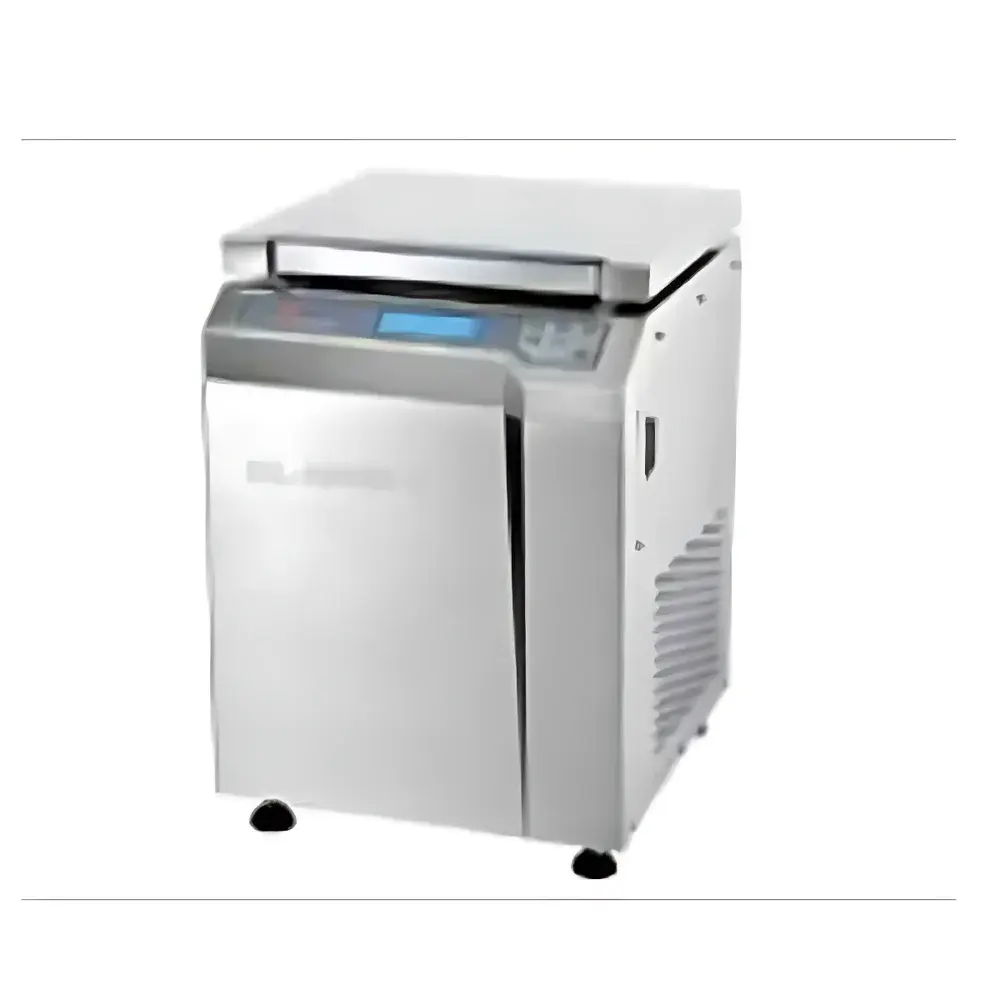
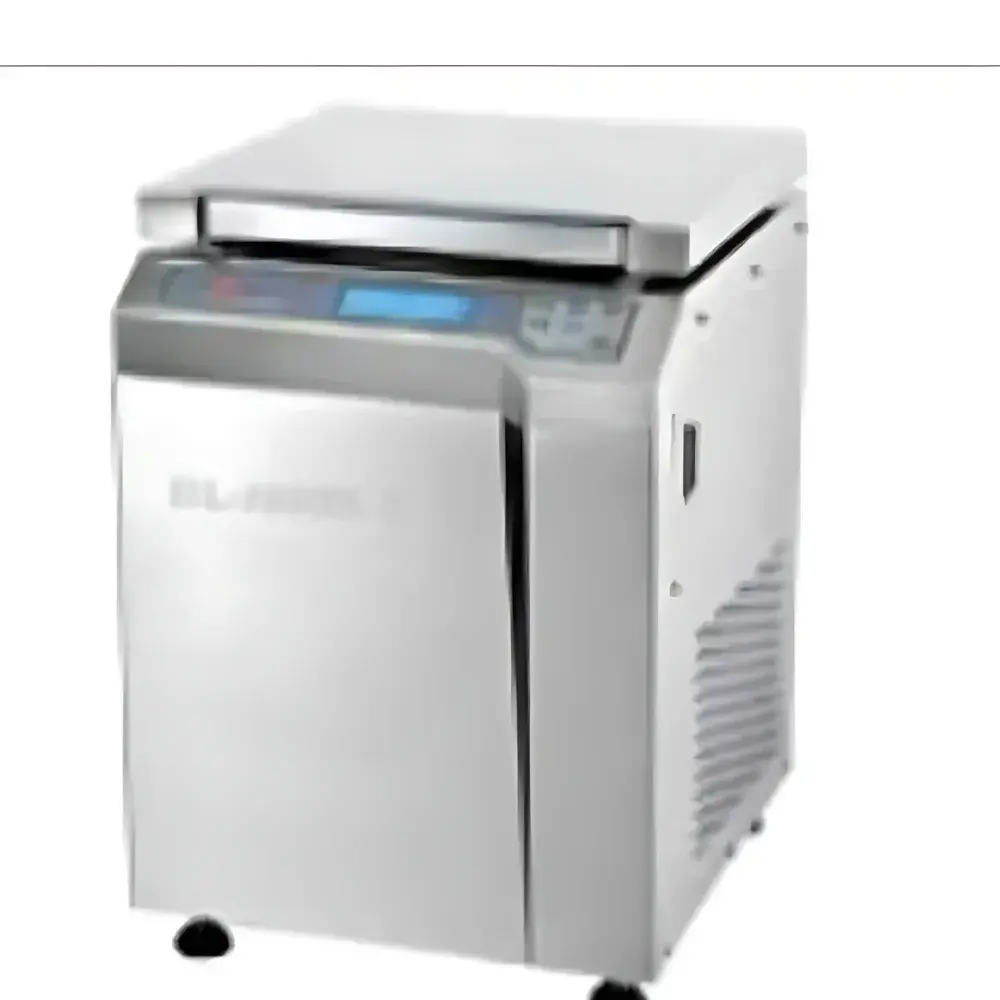
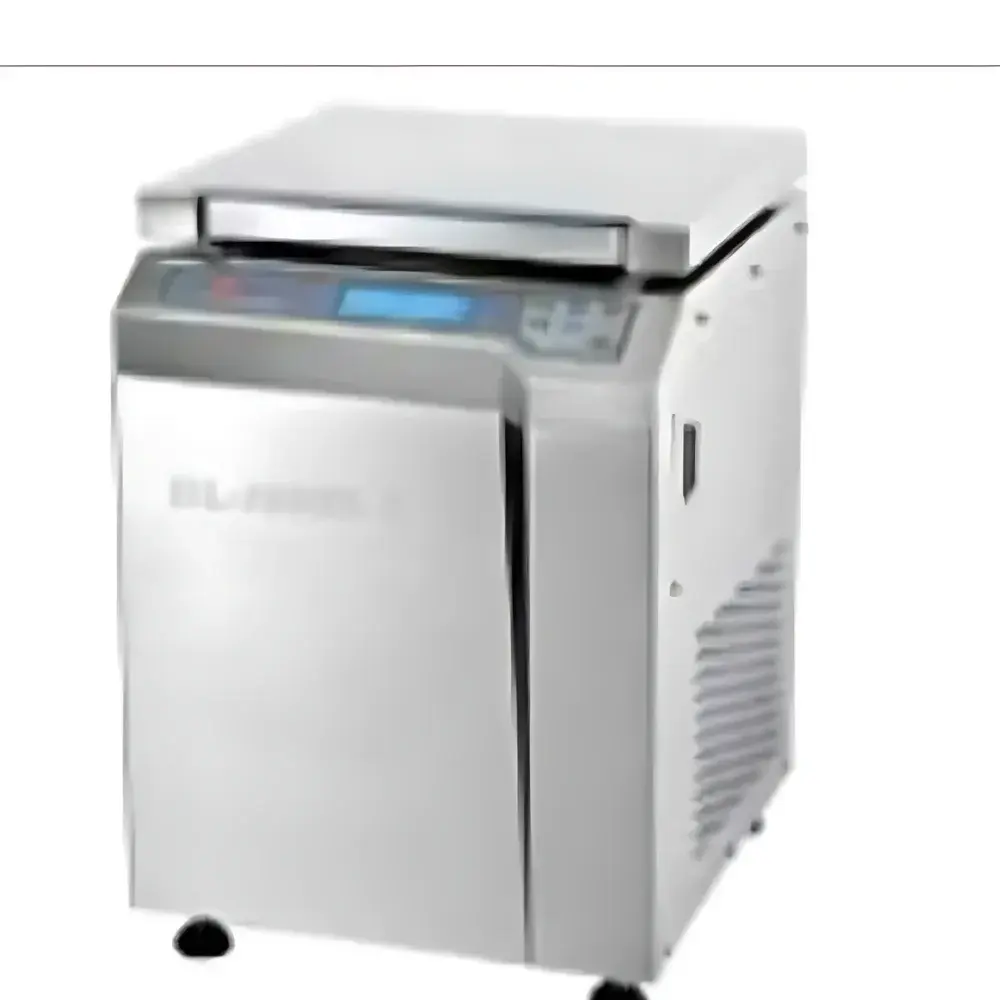
AnTing DL-6000C Low-Speed Refrigerated Centrifuge
| Brand | AnTing |
|---|---|
| Origin | Shanghai, China |
| Model | DL-6000C |
| Type | Benchtop Refrigerated Centrifuge |
| Max Speed | 6000 rpm |
| Max RCF | 7500 ×g |
| Max Capacity | 4 × 500 mL (horizontal rotor) |
| Temperature Range | −20 °C to +30 °C |
| Temp. Accuracy | ±2 °C |
| Timer Range | 0–99 min |
| Noise Level | <70 dB(A) |
| Dimensions (L×W×H) | 740 × 575 × 840 mm |
| Weight | 220 kg |
| Power Supply | 220 V, 50 Hz, 2.5 kW |
| Rotor Configuration | Horizontal swing-out rotor with air shield |
| Construction | Full stainless-steel body with high-strength polymer housing |
| Drive System | Frequency-controlled AC motor |
| Safety | Electronic door lock, automatic rotor recognition (optional), imbalance detection |
Overview
The AnTing DL-6000C is a benchtop low-speed refrigerated centrifuge engineered for reliable, temperature-controlled separation of biological, clinical, and industrial samples requiring gentle yet robust sedimentation forces. Operating on the principle of centrifugal sedimentation—where differential density and particle size drive phase separation under controlled rotational acceleration—the DL-6000C delivers precise RCF up to 7500 ×g at a maximum speed of 6000 rpm. Its integrated refrigeration system maintains sample integrity across a wide operational temperature range (−20 °C to +30 °C), critical for preserving thermolabile macromolecules, cell suspensions, serum fractions, and precipitated polymers. Designed for continuous-duty laboratory environments—including QC labs, bioprocessing facilities, and academic core facilities—the unit features a full stainless-steel chassis, vibration-damped suspension, and frequency-controlled AC motor for consistent torque delivery and long-term mechanical stability.
Key Features
- Refrigerated operation with independent compressor-based cooling system ensuring stable thermal control within ±2 °C across the full temperature range
- Benchtop footprint optimized for space-constrained laboratories (740 × 575 × 840 mm), supporting integration into biosafety cabinets or laminar flow hoods where applicable
- Horizontal swing-out rotor configuration (standard No.1 rotor) accommodating up to four 500 mL bottles or flexible tube arrays (e.g., 16 × 50 mL, 48 × 15 mL, or 48 × 7 mL)
- Electronic interlocked safety door with auto-braking and rotor recognition capability—prevents operation unless lid is fully sealed and rotor is correctly seated
- Digital timer with 1-minute resolution (0–99 min) and automatic stop function; supports ramp-up/ramp-down profiles for sensitive sample handling
- Noise-reduced acoustic enclosure (<70 dB[A] at 1 m distance) compliant with ISO 15712-2 for laboratory ambient noise standards
- Frequency-controlled motor delivering high reproducibility in speed regulation and minimal drift over extended runs
Sample Compatibility & Compliance
The DL-6000C supports a broad spectrum of sample formats used in routine clinical chemistry, hematology, environmental analysis, and upstream bioprocessing—including whole blood, plasma, cell culture supernatants, crude lysates, and polymer emulsions. Its horizontal rotor geometry minimizes shear stress during pelleting, making it suitable for fragile cells, platelet-rich plasma (PRP), and extracellular vesicle pre-enrichment steps. The unit complies with IEC 61010-1:2010 for electrical safety and IEC 61000-6-3/6-4 for electromagnetic compatibility. While not certified to FDA 21 CFR Part 11 out-of-the-box, its electronic log functionality (via optional RS-232/USB interface) supports audit-trail-ready data capture when integrated with validated LIMS or ELN platforms adhering to GLP/GMP documentation requirements.
Software & Data Management
The DL-6000C operates via an embedded microprocessor-based controller with LED display and tactile membrane keypad. All run parameters—including speed, RCF, time, temperature, and rotor ID—are stored in non-volatile memory and recalled per protocol. Optional communication modules enable remote parameter setting, real-time status monitoring, and export of run logs (CSV format) for traceability. When deployed in regulated environments, users may configure electronic signatures and user-level access controls through third-party laboratory informatics systems aligned with ISO/IEC 17025 or CLIA requirements.
Applications
- Clinical diagnostics: Serum/plasma separation from whole blood (e.g., ASTM D7501-19 compliant protocols)
- Cell biology: Harvesting adherent and suspension mammalian cells prior to lysis or cryopreservation
- Food & beverage QA: Clarification of juice extracts, dairy homogenates, and fermentation broths
- Environmental testing: Sedimentation of suspended solids in wastewater or soil leachates per EPA Method 1681
- Pharmaceutical manufacturing: Intermediate purification of vaccine antigens, monoclonal antibody aggregates, and liposomal formulations
- Academic research: Preparative isolation of nuclei, mitochondria, and large ribosomal subunits using differential centrifugation workflows
FAQ
What is the minimum temperature achievable with the DL-6000C?
The unit achieves a stable setpoint down to −20 °C under standard ambient conditions (25 °C, 50% RH); cooling performance may vary slightly depending on load mass and ambient humidity.
Is rotor calibration required before first use?
Yes—rotor identification and balancing verification are mandatory prior to initial operation. Calibration certificates for standard rotors are provided with each shipment.
Can the DL-6000C be operated without refrigeration?
Yes; the refrigeration system can be disabled via the control panel, allowing ambient-temperature centrifugation while retaining all speed and timing functions.
Does the unit support GMP-compliant record keeping?
While the base model does not include built-in 21 CFR Part 11 compliance, its digital log output enables integration with validated data acquisition software meeting ALCOA+ principles.
What maintenance intervals are recommended?
Compressor oil inspection every 12 months; rotor inspection and balancing verification every 6 months or after 500 runs—whichever occurs first—as per AnTing Technical Bulletin TB-DL6000C-REV3.



