
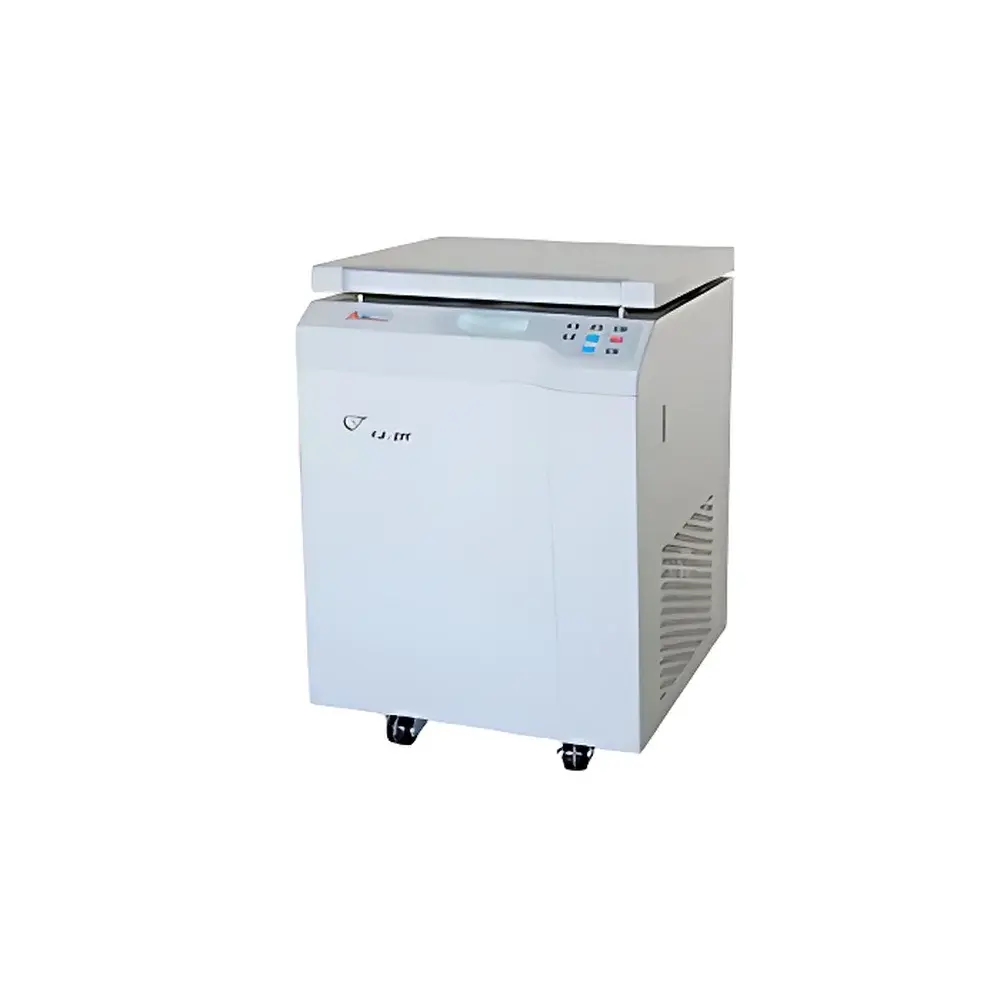
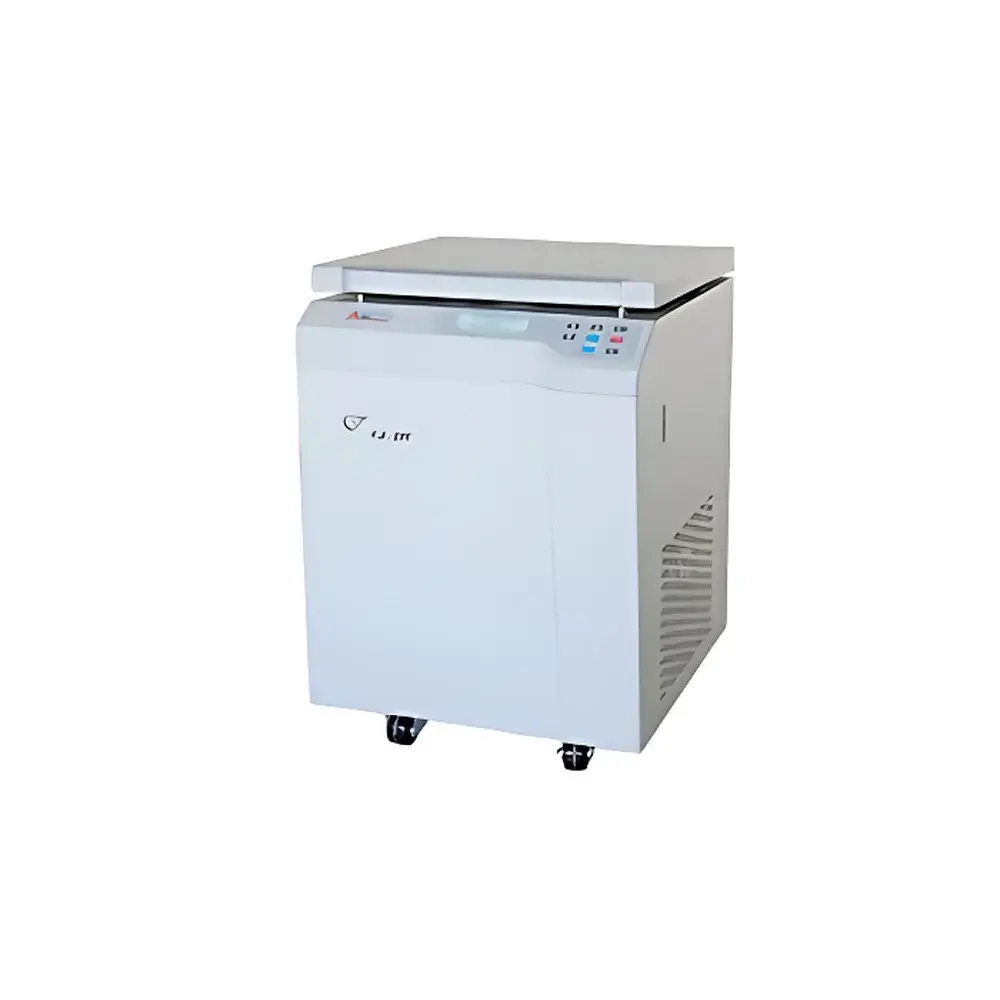
AnTing Feige GL-16G-C High-Speed Refrigerated Centrifuge
| Brand | AnTing Feige |
|---|---|
| Origin | Shanghai, China |
| Instrument Type | Floor-standing centrifuge |
| Max Speed | 16,000 rpm |
| Max RCF | 20,000 × g |
| Max Capacity | 12 × 10 mL |
| Temperature Range | −5 °C to +30 °C |
| Temp. Accuracy | ±2 °C |
| Timer Range | 0–99 min |
| Speed Accuracy | < ±50 rpm |
| Noise Level | < 72 dB(A) |
| Dimensions (L×W×H) | 500 × 590 × 780 mm |
| Weight | 80 kg |
| Power Supply | 220 V, 50 Hz |
| Total Power | 1.5 kW |
| Rotor Type | Fixed-angle |
| Application Class | Biomolecular separation |
| Cooling System | Imported refrigeration unit |
| Drive System | Inverter-controlled brushless motor |
| Chamber Material | ASTM A240 316 stainless steel |
| Safety | Electronic lid lock, auto-balancing suspension, fail-safe rotor recognition |
Overview
The AnTing Feige GL-16G-C is a floor-standing high-speed refrigerated centrifuge engineered for precision separation of biomolecular samples under controlled thermal conditions. It operates on the principle of sedimentation force generation via rapid rotational acceleration—applying centrifugal forces up to 20,000 × g—to resolve subcellular components, nucleic acids, proteins, and viral particles based on differences in density, size, and shape. Designed for routine and research-grade applications in molecular biology, clinical diagnostics, and biopharmaceutical QC labs, the GL-16G-C integrates an imported refrigeration system with inverter-driven brushless motor technology to ensure stable temperature maintenance (−5 °C to +30 °C) and precise speed control (100–16,000 rpm) across extended run cycles. Its all-metal chassis, 316 stainless-steel chamber, and optimized airflow duct design collectively support reproducible thermal management and mechanical durability in high-throughput environments.
Key Features
- Inverter-controlled brushless motor delivering high torque at low noise (<72 dB[A]) and minimal heat generation
- Imported refrigeration unit enabling rapid cooldown and sustained temperature stability (±2 °C accuracy) during operation
- Electronically interlocked safety lid with automatic engagement and position-sensing verification
- Patented self-adjusting suspension system with dynamic balancing for vibration suppression at all speeds
- Fixed-angle rotor configuration optimized for high-RCF pelleting of small-volume samples (up to 12 × 10 mL)
- Full-color LCD interface displaying real-time parameters: speed (rpm), RCF (× g), elapsed time, set temperature, and remaining runtime
- 316 stainless-steel rotor chamber fabricated via seamless deep-drawing process for corrosion resistance and cleanability
- Nanocomposite acoustic damping materials integrated into housing to reduce operational noise without compromising structural integrity
- Compliance-ready architecture supporting audit trails and parameter logging for GLP/GMP-aligned workflows
Sample Compatibility & Compliance
The GL-16G-C accommodates standard conical-bottom polypropylene or polycarbonate tubes (1.5–10 mL) in its fixed-angle rotor configuration, ensuring compatibility with common nucleic acid extraction kits, protein precipitation protocols, and cell lysate clarification steps. Rotor geometry supports uniform pellet formation and minimizes sample resuspension risk during deceleration. The instrument meets IEC 61010-1:2010 safety standards for laboratory electrical equipment and conforms to ISO 13485 requirements for manufacturing quality systems. While not FDA 21 CFR Part 11–certified out-of-the-box, its data logging capability (via optional USB export) enables traceable recordkeeping aligned with internal SOPs and regulatory review expectations in academic, clinical, and industrial settings.
Software & Data Management
The GL-16G-C employs embedded firmware with non-volatile memory to store up to 99 user-defined protocols—including speed, temperature, time, and acceleration/deceleration profiles. All run logs (start/stop timestamps, actual vs. set parameters, error codes) are retained locally and exportable via USB flash drive in CSV format. No proprietary software installation is required; exported files are compatible with Excel, LabArchives, and ELN platforms. Audit trail functionality records operator ID (if enabled via external authentication), method version, and modification history—supporting compliance with ISO/IEC 17025 clause 7.7 and CLIA-mandated documentation practices. Firmware updates are performed offline using signed binary packages to preserve system integrity.
Applications
- Isolation of plasmid DNA, genomic DNA, and RNA from bacterial and mammalian lysates
- Pelleting of exosomes, microvesicles, and ribonucleoprotein complexes (RNPs)
- Clarification of crude enzyme extracts and antibody-containing supernatants
- Preparative separation of subcellular organelles (e.g., mitochondria, nuclei) in gradient-free protocols
- High-speed pelleting steps in viral vector purification workflows (AAV, lentivirus)
- Routine QC testing of raw materials and intermediates in pharmaceutical manufacturing
- Centrifugal concentration of dilute protein solutions prior to SDS-PAGE or mass spectrometry analysis
FAQ
What refrigerant is used in the imported cooling system?
The unit utilizes R134a or R404A refrigerant, compliant with current EU F-Gas Regulation and EPA SNAP requirements for laboratory equipment.
Can this centrifuge be validated for GMP use?
Yes—its consistent thermal performance, programmable parameter locking, and exportable log files support IQ/OQ/PQ execution per ASTM E2500 and Annex 15 guidelines.
Is rotor imbalance detection automated?
The system continuously monitors vibration amplitude and automatically halts operation if imbalance exceeds ISO 21500 Class B thresholds.
Does it support rotor identification via RFID or barcode?
No native RFID reader is included; however, rotor-specific speed limits are enforced via firmware-based rotor ID tables programmed during setup.
What maintenance intervals are recommended?
Compressor oil inspection every 24 months; refrigerant pressure check annually; full calibration (speed, temp, timer) every 12 months by authorized service personnel.



