
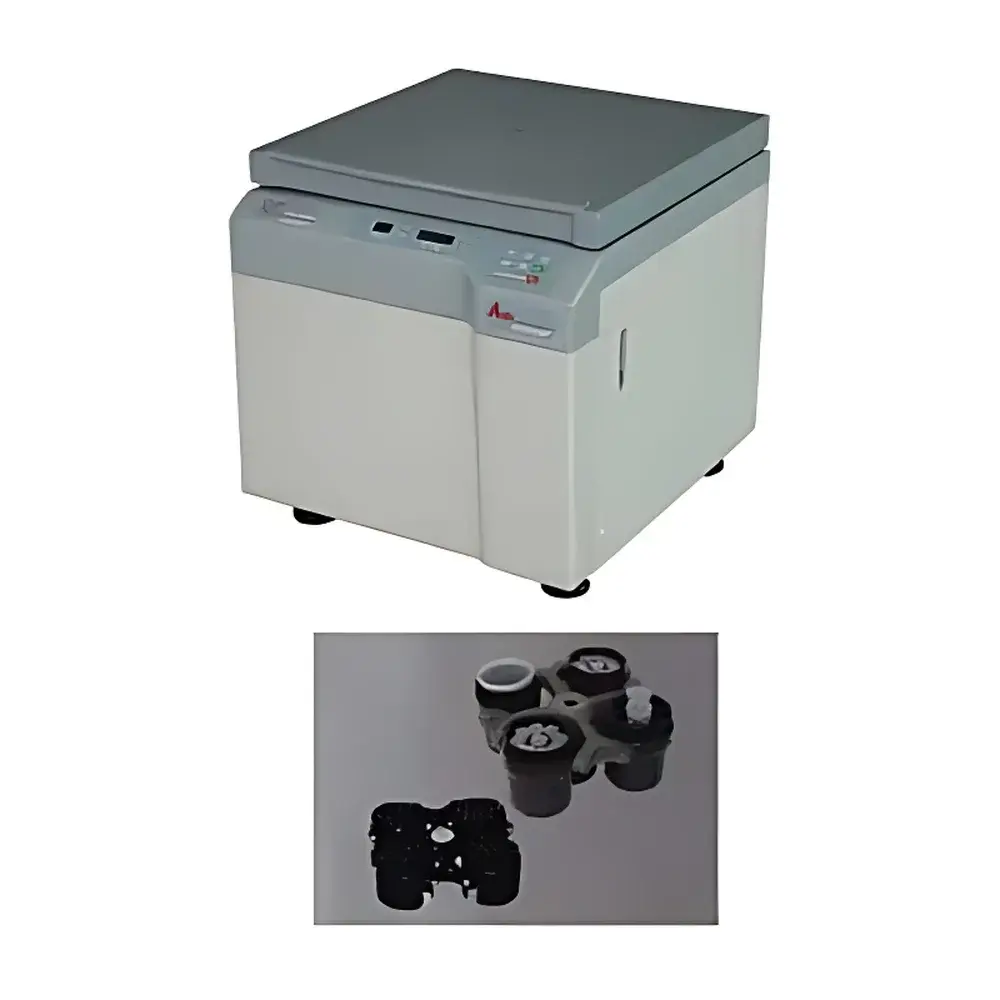
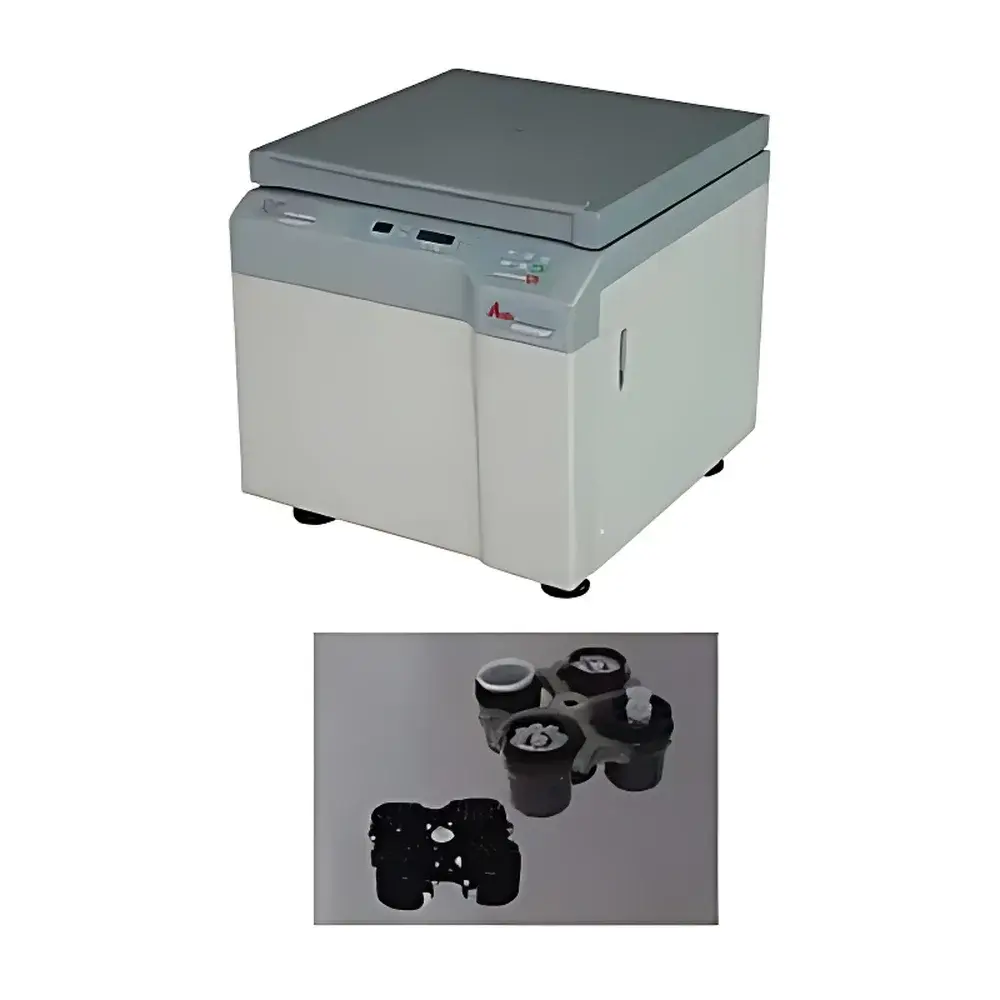
AnTing Feige TDL-4 Benchtop Low-Speed Centrifuge
| Brand | AnTing Feige |
|---|---|
| Origin | Shanghai, China |
| Model | TDL-4 |
| Centrifuge Type | Benchtop Centrifuge |
| Rotor Configuration | Fixed-Angle Rotor |
| Maximum Capacity | 6 × 20 mL |
| Maximum Speed | 4000 rpm |
| Maximum RCF | 1430 × g |
| Dimensions (W×D×H) | 280 mm × 310 mm × 265 mm |
| Timer Range | 0–99 min |
| Power Supply | 220 V, 50 Hz |
| Speed Accuracy | ±20 rpm |
| Temperature Rise During Operation | <5 °C |
| Construction | Full Metal Housing with 316 Stainless Steel Chamber |
| Drive System | Microprocessor-Controlled Inverter Motor |
| Safety | Electronic Lid Lock, Patented Self-Aligning Dampers, Spring-Loaded Hinge Mechanism |
| Noise Level | Low (Engineered with Acoustic Absorption Materials) |
Overview
The AnTing Feige TDL-4 Benchtop Low-Speed Centrifuge is an entry-level, high-reliability centrifugation system engineered for routine separation tasks in academic teaching laboratories, clinical sample preparation, and quality control environments. Designed according to classical sedimentation principles under gravitational acceleration, the TDL-4 operates within a defined low-speed regime (up to 4000 rpm), delivering a maximum relative centrifugal force (RCF) of 1430 × g—sufficient for pelleting whole blood cells, precipitating cellular debris, clarifying crude extracts, or separating immiscible liquid phases. Its fixed-angle rotor configuration ensures rapid sedimentation of samples in standard 20 mL conical tubes, minimizing run time while maintaining mechanical stability across extended operational cycles. The unit complies with IEC 61010-1 safety standards for laboratory electrical equipment and incorporates fail-safe interlocks to prevent operation with the lid unlatched.
Key Features
- Microprocessor-controlled inverter motor for precise speed regulation and consistent torque delivery across load variations.
- Electronic lid lock mechanism that automatically engages during operation and disengages only after complete rotor deceleration—ensuring compliance with GLP-aligned safety protocols.
- Patented self-adjusting damping system with elastomeric isolators, dynamically compensating for minor imbalances to maintain vibration-free operation at all speeds.
- Spring-assisted hinge design enabling smooth, controlled lid opening to any intermediate angle—facilitating ergonomic tube loading and reducing operator fatigue during high-throughput workflows.
- 316 stainless steel chamber with seamless, one-piece forming process—resistant to corrosion from common reagents including ethanol, acetone, and diluted acids; fully autoclavable for biosafety-critical applications.
- Integrated LCD display showing real-time values for speed (rpm), RCF (× g), remaining time, and elapsed runtime—supporting traceable parameter recording without external instrumentation.
- Low-noise architecture incorporating nano-structured acoustic insulation layers around the motor housing and rotor chamber—measured sound pressure level ≤58 dB(A) at 1 m distance.
Sample Compatibility & Compliance
The TDL-4 accommodates standard polypropylene or glass centrifuge tubes up to 20 mL in volume, mounted in its six-position fixed-angle rotor (angle: 35°). It supports ISO/IEC 17025-compliant documentation when used with calibrated tachometers and verified timers. While not refrigerated, its optimized airflow path limits temperature rise to <5 °C over ambient during a full 99-minute run—making it suitable for heat-sensitive biological samples such as plasma fractions or enzyme-containing supernatants. The device meets CE marking requirements per Directive 2014/30/EU (EMC) and 2014/35/EU (LVD), and conforms to GB/T 13754–2018 (Chinese national standard for centrifuges).
Software & Data Management
The TDL-4 operates via embedded firmware without external PC dependency. All user-defined parameters—including speed setpoint, timer duration, and acceleration/deceleration profiles—are stored in non-volatile memory and retained after power cycling. Audit trail functionality is implemented through internal event logging (e.g., lid open/close events, over-speed alerts, thermal warnings), accessible via service mode using factory-authorized diagnostic tools. For laboratories operating under FDA 21 CFR Part 11 requirements, optional RS-232 serial output enables integration with validated LIMS platforms for electronic record retention and signature attribution.
Applications
- Routine blood fractionation (serum/plasma separation from whole blood specimens).
- Pellet recovery in microbiology workflows—including yeast, E. coli, and mammalian cell cultures.
- Clarification of plant tissue homogenates prior to chromatographic analysis.
- Sediment removal from buffer solutions, culture media, or reagent stocks.
- Phase separation in solvent extraction protocols (e.g., phenol-chloroform DNA isolation).
- Preparative steps in ELISA kit workflows and lateral flow assay development.
FAQ
What is the maximum recommended tube volume for the TDL-4 rotor?
The rotor is validated for use with tubes up to 20 mL capacity. Overfilling may compromise balance integrity and trigger automatic shutdown.
Can the TDL-4 be used for centrifuging hazardous materials?
Yes—provided appropriate secondary containment (e.g., sealed buckets or biocontainment sleeves) is employed and local biosafety guidelines are followed. The 316 stainless steel chamber facilitates decontamination.
Is calibration certification available for this model?
Factory calibration certificates (traceable to NIM, China) are provided upon request. Field recalibration services are supported by authorized AnTing service centers.
Does the TDL-4 support programmable ramp rates?
It offers two preset acceleration/deceleration profiles: standard (optimized for tube integrity) and gentle (for fragile pellets); no user-defined ramp rate editing is available.
What maintenance intervals are recommended?
Visual inspection and cleaning of the rotor chamber every 3 months; rotor balancing verification every 6 months; full mechanical inspection annually per GB/T 13754 maintenance schedule.



