
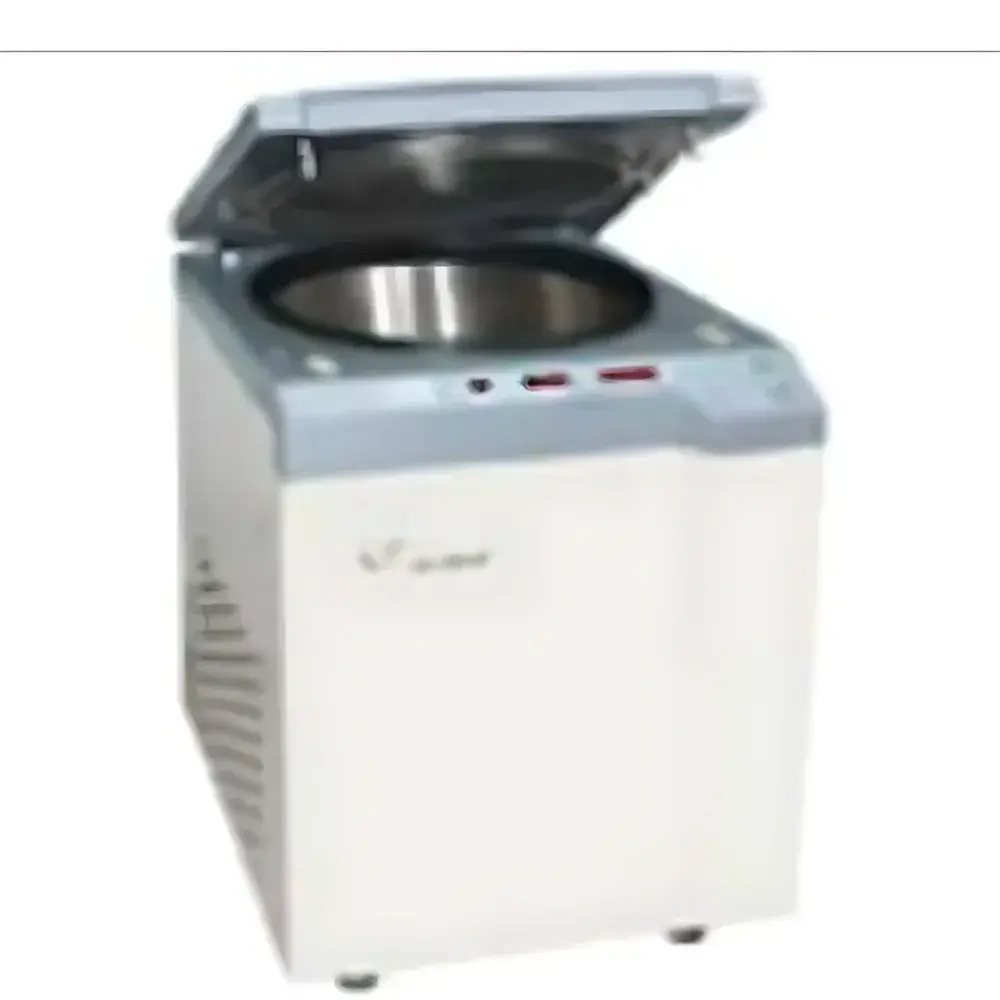
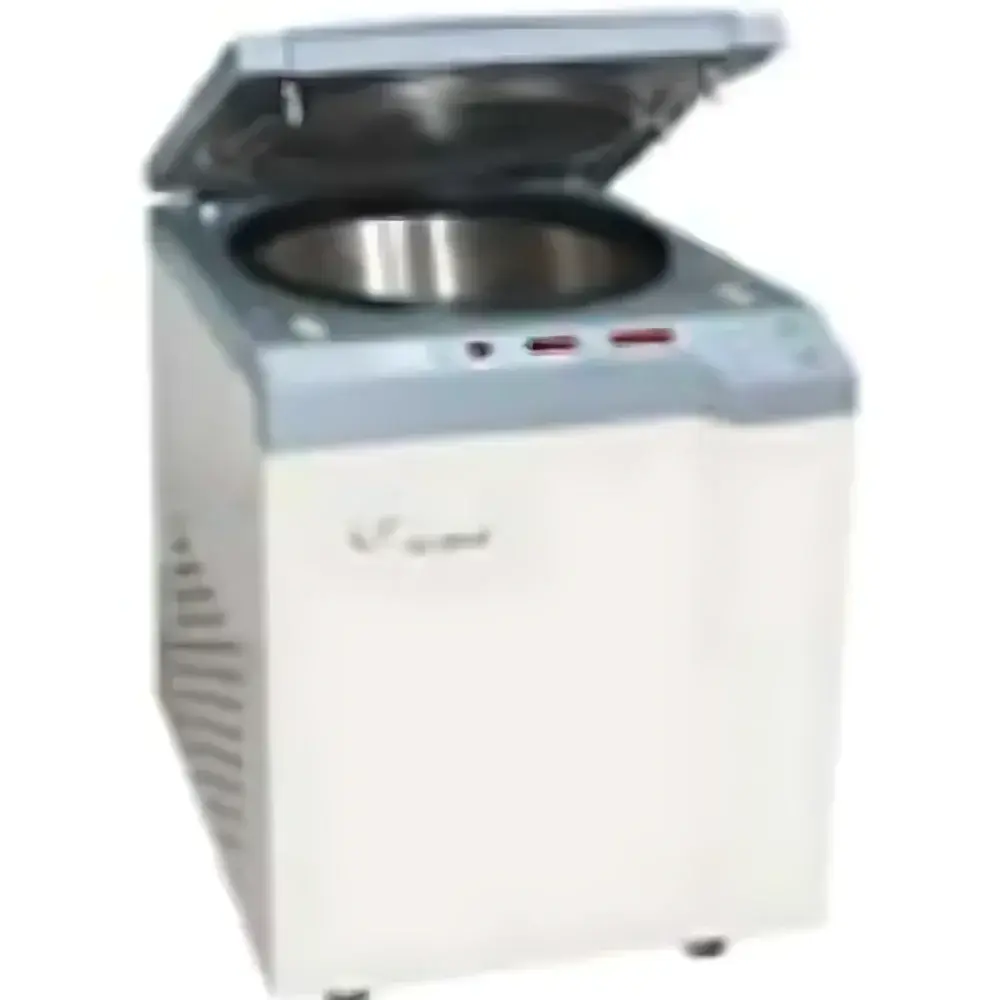
AnTing GL-20G-II High-Speed Refrigerated Centrifuge
| Brand | AnTing |
|---|---|
| Origin | Shanghai, China |
| Model | GL-20G-II |
| Type | Benchtop Refrigerated Centrifuge |
| Speed Range | Up to 20,000 rpm |
| Max RCF | 25,938 × g |
| Max Capacity | 6 × 50 mL |
| Temperature Range | −20 °C to +30 °C |
| Temp. Accuracy | ±2 °C |
| Timer Range | 0–99 min |
| Power Supply | 220 V, 50 Hz |
| Total Power | 1.5 kW |
| Dimensions (L×W×H) | 500 mm × 540 mm × 780 mm |
| Weight | 115 kg |
| Rotor Configuration | Fixed-angle rotor |
| Safety | Electronic door lock |
| Construction | Reinforced polymer housing |
Overview
The AnTing GL-20G-II is a benchtop high-speed refrigerated centrifuge engineered for precision separation of biological, chemical, and pharmaceutical samples under controlled thermal conditions. It operates on the principle of sedimentation acceleration via rotational force—generating up to 25,938 × g at its maximum speed of 20,000 rpm—to resolve particles based on density, size, and shape in liquid suspensions. Designed for routine and research-grade applications in QC laboratories, academic core facilities, and bioprocessing environments, the GL-20G-II maintains sample integrity through active refrigeration (−20 °C to +30 °C), minimizing thermal degradation during prolonged or high-force runs. Its reinforced polymer housing ensures structural rigidity while reducing overall mass, contributing to mechanical stability and low-vibration operation—critical for reproducible pellet formation and supernatant clarity.
Key Features
- Refrigerated operation with independent compressor-based cooling system, maintaining setpoint accuracy within ±2 °C across the full temperature range (−20 °C to +30 °C)
- Benchtop footprint (500 × 540 × 780 mm) optimized for space-constrained laboratories without compromising rotor capacity or thermal performance
- Fixed-angle rotor configuration supporting six 50 mL tubes—compatible with standard polypropylene and polycarbonate centrifuge tubes meeting ISO 8573-1 Class 3 purity requirements
- Microprocessor-controlled timing system with programmable run duration from 0 to 99 minutes, including automatic rotor deceleration and hold-at-zero functionality
- Integrated electronic door interlock ensuring operational safety: motor engagement is disabled unless the lid is fully closed and latched
- Brushless DC drive motor delivering consistent torque output, extended service life, and minimal electromagnetic interference with adjacent instrumentation
- Real-time display of speed (rpm), relative centrifugal force (×g), elapsed time, and chamber temperature for full process visibility
Sample Compatibility & Compliance
The GL-20G-II accommodates common laboratory tube formats—including conical-bottom 50 mL centrifuge tubes—and supports protocols requiring cold-chain continuity, such as nucleic acid extraction, organelle isolation, and protein precipitation. Its temperature control architecture complies with general-purpose laboratory environmental standards per IEC 61010-1 (Safety Requirements for Electrical Equipment for Measurement, Control, and Laboratory Use). While not certified for GMP manufacturing environments, the unit meets foundational requirements for GLP-compliant workflows when paired with documented calibration and maintenance records. The absence of moving parts in the refrigeration loop (e.g., no oil-lubricated compressors) minimizes contamination risk—aligning with USP guidance on analytical instrument qualification for non-sterile applications.
Software & Data Management
The GL-20G-II operates via embedded firmware with no external PC dependency; all parameters are configured directly through its front-panel keypad and LCD interface. Though it does not feature USB or Ethernet connectivity, the device supports audit-ready operation through manual logbook documentation of run parameters (speed, time, temperature, rotor ID). For laboratories implementing electronic record systems, validated third-party data capture modules may be integrated using analog output signals (0–5 V) for rpm and temperature monitoring. Firmware versioning and factory calibration certificates are provided with each unit to support traceability under ISO/IEC 17025 accreditation frameworks.
Applications
- Preparative isolation of subcellular fractions (e.g., mitochondria, lysosomes) from mammalian tissue homogenates
- Clarification of bacterial and yeast lysates prior to chromatographic analysis or enzymatic assays
- Routine purification of plasmid DNA and RNA using silica-membrane or phenol-chloroform protocols
- Sedimentation of nanoparticles and colloidal suspensions for size distribution analysis via DLS or TEM sample prep
- Stabilization of thermolabile enzyme preparations during buffer exchange or concentration steps
- QC testing of vaccine formulations involving adjuvant suspension homogeneity assessment
FAQ
What is the minimum operating temperature, and how quickly does the chamber reach setpoint?
The chamber achieves −20 °C from ambient (25 °C) in approximately 18–22 minutes under no-load conditions, depending on ambient humidity and ventilation.
Is rotor balancing required before each run?
Yes—symmetrical mass distribution across the rotor is mandatory. The unit does not include automatic imbalance detection; users must verify tube mass equivalence to ±0.1 g per position.
Can this centrifuge accommodate swing-bucket rotors?
No—the GL-20G-II is configured exclusively for fixed-angle rotors. Swinging-bucket compatibility is not supported by mechanical or firmware design.
Does the unit meet FDA 21 CFR Part 11 requirements for electronic records?
No—it lacks electronic signature capability, audit trail generation, or user-access controls required under Part 11; manual documentation remains the compliant method for regulated environments.
What maintenance intervals are recommended for optimal performance?
Compressor oil inspection every 12 months, condenser coil cleaning quarterly, and rotor inspection (for stress cracks or corrosion) after every 500 runs or annually—whichever occurs first.



