
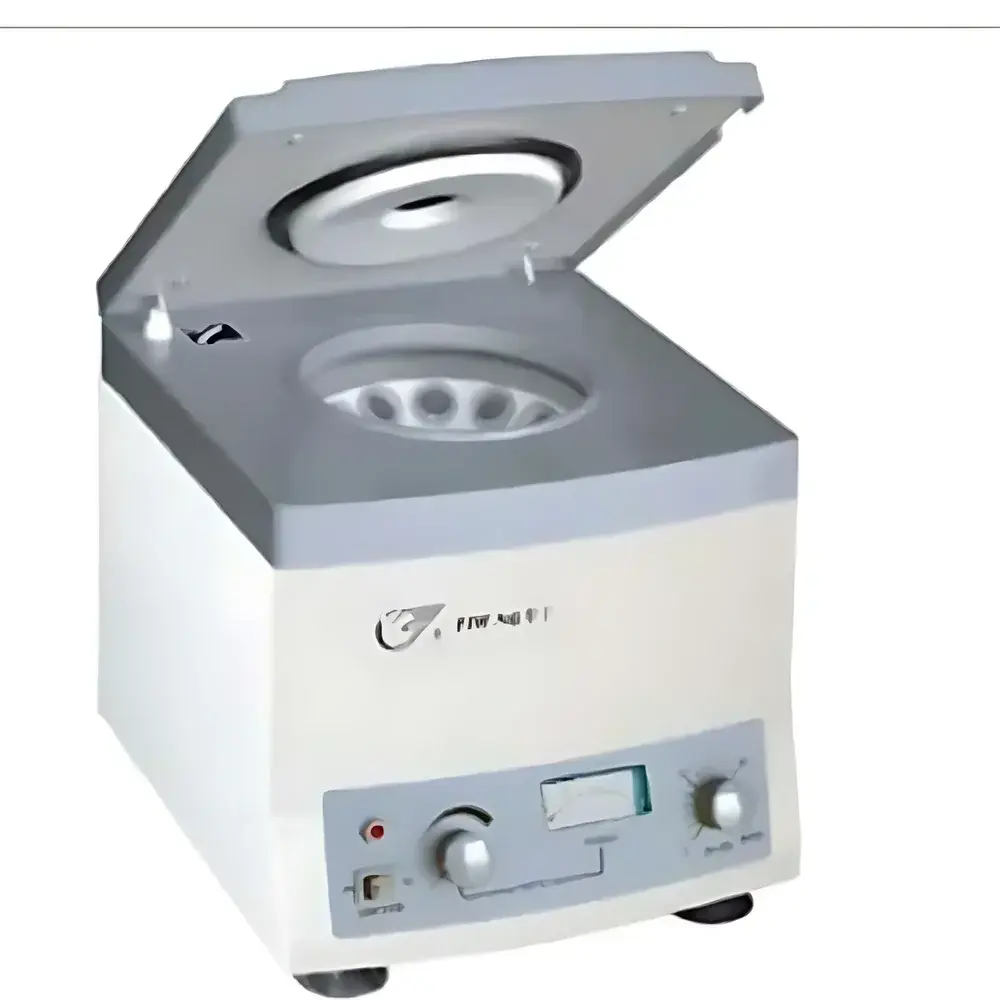
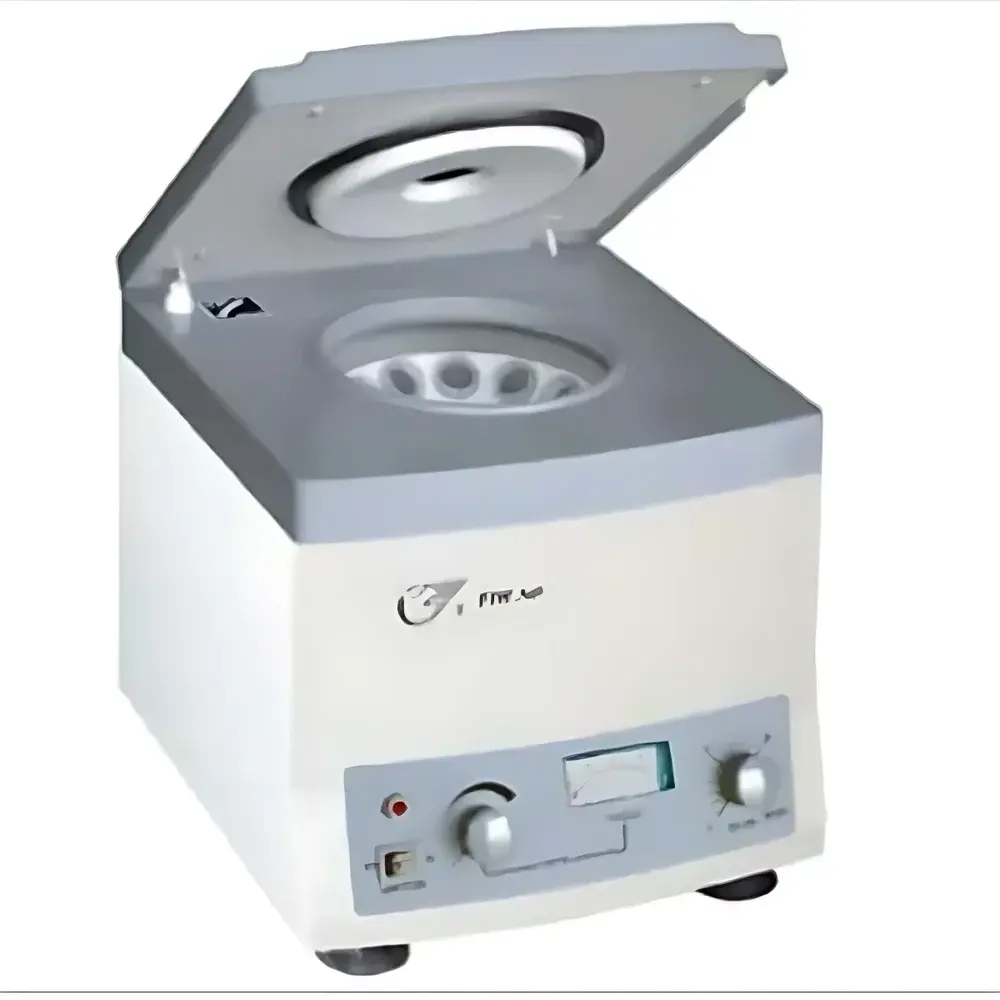
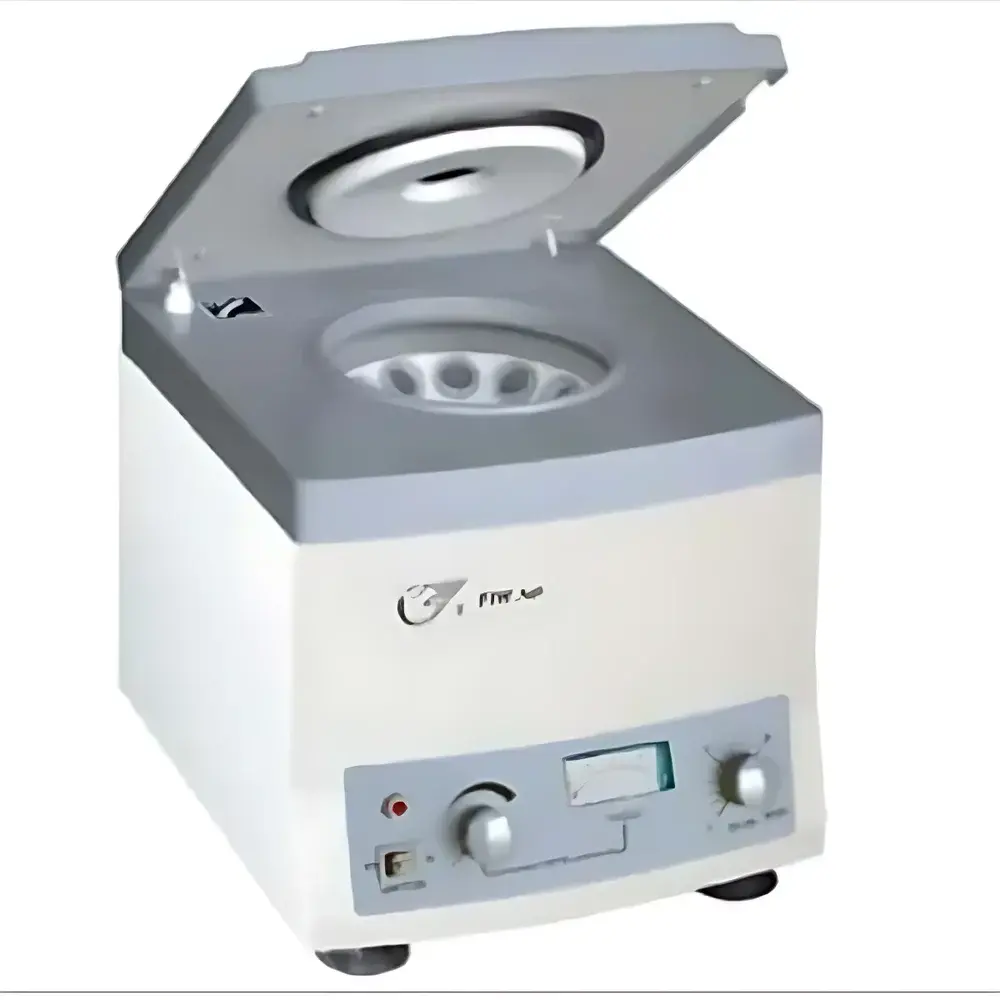
AnTing KA-1000 Benchtop Low-Speed Centrifuge
| Brand | AnTing |
|---|---|
| Origin | Shanghai, China |
| Model | KA-1000 |
| Instrument Type | Benchtop Centrifuge |
| Speed Range | 0–4000 rpm |
| Max RCF | 2220 × g |
| Rotor Capacity | 8 × 20 mL (angle rotor) |
| Timer Range | 0–30 min |
| Power Supply | 220 V, 50 Hz, 135 W |
| Dimensions (L×W×H) | 330 × 300 × 280 mm |
| Weight | 12 kg |
| Construction | Reinforced polymer housing with electronic safety lid lock |
| Compliance | Designed for general laboratory use under ISO/IEC 17025-aligned operational environments |
Overview
The AnTing KA-1000 is a benchtop low-speed centrifuge engineered for routine separation tasks in academic laboratories, quality control units, and small-scale production facilities. It operates on the principle of sedimentation-driven separation—utilizing rotational force to accelerate phase partitioning based on particle density, size, and medium viscosity. With a maximum speed of 4000 rpm and a corresponding relative centrifugal force (RCF) of 2220 × g, the KA-1000 delivers reproducible performance for applications requiring gentle yet effective pelleting of cells, precipitates, or suspended particulates without inducing shear-induced damage typical of high-speed systems. Its compact footprint (330 × 300 × 280 mm) and lightweight reinforced polymer chassis (12 kg) facilitate flexible placement on standard lab benches while maintaining mechanical stability during operation. The unit is not intended for ultracentrifugation or high-G applications; rather, it serves as a robust, entry-level solution aligned with fundamental ISO 15195 and CLSI EP05-A3 guidelines for centrifuge validation in non-regulated and GLP-supportive workflows.
Key Features
- Stable low-speed operation up to 4000 rpm with digitally adjustable speed control and real-time RPM/RCF display
- Angle rotor configuration accommodating eight 20 mL conical tubes—optimized for uniform sedimentation and efficient pellet formation
- Electronic lid interlock system ensuring automatic motor cutoff upon lid opening, compliant with IEC 61010-1 safety requirements for laboratory equipment
- Precision electromechanical timer (0–30 minutes) with audible end-of-run signal and auto-brake function
- Low-noise brushless DC motor delivering consistent torque across operating range and minimizing thermal drift
- Corrosion-resistant polymer housing with vibration-damping base, enabling stable operation even at maximum load without external anchoring
Sample Compatibility & Compliance
The KA-1000 supports standard polypropylene and polycarbonate centrifuge tubes (up to 20 mL), including common formats such as Falcon®-style conical tubes and universal round-bottom vessels. It is compatible with aqueous buffers, saline solutions, cell culture supernatants, blood serum/plasma fractions, and polymer emulsions—provided sample density differentials exceed ≥0.02 g/cm³ for reliable stratification. While not certified to FDA 21 CFR Part 11 or ISO 13485, the instrument’s design adheres to general safety and electromagnetic compatibility (EMC) standards outlined in IEC 61326-1. Routine verification of rotor balance, timer accuracy, and RCF output is recommended per ISO/IEC 17025 Clause 6.4.3 for laboratories implementing internal calibration protocols.
Software & Data Management
The KA-1000 operates as a standalone hardware platform with no embedded software stack or network interface. All operational parameters—including speed setpoint, run time, and status indicators—are managed via front-panel push-button controls and LED display. No data logging, USB export, or PC connectivity is provided. For labs requiring traceability, manual recording of run conditions (date, operator ID, rotor type, tube count, speed, duration) is advised to support audit readiness under GLP or ISO 9001 frameworks. Optional third-party environmental monitoring systems may integrate via analog voltage output (if retrofitted), though this is not factory-supported.
Applications
- Preparative pelleting of mammalian and bacterial cells from suspension cultures
- Clarification of crude enzyme extracts and protein-containing lysates
- Separation of whole blood into serum or plasma layers for downstream immunoassays
- Removal of insoluble aggregates from buffer-based formulations in pharmaceutical development
- Routine sedimentation of latex beads, silica nanoparticles, or microcarrier fragments in material science workflows
- Field-deployable sample concentration in mobile diagnostic or environmental testing units where power stability and portability are prioritized
FAQ
What is the maximum tube volume supported by the KA-1000?
The unit accepts eight 20 mL tubes in its fixed-angle rotor—no adapters or swing-bucket configurations are available.
Does the KA-1000 include rotor imbalance detection?
No. Users must manually verify tube mass symmetry prior to operation; the electronic lid lock prevents startup if the lid is unlatched but does not monitor dynamic imbalance.
Can the timer be bypassed for continuous operation?
No. The timer is non-defeatable and enforces automatic shutdown after the selected duration; there is no “run until stopped” mode.
Is the rotor autoclavable?
The aluminum angle rotor is not designed for autoclaving; cleaning is limited to 70% ethanol wipe-down and air drying.
What maintenance intervals are recommended?
Visual inspection of rotor threads and lid seal integrity every 100 runs; full mechanical check (bearing noise, motor response, brake function) annually or after 500 hours of cumulative operation.



