
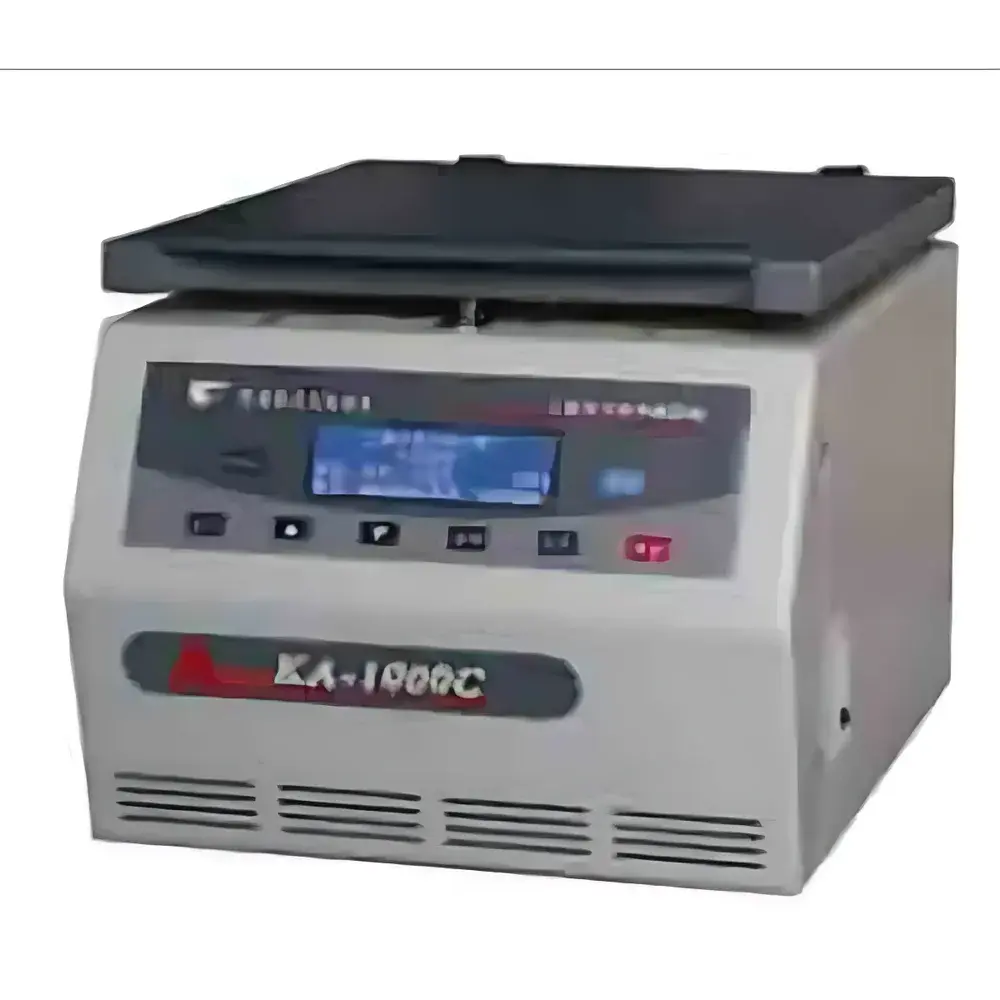
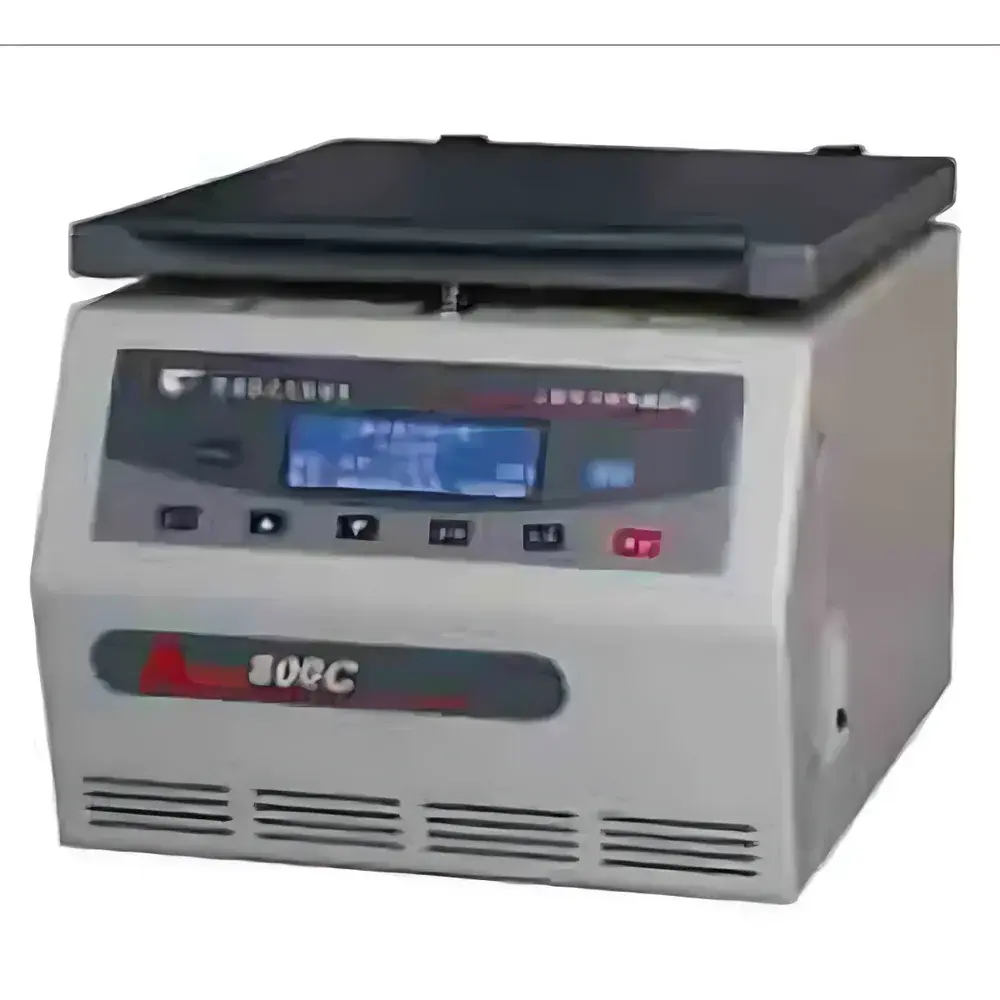
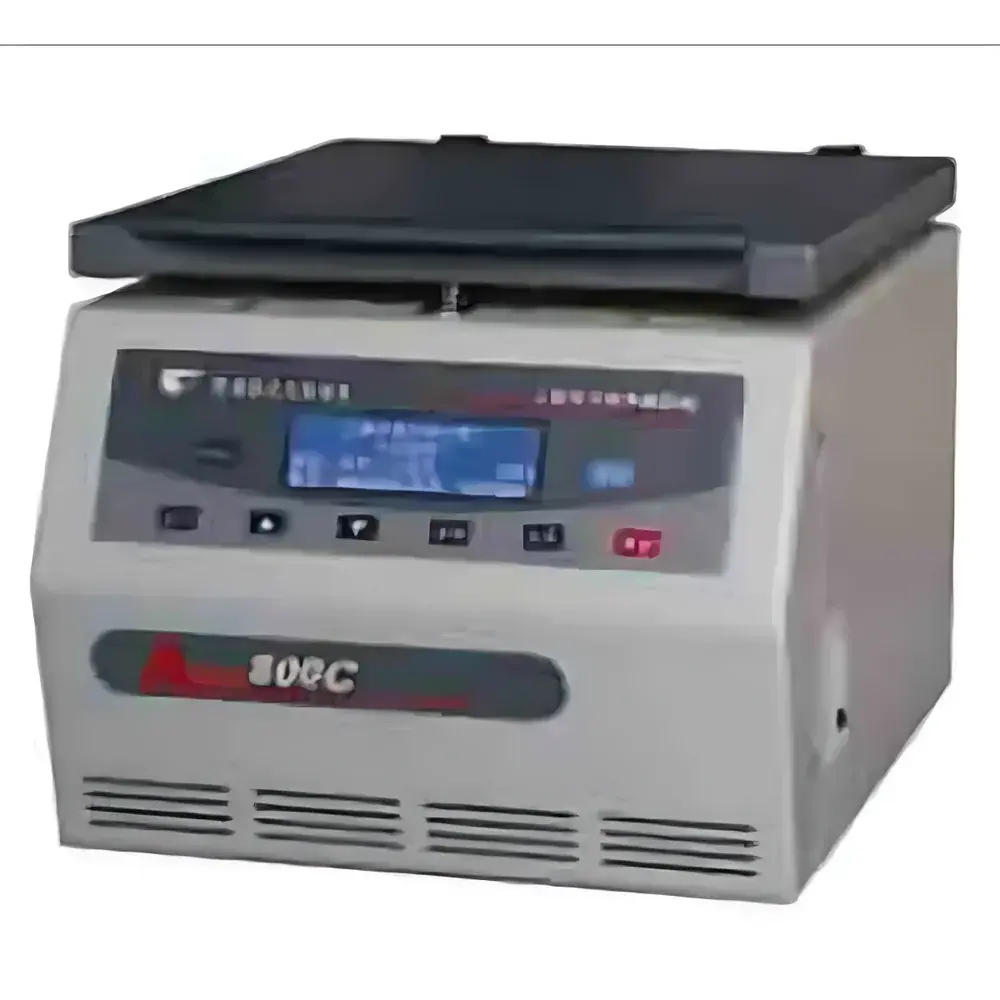
AnTing KA-1000C Benchtop Low-Speed Centrifuge
| Brand | AnTing |
|---|---|
| Origin | Shanghai, China |
| Model | KA-1000C |
| Type | Benchtop Centrifuge |
| Speed Range | 0–4000 rpm |
| Max RCF | 2220 × g |
| Rotor Type | Fixed-angle rotor |
| Capacity | 8 × 15 mL |
| Timer Range | 0–99 min |
| Power Supply | 220 V, 50 Hz, 180 W |
| Dimensions (L×W×H) | 380 mm × 480 mm × 330 mm |
| Net Weight | 45 kg |
| Construction | Reinforced polymer housing with electronic safety interlock door |
Overview
The AnTing KA-1000C is a robust, benchtop low-speed centrifuge engineered for routine separation tasks in academic laboratories, quality control environments, and small-scale production facilities. Operating on the principle of sedimentation under centrifugal force, it accelerates phase separation by applying controlled rotational acceleration to heterogeneous liquid samples—enabling efficient pelleting of cells, precipitates, or particulates while preserving sample integrity. With a maximum rotational speed of 4000 rpm and a corresponding relative centrifugal force (RCF) of 2220 × g, the KA-1000C delivers consistent performance within the low-speed centrifugation range (typically defined as <6000 rpm), making it suitable for applications where high g-forces are unnecessary or potentially detrimental—such as blood component separation, yeast harvesting, or polymer precipitation. Its compact footprint (380 × 480 × 330 mm) and 45 kg mass ensure stable operation without requiring anchoring, while the reinforced polymer chassis minimizes vibration transmission and supports long-term mechanical reliability.
Key Features
- Fixed-angle rotor configuration optimized for rapid sedimentation of standard microcentrifuge tubes (up to 15 mL × 8 positions)
- Digitally adjustable timer (0–99 minutes) with automatic rotor deceleration and audible end-of-run signal
- Electronic safety interlock door system that prevents operation unless fully latched—compliant with IEC 61010-1 requirements for laboratory equipment safety
- Brushless DC motor delivering smooth acceleration/deceleration profiles and extended service life with minimal maintenance
- Real-time rpm/RCF display with non-volatile memory retaining last-used parameters across power cycles
- Thermal management system maintaining ambient rotor chamber temperature during extended runs (≤99 min)
Sample Compatibility & Compliance
The KA-1000C accommodates common polypropylene and polycarbonate conical-bottom tubes (15 mL capacity) and is compatible with standard autoclavable aluminum or composite fixed-angle rotors. It supports protocols aligned with ISO 15189 (medical laboratories), CLSI EP05-A3 (precision evaluation of centrifuges), and general GLP-compliant workflows where documentation of run parameters (time, speed, RCF) is required. While not certified for Class II biosafety containment, its sealed rotor chamber and drip tray design facilitate decontamination between runs. The unit meets CE marking requirements for electromagnetic compatibility (EMC Directive 2014/30/EU) and low-voltage safety (LVD Directive 2014/35/EU).
Software & Data Management
The KA-1000C operates via an embedded microcontroller interface with no external PC dependency. All operational data—including start time, set speed, actual RCF, elapsed time, and final stop status—is logged internally and displayed at completion. Though lacking USB or Ethernet connectivity, the device supports manual audit trail reconstruction through printed lab notebook entries referencing displayed parameters. For regulated environments requiring electronic records, users may integrate run logs into LIMS or ELN platforms via manual transcription—a practice consistent with FDA 21 CFR Part 11 guidance for non-networked instrumentation used in GMP/QC settings.
Applications
- Preparative separation of mammalian blood components (e.g., plasma, buffy coat, erythrocytes)
- Harvesting bacterial or yeast cultures prior to lysis or storage
- Clarification of crude enzyme extracts or cell lysates
- Removal of insoluble aggregates from protein or nucleic acid solutions
- Routine sedimentation of latex particles, silica suspensions, or polymer emulsions in materials science labs
- Sample conditioning prior to downstream analysis (e.g., HPLC injection, spectrophotometric assays)
FAQ
What is the maximum tube volume supported by the KA-1000C?
The instrument accepts up to eight 15 mL conical tubes in its standard fixed-angle rotor configuration.
Does the KA-1000C support refrigerated operation?
No—this is a non-refrigerated benchtop model designed for ambient-temperature separations only.
Can the rotor be autoclaved?
Yes, the aluminum fixed-angle rotor is autoclavable at 121°C for 20 minutes; verify rotor balance post-sterilization before reuse.
Is calibration traceable to national standards?
Speed and timer accuracy are factory-verified against NIST-traceable tachometers and quartz timers; calibration certificates are available upon request.
What safety certifications does the KA-1000C hold?
It complies with IEC 61010-1 (safety of electrical equipment for measurement, control, and laboratory use) and carries CE marking per EU directives.



