
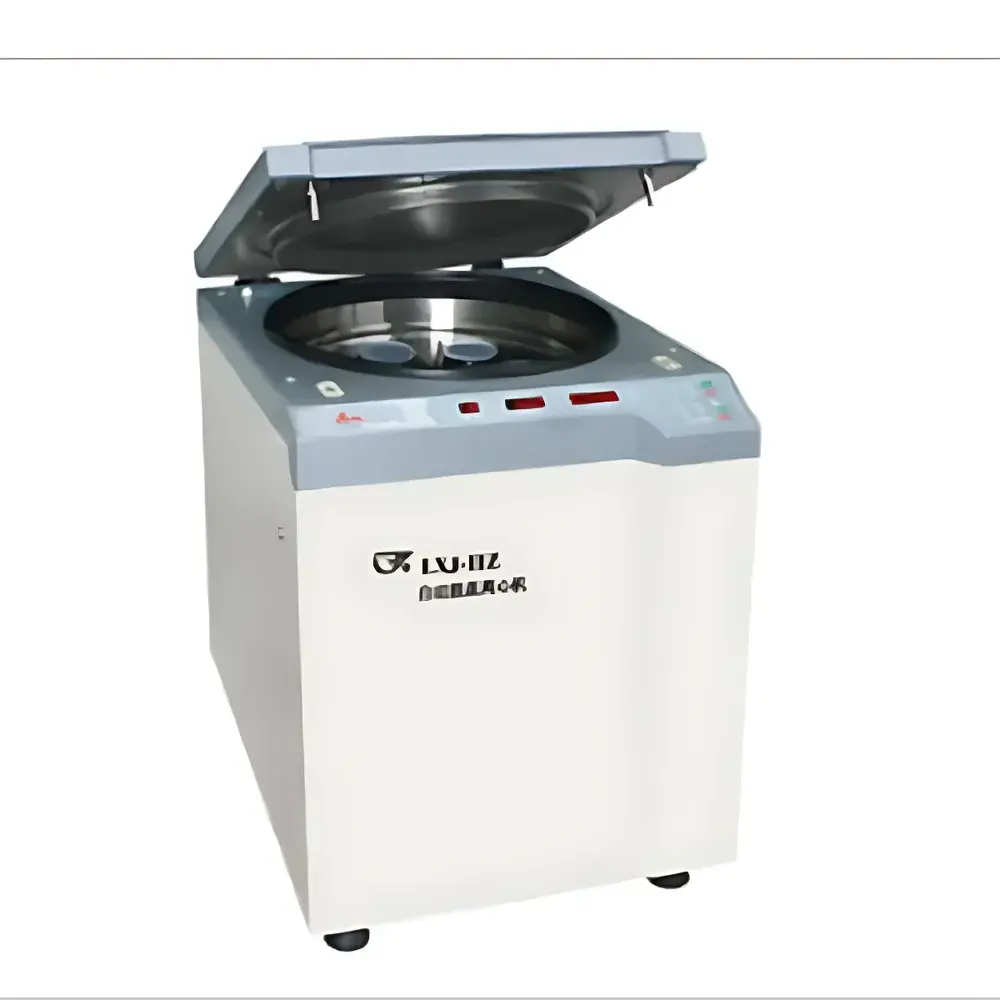
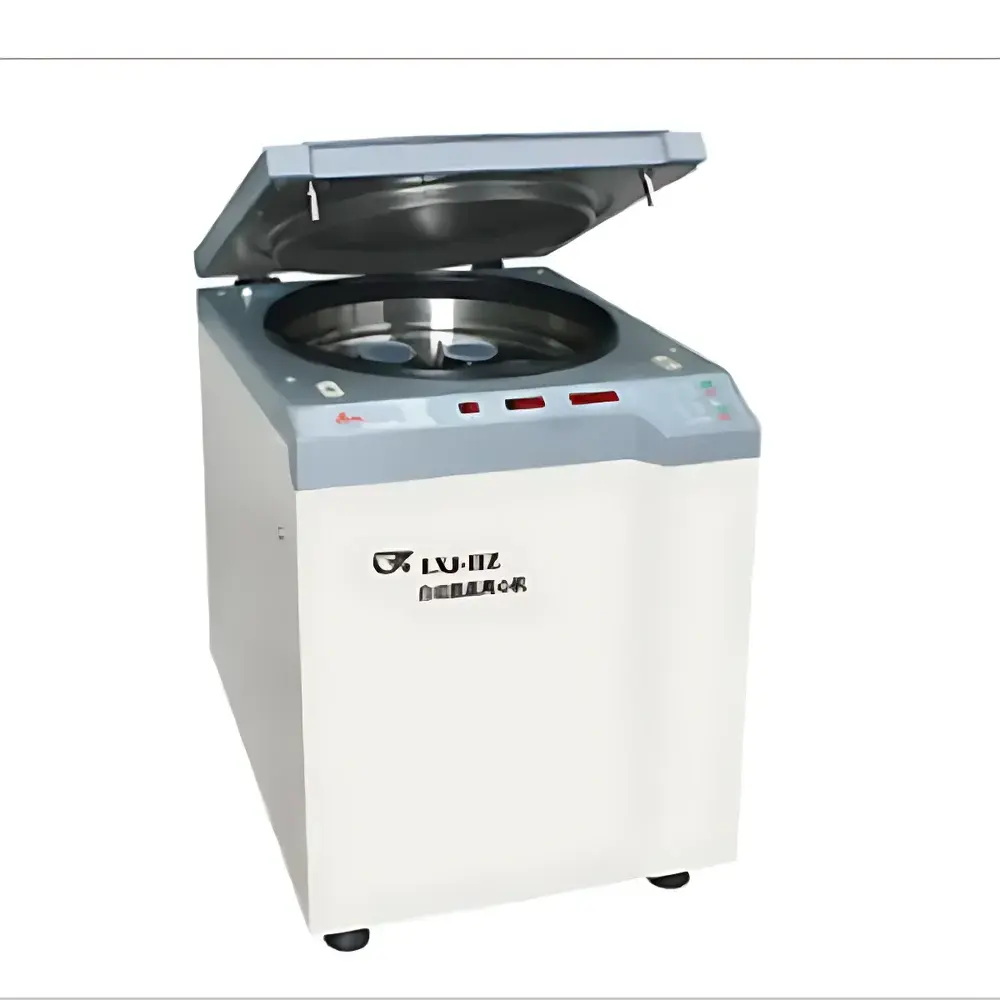
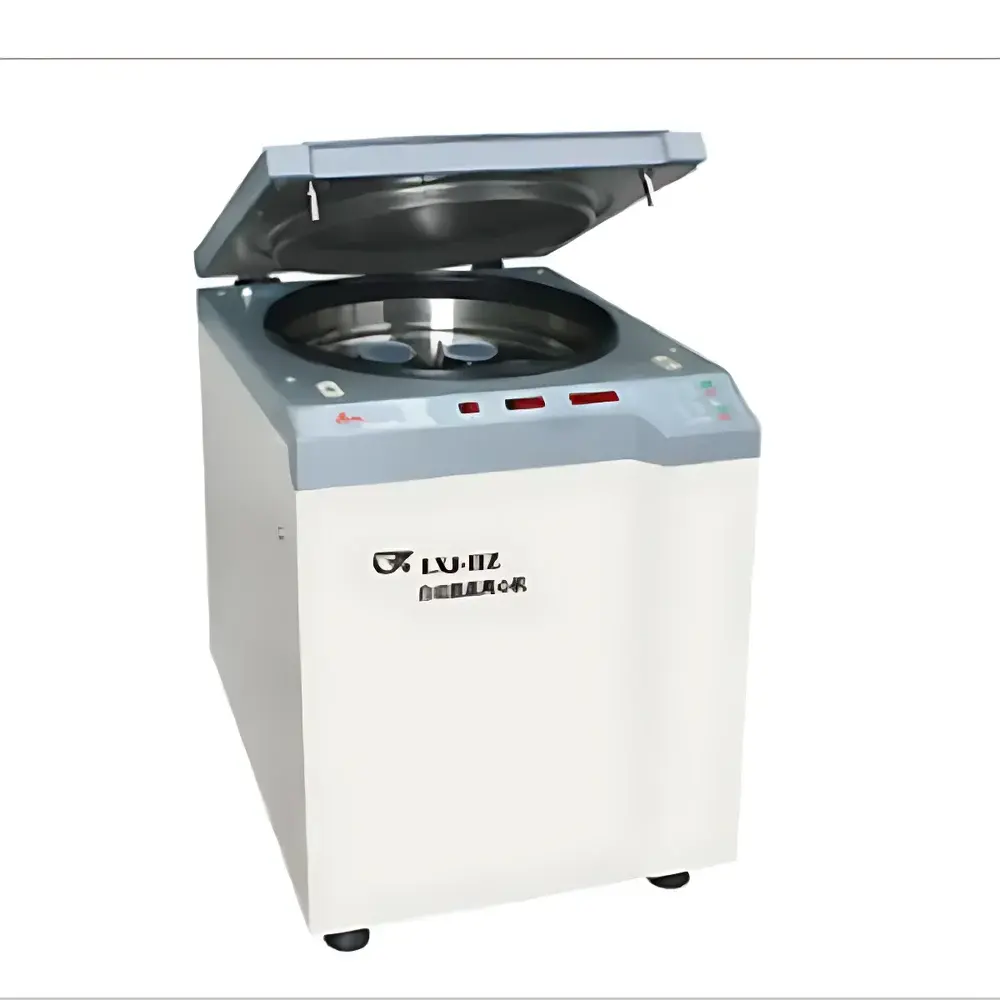
Anting LXJ-IIZ Automatic Cap-Removal Benchtop Centrifuge
| Brand | Anting |
|---|---|
| Origin | Shanghai, China |
| Model | LXJ-IIZ |
| Type | Benchtop Centrifuge |
| Category | Low-Speed Centrifuge |
| Cooling | Refrigerated |
| Rotor Type | Horizontal Swing-Bucket Rotor |
| Maximum Capacity | 120 × 5 mL Vacuum Blood Tubes |
| Maximum Speed | 3600 rpm |
| Maximum RCF | 3040 × g |
| Timer Range | 0–99 min |
| Power Supply | 220 V, 50 Hz, 750 W |
| Dimensions (L×W×H) | 550 mm × 700 mm × 770 mm |
| Weight | 145 kg |
| Drive System | Brushless Frequency-Controlled Motor |
| Safety | Electronic Door Lock Interlock |
| Noise Level | Low-Noise Operation |
Overview
The Anting LXJ-IIZ Automatic Cap-Removal Benchtop Centrifuge is an engineered solution for high-throughput clinical laboratories requiring integrated vacuum blood tube processing. Designed specifically for hospital core labs, blood banks, and diagnostic centers, this refrigerated centrifuge combines horizontal swing-bucket rotor mechanics with synchronized cap-removal actuation—enabling complete separation and de-capping in a single automated cycle. Its operation relies on precisely timed centrifugal acceleration (up to 3040 × g at 3600 rpm) to sediment cellular components while mechanical grippers simultaneously detach tube caps without manual intervention. The brushless frequency-controlled motor ensures stable rotational control, minimal thermal drift, and extended service life under repetitive daily use. Unlike conventional centrifuges requiring post-run manual decapping—a labor-intensive, contamination-prone step—the LXJ-IIZ eliminates operator contact with tube tops, reducing biohazard exposure and improving workflow traceability in regulated environments.
Key Features
- Integrated automatic cap-removal mechanism synchronized with centrifugation cycle—achieves 100% decapping success rate across standard 5 mL vacuum blood tubes (e.g., EDTA, serum separator, lithium heparin).
- Refrigerated operation maintains sample temperature stability between 4 °C and 25 °C during runs, critical for preserving analyte integrity in hematology and coagulation assays.
- Horizontal swing-bucket rotor configuration (120-position, 5 mL capacity) ensures uniform sedimentation profiles and minimizes pellet displacement during acceleration/deceleration phases.
- Electronically interlocked safety door prevents accidental opening during operation and halts rotation instantly upon lid detection failure—compliant with IEC 61010-2-020 safety standards for laboratory centrifuges.
- Low-noise design (<65 dB[A] at rated speed) enables installation in shared laboratory spaces without acoustic isolation requirements.
- Intuitive digital interface with programmable timer (0–99 minutes), speed/RCF toggle, and real-time status indicators supports GLP-aligned procedural documentation.
Sample Compatibility & Compliance
The LXJ-IIZ accommodates all common 5 mL vacuum collection tubes meeting ISO 6710 and CLSI H26-A4 dimensional specifications—including gel barrier, clot activator, and anticoagulant variants. Its rotor geometry and cap-removal force profile have been validated for compatibility with major manufacturers’ tube systems (BD Vacutainer®, Greiner Bio-One, Sarstedt). The unit meets CE marking requirements under the EU Machinery Directive 2006/42/EC and Electromagnetic Compatibility Directive 2014/30/EU. While not certified for FDA 510(k) clearance as a Class II medical device, its operational parameters align with CLIA-waived and CAP-accredited laboratory workflows where centrifugation is performed under defined SOPs. Routine maintenance intervals and calibration logs support internal quality system audits per ISO/IEC 17025:2017 clause 6.4.10.
Software & Data Management
The LXJ-IIZ operates via embedded firmware without external PC dependency; however, optional RS-232 or USB-to-serial interface enables integration with Laboratory Information Systems (LIS) for run log export. Timestamped cycle records—including start time, duration, final speed, RCF, and door lock status—are stored onboard for ≥1,000 cycles and exportable as CSV files. Audit trail functionality satisfies basic 21 CFR Part 11 readiness when paired with institutional electronic signature protocols. No proprietary software installation is required—data retrieval uses standard terminal emulation or third-party serial logging tools compliant with HL7 v2.x message framing conventions.
Applications
- Routine serum/plasma separation from whole blood in clinical chemistry and immunoassay pre-analytical workflows.
- High-volume blood bank operations including donor screening, component preparation, and infectious disease serology testing.
- Research applications involving peripheral blood mononuclear cell (PBMC) isolation where consistent cap removal prevents cross-contamination between samples.
- Point-of-care testing environments where rapid turnaround and minimal hands-on time are essential for STAT specimen processing.
- Quality control of vacuum tube manufacturing—validating cap retention force and centrifugal release thresholds per ASTM F2338-22.
FAQ
Does the LXJ-IIZ support rotor validation for IQ/OQ/PQ protocols?
Yes—rotor imbalance tolerance, speed accuracy (±25 rpm), and temperature uniformity (±1.5 °C across chamber) are documented in the factory test report provided with each unit. Custom validation templates compatible with ISO 13485 Annex A are available upon request.
Can the cap-removal mechanism be disabled for non-vacuum tube applications?
No—the mechanism is mechanically coupled to the rotor assembly and cannot be disengaged. It is optimized exclusively for standardized 5 mL vacuum tubes and should not be used with non-compliant containers.
What maintenance is required to sustain optimal performance?
Monthly cleaning of cap-removal jaws with 70% ethanol and biannual inspection of rotor bearings and door interlock switches are recommended. Full service intervals are specified at 10,000 operating hours or every 24 months, whichever occurs first.



