
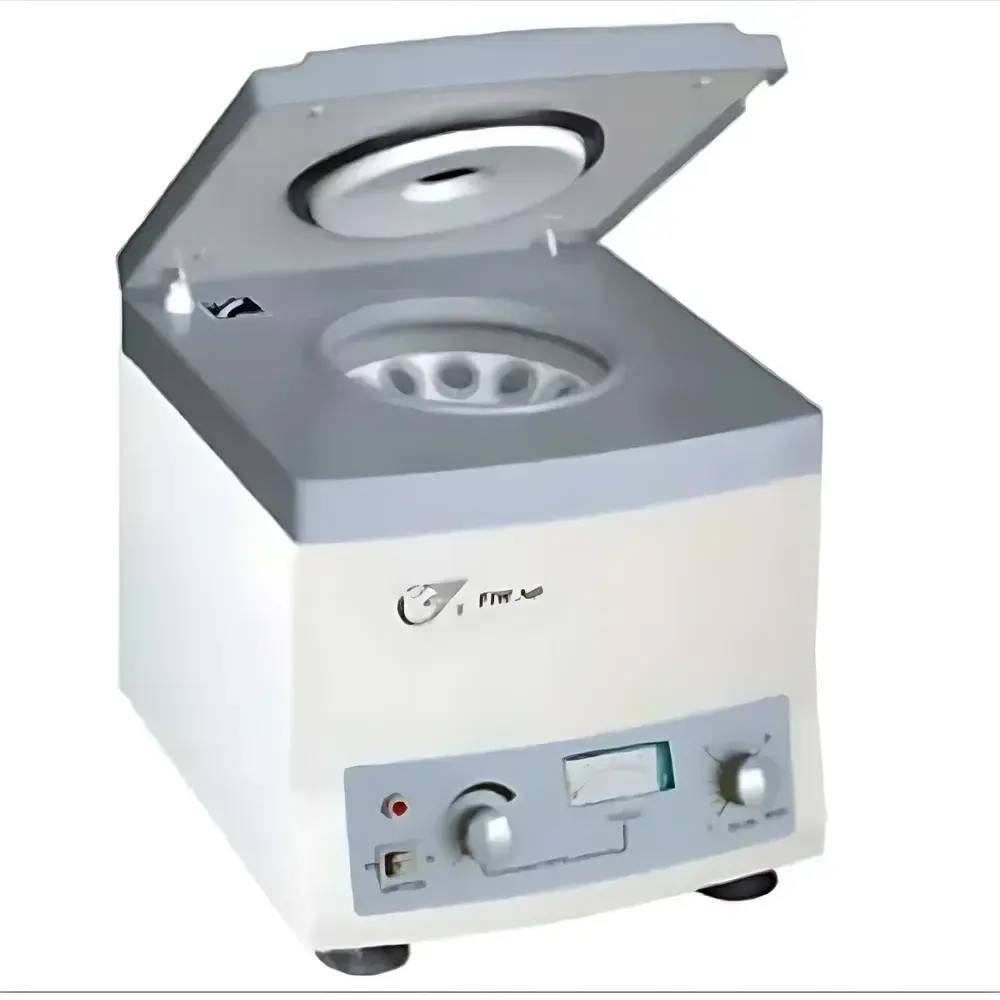
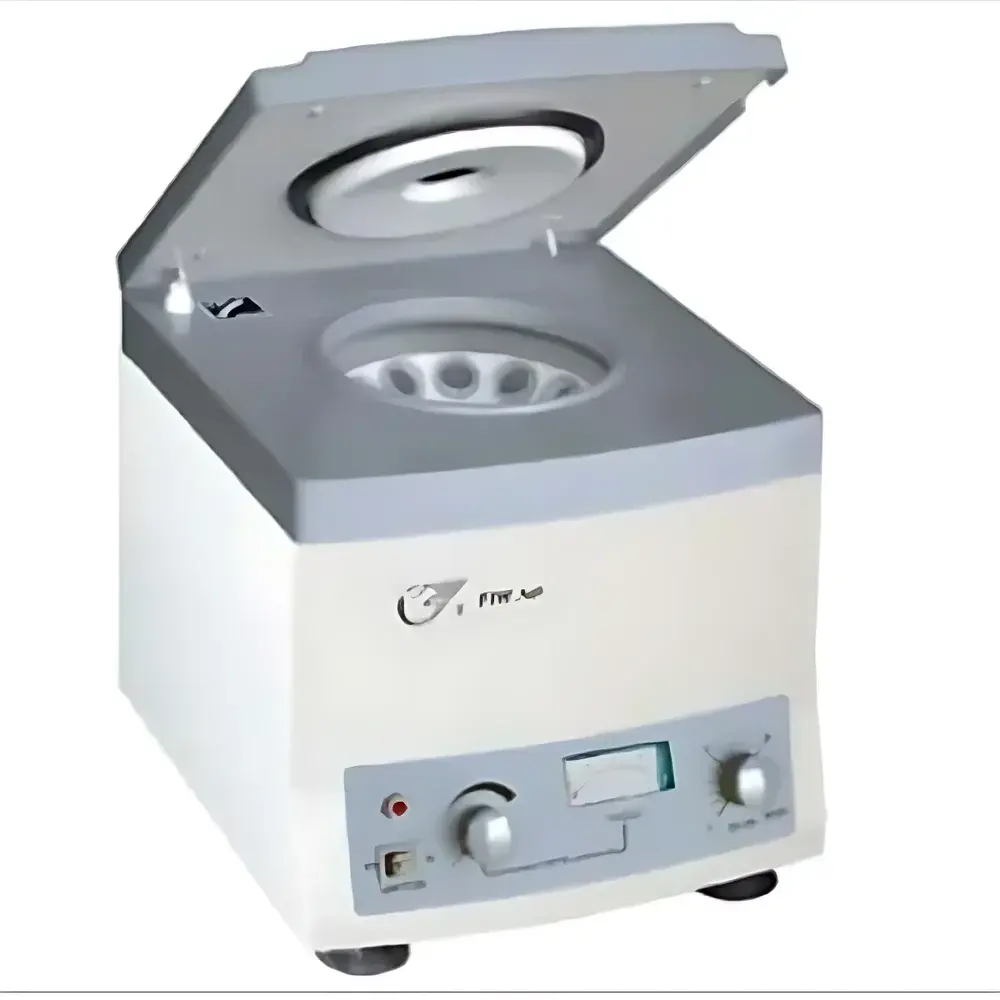
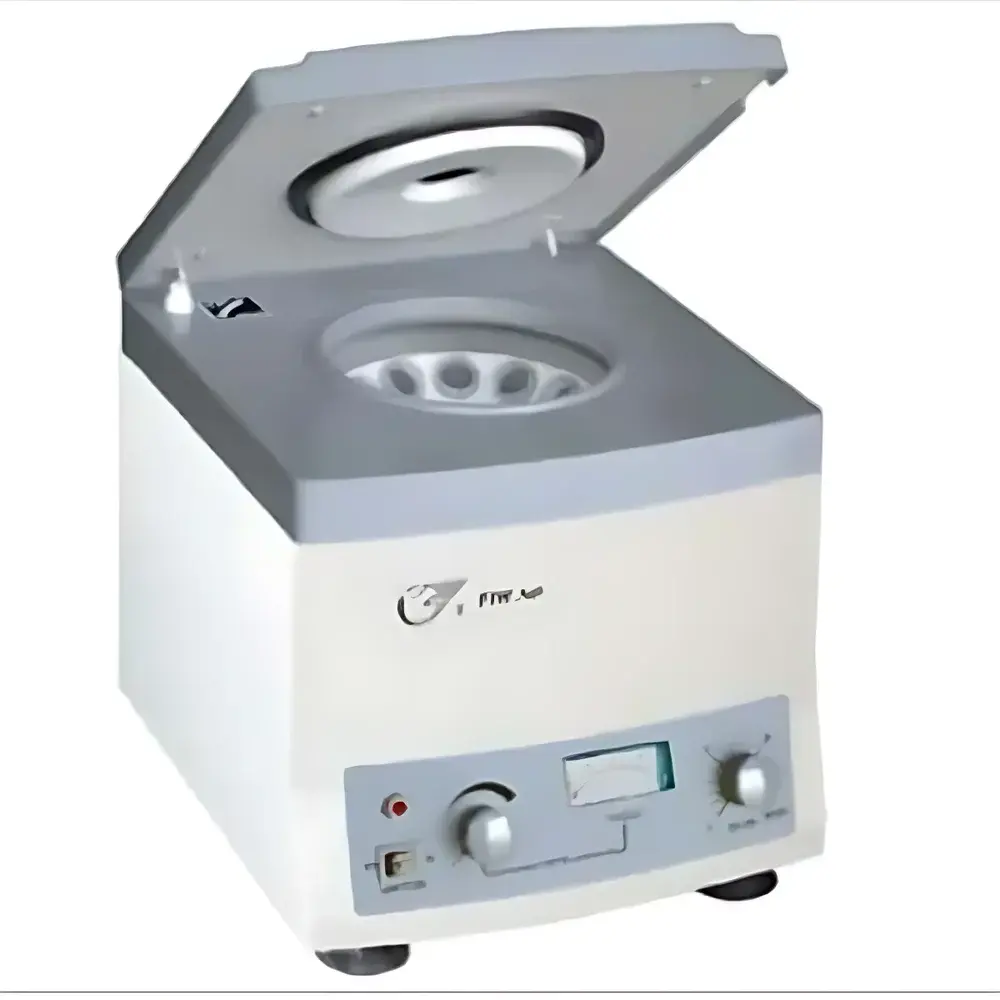
AnTing TDL-4 Benchtop Low-Speed Centrifuge
| Brand | AnTing |
|---|---|
| Origin | Shanghai, China |
| Model | TDL-4 |
| Instrument Type | Benchtop Centrifuge |
| Speed Range | 0–4000 rpm |
| Max RCF | 1430 × g |
| Rotor Capacity | 6 × 20 mL (angle rotor) |
| Timer Range | 0–30 min |
| Power Supply | 220 V, 50 Hz, 65 W |
| Dimensions (L×W×H) | 280 mm × 310 mm × 265 mm |
| Net Weight | 9 kg |
| Construction | Reinforced polymer housing with electronic safety door lock |
| Compliance | Designed for general laboratory separation per ISO 13485-aligned manufacturing practices |
Overview
The AnTing TDL-4 Benchtop Low-Speed Centrifuge is an entry-level, mechanically robust centrifugation system engineered for routine sedimentation and phase separation tasks in academic laboratories, quality control environments, and small-scale production facilities. Operating on the principle of radial acceleration-induced density-based particle migration, the TDL-4 applies controlled centrifugal force to accelerate the separation of suspended solids from liquid matrices or immiscible liquid phases. Its fixed-angle rotor configuration ensures consistent angular geometry for reproducible pelleting efficiency across standard 15–20 mL conical tubes. With a maximum rotational speed of 4000 rpm and a corresponding relative centrifugal force (RCF) of 1430 × g, the instrument falls within the low-speed centrifuge classification (typically < 10,000 rpm), making it suitable for applications involving whole blood fractionation, cell harvesting, precipitate recovery, and basic microbiological sample preparation—without inducing excessive shear stress on fragile biological components.
Key Features
- Stable, low-vibration operation enabled by precision-balanced rotor assembly and rigid polymer chassis
- Electronic safety door interlock system prevents rotor activation unless lid is fully closed and latched
- Digital timer with adjustable range from 0 to 30 minutes, supporting both timed and continuous run modes
- Fixed-angle rotor accommodating six 20 mL centrifuge tubes (compatible with common polypropylene or glass tubes meeting ISO 8573-1 mechanical integrity standards)
- Energy-efficient 65 W induction motor with thermal overload protection and automatic shutdown on abnormal current draw
- Compact footprint (280 × 310 × 265 mm) optimized for limited bench space without compromising structural rigidity
- Lightweight design (9 kg net weight) facilitates repositioning within shared lab environments while maintaining operational stability
Sample Compatibility & Compliance
The TDL-4 supports standard laboratory tube formats including 15 mL and 20 mL conical centrifuge tubes made from polypropylene (PP), polycarbonate (PC), or borosilicate glass—provided they conform to dimensional tolerances specified in ISO 10993-1 for non-invasive device compatibility. It is not rated for use with hazardous, volatile, or highly corrosive solvents; users must verify chemical resistance of tube materials prior to operation. While the unit does not carry CE marking or FDA 510(k) clearance, its construction adheres to baseline electrical safety principles outlined in IEC 61010-1:2010 for laboratory equipment. For GLP-compliant workflows, manual logbook entries are recommended for run parameters, date/time stamp, operator ID, and rotor usage history.
Software & Data Management
The TDL-4 operates via standalone hardware controls with no embedded microprocessor or digital interface. All operational parameters—including speed setting, timer duration, and start/stop commands—are managed through tactile push-button inputs and analog display indicators. As such, it generates no electronic audit trail, does not support data export, and is not compliant with FDA 21 CFR Part 11 requirements for electronic records and signatures. This architecture prioritizes reliability and serviceability over connectivity, aligning with institutional policies that restrict networked instrumentation in regulated core labs where deterministic behavior and minimal firmware attack surface are critical.
Applications
- Routine plasma/serum separation from whole blood specimens (e.g., clinical diagnostics prep)
- Pelleting of mammalian or microbial cells at low g-force to preserve membrane integrity
- Clarification of crude enzyme extracts or protein solutions prior to chromatographic analysis
- Sedimentation of precipitated nucleic acid or polysaccharide fractions in molecular biology workflows
- Removal of particulate contaminants from buffer stock solutions or reagent preparations
- Basic density-gradient pre-centrifugation steps prior to ultracentrifugation protocols
FAQ
What is the maximum tube volume supported by the TDL-4?
The instrument accepts up to six 20 mL centrifuge tubes in its standard fixed-angle rotor configuration.
Does the TDL-4 support variable speed control?
Yes—speed is continuously adjustable from 0 to 4000 rpm using the front-panel rotary dial.
Is rotor imbalance detection built into the system?
No; users must manually balance tube loads symmetrically before operation to prevent vibration-induced wear.
Can this centrifuge be used for clinical diagnostic samples under CLIA guidelines?
It may be employed for pre-analytical specimen processing provided validation documentation confirms performance consistency per CLIA §493.1253(b)(1).
What maintenance intervals are recommended?
Visual inspection of rotor threads and lid latch mechanism every 100 operating hours; annual verification of motor brush condition and bearing lubrication status.



