
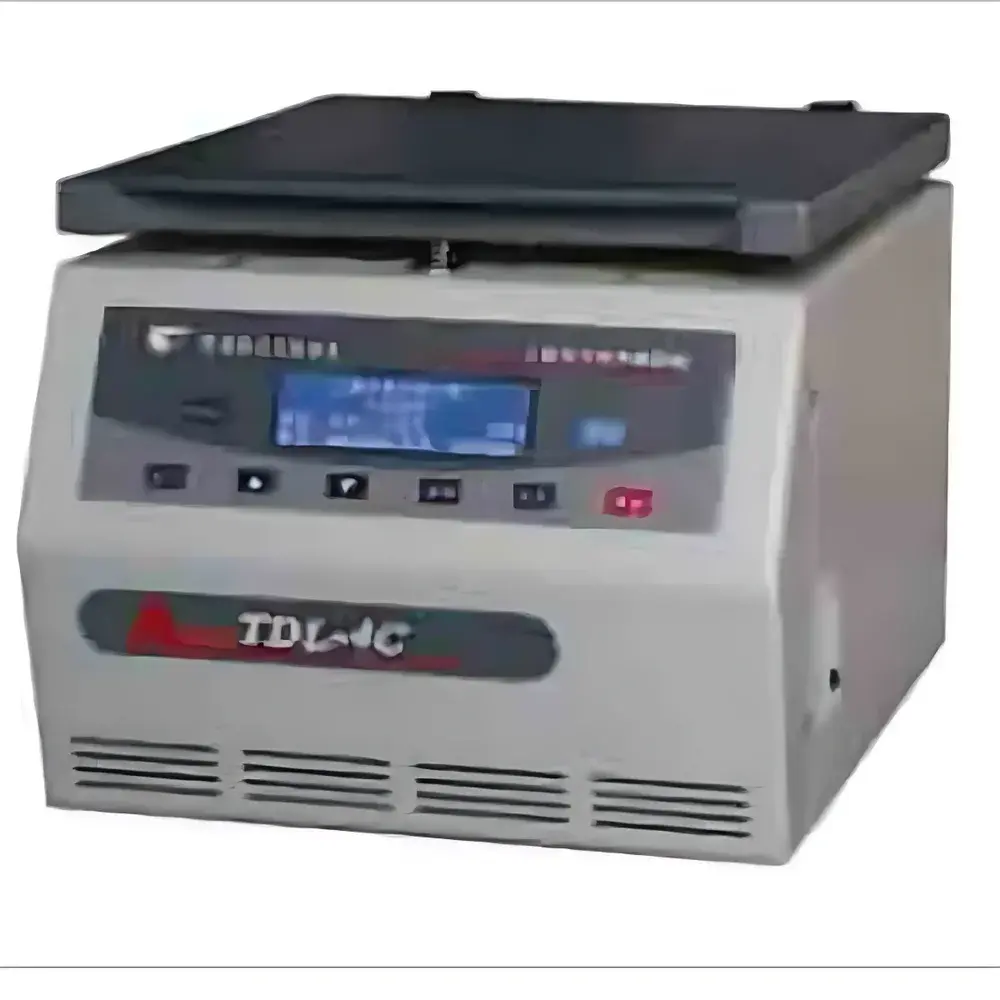
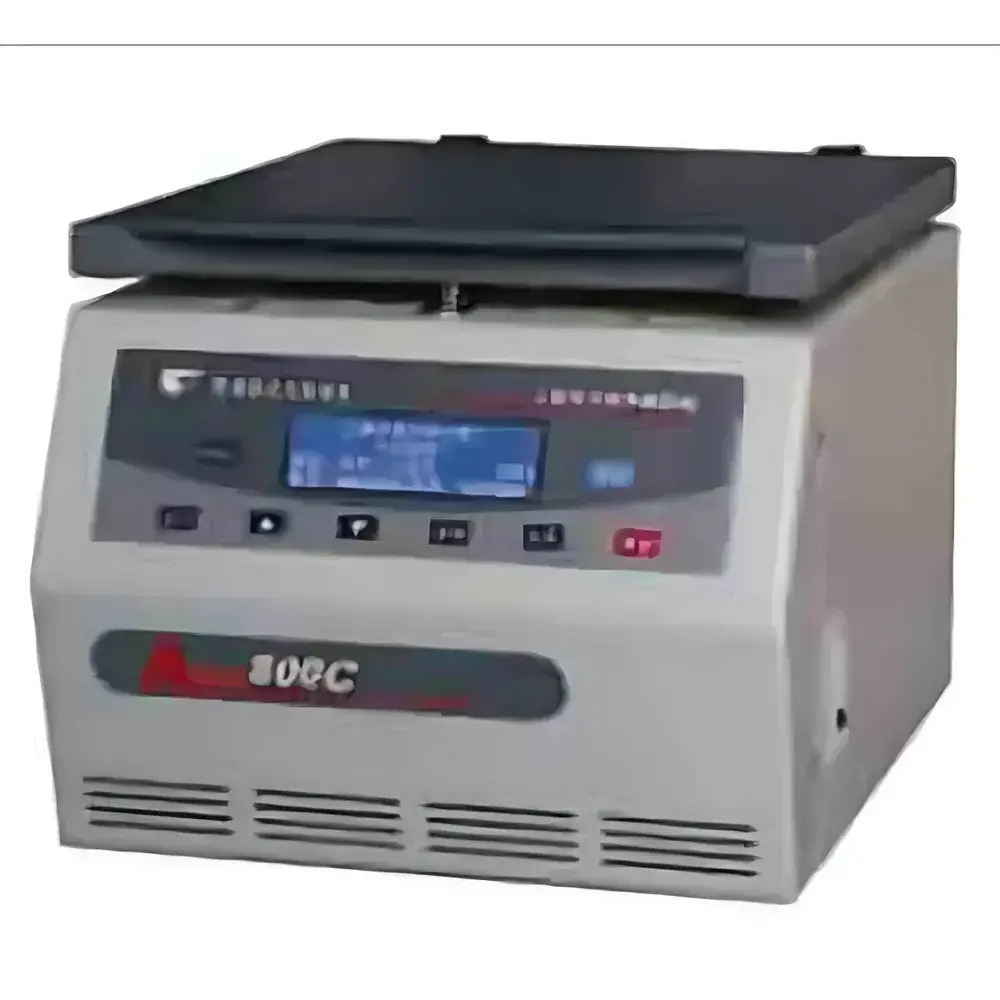
AnTing TDL-4C Benchtop Low-Speed Centrifuge
| Brand | AnTing |
|---|---|
| Origin | Shanghai, China |
| Model | TDL-4C |
| Type | Benchtop Centrifuge |
| Speed Range | 0–4000 rpm |
| Max RCF | 1430 × g |
| Rotor Capacity | 6 × 15 mL (angle rotor) |
| Timer Range | 0–99 min |
| Power Supply | 220 V, 50 Hz, 180 W |
| Dimensions (L×W×H) | 380 mm × 480 mm × 330 mm |
| Weight | 45 kg |
| Construction | Reinforced polymer housing with electronic safety door lock |
| Compliance | Designed for general laboratory use under ISO/IEC 17025-aligned workflows |
Overview
The AnTing TDL-4C Benchtop Low-Speed Centrifuge is an engineered solution for routine sedimentation and phase separation tasks in life science, clinical, and quality control laboratories. Operating on the principle of centrifugal force generation via rotational acceleration, the TDL-4C delivers controlled, reproducible separation of heterogeneous liquid mixtures—including cell suspensions, blood components, precipitates, and coarse particulates—based on differences in particle density and size. Its fixed-angle rotor configuration enables rapid pelleting of samples at speeds up to 4000 rpm, generating a maximum relative centrifugal force (RCF) of 1430 × g. Designed for operational simplicity and mechanical stability, the unit features a rigid reinforced polymer chassis, precision-balanced drive assembly, and low-vibration motor architecture—ensuring consistent performance across extended duty cycles without thermal drift or positional instability.
Key Features
- Benchtop footprint optimized for standard laboratory bench space (380 × 480 × 330 mm), facilitating integration into shared core facilities or QC labs with spatial constraints.
- Electronically interlocked safety door system prevents rotor operation unless fully latched—compliant with IEC 61010-1 requirements for electrical safety in laboratory equipment.
- Digital timer with 1-minute resolution (0–99 min) supports unattended batch processing while maintaining traceability of run duration.
- Fixed-angle rotor accommodates six 15 mL conical tubes (e.g., Falcon-style), enabling parallel processing of clinical or preparative samples without adapter requirements.
- Low-noise brushless DC motor ensures sustained torque delivery at variable loads, minimizing acoustic emission (<65 dB(A) at 1 m) during operation.
- Thermally stable housing design dissipates heat efficiently during prolonged runs, eliminating need for active cooling or forced-air ventilation.
Sample Compatibility & Compliance
The TDL-4C is validated for use with standard polypropylene and polycarbonate centrifuge tubes rated for ≤1430 × g. It supports common biosample types including whole blood (for serum/plasma separation), bacterial pellets, tissue homogenates, and polymer emulsions. While not certified for biosafety level (BSL)-2+ containment, its sealed rotor chamber and drip-resistant base meet basic hygiene standards for non-sterile, non-aerosol-generating applications. The instrument aligns with foundational laboratory quality frameworks: it supports GLP-compliant documentation when paired with external logbooks, and its fixed-speed operation eliminates variability associated with programmable ramp profiles—reducing risk of protocol deviation in regulated environments such as ISO 15189-accredited medical labs.
Software & Data Management
The TDL-4C operates as a standalone electromechanical device with no embedded firmware or network interface. All operational parameters—including speed setpoint, timer value, and run status—are controlled via front-panel membrane switches and displayed on a dual-digit LED screen. No proprietary software, drivers, or cloud connectivity are required. This architecture ensures long-term functional reliability, avoids cybersecurity vulnerabilities inherent in connected instruments, and simplifies validation for FDA-regulated environments where software qualification (per 21 CFR Part 11) would otherwise be mandated. Users maintain full audit trail integrity through manual entry of run logs, consistent with traditional paper-based SOPs still prevalent in resource-constrained or legacy-compliant facilities.
Applications
- Routine serum and plasma separation from whole blood specimens in clinical diagnostics and point-of-care testing.
- Pelleting of mammalian and microbial cells prior to lysis or RNA/DNA extraction protocols.
- Clarification of crude protein extracts or antibody-containing supernatants in early-stage bioprocessing.
- Sedimentation of suspended solids in environmental water samples prior to gravimetric or spectrophotometric analysis.
- Preparative isolation of extracellular vesicles or lipoprotein fractions where high g-force is unnecessary and shear sensitivity is moderate.
- Quality assurance testing of suspension-based pharmaceutical formulations (e.g., oral suspensions, topical emulsions) per USP <711> guidelines.
FAQ
What is the maximum tube capacity supported by the TDL-4C?
The instrument accepts six 15 mL conical centrifuge tubes in its standard fixed-angle rotor. Tube compatibility is limited to formats with outer diameters ≤17 mm and heights ≤120 mm.
Does the TDL-4C support variable acceleration/deceleration rates?
No. It operates with fixed-speed ramp-up and coast-down profiles, typical of entry-level low-speed centrifuges intended for robustness over programmability.
Is rotor imbalance detection included?
The unit does not feature active imbalance sensing; however, its mechanical design includes passive vibration-dampening mounts and automatic shutdown triggered by excessive oscillation beyond ISO 1940-1 G2.5 balance class thresholds.
Can this centrifuge be used for radioactive or hazardous samples?
Only with appropriate secondary containment (e.g., sealed buckets or sealed rotors), as the base configuration lacks certified biocontainment or chemical resistance ratings.
What maintenance intervals are recommended?
Annual inspection of drive belt tension (if applicable), rotor thread integrity, and door latch actuation is advised. No lubrication or calibration is required under normal operating conditions.



