
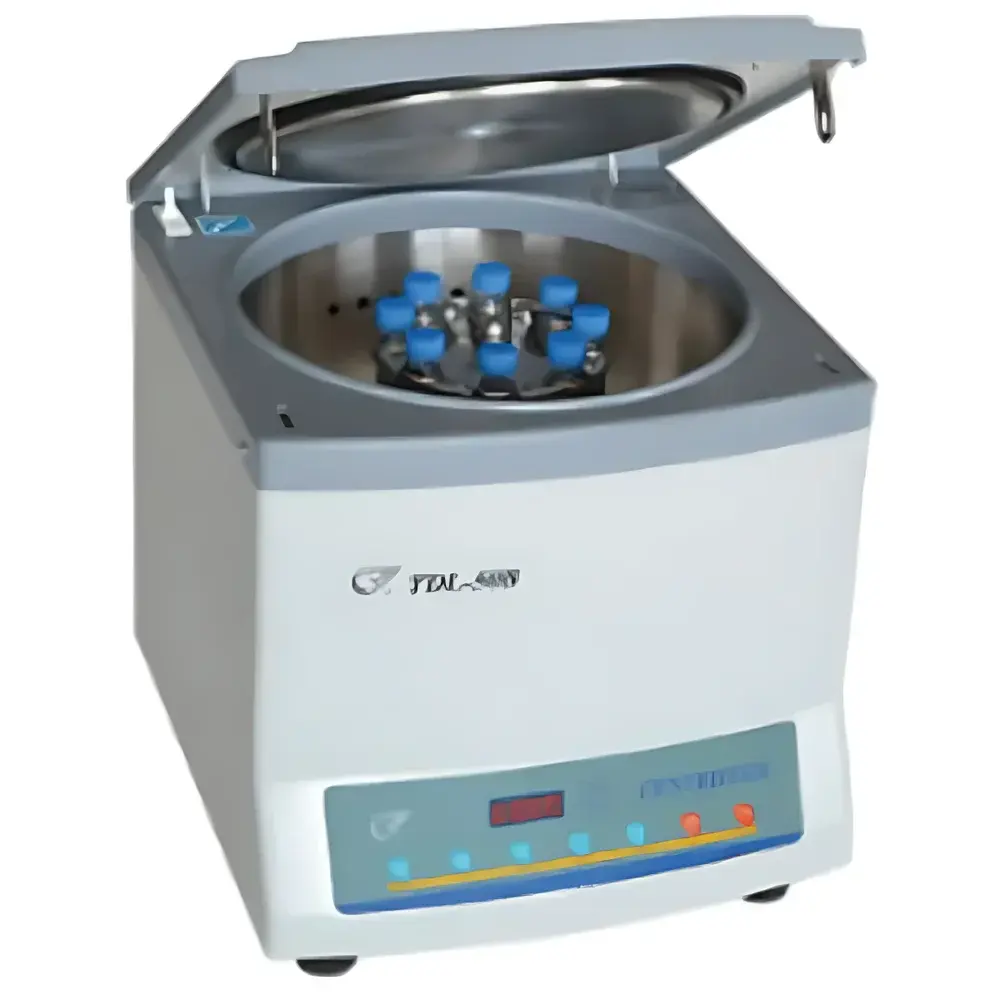
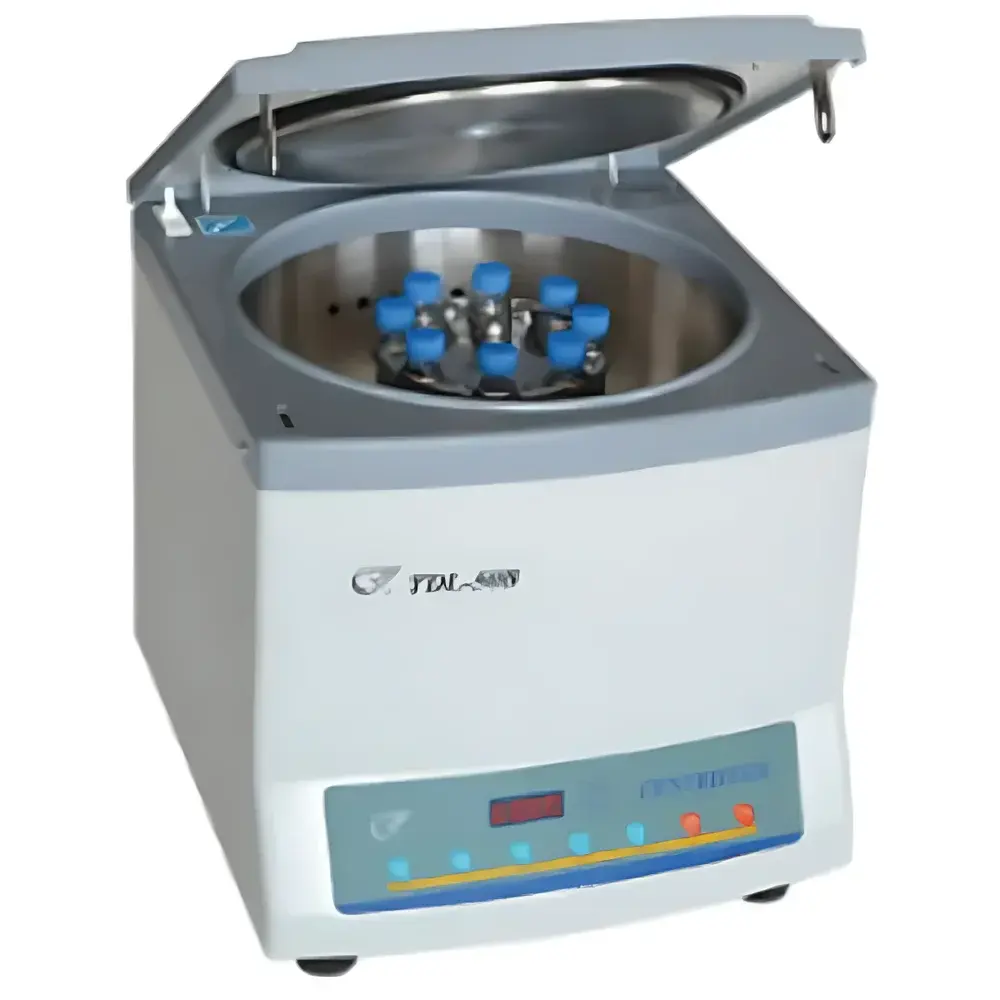
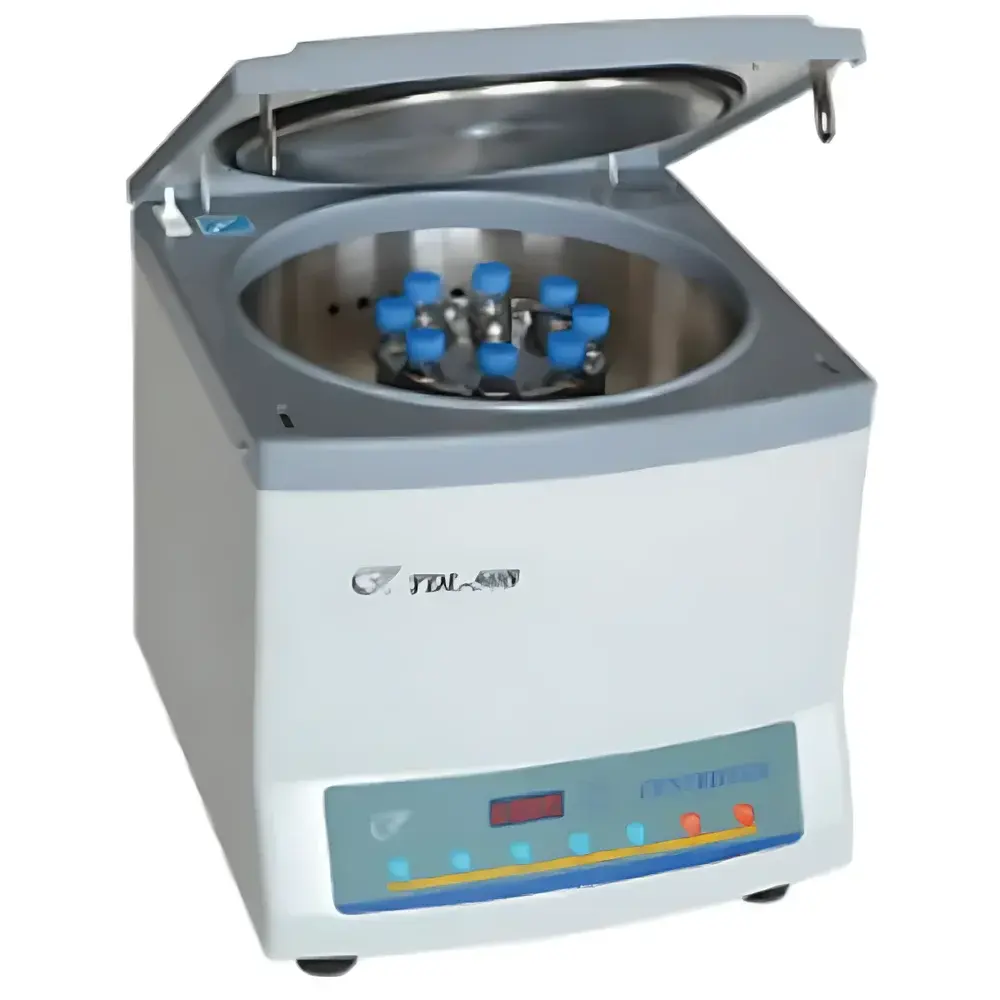
AnTing TDL-50B Benchtop Low-Speed Centrifuge
| Brand | AnTing |
|---|---|
| Origin | Shanghai, China |
| Model | TDL-50B |
| Type | Benchtop Centrifuge |
| Speed Range | 0–5000 rpm |
| Max RCF | 3800 × g |
| Rotor Type | Swing-Bucket |
| Max Capacity | 8 × 20 mL |
| Timer Range | 0–99 min |
| Power Supply | 220 V, 50 Hz, 400 W |
| Dimensions (L×W×H) | 380 × 350 × 360 mm |
| Weight | 20 kg |
Overview
The AnTing TDL-50B is a benchtop low-speed centrifuge engineered for routine separation tasks in academic laboratories, quality control environments, and small-scale production facilities. It operates on the principle of sedimentation under centrifugal force—accelerating gravitational separation of suspended particles or immiscible phases based on differences in density, size, and shape. With a maximum rotational speed of 5000 rpm and a corresponding relative centrifugal force (RCF) of 3800 × g, the TDL-50B delivers reproducible performance for applications requiring gentle yet effective pelleting of cells, precipitates, or particulates without inducing shear-induced damage. Its compact footprint (380 × 350 × 360 mm) and lightweight construction (20 kg) make it suitable for shared lab benches, biosafety cabinets, or mobile laboratory setups where space and portability are constraints. The unit features an integrated electronic door lock system compliant with IEC 61010-1 safety standards, ensuring automatic rotor deceleration and lid interlock before opening.
Key Features
- Swing-bucket rotor configuration enabling uniform sample orientation during acceleration and deceleration—critical for preserving pellet integrity in sensitive biological suspensions.
- Digital timer with adjustable range from 0 to 99 minutes, supporting both timed and continuous operation modes.
- Brushless DC motor delivering consistent torque across the operational speed range, minimizing mechanical wear and enhancing long-term stability.
- High-strength polymer housing offering corrosion resistance, electrical insulation, and vibration damping—reducing noise (<65 dB(A)) and improving operational comfort in shared workspaces.
- Intuitive front-panel controls with LED display for real-time monitoring of speed (rpm), elapsed time, and error codes (e.g., imbalance detection, overtemperature).
- Automatic rotor recognition is not supported; however, the fixed-angle swing-bucket rotor is pre-calibrated for 20 mL tubes, eliminating need for manual RCF recalibration.
Sample Compatibility & Compliance
The TDL-50B accommodates standard conical-bottom polypropylene or glass centrifuge tubes (15–20 mL) in its eight-position swing-bucket rotor. It is compatible with common aqueous buffers, saline solutions, cell culture supernatants, serum, urine, and emulsions used in clinical chemistry and basic life science workflows. While not certified for biosafety level 3 (BSL-3) containment, its sealed rotor chamber meets ISO 13485-aligned design principles for Class II medical device accessories. The unit complies with CE marking requirements (EMC Directive 2014/30/EU and Low Voltage Directive 2014/35/EU) and conforms to GB/T 13777–2012 (Chinese national standard for centrifuges). It supports GLP-compliant documentation when paired with external logging tools but does not include FDA 21 CFR Part 11–compliant audit trail functionality.
Software & Data Management
The TDL-50B operates as a standalone instrument without embedded connectivity (no USB, Ethernet, or Bluetooth interfaces). All operational parameters are set manually via the front panel, and no proprietary software is required or provided. For laboratories requiring traceable records, users may integrate the centrifuge into validated workflows using external time-stamped video recording, manual logbooks, or third-party LIMS-compatible data capture systems. The absence of networked firmware eliminates cybersecurity risks associated with IoT-enabled instruments while maintaining regulatory flexibility in GxP environments where software validation burden must be minimized.
Applications
- Routine pelleting of mammalian and bacterial cells prior to lysis or cryopreservation.
- Clarification of tissue homogenates and crude enzyme extracts in biochemistry labs.
- Sedimentation of precipitated proteins or nucleic acids following ammonium sulfate or ethanol precipitation protocols.
- Phase separation in diagnostic assays involving whole blood, plasma, or serum samples.
- Preparative isolation of extracellular vesicles or lipoprotein fractions at low-force conditions to avoid aggregation.
- Quality assurance testing of suspension-based pharmaceutical formulations (e.g., oral suspensions, injectables) per USP and .
FAQ
What is the maximum tube capacity supported by the TDL-50B?
The centrifuge accepts eight 20 mL conical tubes in its swing-bucket rotor. Tubes exceeding 20 mL or deviating from standard dimensions may compromise balance and trigger automatic shutdown.
Does the TDL-50B support refrigeration?
No. This is a non-refrigerated model intended for ambient-temperature operation only. Samples requiring thermal stability must be pre-chilled prior to loading.
Is rotor balancing mandatory before each run?
Yes. Although the unit includes imbalance detection, symmetrical loading of all eight positions—or use of counterbalancing dummy tubes—is required to prevent excessive vibration and premature bearing wear.
Can the TDL-50B be used for clinical diagnostics under CLIA or CAP guidelines?
It may be employed in CLIA-waived or moderate-complexity testing environments, provided that operator training, preventive maintenance logs, and performance verification (e.g., speed calibration annually per CLSI EP17-A2) are documented.
What maintenance intervals are recommended?
Visual inspection and cleaning of the rotor chamber after every 100 runs; lubrication-free operation eliminates grease servicing, but annual verification of motor brush condition and door lock actuation is advised.



