
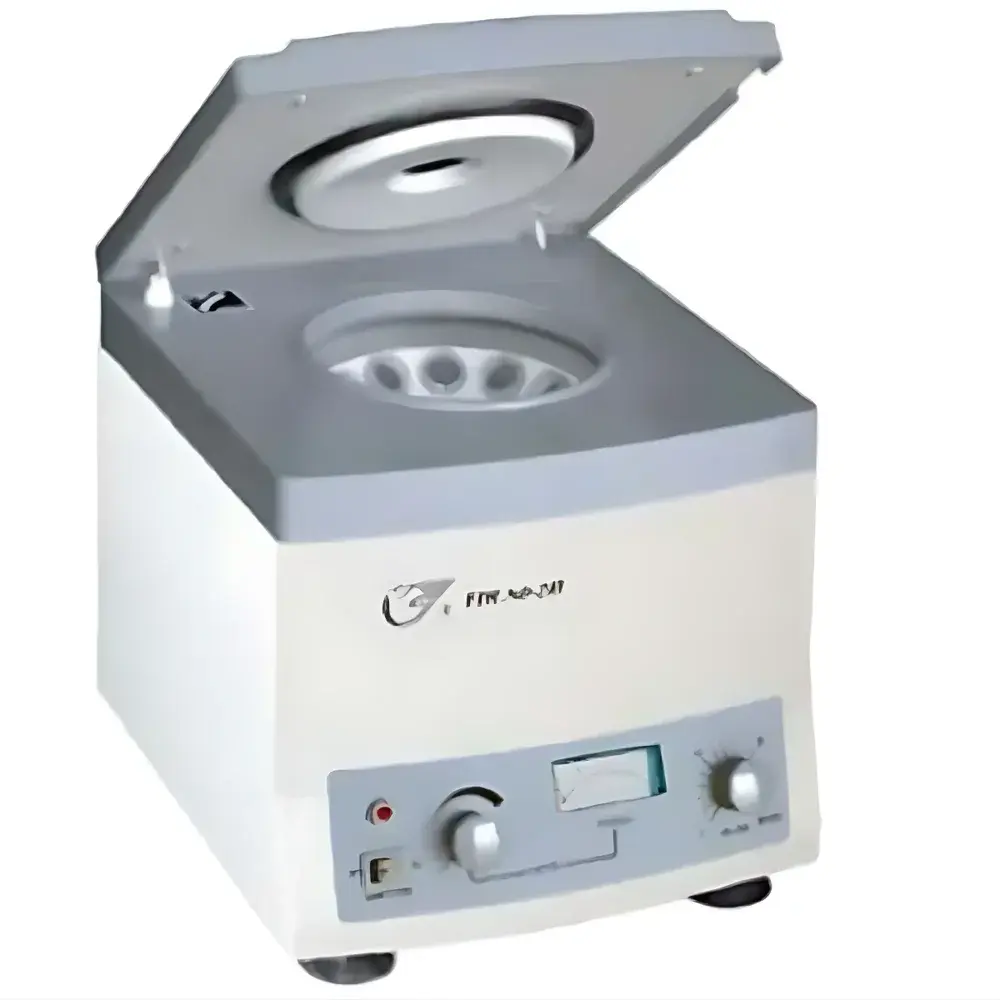
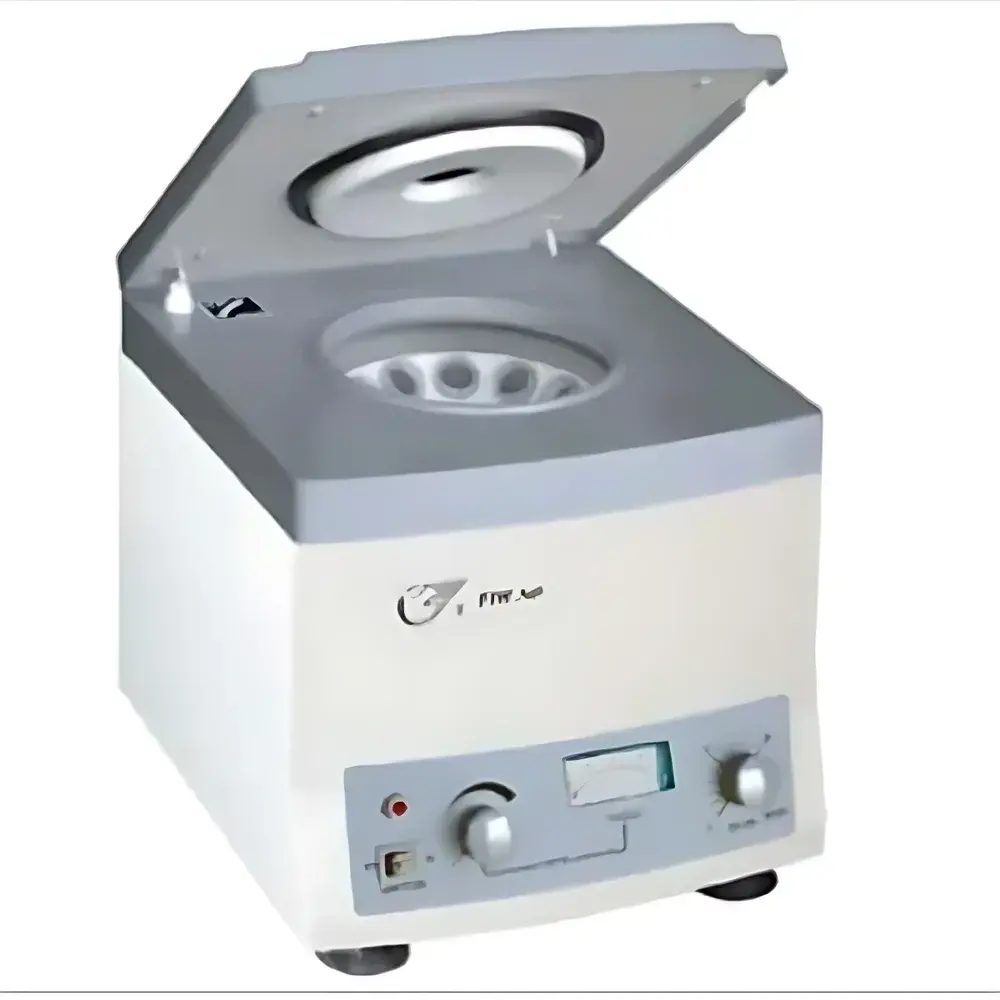
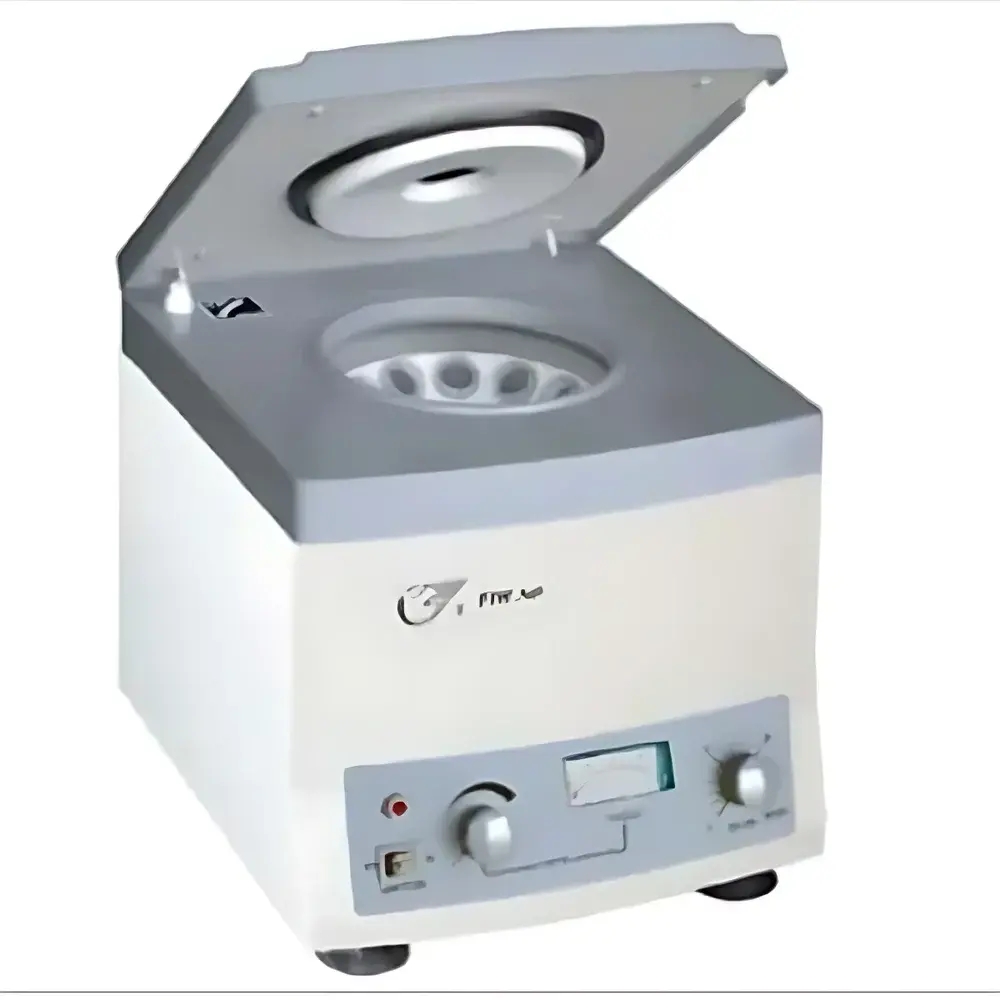
AnTing TDL-80-2B Benchtop Low-Speed Centrifuge
| Brand | AnTing |
|---|---|
| Origin | Shanghai, China |
| Model | TDL-80-2B |
| Instrument Type | Benchtop Centrifuge |
| Speed Range | Up to 4000 rpm |
| Max RCF | 2325 × g |
| Rotor Capacity | 12 × 20 mL (angle rotor) |
| Power Supply | 220 V, 50 Hz, 135 W |
| Dimensions (L×W×H) | 280 × 310 × 265 mm |
| Weight | 10 kg |
| Construction | Reinforced polymer housing with electronic safety door lock |
| Compliance | Designed for general laboratory separation tasks under ISO/IEC 17025-aligned workflows |
Overview
The AnTing TDL-80-2B is a benchtop low-speed centrifuge engineered for routine sample separation in academic laboratories, quality control environments, and small-scale production facilities. It operates on the principle of sedimentation-based separation under controlled rotational acceleration—utilizing angular momentum to generate radial centrifugal force that accelerates phase separation in heterogeneous liquid mixtures. With a maximum rotational speed of 4000 rpm and a corresponding relative centrifugal force (RCF) of 2325 × g, the TDL-80-2B is optimized for applications requiring gentle yet effective pelleting of cells, precipitates, or suspended particulates without inducing shear-induced damage. Its compact footprint (280 × 310 × 265 mm) and lightweight construction (10 kg) make it suitable for shared lab benches, biosafety cabinets, or mobile analytical workstations where space and portability are constrained.
Key Features
- Stable, low-noise operation enabled by precision-balanced rotor assembly and vibration-damping polymer chassis
- Electronic safety door interlock system preventing operation unless lid is fully closed and latched—compliant with IEC 61010-1 requirements for laboratory electrical equipment safety
- Angle rotor configuration supporting up to twelve 20 mL conical tubes (e.g., Falcon-type), ensuring uniform orientation and reproducible sedimentation geometry
- Microprocessor-controlled speed regulation with ±20 rpm accuracy across the full 0–4000 rpm range
- Thermally stable motor design rated for continuous duty at ambient temperatures between 10–30 °C and relative humidity ≤80% non-condensing
- Front-panel digital display showing real-time rpm, elapsed time, and countdown timer with audible end-of-run alert
Sample Compatibility & Compliance
The TDL-80-2B accommodates standard polypropylene or polycarbonate centrifuge tubes (10–20 mL capacity) and is compatible with common aqueous buffers, saline solutions, cell culture supernatants, serum, plasma, and crude lysates. It does not support sealed rotors or vacuum-rated configurations; therefore, it is not intended for volatile organic solvents or high-risk biohazardous agents requiring containment certification (e.g., BSL-2+). While not certified to GLP or GMP standards out-of-the-box, its consistent performance profile supports documentation practices aligned with ISO/IEC 17025 clause 7.2.2 (method validation) and USP guidelines for analytical instrument qualification—particularly for Category C (non-critical) separation steps in pharmaceutical QC testing.
Software & Data Management
The TDL-80-2B operates as a standalone instrument without embedded software or network connectivity. All operational parameters are set manually via tactile push-button controls. No data logging, USB export, or remote monitoring capability is integrated. Users are advised to maintain manual run logs—including date, operator ID, rotor type, tube configuration, speed, duration, and observed outcomes—for traceability in regulated environments. For labs implementing electronic lab notebooks (ELNs) or LIMS integration, external timestamped documentation remains the recommended practice per FDA 21 CFR Part 11 principles governing non-automated instrumentation.
Applications
- Preparative isolation of mammalian blood components (e.g., platelet-rich plasma separation at 1500–2500 rpm)
- Clarification of bacterial culture supernatants prior to protein purification or PCR template preparation
- Sedimentation of precipitated proteins or nucleic acid complexes following ammonium sulfate or ethanol precipitation
- Routine washing steps in ELISA, lateral flow assay development, and immunoaffinity capture workflows
- Separation of emulsions and colloidal suspensions in materials science pre-characterization protocols
- Quality assurance checks for particle load in injectable formulations per USP
FAQ
What is the maximum tube volume supported by the TDL-80-2B?
The instrument accepts angle rotor configurations accommodating twelve 20 mL centrifuge tubes—compatible with standard 15–20 mL conical polypropylene tubes meeting ISO 9001-manufactured dimensional tolerances.
Does the TDL-80-2B include rotor imbalance detection?
No. It relies on mechanical symmetry and user verification of balanced tube loading (e.g., paired mass-matching); automatic imbalance sensing is absent per its Class I low-speed design classification.
Can this centrifuge be used for clinical diagnostics under CLIA or CAP requirements?
Yes—provided operators validate run parameters against established SOPs and maintain calibration records per manufacturer-recommended annual verification intervals; however, no factory-issued IQ/OQ documentation is supplied.
Is the rotor autoclavable?
The aluminum angle rotor is heat-resistant but not designed for repeated autoclaving; cleaning is recommended with 70% ethanol or mild detergent followed by air drying.
What maintenance schedule is recommended?
Biannual visual inspection of door latch integrity, rotor threads, and drive coupling; annual lubrication of rotor spindle bearings by qualified service personnel only.
Related Products



