
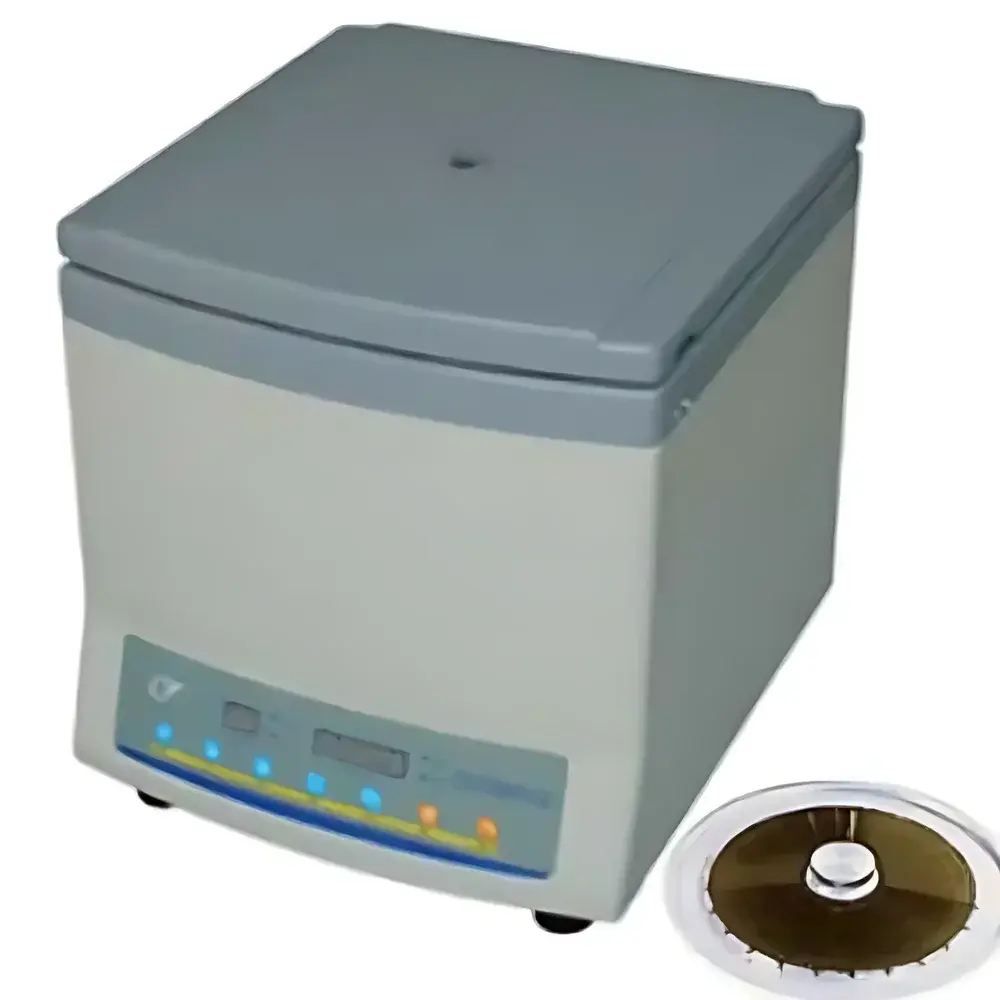
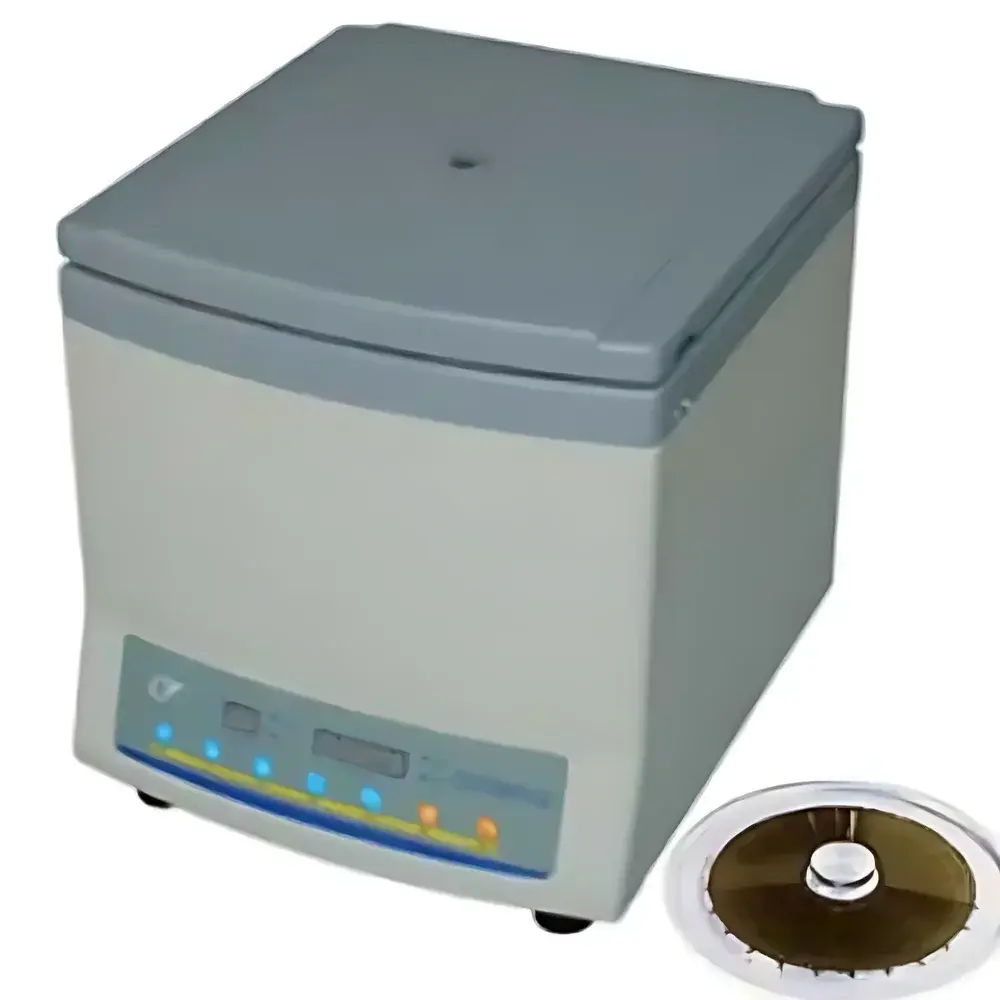
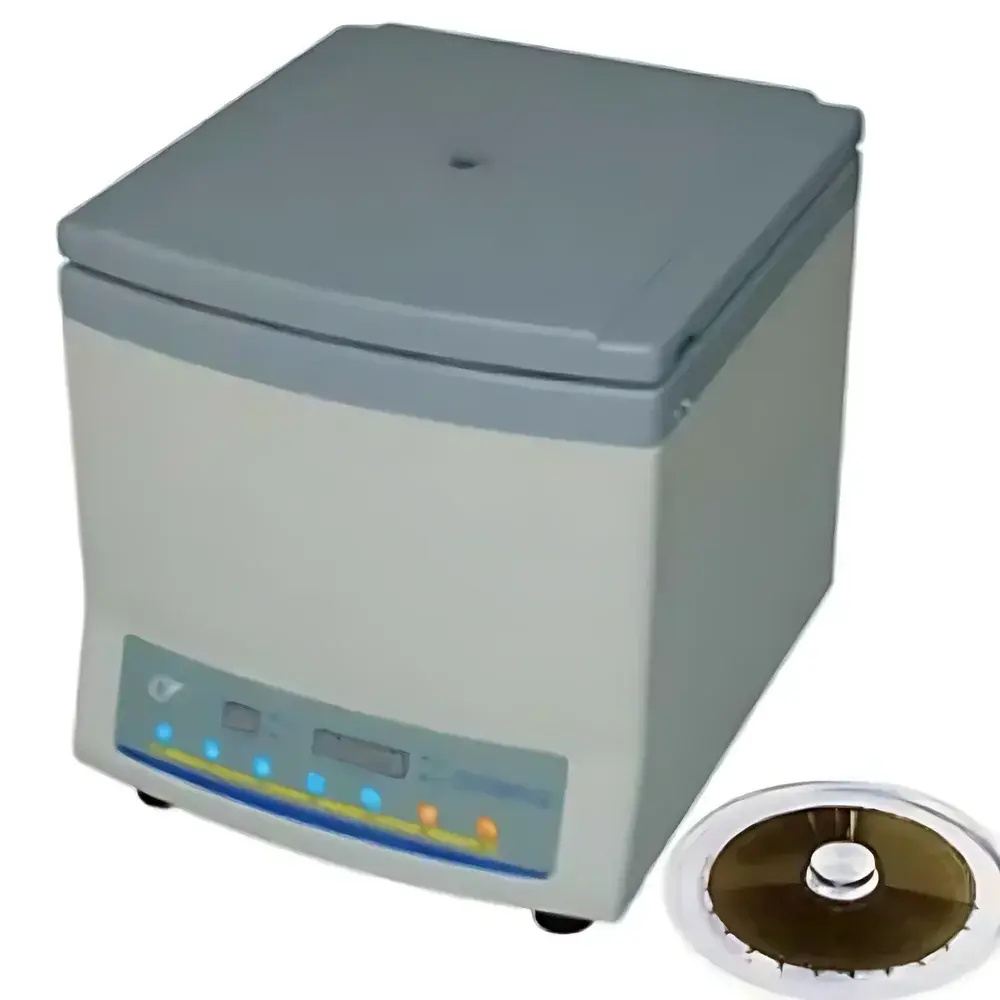
AnTing TGL-12B Microhematocrit Benchtop Centrifuge
| Brand | AnTing |
|---|---|
| Origin | Shanghai, China |
| Model | TGL-12B |
| Max Speed | 12000 rpm |
| Capacity | 24 × capillary tubes (e.g., 75 mm length, 1.0–1.2 mm ID) |
| Timer Range | 0–99 min |
| Power Supply | 220 V, 50 Hz, 250 W |
| Dimensions (L×W×H) | 350 × 390 × 350 mm |
| Weight | 12 kg |
| Construction | Reinforced engineering plastic housing |
| Safety | Electronic lid interlock system |
| Classification | Benchtop microhematocrit centrifuge |
| Compliance | Designed for routine clinical and research hematocrit determination per CLSI H16-A3 and ISO 15189 pre-analytical requirements |
Overview
The AnTing TGL-12B is a precision-engineered benchtop microhematocrit centrifuge specifically designed for rapid, reproducible separation of whole blood in capillary tubes. It operates on the principle of sedimentation under controlled centrifugal force, enabling accurate hematocrit (Hct) measurement — a critical parameter in clinical diagnostics, hematology research, and point-of-care testing. With a maximum rotational speed of 12,000 rpm and optimized rotor geometry, the TGL-12B delivers consistent g-force profiles (up to ~13,500 × g at full speed with standard 75 mm capillaries), ensuring complete erythrocyte packing within clinically validated time windows (typically 3–5 min at ≥10,000 rpm). Its compact footprint and low-mass construction minimize vibration transmission, contributing to long-term mechanical stability and operator safety in high-throughput laboratory environments.
Key Features
- Robust reinforced polymer chassis engineered for durability and acoustic dampening — reduces operational noise to <65 dB(A) at 1 m distance
- Microprocessor-controlled speed regulation with ±50 rpm accuracy across the full 1,000–12,000 rpm range
- Digital timer with 1-minute resolution and automatic rotor deceleration (braking profile optimized to prevent red cell layer disruption)
- Fail-safe electronic lid interlock: motor inhibition until lid is fully closed and latched; immediate power cutoff upon lid opening during operation
- Thermally stable brushless DC motor with integrated thermal protection circuitry — rated for continuous duty cycles up to 99 minutes
- Angle rotor configuration (fixed 12° tilt) optimized for capillary tube alignment and minimal meniscus distortion during spin-down
Sample Compatibility & Compliance
The TGL-12B accommodates standard hematocrit capillary tubes (e.g., heparinized or EDTA-coated glass or plastic tubes, 75 mm length × 1.0–1.2 mm internal diameter) in a 24-position aluminum rotor. Tube compatibility conforms to CLSI document H16-A3 (Methodology for Hematocrit Determination) and supports both manual and automated hematocrit reading workflows. The instrument’s performance characteristics align with ISO 15189:2022 requirements for pre-analytical phase validation, including documented speed calibration traceability and timer accuracy verification. While not certified for IVD use under EU IVDR or FDA 510(k), it meets general laboratory equipment safety standards per GB 4793.1–2007 (equivalent to IEC 61010-1) for electrical safety and mechanical integrity.
Software & Data Management
The TGL-12B operates as a standalone instrument with no embedded software or network interface. All operational parameters — speed setpoint, timer duration, and run status — are managed via front-panel membrane keypad and LED display. For quality assurance purposes, laboratories may implement external calibration logs per GLP/GMP guidelines, documenting periodic verification of rotational speed (using certified tachometer) and timer accuracy (±1% tolerance). Audit trails are maintained manually or integrated into LIMS via external timestamped run records. No data export functionality is provided, consistent with its role as a dedicated, non-connected analytical support device.
Applications
- Routine hematocrit determination in clinical pathology labs, blood banks, and outpatient clinics
- Capillary electrophoresis sample preparation requiring rapid plasma separation
- Small-volume serum/plasma isolation from fingerstick or heel-prick samples in pediatric and field-deployable settings
- Research applications involving density-based separation of blood components (e.g., platelet-rich plasma isolation)
- Educational use in biomedical science curricula for demonstrating sedimentation kinetics and centrifugal force principles
FAQ
What capillary tube dimensions are supported by the TGL-12B?
Standard 75 mm length × 1.0–1.2 mm internal diameter capillaries (glass or polymer), compatible with common anticoagulants (EDTA, heparin, citrate).
Is speed calibration traceable to national standards?
Yes — users should perform annual speed verification using an NIST-traceable handheld tachometer; calibration certificate templates are available upon request.
Does the centrifuge meet FDA or CE regulatory requirements for clinical use?
It complies with general electrical safety standards (IEC 61010-1), but is not classified as an IVD device and carries no FDA 510(k) clearance or CE-IVD marking.
Can the rotor be autoclaved?
No — the aluminum rotor is not autoclavable; cleaning is recommended with 70% ethanol or isopropyl alcohol and lint-free wipes.
What maintenance is required for long-term reliability?
Biannual inspection of lid interlock mechanism, visual check of rotor for stress cracks or corrosion, and lubrication of hinge pins with silicone-based grease every 12 months.



