
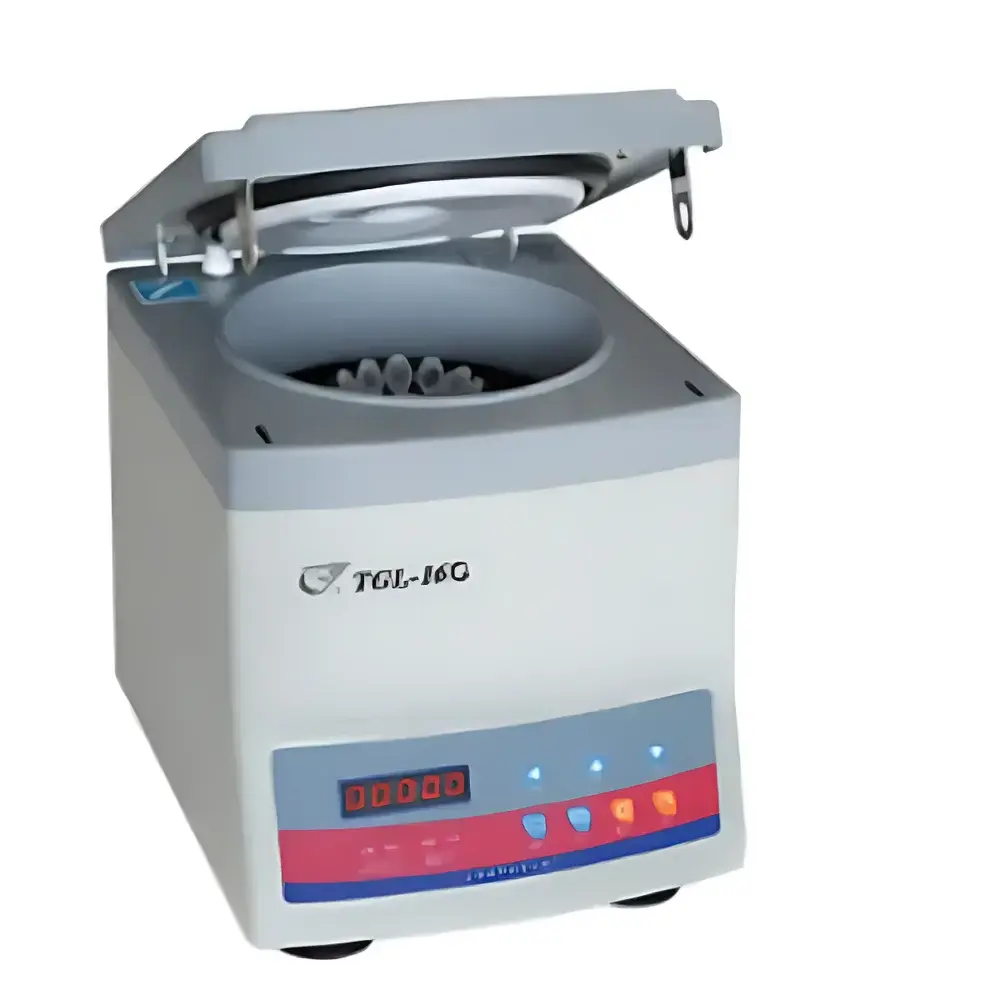
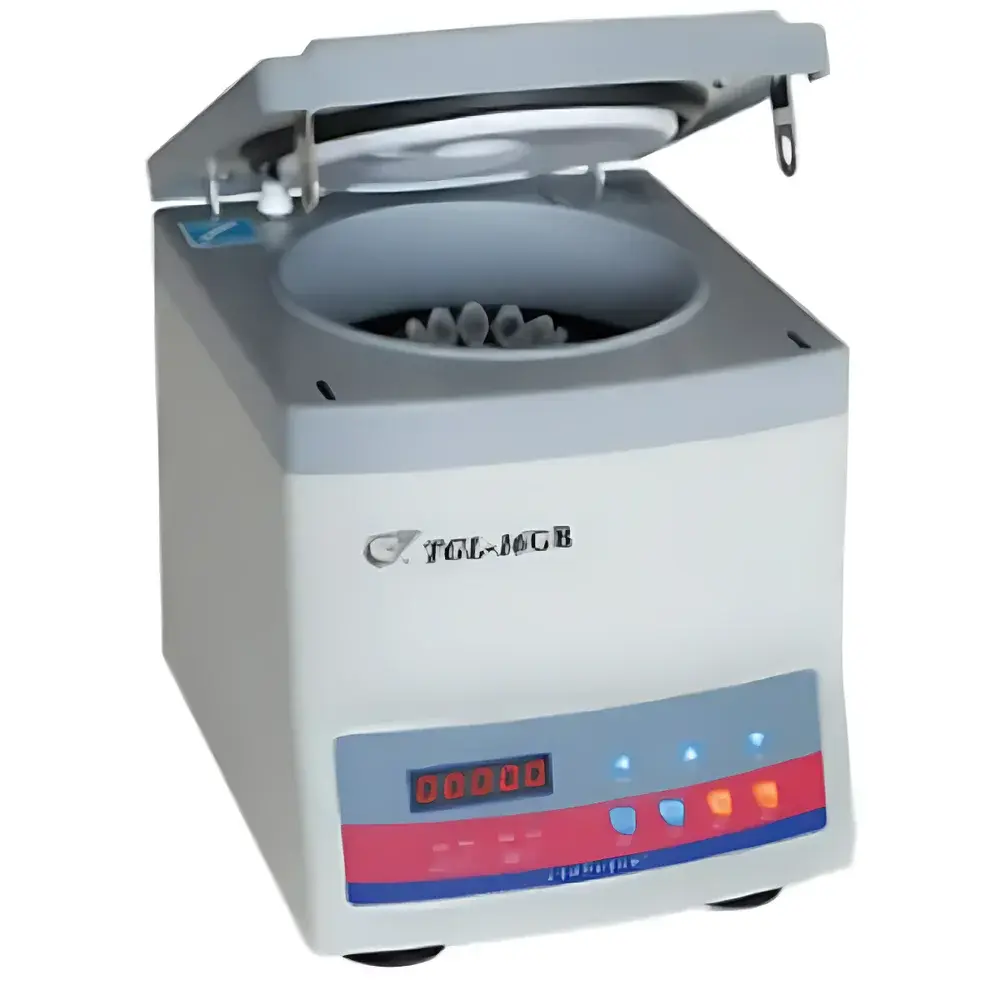
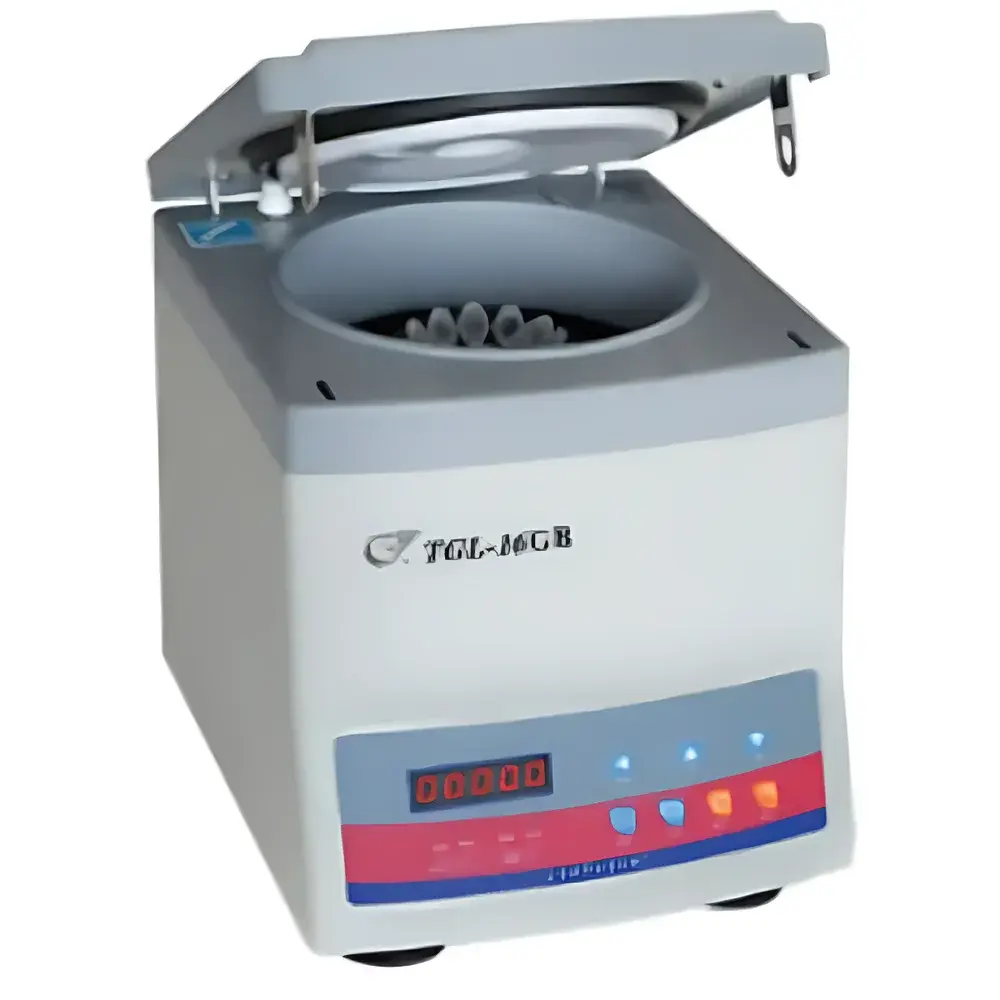
AnTing TGL-16G High-Speed Benchtop Centrifuge
| Brand | AnTing |
|---|---|
| Origin | Shanghai, China |
| Model | TGL-16G |
| Instrument Type | Benchtop Centrifuge |
| Speed Range | Up to 12,000 rpm (max) / 16,500 rpm (spec sheet variant) |
| Max RCF | 12,000 × g (declared) / 18,080 × g (per technical documentation) |
| Capacity | 24 × 2 mL or 12 × 2 mL/1.5 mL tubes (angular rotor) |
| Timer Range | 0–99 min |
| Power Consumption | 400 W |
| Dimensions (L×W×H) | 350 × 390 × 350 mm |
| Weight | 10 kg |
| Construction | Reinforced polymer housing with electronic safety interlock door |
| Compliance | Designed for general laboratory use under ISO/IEC 17025-aligned operational environments |
Overview
The AnTing TGL-16G High-Speed Benchtop Centrifuge is an engineered solution for routine and research-grade sample separation in academic laboratories, quality control facilities, and small-scale bioprocessing units. Operating on the principle of sedimentation acceleration via angular acceleration, this centrifuge applies controlled radial force to heterogeneous liquid mixtures—enabling rapid phase separation of cellular components, precipitated proteins, nucleic acids, and particulate suspensions. Its fixed-angle rotor configuration ensures high efficiency in pelleting applications where compact pellet formation and minimal resuspension risk are critical. With a maximum rotational speed of 12,000 rpm (and documented capability up to 16,500 rpm under specified rotor load conditions), the TGL-16G delivers a nominal maximum relative centrifugal force (RCF) of 12,000 × g—extending to 18,080 × g when operated at full rated speed with the standard 12-position angular rotor. The unit’s compact footprint (350 × 390 × 350 mm) and lightweight construction (10 kg) facilitate integration into fume hoods, biosafety cabinets, or shared instrument benches without structural reinforcement.
Key Features
- High-strength polymer chassis providing mechanical stability, vibration damping, and electromagnetic compatibility during continuous operation.
- Microprocessor-controlled speed regulation with ±100 rpm speed accuracy and real-time RPM/RCF display.
- Electronic door interlock system meeting IEC 61010-1 safety requirements; automatically halts rotation upon lid opening or latch failure.
- Programmable timer (0–99 minutes) with automatic deceleration and audible end-of-run alert.
- Brushless DC motor delivering consistent torque across the speed range and supporting >10,000-hour service life under typical usage profiles.
- Low-noise operation (<65 dB[A] at 1 m distance), suitable for open-lab environments without acoustic enclosures.
Sample Compatibility & Compliance
The TGL-16G accommodates standard microcentrifuge tubes (1.5 mL and 2.0 mL) in its 12-position angular rotor (2 × 12 configuration yields 24-tube capacity). It supports common tube materials including polypropylene, polycarbonate, and polyethylene—compatible with aqueous buffers, ethanol-based precipitations, and low-viscosity organic solvents. While not certified for biosafety level 3 (BSL-3) containment, the sealed rotor chamber and drip-resistant design meet general Good Laboratory Practice (GLP) expectations for non-hazardous sample processing. The device complies with CE marking directives (2014/30/EU EMC and 2014/35/EU LVD) and conforms to ISO 13485-informed manufacturing controls. Routine calibration verification can be performed using traceable tachometer standards per ISO/IEC 17025 clause 6.5.2.
Software & Data Management
The TGL-16G operates as a standalone instrument without embedded data logging or network connectivity. All operational parameters—including set speed, elapsed time, and final RCF—are displayed on a dual-line LED interface. For laboratories requiring audit trails, external validation protocols may integrate digital tachometers and calibrated timers to document run logs manually. Though lacking FDA 21 CFR Part 11-compliant electronic records, its deterministic control architecture supports IQ/OQ/PQ qualification packages when deployed in regulated environments under defined SOPs.
Applications
- Routine pelleting of bacterial and yeast cells prior to lysis or genomic DNA extraction.
- Clarification of cell lysates and supernatant recovery following centrifugal filtration steps.
- Separation of plasma from whole blood in clinical screening workflows (EDTA/K2-anticoagulated samples).
- Concentration of viral particles or exosomes from conditioned media in virology and extracellular vesicle research.
- Removal of insoluble aggregates from protein purification intermediates before HPLC injection.
- Preparative isolation of mitochondria and nuclei from tissue homogenates using differential centrifugation protocols.
FAQ
What rotor types are compatible with the TGL-16G?
The instrument ships with a fixed-angle aluminum rotor designed for 1.5 mL and 2.0 mL microcentrifuge tubes. No swing-bucket or vertical rotors are supported.
Is the TGL-16G suitable for centrifuging hazardous or infectious samples?
It is not equipped with biocontainment features such as sealed rotors or aerosol-tight lids; BSL-2+ applications require additional secondary containment measures.
Does the unit include a calibration certificate?
No factory-issued calibration certificate is provided; users must perform initial verification using NIST-traceable speed measurement tools.
Can the timer be bypassed for continuous operation?
No—the timer is mandatory and non-bypassable; the motor stops automatically upon reaching the set duration.
What maintenance intervals are recommended?
Visual inspection of rotor integrity every 100 runs; lubrication-free motor design eliminates routine grease servicing; annual verification of door interlock function is advised.



