
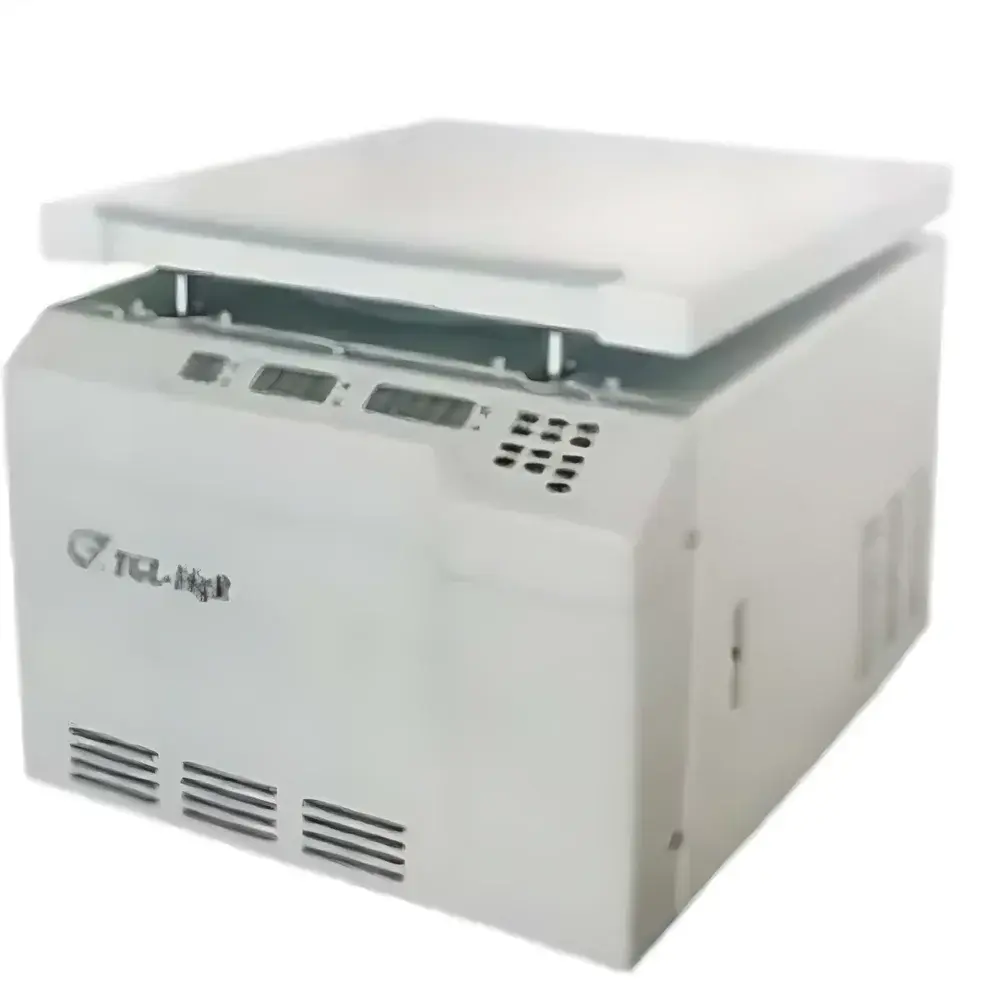
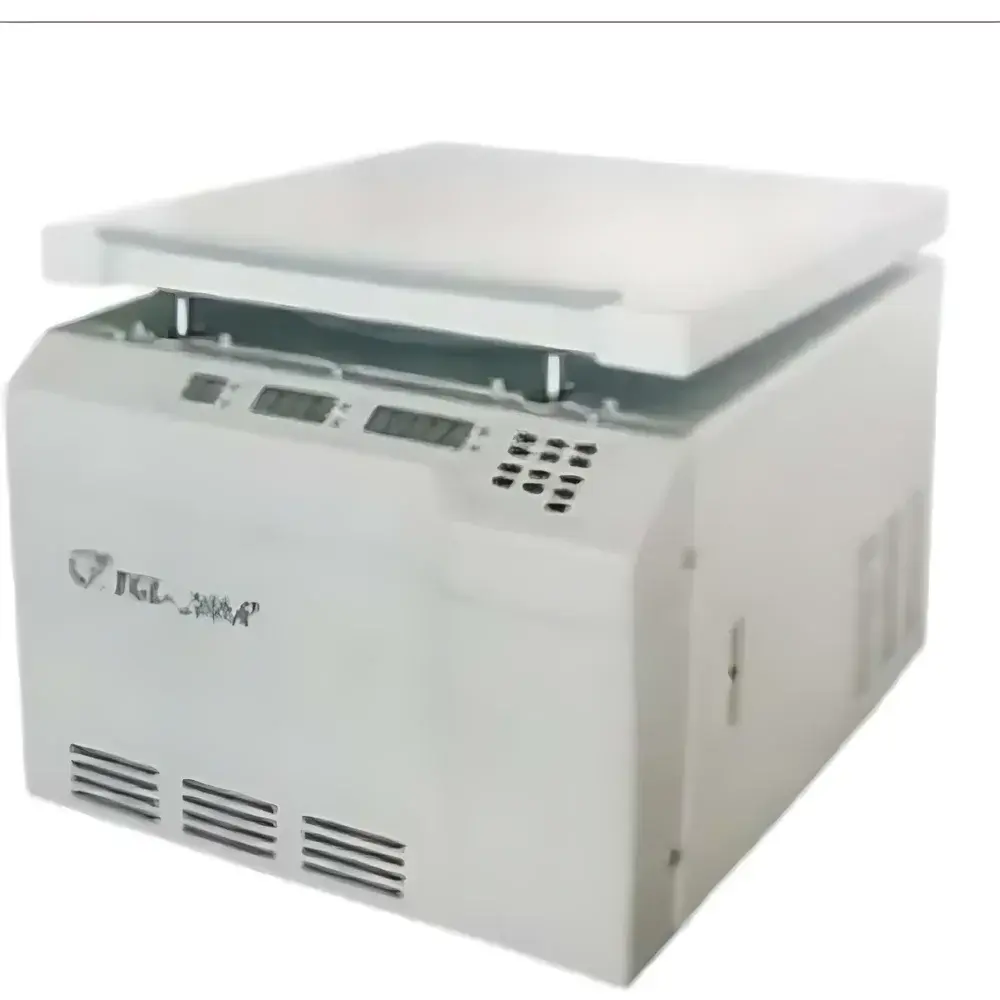
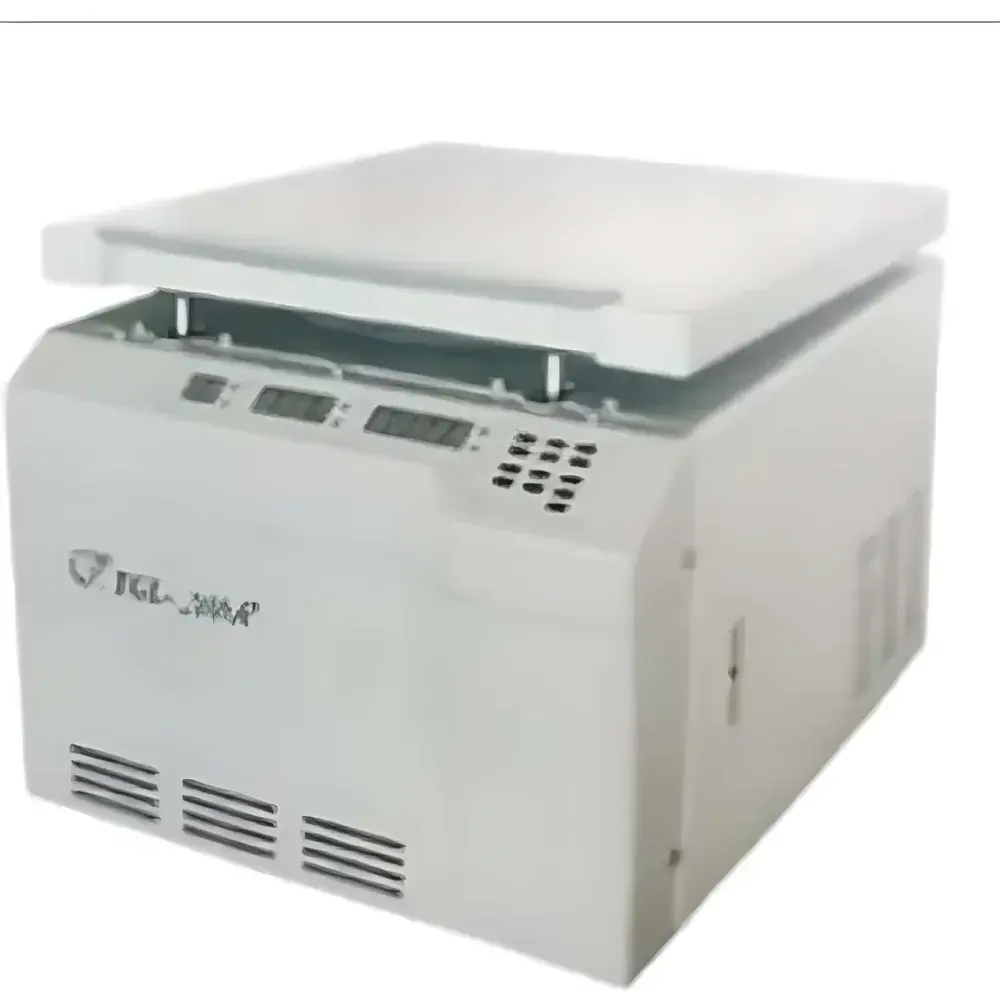
AnTing TGL-16gR High-Speed Refrigerated Benchtop Centrifuge
| Brand | AnTing |
|---|---|
| Origin | Shanghai, China |
| Model | TGL-16gR |
| Instrument Type | Benchtop Centrifuge |
| Cooling Function | Refrigerated (–20 °C to +30 °C) |
| Rotor Configuration | Fixed-Angle Rotor |
| Maximum Speed | 16,000 rpm |
| Maximum RCF | 17,000 × g |
| Capacity | 12 × 10 mL |
| Timer Range | 0–99 min |
| Power Consumption | 1.25 kW |
| Dimensions (L×W×H) | 640 × 460 × 370 mm |
| Weight | 77 kg |
| Housing Material | Reinforced Engineering Plastic |
| Safety | Electronic Door Lock |
| Centrifugation Class | General-Purpose High-Speed Refrigerated Centrifuge |
Overview
The AnTing TGL-16gR is a high-speed refrigerated benchtop centrifuge engineered for precision separation of biological, biochemical, and pharmaceutical samples under controlled thermal conditions. It operates on the principle of sedimentation centrifugation—utilizing rotational force to separate particles based on density, size, and shape within liquid suspensions. With a maximum rotational speed of 16,000 rpm and an achievable relative centrifugal force (RCF) of 17,000 × g, the TGL-16gR delivers consistent performance for applications requiring rapid pelleting of cellular components, subcellular organelles, viruses, and macromolecular complexes. Its integrated refrigeration system maintains sample temperature between –20 °C and +30 °C, minimizing thermal degradation during extended runs—a critical requirement for heat-sensitive proteins, nucleic acids, and live-cell preparations. Designed as a fixed-angle rotor platform, it accommodates up to twelve 10 mL conical tubes per run, supporting standardized workflows in academic laboratories, quality control environments, and pilot-scale bioprocessing units.
Key Features
- Reinforced engineering plastic housing for reduced mass, enhanced vibration damping, and improved operational stability at high speeds
- Microprocessor-controlled temperature regulation with real-time digital display and ±2 °C accuracy across the full operating range
- Electronic safety interlock system with automatic rotor recognition and door lock verification prior to acceleration
- Precision brushless DC motor enabling smooth ramp-up/down profiles, low acoustic emission (<65 dB(A)), and extended service life
- Programmable timer (0–99 minutes) with automatic brake and coast-down function to preserve pellet integrity
- Compact footprint (640 × 460 × 370 mm) optimized for limited bench space without compromising structural rigidity or cooling efficiency
Sample Compatibility & Compliance
The TGL-16gR is compatible with standard polypropylene and polycarbonate conical tubes (10 mL), as well as common microcentrifuge tube adapters for smaller volumes. Its rotor geometry supports routine protocols involving whole blood fractionation, bacterial cell harvesting, plasmid DNA purification, and protein precipitation. While not certified to ISO 13485 or FDA 21 CFR Part 11 out-of-the-box, the instrument’s electronic logging capabilities—including run ID, timestamp, speed, temperature, and duration—support traceability requirements under GLP and GMP-aligned laboratory practices. Users may implement supplementary audit trails via external data capture systems compliant with ISO/IEC 17025 documentation standards.
Software & Data Management
The TGL-16gR operates via an embedded LCD interface with tactile membrane buttons; no external PC connection or proprietary software is required for basic operation. All parameter settings are retained in non-volatile memory after power cycling. For laboratories requiring integration into LIMS or electronic lab notebook (ELN) ecosystems, optional RS-232 or USB-to-serial interfaces (available upon request) enable export of run metadata—including start/stop time, actual RCF, and temperature deviation logs—for post-run analysis and regulatory documentation. The system supports manual calibration verification using certified tachometers and NIST-traceable thermistors.
Applications
- Preparative isolation of mitochondria, nuclei, and lysosomes from mammalian tissue homogenates
- Routine clarification of bacterial lysates prior to chromatographic purification
- Concentration of viral vectors and extracellular vesicles in gene therapy development
- High-yield recovery of recombinant proteins expressed in E. coli or yeast systems
- Quality assurance testing of suspension-based vaccines and sterile injectables
- Environmental microbiology workflows involving waterborne pathogen concentration
FAQ
What is the minimum sample volume this centrifuge can process effectively?
The TGL-16gR is optimized for 10 mL tubes; however, with appropriate adapters, it accommodates volumes as low as 0.5 mL in 1.5 mL microcentrifuge tubes—though RCF uniformity and sedimentation kinetics should be empirically validated for such configurations.
Does the unit meet international electrical safety standards?
The device complies with GB 4793.1–2019 (Chinese equivalent of IEC 61010-1) for laboratory electrical equipment, including dielectric strength, leakage current, and mechanical stability requirements. CE marking is not applicable unless modified for EU market compliance.
Can the rotor be autoclaved?
No—the fixed-angle aluminum rotor is not autoclavable. Cleaning is performed using ethanol or isopropanol wipes; prolonged exposure to strong oxidizers or alkaline solutions is not recommended.
Is rotor imbalance detection built into the control system?
Yes—the microcontroller continuously monitors drive current fluctuations during acceleration and will halt operation if imbalance-induced vibration exceeds preset thresholds.
What maintenance intervals are recommended for long-term reliability?
Routine inspection of door seal integrity and condenser coil cleanliness is advised every 3 months; annual verification of refrigerant pressure and temperature sensor calibration is recommended for continuous-use environments.



