
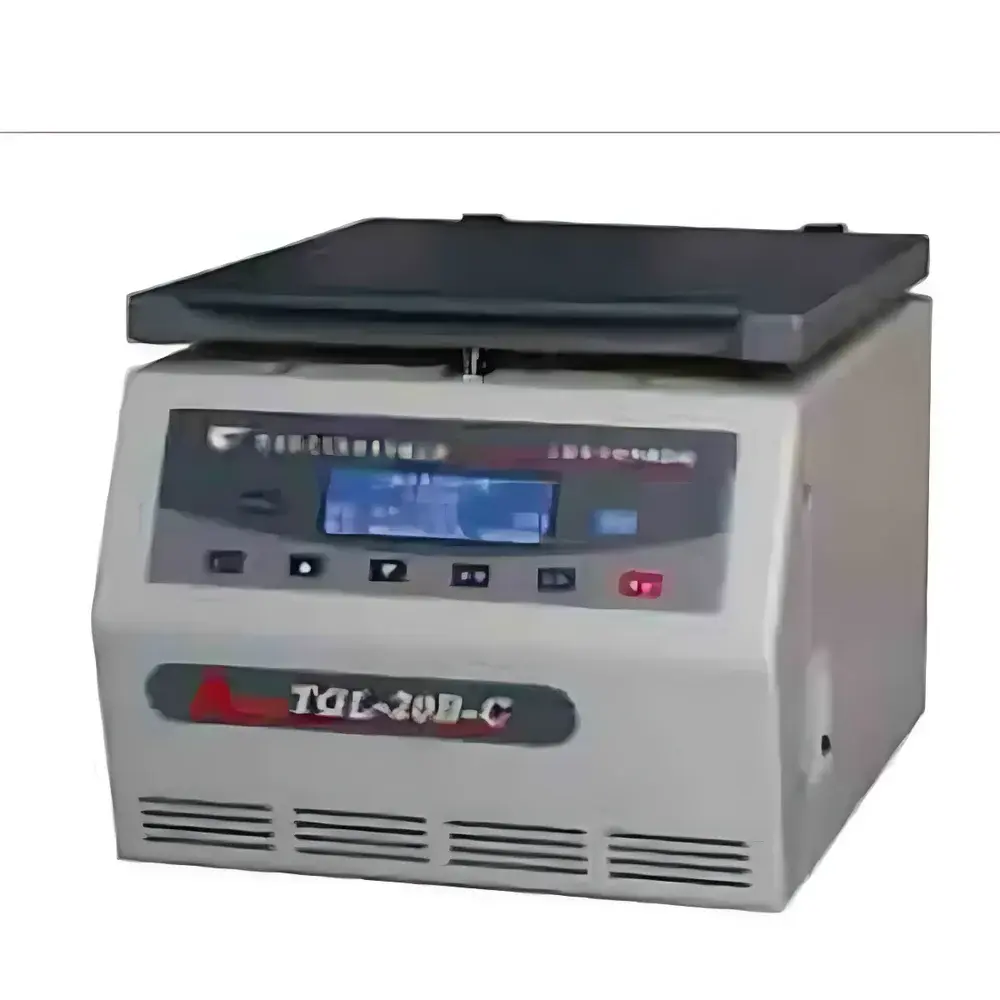
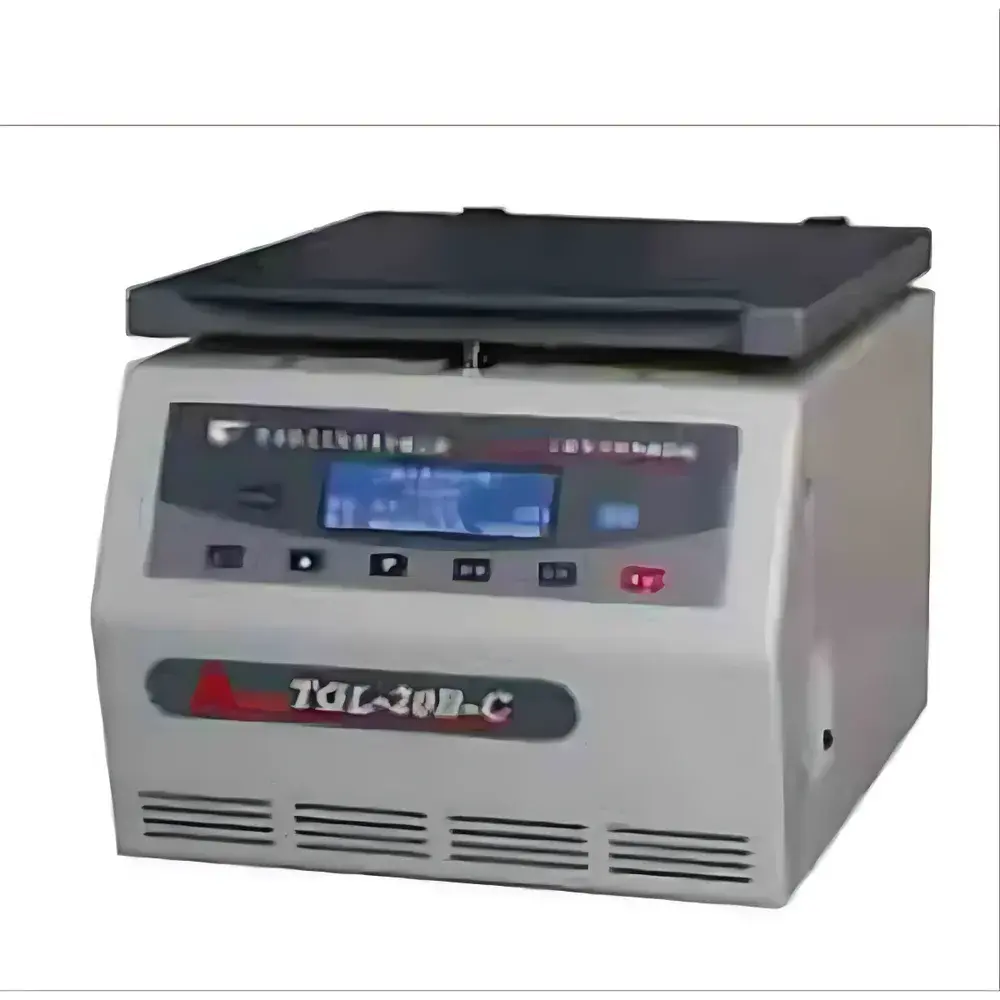
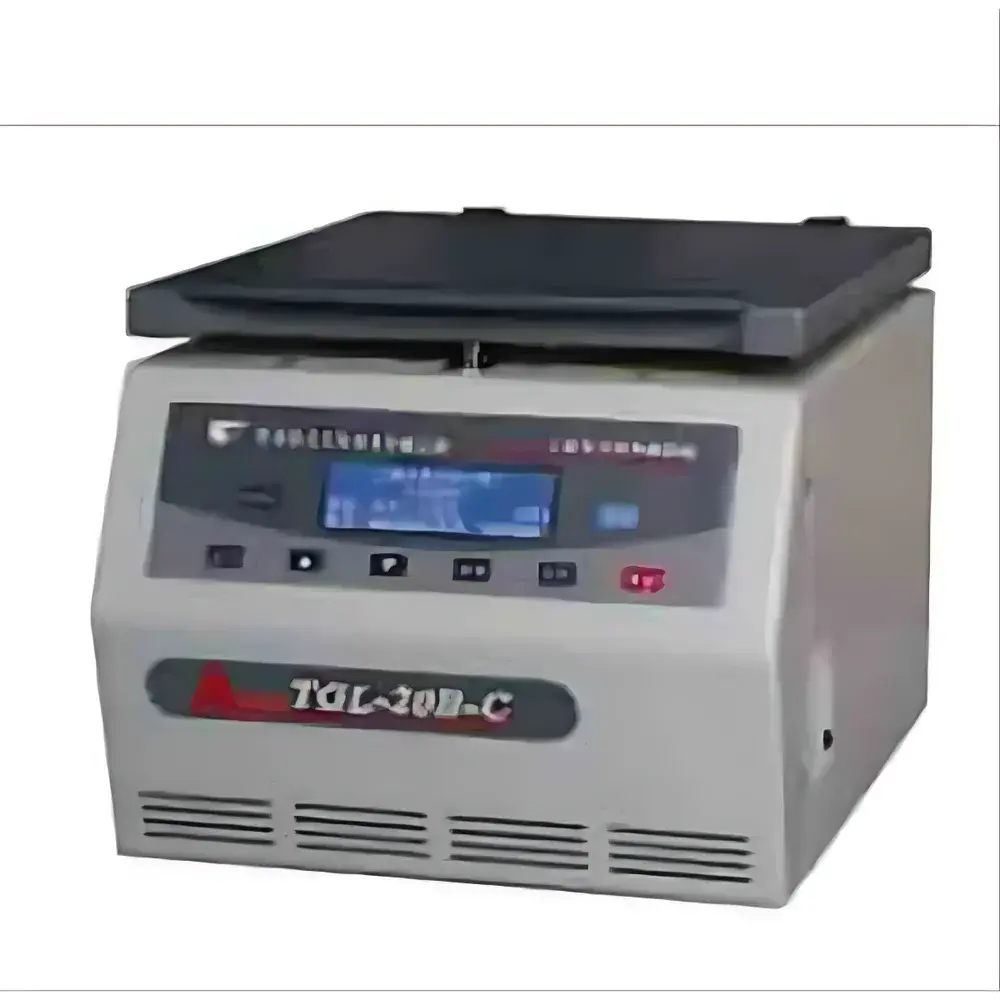
AnTing TGL-20B-C High-Speed Benchtop Centrifuge
| Brand | AnTing |
|---|---|
| Origin | Shanghai, China |
| Model | TGL-20B-C |
| Type | Benchtop Centrifuge |
| Speed Range | 0–20,000 rpm |
| Max RCF | 27,000 × g |
| Max Capacity | 50 mL × 6 (with angle rotor) |
| Timer Range | 0–99 min |
| Noise Level | <70 dB(A) |
| Power Supply | 220 V, 50 Hz, 400 W |
| Dimensions (L×W×H) | 620 × 420 × 385 mm |
| Weight | 57 kg |
| Rotor Compatibility | Five standard angle rotors (1.5/2 mL × 12 at 20,000 rpm |
| Safety | Electronic lid lock, imbalance detection, automatic rotor recognition (via manual selection), over-speed and over-temperature protection |
Overview
The AnTing TGL-20B-C is a high-speed benchtop centrifuge engineered for precision separation in routine laboratory workflows across life sciences, clinical diagnostics, pharmaceutical quality control, and academic research. It operates on the principle of sedimentation under controlled centrifugal force—generating up to 27,000 × g at its maximum rotational speed of 20,000 rpm—to efficiently separate particles based on size, density, and shape within heterogeneous liquid suspensions. Designed with a robust cast-aluminum housing and reinforced polymer structural components, the unit delivers mechanical stability and low-vibration operation even during extended high-speed runs. Its compact footprint (620 × 420 × 385 mm) enables seamless integration into space-constrained environments such as biosafety cabinets, clean benches, or shared core facility labs—without compromising thermal management or acoustic performance (<70 dB[A] at full load).
Key Features
- Brushless frequency-controlled motor ensuring consistent torque delivery, extended service life, and precise speed regulation (±20 rpm accuracy across full range)
- Five pre-calibrated angle rotors included, each optimized for specific tube formats and operational RCF envelopes—enabling rapid method transfer between sample types without recalibration
- Electronic lid interlock system compliant with IEC 61010-2-020 safety standards, preventing rotor acceleration unless lid is fully closed and latched
- Digital timer with 1-minute resolution and auto-brake function; supports both timed and continuous modes with audible end-of-run alert
- Integrated imbalance detection circuitry that halts acceleration if mass asymmetry exceeds ±5% across opposing positions, minimizing risk of mechanical failure
- Thermal management via passive convection cooling and strategically placed ventilation channels—no external refrigeration required, suitable for ambient lab environments (15–30 °C)
Sample Compatibility & Compliance
The TGL-20B-C accommodates standard polypropylene, polycarbonate, and glass centrifuge tubes ranging from 0.2 mL microtubes to 50 mL conical tubes. All five supplied angle rotors are certified for use with common tube materials under ISO 13485-aligned manufacturing protocols. The instrument meets essential electrical safety requirements per IEC 61010-1 and electromagnetic compatibility (EMC) per IEC 61326-1. While not a regulated medical device, its operational repeatability and documentation traceability support GLP-compliant workflows when paired with user-defined SOPs and maintenance logs. Rotor lifetime tracking is enabled via manual entry of cumulative run hours per rotor in lab records—consistent with ISO/IEC 17025 clause 6.4.10 on equipment monitoring.
Software & Data Management
The TGL-20B-C operates via an embedded microcontroller interface with no external software dependency. All parameters—including speed (rpm), RCF (×g), time, and rotor ID—are set directly via membrane keypad and confirmed on a high-contrast LCD display. While it does not feature USB or Ethernet connectivity, the interface supports audit-ready parameter locking: once a protocol is initiated, settings remain immutable until completion or manual reset. For laboratories requiring electronic record retention, users may integrate the centrifuge into broader LIMS or ELN platforms via external barcode-scanned run logs or manually entered metadata (e.g., rotor batch number, operator ID, date/time stamp). This approach aligns with FDA 21 CFR Part 11 principles for non-electronic systems where procedural controls substitute for digital signature enforcement.
Applications
- Cell pellet recovery from mammalian and bacterial cultures (e.g., E. coli, CHO, HEK293) using 50 mL rotors at 12,000 rpm
- Subcellular fractionation of mitochondria and nuclei via differential centrifugation protocols employing sequential rotor swaps
- Clarification of serum, plasma, or cell lysates prior to HPLC, ELISA, or Western blot analysis
- Concentration of viral vectors or exosomes in bioprocessing development workflows
- Routine DNA/RNA precipitation steps requiring high-speed pelleting of ethanol-isopropanol precipitates in 1.5 mL tubes
- Quality assurance testing of nanoparticle dispersions and colloidal suspensions in materials science labs
FAQ
What rotor configurations are factory-supplied with the TGL-20B-C?
Five angle rotors are included: Rotor 1 (1.5/2 mL × 12, rated to 20,000 rpm), Rotor 2 (5 mL × 12, rated to 15,000 rpm), Rotor 3 (1.5/2 mL × 18, rated to 12,000 rpm), Rotor 4 (10 mL × 12, rated to 12,000 rpm), and Rotor 5 (50 mL × 6, rated to 12,000 rpm). Each rotor carries engraved identification markings and maximum speed labels.
Is the centrifuge compatible with fixed-angle tubes only, or can swing-bucket rotors be added?
The TGL-20B-C is mechanically configured exclusively for fixed-angle rotor use. Swing-bucket or horizontal rotors are not supported due to drive shaft geometry and brake design constraints.
Does the unit meet international export certification requirements for CE or UKCA marking?
The TGL-20B-C complies with the essential health and safety requirements of the EU Machinery Directive 2006/42/EC and EMC Directive 2014/30/EU. CE marking is applied per manufacturer’s declaration of conformity; UKCA marking requires additional UK-based notified body assessment not currently performed.
How often should preventive maintenance be scheduled?
AnTing recommends biannual inspection of rotor threads, lid seal integrity, and brake pad wear—especially after ≥500 cumulative high-speed cycles (>15,000 rpm). Full calibration verification (speed and timer accuracy) is advised annually or following any impact event or transport-related shock.



