
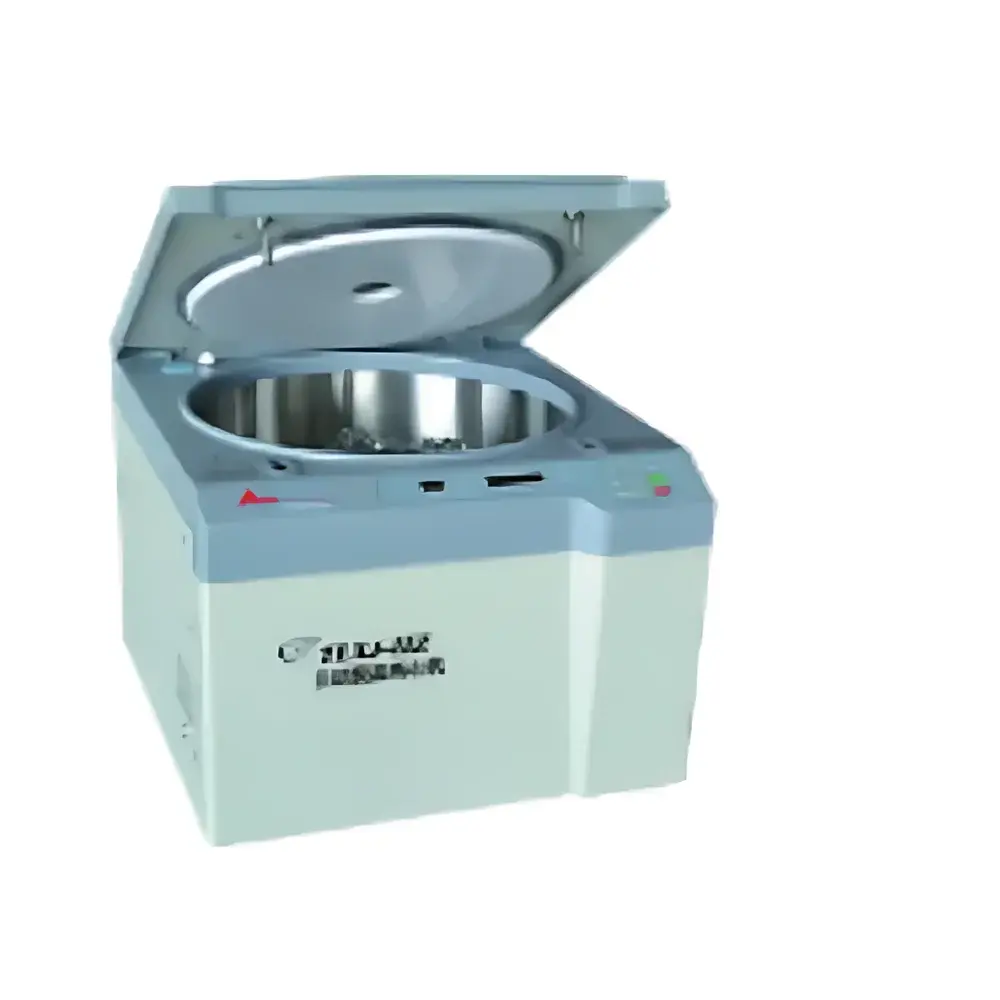
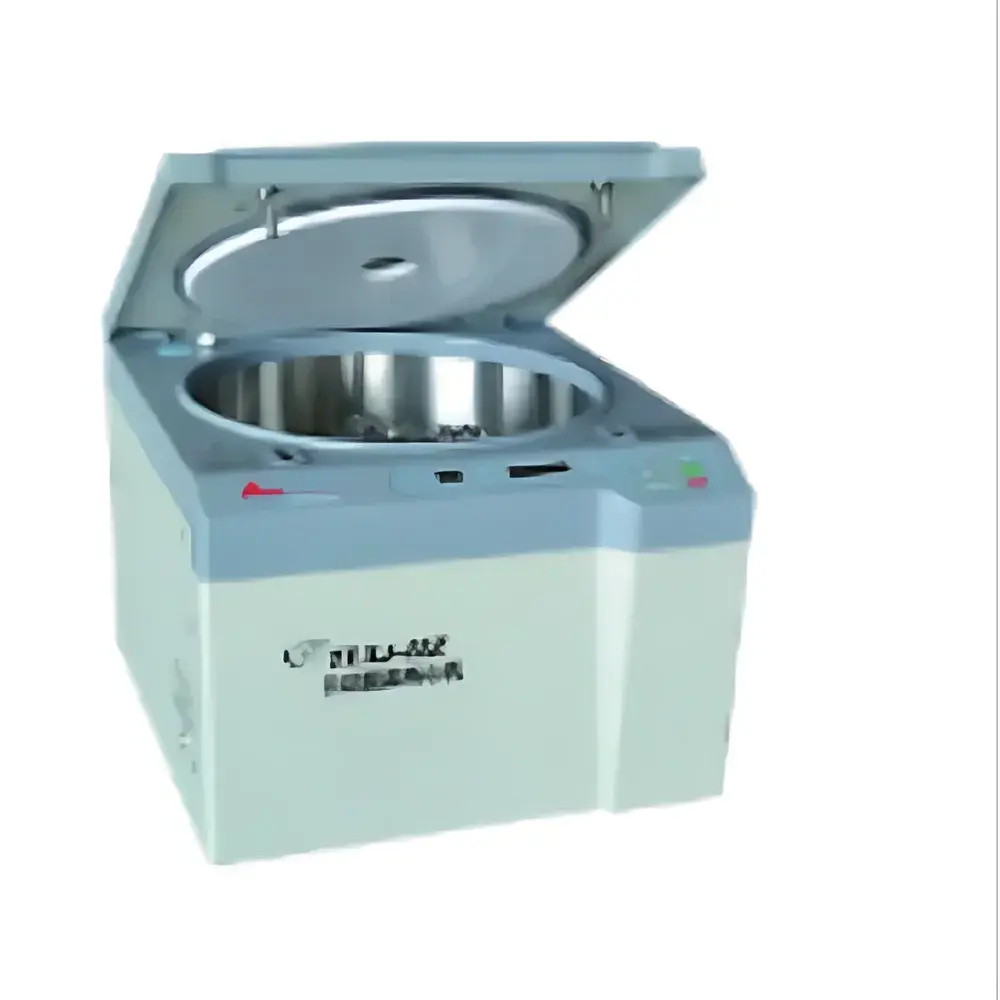
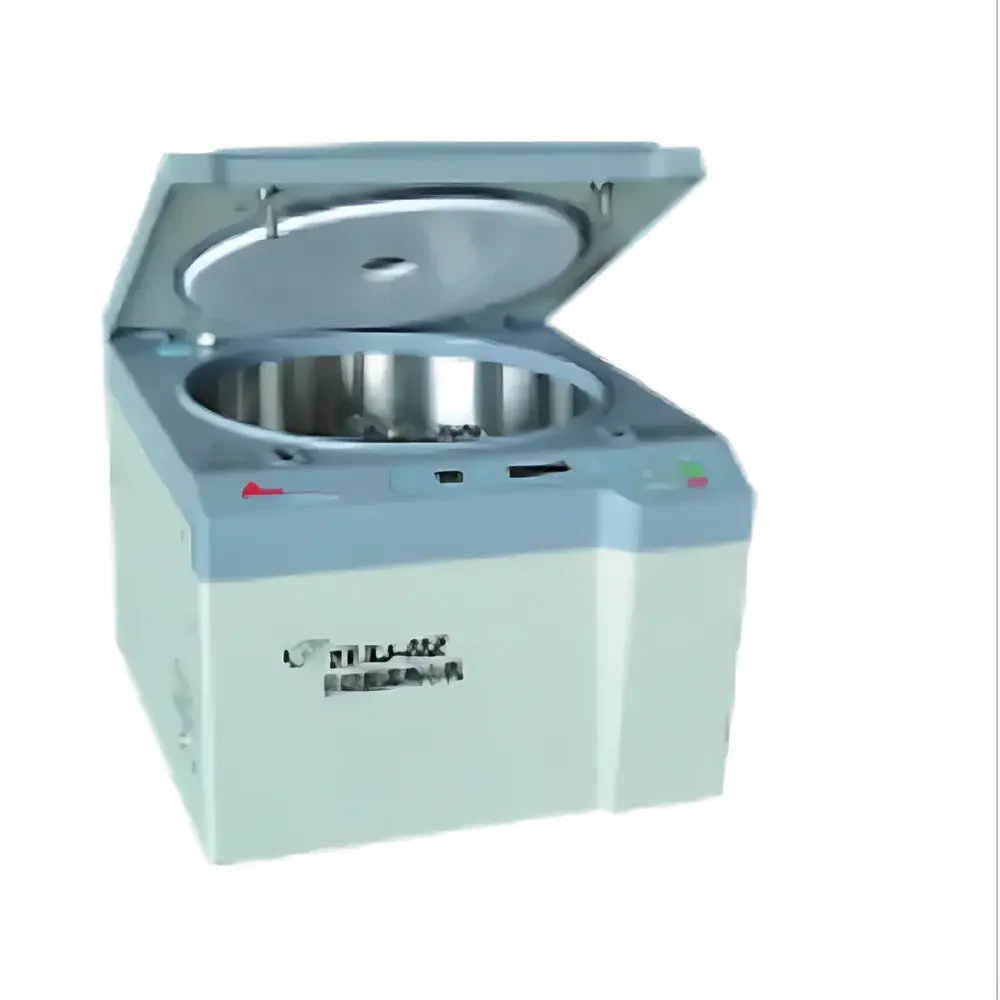
AnTing TLXJ-IIZ Automated Cap-Removal Benchtop Centrifuge
| Brand | AnTing |
|---|---|
| Origin | Shanghai, China |
| Model | TLXJ-IIZ |
| Instrument Type | Benchtop Centrifuge |
| Speed Range | Up to 4000 rpm |
| Max RCF | ~2000 × g |
| Rotor Configuration | Horizontal (Swinging-Bucket) |
| Capacity | 24 × 10 mL tubes with auto-cap-removal function |
| Temperature Control | Refrigerated (Freezing) |
| Motor Type | Frequency-Controlled AC Motor |
| Timer Range | 0–99 min |
| Noise Level | <70 dB(A) |
| Power Supply | 220 V, 50 Hz, 750 VA |
| Dimensions (L×W×H) | 752 × 555 × 435 mm |
| Weight | 90 kg |
| Compliance | Designed for CLIA-, CAP-, and GLP-aligned clinical laboratory workflows |
| Rotor Material | High-strength polymer housing with stainless-steel rotor arms |
| Safety | Integrated electronic door lock, imbalance detection, lid interlock, and automatic cap ejection mechanism |
Overview
The AnTing TLXJ-IIZ Automated Cap-Removal Benchtop Centrifuge is an engineered solution for high-throughput clinical specimen processing, specifically optimized for vacuum blood collection tube (e.g., EDTA, serum separator, heparin) handling in diagnostic laboratories, hospital core labs, and biobanking facilities. Unlike conventional centrifuges requiring manual decapping prior to or after centrifugation, the TLXJ-IIZ integrates synchronized mechanical cap ejection directly into the centrifugation cycle—enabling fully automated, hands-free separation of serum, plasma, or cellular fractions from capped tubes. Its operation is based on controlled angular acceleration and precise timing of centrifugal force application, followed by a dedicated cap-lift phase executed by pneumatically actuated, position-calibrated lifting pins aligned with standard tube cap geometries (e.g., BD Vacutainer®, Greiner Bio-One). The refrigerated design maintains sample integrity at 4 °C throughout processing, minimizing enzymatic activity and metabolite degradation during extended run cycles.
Key Features
- Integrated cap-removal mechanism: Achieves 100% cap ejection success rate across 2 mL, 5 mL, and 10 mL vacuum tubes without operator intervention or tube repositioning.
- Refrigerated benchtop architecture: Maintains consistent 4 °C chamber temperature during runs up to 99 minutes; compressor-based cooling system complies with IEC 61010-2-020 safety standards for lab equipment.
- Frequency-controlled AC motor: Delivers stable rotational speed control (0–4000 rpm) with ±10 rpm accuracy and <0.5% speed fluctuation under load, ensuring reproducible RCF profiles across batches.
- Electronic safety interlocks: Includes dual-sensor lid lock, real-time imbalance detection (±5 g mass differential), and automatic rotor stop if cap ejection fails or tube breakage is detected via acoustic signature analysis.
- Horizontal swinging-bucket rotor system: Accommodates 24 × 10 mL tubes in standardized autoclavable polymer buckets; rotor geometry validated per ISO 15195:2018 for clinical centrifuge performance verification.
- User interface: 7-inch capacitive touchscreen with multilingual support (EN/DE/FR/ES), password-protected method storage (up to 99 protocols), and audit-trail-enabled operation logging compliant with FDA 21 CFR Part 11 requirements.
Sample Compatibility & Compliance
The TLXJ-IIZ accepts all major vacuum tube formats conforming to CLSI GP41-A7 specifications—including round-bottom and conical-bottom tubes with rubber stoppers (e.g., 13 × 75 mm, 13 × 100 mm, 16 × 100 mm). It supports common anticoagulants (EDTA-K₂/K₃, sodium citrate, lithium heparin) and serum separator gel tubes. Validation data confirm compatibility with ISO 6710:2022 tube labeling and barcode readability post-centrifugation. The device meets electromagnetic compatibility (EMC) per EN 61326-1 and carries CE marking under the EU Medical Device Regulation (MDR 2017/745) as a Class I non-invasive ancillary device for in vitro diagnostic use. Routine calibration adheres to ASTM E2918-21 guidelines for centrifuge performance verification.
Software & Data Management
Embedded firmware supports method-driven operation with configurable parameters: speed (rpm), time (min/sec), temperature setpoint (2–10 °C), acceleration/deceleration ramps (0–9 levels), and cap-ejection delay (0–5 sec post-braking). All operational events—including start/stop timestamps, rotor ID recognition, error codes, and cap-ejection confirmation signals—are logged locally with optional USB export in CSV or XML format. Optional Ethernet/Wi-Fi module enables integration into LIS/HIS environments via HL7 v2.5.1 or ASTM E1384 messaging. Audit trails include user ID, timestamp, parameter changes, and electronic signatures—fully traceable for GLP/GMP audits.
Applications
- Routine serum/plasma separation in clinical chemistry and immunoassay workflows.
- High-volume blood bank sample preparation with integrated decapping for downstream automated analyzers (e.g., Roche cobas®, Siemens Atellica®).
- Biofluid banking where cap integrity, sterility maintenance, and minimal aerosol generation are critical.
- Research applications requiring sequential processing of large cohorts (e.g., epidemiological studies, longitudinal biobanking).
- Point-of-care testing (POCT) support in decentralized labs where space, noise, and operator training constraints exist.
FAQ
Does the TLXJ-IIZ support rotor validation and calibration documentation?
Yes—each unit ships with a Certificate of Conformance and a factory-verified RCF profile report generated using NIST-traceable tachometry and thermometry equipment.
Can the centrifuge be integrated into a robotic sample handling system?
Yes—the device provides dry-contact I/O ports (24 V DC) and Modbus RTU over RS-485 for external trigger control and status feedback, enabling synchronization with track-based automation platforms.
What maintenance intervals are recommended for the cap-removal mechanism?
The pneumatic cap-lift assembly requires inspection every 6 months or after 10,000 cycles; consumable wear parts (seals, lift pins) are field-replaceable without specialized tools.
Is the rotor autoclavable?
No—the horizontal rotor assembly is not autoclavable due to embedded sensors and polymer composite construction; cleaning is performed using 70% ethanol or 0.5% sodium hypochlorite solution per manufacturer’s SOP.
How is sample cross-contamination prevented during cap ejection?
Each cap-lift pin operates independently with HEPA-filtered exhaust airflow directed away from the rotor chamber; residual cap fragments are retained in a removable, sealed waste tray beneath the rotor deck.
Related Products



