
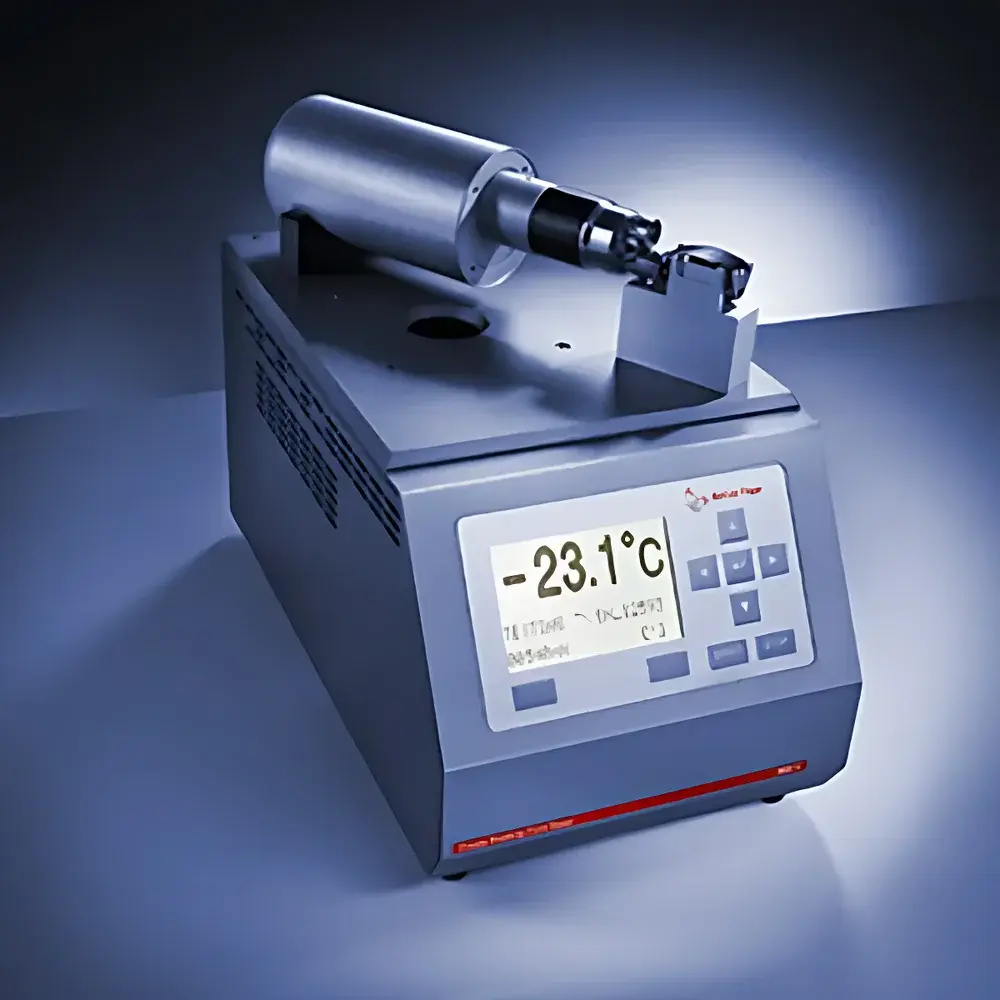
Anton Paar BPA Automatic Bitumen Fraass Breaking Point Tester
| Brand | Anton Paar |
|---|---|
| Origin | Germany |
| Manufacturer | Anton Paar GmbH (Petrotest GmbH, a company of Anton Paar) |
| Product Category | Imported |
| Model | BPA |
| Price | Upon Request |
Overview
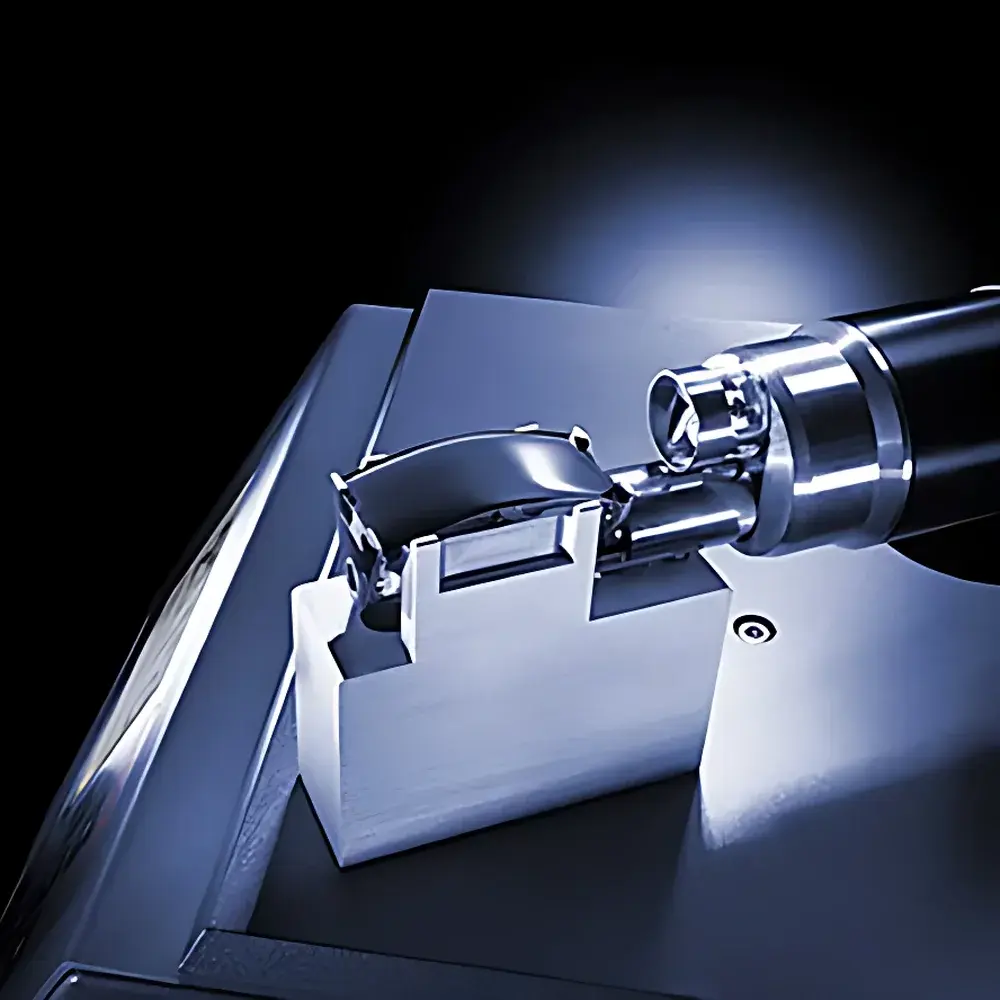
The Anton Paar BPA Automatic Bitumen Fraass Breaking Point Tester is a precision-engineered instrument designed for the standardized determination of the brittle point of bituminous binders according to ASTM D36, EN 12593, ISO 12593, JIS K2207, and NF T66-026. It operates on the fundamental principle of controlled thermal contraction combined with mechanical stress assessment: a thin bitumen-coated steel strip is cooled at a defined rate while subjected to a constant bending force; the temperature at which the bitumen layer fractures under this constraint is recorded as the Fraass breaking point. This measurement is critical for evaluating low-temperature cracking resistance in asphalt pavements—directly informing pavement design, binder selection, and climate-specific performance grading (e.g., PG grading per AASHTO M320). The BPA integrates Peltier-based thermoelectric cooling, eliminating reliance on external cryogenic fluids or high-power compressors, thereby ensuring stable, repeatable temperature ramps (1 K/min standard, 2 K/min fast mode) across its operational range of –45 °C to +60 °C.
Key Features
- Peltier-cooled test chamber with integrated solid-state thermoelectric elements—enables precise, maintenance-light temperature control without liquid nitrogen or refrigerant-based chillers
- High-resolution force transducer (10 mN resolution) continuously monitors bending force evolution during cooling, enabling detection of micro-fractures invisible to optical inspection
- Large backlit LCD touchscreen interface with intuitive icon-driven navigation—no external PC required for routine operation
- Modular architecture supporting optional accessories: BPM 5 sample coating station for standardized steel strip preparation, calibration kit traceable to NIST-equivalent reference materials, and BPACon software suite
- Dual cooling configuration: Peltier module + optional recirculating chiller (for extended low-temperature stability below –30 °C)
- Comprehensive programmability—including user-defined cooling profiles, search-mode for rapid brittle point estimation, and permanent deformation testing protocols
Sample Compatibility & Compliance
The BPA accommodates standard 20 mm × 40 mm steel strips coated with bitumen specimens prepared per EN 12593 Annex A or ASTM D36 Section 7. It supports penetration-grade, polymer-modified, and crumb rubber–modified bitumens. All test sequences comply with regulatory and quality assurance frameworks including ISO/IEC 17025:2017 (for accredited laboratories), GLP (Good Laboratory Practice), and FDA 21 CFR Part 11 when operated with BPACon software and audit-trail-enabled configurations. Instrument certification documentation includes full traceability to national metrology institutes (e.g., PTB Germany) and conformity statements for IP80 ingress protection rating.
Software & Data Management
BPACon software (optional) transforms the BPA into a fully networked analytical workstation. It provides real-time graphical visualization of bending force vs. temperature, automatic fracture event detection, and export of raw time-series data in CSV and XML formats. The software supports LIMS integration via RS232 serial interface (dual ports: one for printer, one for PC/LIMS), enables electronic signature workflows compliant with 21 CFR Part 11, and maintains immutable audit trails for all method changes, calibration events, and result modifications. Data files include embedded metadata: operator ID, sample ID, environmental conditions, and instrument firmware version—ensuring full data integrity for regulatory submissions.
Applications
- Determination of Fraass brittle point for specification compliance (e.g., EN 14023, AASHTO M320, SHRP PG grading)
- Evaluation of low-temperature stiffness and fracture initiation behavior in modified binders
- Research on thermal transition phenomena: glass transition temperature (Tg) estimation via force recovery analysis post-bending
- Permanent deformation characterization—quantifying elastic recovery ratio after controlled thermal cycling
- Quality control in bitumen production plants and asphalt mixing facilities
- Comparative studies of aging effects (RTFOT, PAV) on cold-weather cracking susceptibility
FAQ
What standards does the BPA support for brittle point testing?
ASTM D36, EN 12593, ISO 12593, JIS K2207, NF T66-026, and GB/T 4507 (via user-configurable ramp parameters).
Can the BPA perform tests beyond the standard Fraass method?
Yes—it supports permanent deformation analysis and empirical glass transition assessment through force–temperature curve interpretation.
Is external cooling equipment mandatory?
No—Peltier cooling alone achieves –40 °C; an optional recirculating chiller extends stability and reproducibility below –30 °C in ambient temperatures >25 °C.
How is measurement traceability ensured?
Calibration kits include certified reference strips with documented fracture temperatures; factory calibration certificates are issued with NIST-traceable uncertainty budgets.
Does the system meet data integrity requirements for regulated environments?
When used with BPACon software, it supports ALCOA+ principles (Attributable, Legible, Contemporaneous, Original, Accurate), electronic signatures, and audit-trail logging per 21 CFR Part 11.
Related Products





