Anton Paar Brabender Quadrumat Junior and Senior Laboratory Milling Systems
| Brand | Anton Paar Brabender |
|---|---|
| Origin | Germany |
| Model Series | Quadrumat Junior / Quadrumat Senior |
| Application | Laboratory-scale milling of wheat, durum, rye, barley and other cereals for flour quality analysis |
| Compliance | Designed in accordance with ISO 27971 (Cereal and cereal products — Determination of milling yield), ISO 5528 (Cereals — Sampling), and aligned with AACC International Method 26–10A (Milling of Wheat to Produce Flour for Baking Tests) |
| Key Features | Dual-roller (Junior) and quad-roller (Senior) configuration |
| Standard Sieve Aperture | 280 µm |
| Max. Feed Moisture Content | 18% w/w |
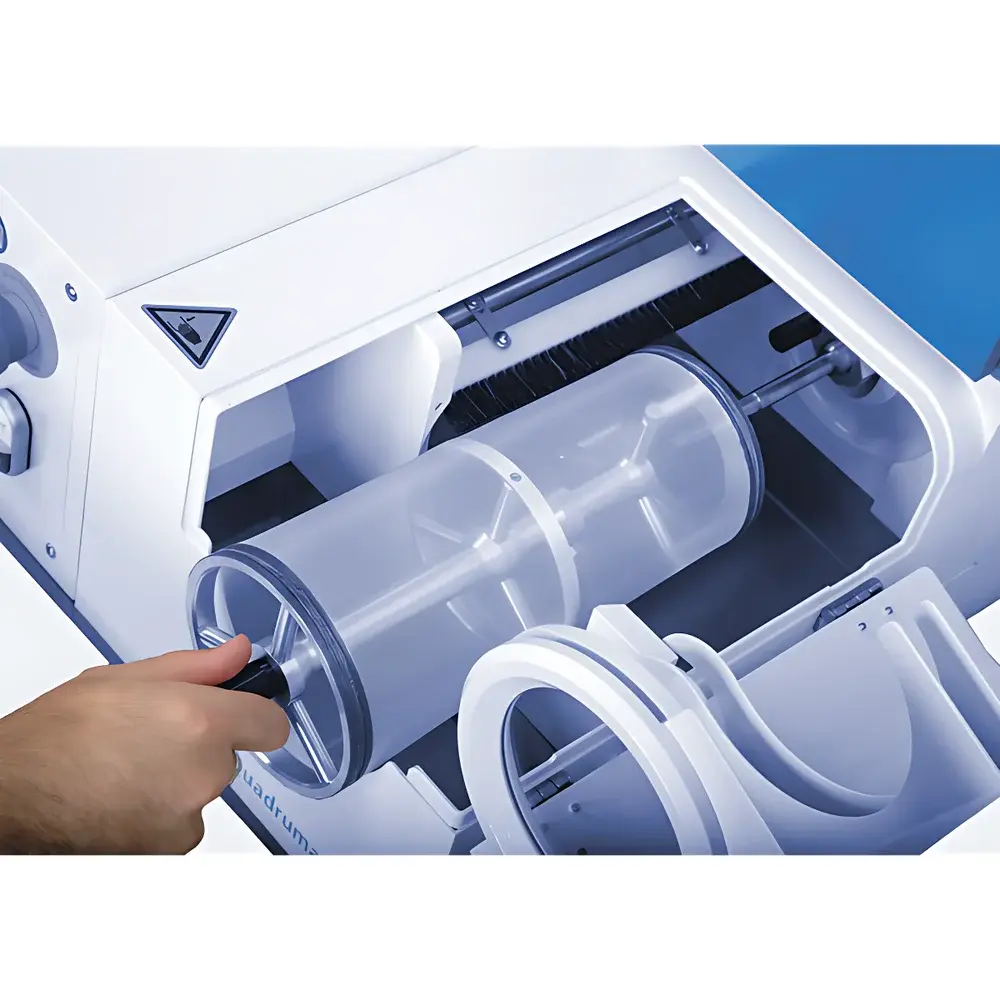
| Cleaning | Tool-free circular sieve removal |
| Optional Integration | Compatible with Brabender Debranning Unit (TorqueTec GmbH) for ash reduction and yield optimization |
Overview
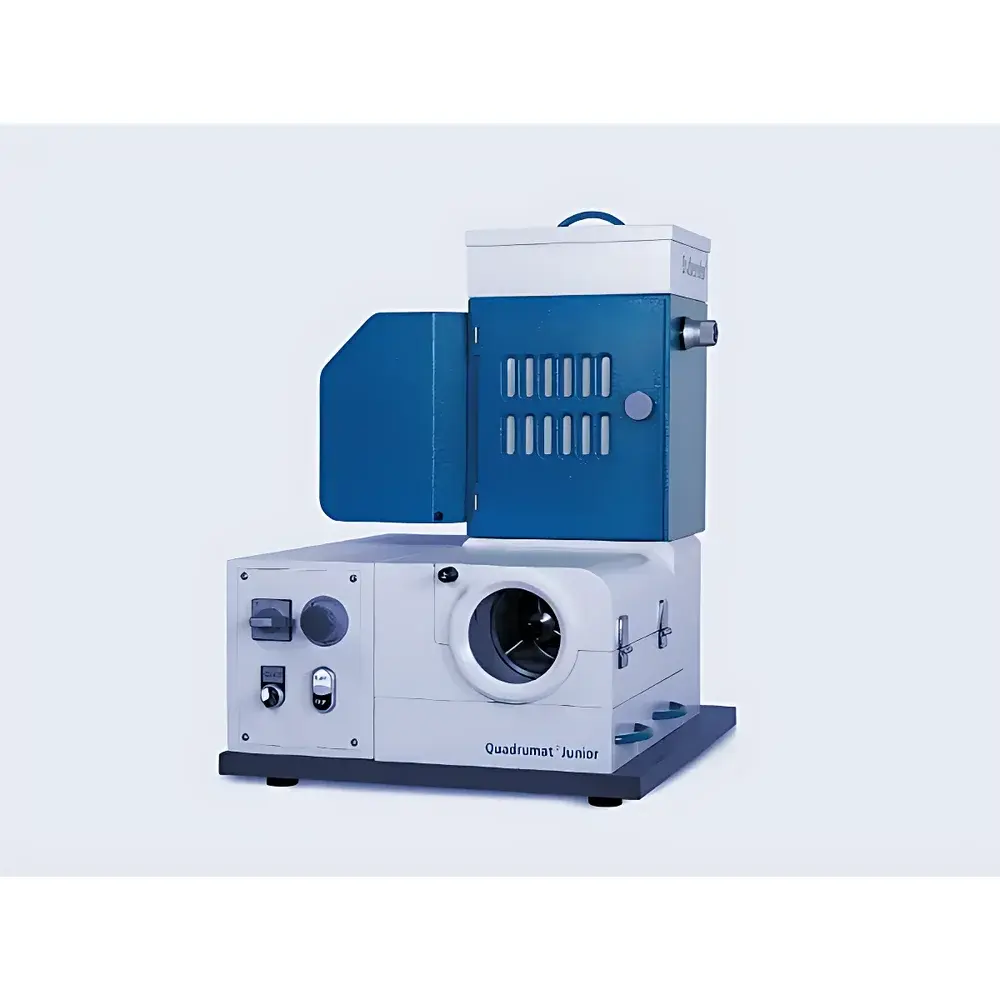
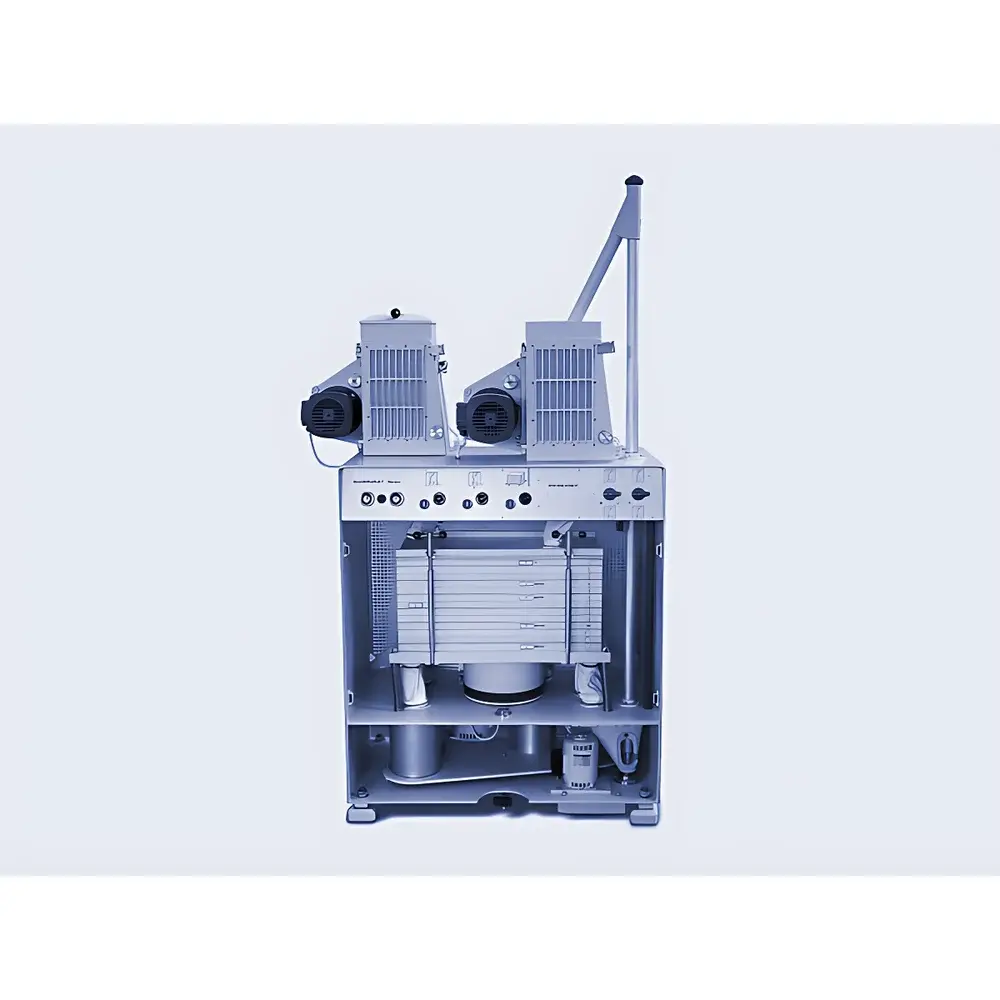
The Anton Paar Brabender Quadrumat series comprises two precision laboratory milling systems—Quadrumat Junior and Quadrumat Senior—engineered for reproducible, standardized cereal grain milling under controlled conditions. These instruments implement the principle of gradual reduction milling using calibrated, hardened steel rollers operating under defined gap settings and rotational speeds. The Quadrumat Junior employs a dual-roller configuration optimized for small-batch preparation (up to 500 g per run), while the Quadrumat Senior integrates two independent four-roller units—enabling simultaneous full-grain and endosperm fractionation—to produce four distinct streams: coarse semolina, flour, bran, and coarse shorts. Both systems adhere to internationally recognized milling protocols for flour yield, ash content, and particle size distribution assessment, serving as critical upstream tools in cereal quality laboratories, R&D facilities, and regulatory testing centers.
Key Features
- Quadrumat Junior: Completes milling of up to 500 g of cereal grain within 5 minutes; designed for rapid sample throughput in routine quality control.
- Quadrumat Senior: Processes 8–10 kg/h of grain; features two synchronized four-roller assemblies—one for whole-grain passage and one for refined endosperm release—ensuring gentle, sequential breakdown without thermal degradation.
- Roller geometry: Contoured, hardened steel rollers minimize shear stress and preserve starch integrity during milling—critical for downstream rheological and baking performance evaluation.
- Modular sieve system: Interchangeable circular sieves with standardized apertures (including default 280 µm); tool-free installation enables rapid cleaning and method switching.
- Integrated aspiration: Vacuum-assisted airflow prevents roller clogging and ensures consistent feed flow—even with high-moisture grains (≤18% w/w).
- Optional debranning integration: Seamless coupling with the Brabender Debranning Unit (now Anton Paar TorqueTec GmbH) reduces ash content by ~5–10% and improves flour yield via selective outer-layer removal prior to milling.
Sample Compatibility & Compliance
The Quadrumat systems accommodate common cereal species—including soft wheat, durum wheat, rye, barley, spelt, and triticale—with documented performance across moisture ranges from 12% to 18% (w/w). Each unit is calibrated and validated per ISO 27971 for milling yield determination and supports traceable alignment with AACC International Method 26–10A and ICC Standard Method No. 171. All mechanical components comply with EU Machinery Directive 2006/42/EC and are constructed from food-grade stainless steel (EN 1.4301) with surface roughness ≤0.8 µm Ra. Documentation packages include factory calibration certificates, operational qualification (OQ) templates, and GMP-relevant maintenance logs.
Software & Data Management
While the Quadrumat Junior and Senior operate as standalone electromechanical instruments, their process parameters—including roller speed, gap setting, feed rate, and aspiration pressure—are manually recorded and linked to LIMS or ELN platforms via structured CSV export (when paired with optional digital loggers). The systems support 21 CFR Part 11-compliant data integrity when integrated with Anton Paar’s LabX software suite (via third-party I/O modules), enabling electronic signatures, audit trails, and version-controlled SOP execution. Routine calibration verification follows GLP principles, with annual metrological validation recommended per ISO/IEC 17025 requirements.
Applications
- Flour mill quality assurance: Yield, ash, protein, and falling number correlation studies.
- Bakery R&D: Controlled flour fractionation for dough rheology (Brabender Visco-Amylo-Graph), Farinograph, and Mixolab testing.
- Grain breeding programs: High-throughput screening of milling behavior across genetic lines.
- Regulatory compliance testing: ISO, Codex Alimentarius, and national standards for flour specifications (e.g., ash ≤0.55%, particle size distribution).
- Durum semolina production: Optimized coarse grinding for pasta quality evaluation (gluten strength, yellow pigment retention).
FAQ
What is the maximum allowable moisture content for grain samples?
Grain samples with moisture content up to 18% (w/w) may be milled without pre-drying, provided ambient humidity remains below 60% RH during operation.
Can the Quadrumat Senior be used for both soft and durum wheat?
Yes—the Senior’s adjustable roller gaps and dual-unit architecture allow method-specific configuration for soft wheat flour production and durum semolina generation.
Is the 280 µm sieve included as standard equipment?
Yes, each Quadrumat system ships with one certified 280 µm circular sieve conforming to ISO 3310-1 tolerances.
Does the system require external compressed air or vacuum sources?
The built-in aspiration module operates independently; however, connection to a central lab vacuum (−0.8 bar minimum) enhances dust extraction efficiency and extends filter service intervals.
How does integration with the Brabender Debranning Unit affect analytical outcomes?
Pre-milling debranning reduces ash content by ~5–10% and increases flour yield proportionally—improving repeatability in ash-based grading and enabling more accurate protein-to-ash ratio calculations.