
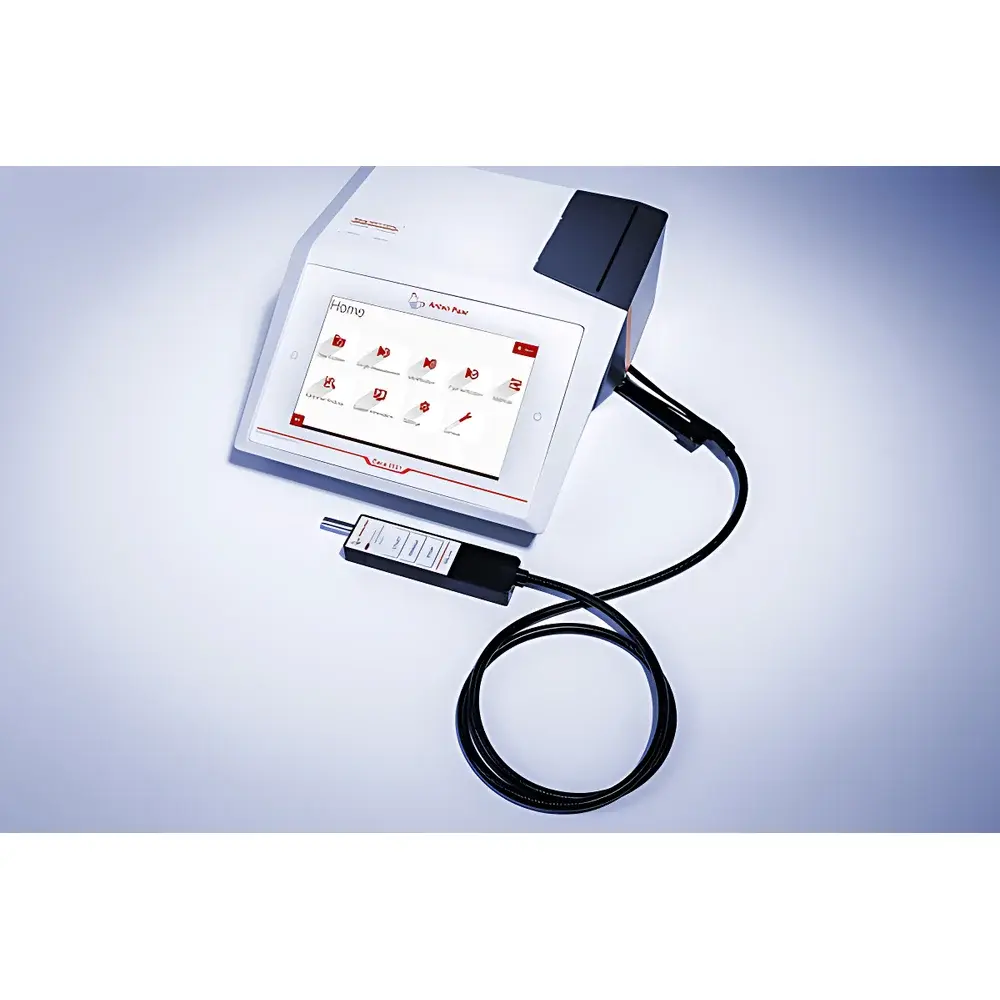
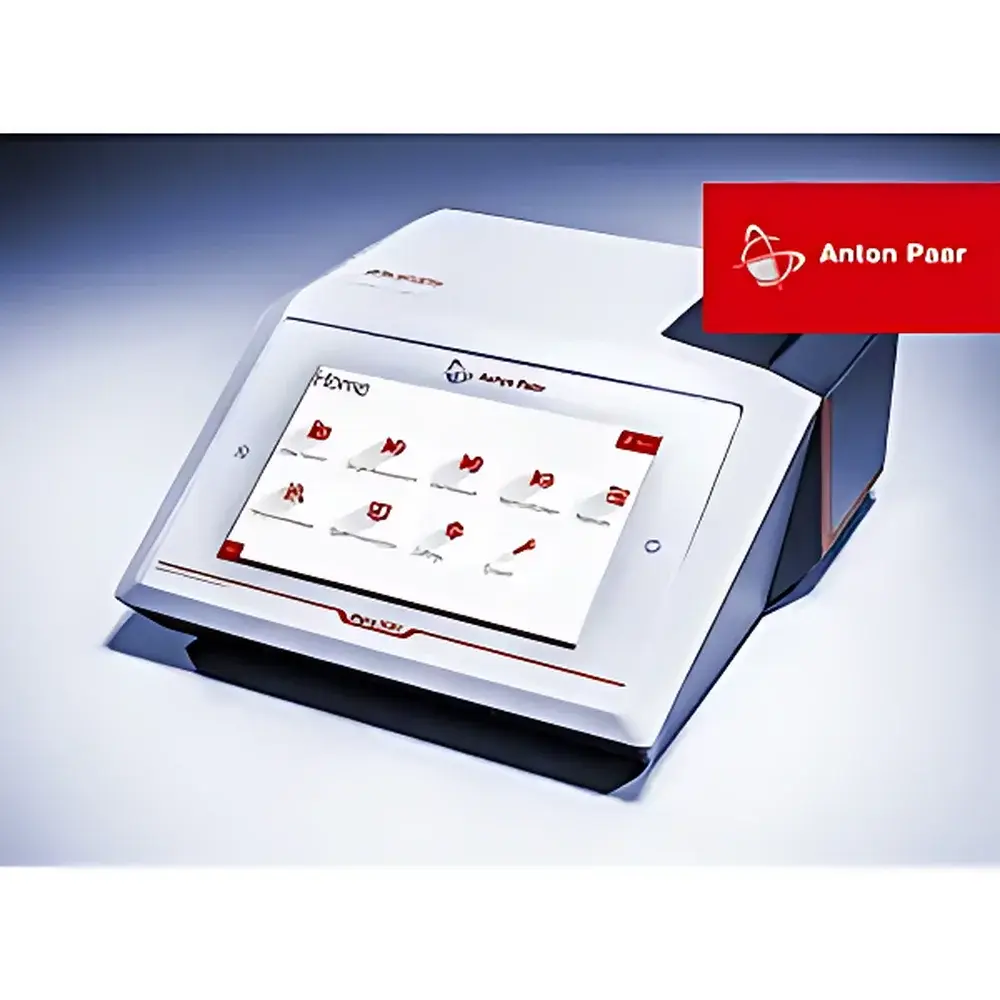
Anton Paar Cora 5001 Compact Raman Spectrometer
| Brand | Anton Paar |
|---|---|
| Origin | Austria |
| Manufacturer | Anton Paar GmbH |
| Product Type | Portable/Desktop Raman Spectrometer |
| Model | Cora 5001 |
| Spectral Range | 100–3500 cm⁻¹ |
| Spectral Resolution | 6–9 cm⁻¹ |
| Spatial Resolution | 1 µm (lateral), 1 µm (axial) |
| Minimum Wavenumber | 100 cm⁻¹ |
| Spectral Reproducibility | < 0.5 cm⁻¹ |
Overview
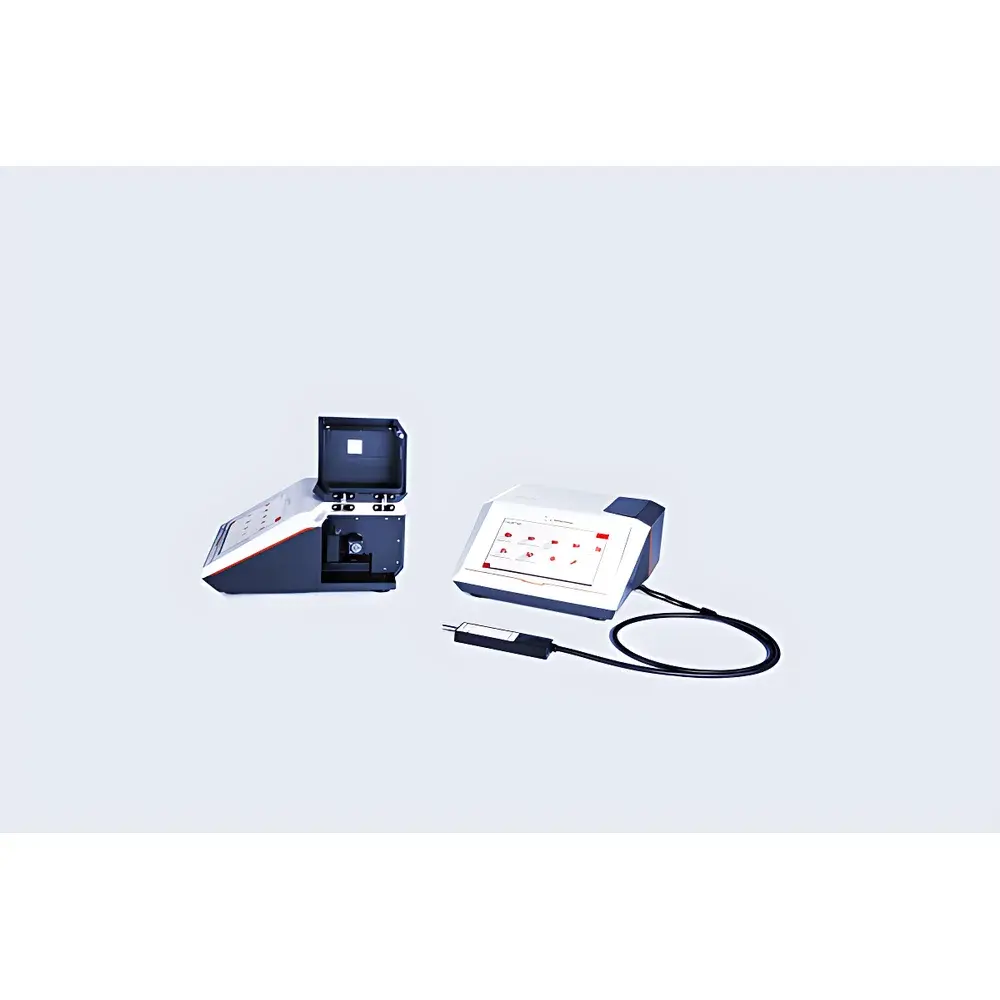
The Anton Paar Cora 5001 Compact Raman Spectrometer is a benchtop-grade, Class 1 laser-based analytical instrument engineered for rapid, non-destructive molecular identification across research laboratories, quality control environments, and field-deployable applications. Operating on the principle of inelastic light scattering—where monochromatic laser excitation induces vibrational mode shifts in chemical bonds—the Cora 5001 delivers high-fidelity Raman spectra that serve as unique “chemical fingerprints” for qualitative and semi-quantitative analysis. Unlike handheld units with compromised optical stability, the Cora 5001 integrates a solid aluminum monolithic optical bench, eliminating moving parts and ensuring long-term alignment integrity. Its dual operational modes—direct measurement inside a sealed sample chamber and remote fiber-coupled probing—enable method flexibility without sacrificing spectral fidelity or safety compliance.
Key Features
- Class 1 laser safety certification (IEC 60825-1): Laser emission is physically interlocked to the sample chamber door; operation is only permitted when fully closed, eliminating exposure risk during routine use.
- Automated focus optimization: Real-time signal maximization algorithm locates optimal focal position within seconds—even for low-signal, turbid, or heterogeneous samples—ensuring reproducible peak intensities and consistent spectral acquisition.
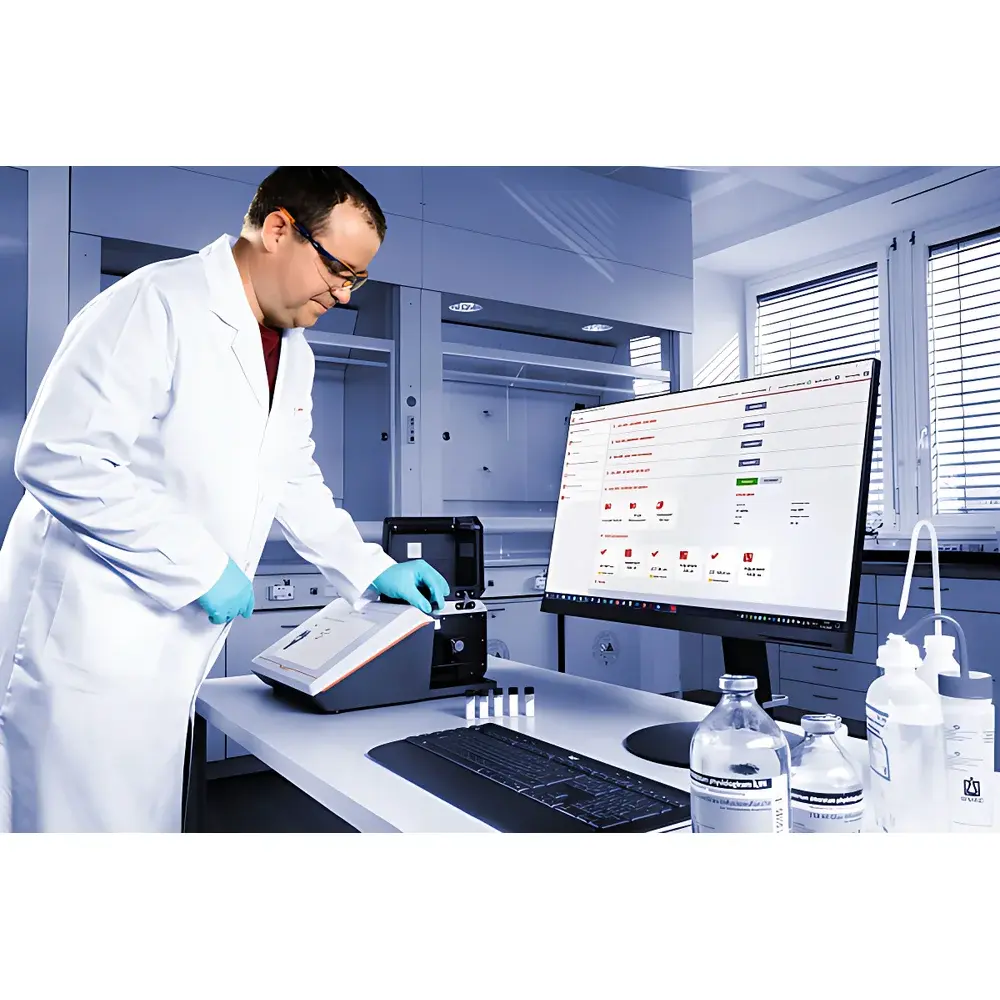
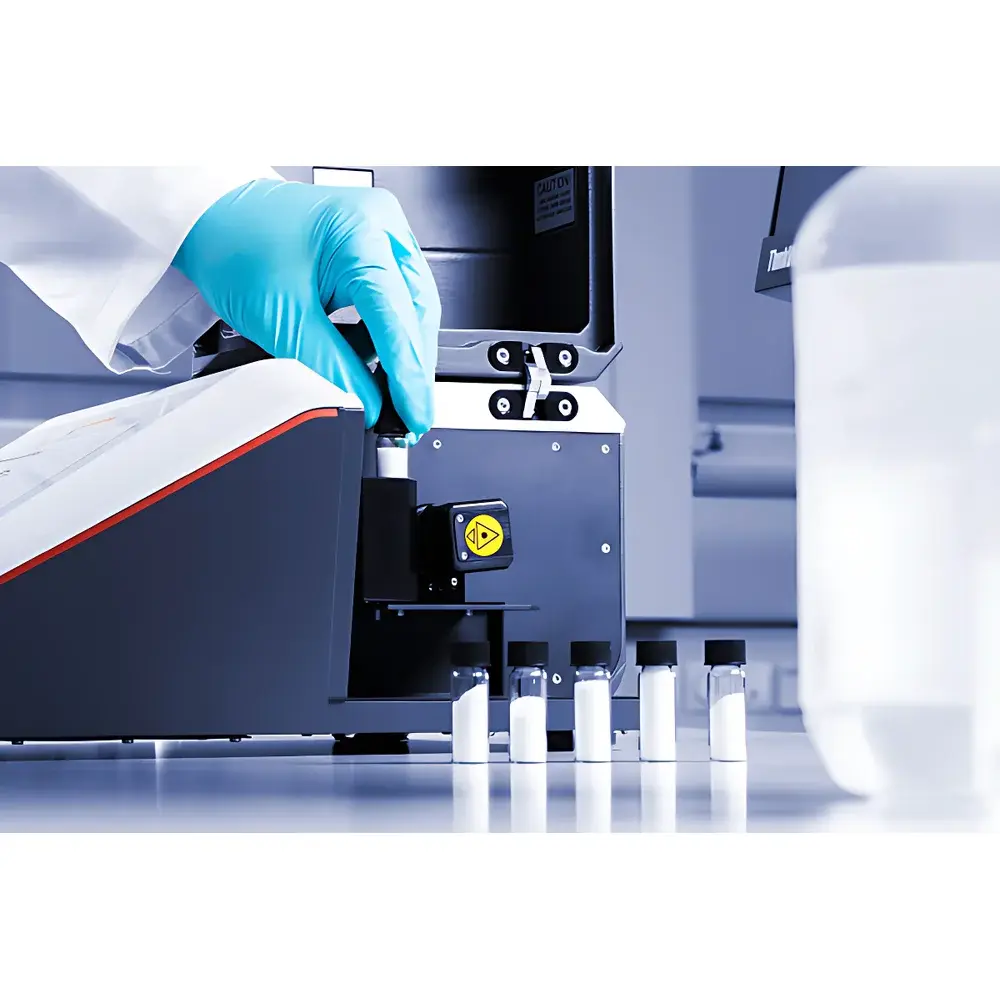
- Modular sample interface: Supports solids (tablets, films, crystals), liquids (in vials of circular, square, or rectangular cross-sections), and powders via magnetically indexed sample holders that maintain repeatable positioning without manual refocusing.
- Dual-core Raman option: Integrates two independent, wavelength-specific optical engines (e.g., 785 nm and 532 nm) in one chassis. Switching between excitation wavelengths requires no recalibration, enabling fluorescence suppression and broad-spectrum material coverage—from carbon nanotubes to pharmaceutical actives.
- Robust mechanical architecture: All critical optics are mounted on a CNC-machined, thermally stable aluminum block. No motors, gimbals, or translation stages—minimizing sensitivity to vibration, thermal drift, or mechanical shock during transport or operation in industrial settings.
Sample Compatibility & Compliance
The Cora 5001 accommodates diverse physical forms without pretreatment: intact tablets, bulk polymers, aqueous solutions, crystalline APIs, and even highly fluorescent dyes. Sample introduction is standardized through ISO-compliant vial holders and reusable magnetic stage inserts, supporting traceability and GLP-aligned workflows. The instrument meets IEC 61326-1 (EMC for laboratory equipment), IEC 61010-1 (safety requirements), and complies with FDA 21 CFR Part 11 when paired with Anton Paar’s validated software suite—including electronic signatures, audit trails, and role-based access control. Optional IQ/OQ documentation packages facilitate GMP-regulated deployment in pharmaceutical and biotech QC labs.
Software & Data Management
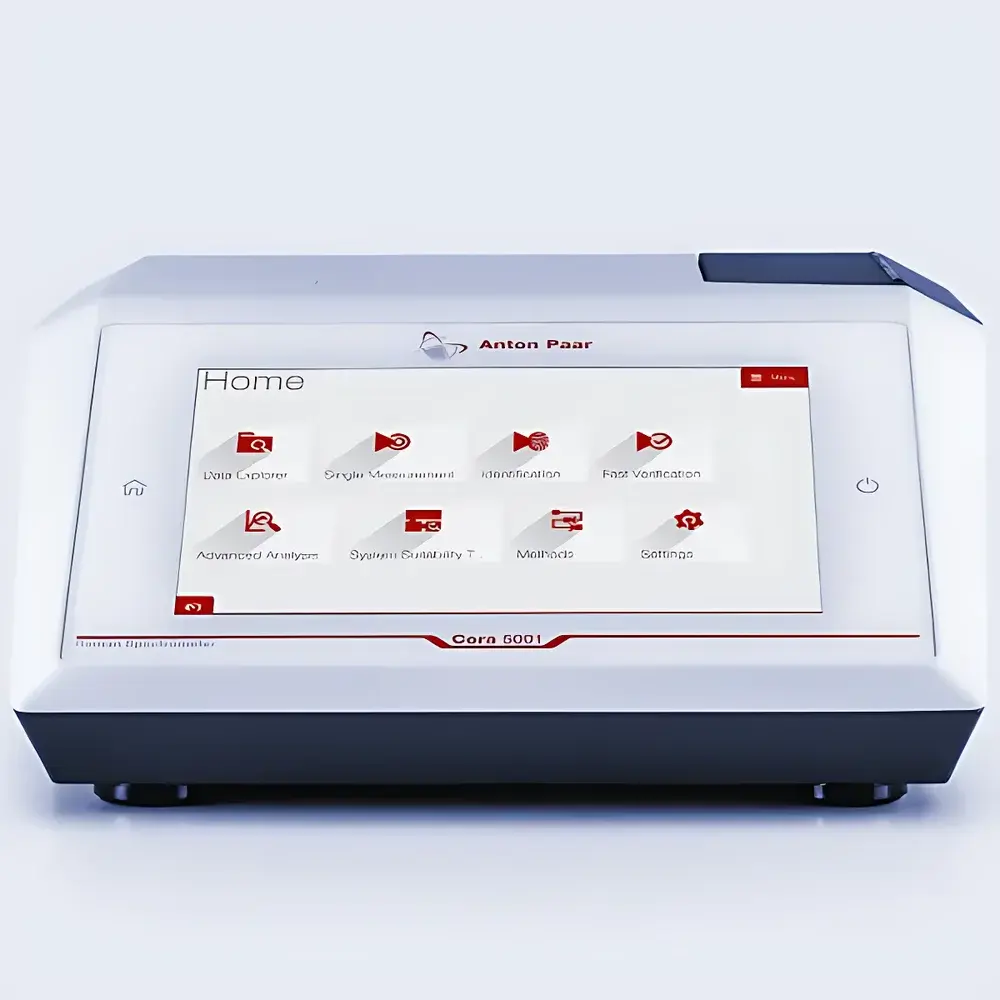
Cora Software provides guided workflows—from method creation and spectral acquisition to library matching and report generation—with intuitive icon-driven navigation. Built-in spectral libraries (e.g., USP, EP, polymer, illicit substance databases) support real-time identification with confidence scoring. Raw data is stored in vendor-neutral HDF5 format, preserving metadata (laser power, integration time, grating position, temperature). Batch processing, multivariate analysis (PCA, PLS), and customizable PDF/CSV export comply with LIMS integration requirements. Software validation documentation supports regulatory submissions under ISO/IEC 17025 and ASTM E1847.
Applications
- Pharmaceutical: Raw material ID verification, counterfeit detection, polymorph screening, and blend uniformity assessment per USP and .
- Materials Science: Carbon allotrope characterization (graphene, diamond, CNTs), stress/strain mapping in thin films, and degradation analysis of composites.
- Forensics & Security: On-site identification of explosives, narcotics, and hazardous chemicals without contact or sampling.
- Academic Research: Teaching spectroscopy fundamentals, reaction monitoring, and in situ catalysis studies using fiber-optic probes.
- Quality Assurance: Incoming inspection of solvents, excipients, and packaging materials across chemical, food, and cosmetics industries.
FAQ
Is the Cora 5001 suitable for regulated environments such as pharmaceutical QC labs?
Yes—when deployed with validated software, audit-trail-enabled operation, and documented IQ/OQ protocols, it meets GMP and 21 CFR Part 11 requirements.
Can I analyze fluorescent samples without spectral interference?
The optional dual-core configuration allows automatic switching between 785 nm and 532 nm excitation to minimize fluorescence background while maintaining Raman signal intensity.
Does the instrument require regular recalibration?
No—its monolithic optical design ensures long-term wavelength stability; factory calibration remains valid across operating conditions unless subjected to extreme mechanical impact.
What sample preparation is needed for liquid analysis?
None. Standard 4–10 mm pathlength glass or quartz vials are inserted directly; magnetic staging ensures repeatable positioning and focus retention across multiple measurements.
How is data integrity ensured during extended measurement campaigns?
Each spectrum includes embedded timestamps, operator ID, environmental sensor logs (optional), and cryptographic hash values—enabling full traceability and forensic reconstruction of analytical sequences.
Related Products




