
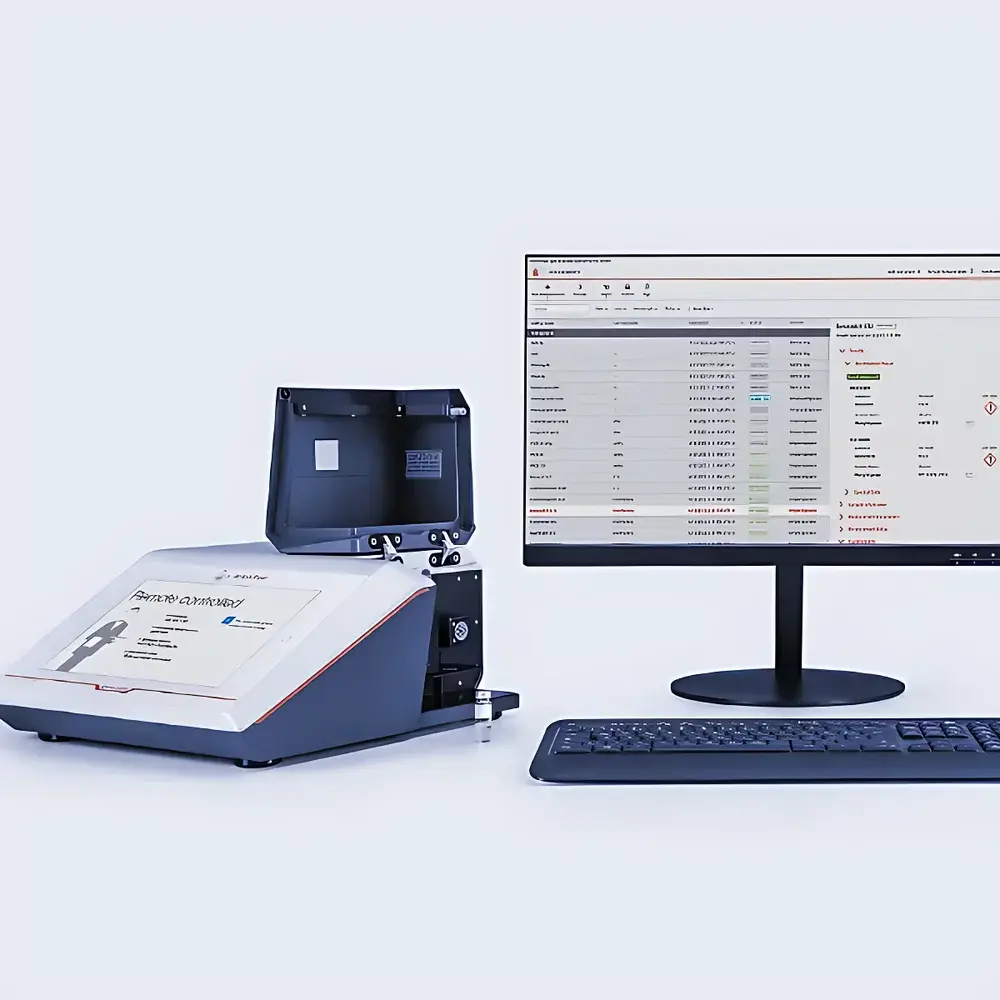
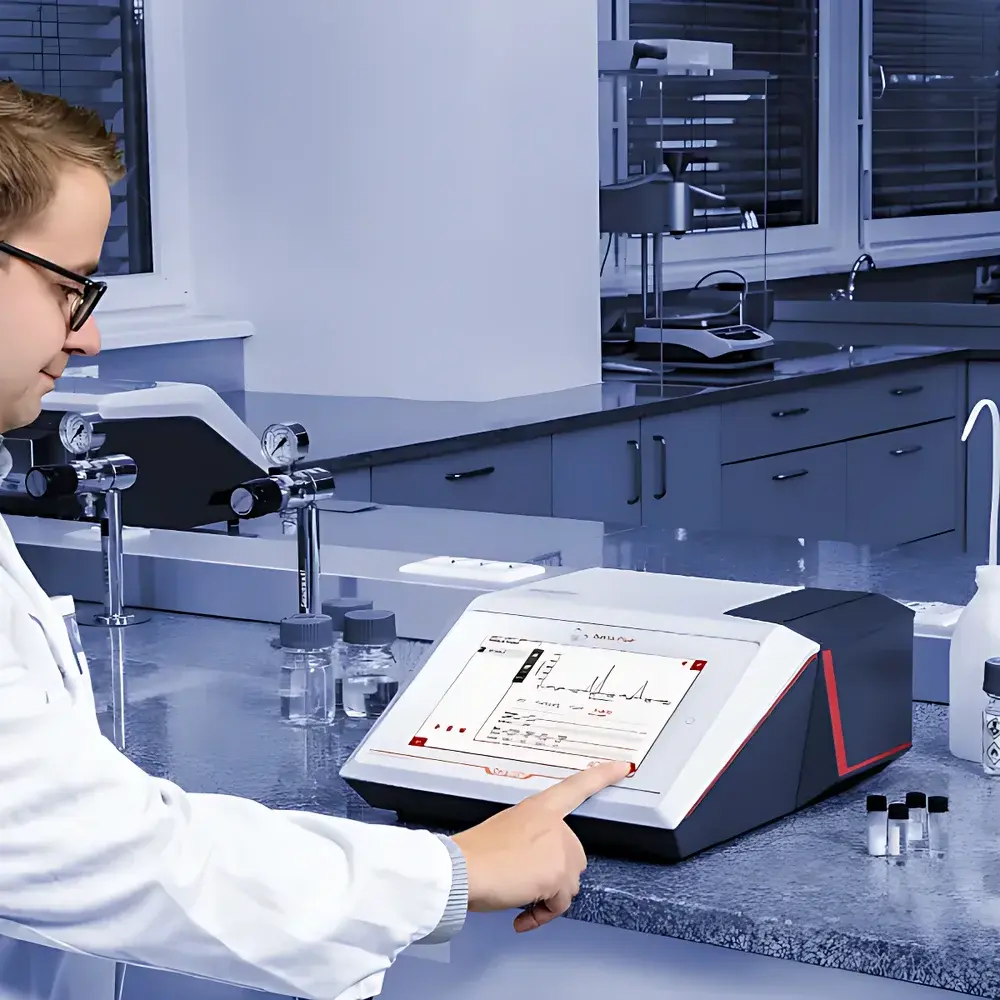
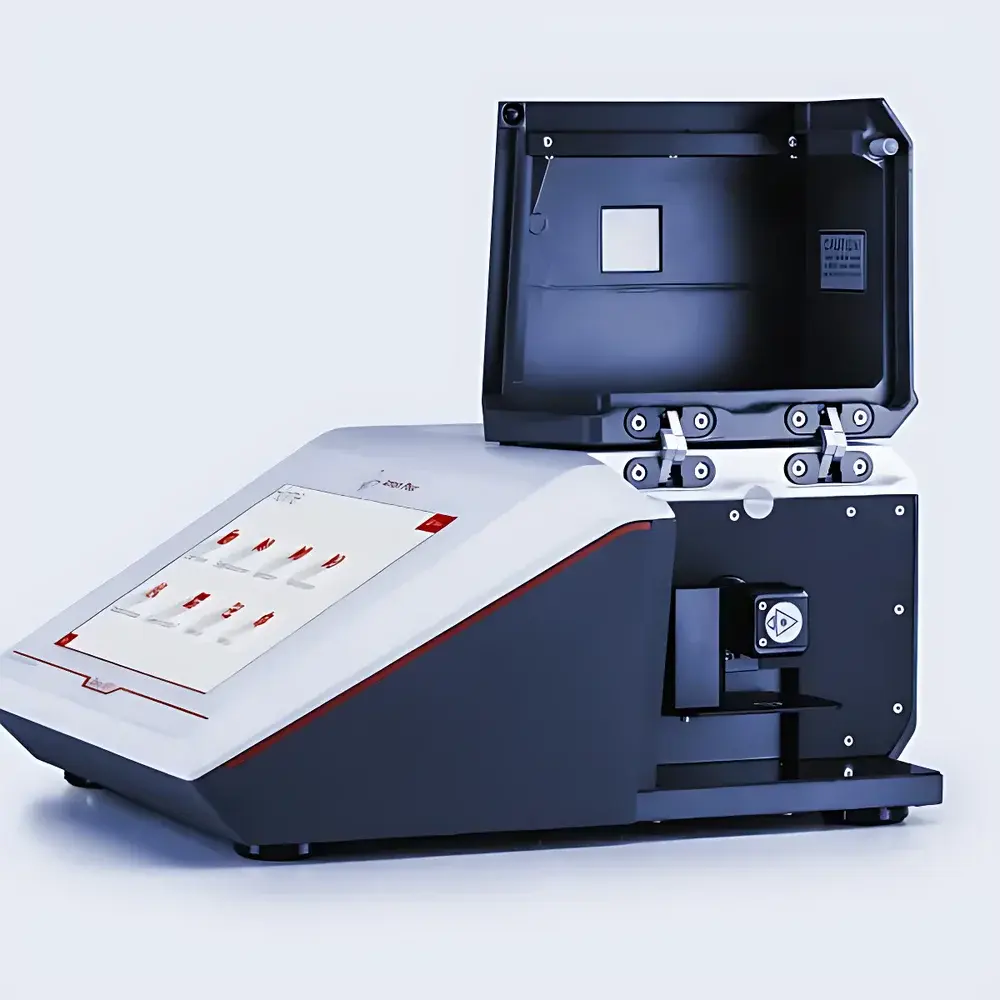
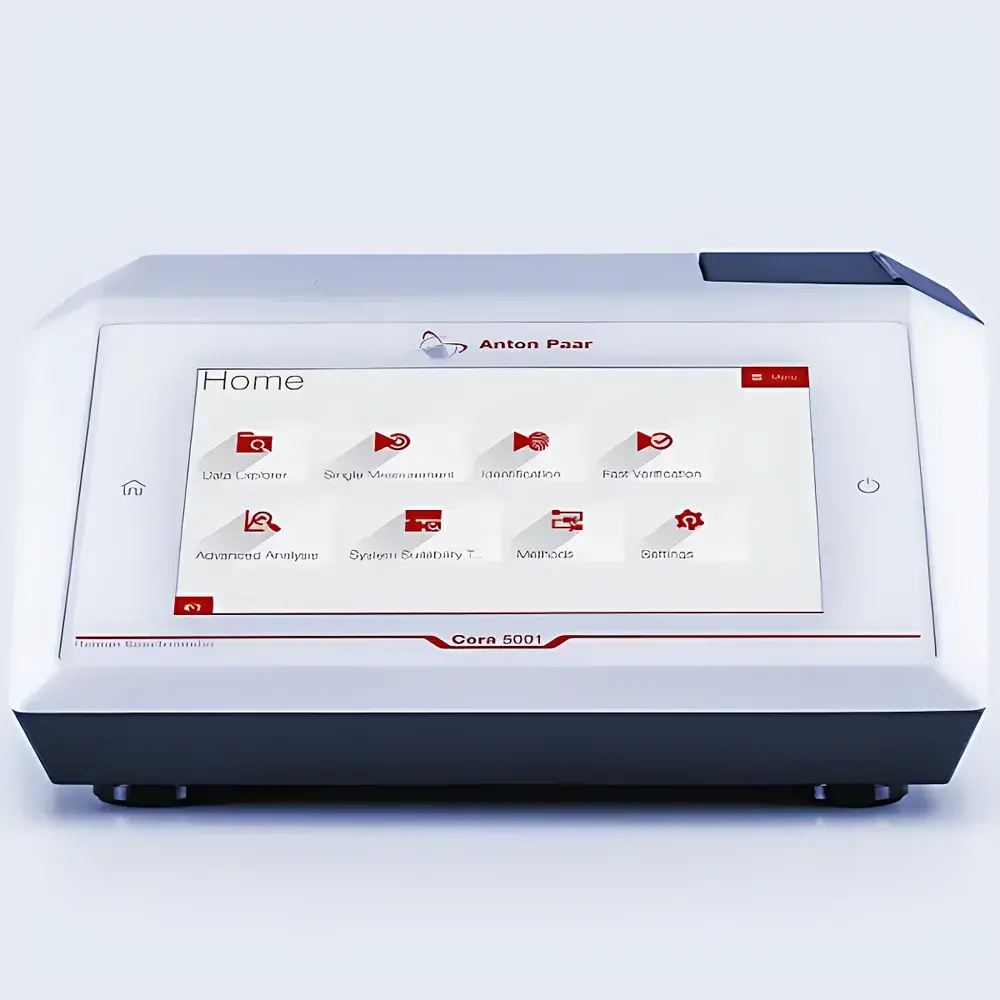
Anton Paar Cora 5001 Direct Compact Raman Spectrometer
| Brand | Anton Paar |
|---|---|
| Origin | Austria |
| Manufacturer Type | Manufacturer |
| Origin Category | Imported |
| Model | Cora 5001 Direct |
| Instrument Type | In-line Raman Spectrometer |
| Spectral Range | 100–3500 cm⁻¹ (wavelength-dependent) |
| Laser Classes | Class 1 (Direct model) |
| Excitation Wavelengths | 532 nm, 785 nm, 1064 nm (single- or dual-wavelength configurations) |
| Spectral Resolution (per ASTM E2529) | 6–17 cm⁻¹ (wavelength-dependent) |
| Detector | 2048-pixel CCD (532/785 nm), 256-pixel InGaAs (1064 nm) |
| Auto-focus | Yes |
| Software | Anton Paar Spectroscopy Suite (with audit trail, electronic signatures, SQL database, GLP/GMP support) |
Overview
The Anton Paar Cora 5001 Direct is a benchtop-integrated, Class 1 certified compact Raman spectrometer engineered for reliable, operator-safe chemical identification and quantitative analysis in regulated and non-regulated environments. It operates on the principle of inelastic light scattering—where monochromatic laser excitation induces vibrational transitions in molecular bonds, generating a unique spectral “fingerprint” between 100 cm⁻¹ and 3500 cm⁻¹. Unlike handheld or fiber-coupled variants, the Direct configuration features a fully enclosed sample chamber with interlocked laser activation: emission is physically inhibited unless the chamber door is fully closed, eliminating exposure risk to personnel. This intrinsic safety architecture meets IEC 60825-1:2014 requirements for Class 1 lasers—making it suitable for open-lab deployment without dedicated laser safety officers or controlled access zones. The system supports single- or dual-wavelength excitation (532 nm, 785 nm, and/or 1064 nm), each with wavelength-optimized optics, detectors, and spectral calibration, enabling robust characterization of diverse materials—including highly fluorescent pharmaceuticals, polymers, inorganic salts, and biological matrices—without manual realignment.
Key Features
- Class 1 Laser Safety by Design: Laser emission is hardware-interlocked to the sample chamber; no beam exposure occurs during operation, satisfying stringent occupational health and safety requirements in academic, QC, and production settings.
- Dual-Wavelength Flexibility: Selectable 532/785 nm or 532/1064 nm configurations provide orthogonal spectral information—minimizing fluorescence interference while preserving Raman intensity and resolution across chemically heterogeneous samples.
- Automated Focus Optimization: Motorized stage and real-time signal maximization algorithm locate the optimal focal plane within seconds—even for low-signal, opaque, or uneven surfaces—ensuring measurement repeatability independent of operator skill.
- Integrated Touch Interface: A 10-inch capacitive touchscreen runs the full Anton Paar Spectroscopy Suite natively, enabling method execution, library search, and report generation without external PC dependency.
- ASTM-E2529 Compliant Performance: Spectral resolution (6–17 cm⁻¹, depending on excitation) and wavelength accuracy are validated per ASTM E2529-17, supporting method transfer and instrument qualification under regulatory frameworks.
- Modular Detector Architecture: CCD (2048 px) for visible/NIR excitation and thermoelectrically cooled InGaAs (256 px) for 1064 nm ensure high signal-to-noise ratio and dynamic range across the full Raman shift domain.
Sample Compatibility & Compliance
The Cora 5001 Direct accommodates solid powders, tablets, films, gels, liquids, and suspensions via standardized sample holders (e.g., vial trays, petri dish adapters, and custom cuvette mounts). Its sealed chamber minimizes ambient light contamination and enables analysis of air-sensitive or volatile compounds. Regulatory compliance is embedded into the platform: Spectroscopy Suite implements 21 CFR Part 11-compliant electronic signatures, role-based user permissions, immutable audit trails (including timestamped operator actions, parameter edits, and library updates), and version-controlled method storage. All raw spectra, processed data, and metadata are archived in an encrypted Microsoft SQL Server database—supporting GLP, GMP, and ISO/IEC 17025 laboratory accreditation requirements. The system is CE-marked and conforms to EN 61326-1 (EMC) and EN 61010-1 (safety).
Software & Data Management
Anton Paar Spectroscopy Suite delivers a workflow-driven interface designed for routine operation in quality control laboratories. Guided analysis sequences—from sample placement and auto-focus to spectral acquisition, library matching, and concentration quantification—are configurable by lab managers and enforced at the operator level. Reference libraries include >1,200 pharmaceutical APIs, excipients, and polymorphs; users may extend these with custom spectra or import third-party .spc/.jasco files. Advanced chemometric tools (PCA, PLS, SIMCA) support multivariate calibration and outlier detection. Data export supports CSV, TXT, PNG, SPC, APS, and PDF formats. Remote monitoring and method synchronization are enabled via optional Wi-Fi or Ethernet connectivity. All software updates undergo rigorous validation per IQ/OQ protocols, with documentation provided for regulatory submissions.
Applications
- Pharmaceutical Quality Control: Raw material identification (RMI), blend uniformity assessment, polymorph screening, and counterfeit detection per USP , Ph. Eur. 2.2.48, and FDA guidance on spectroscopic PAT.
- Chemical Manufacturing: In-process verification of reaction endpoints, catalyst monitoring, and impurity profiling in batch and continuous processes.
- Academic Research & Teaching: Undergraduate and graduate-level instruction in molecular spectroscopy—leveraging intuitive workflows, real-time spectral visualization, and built-in theory modules.
- Materials Science: Characterization of carbon allotropes (graphene, CNTs), battery electrode components, and polymer crystallinity without destructive sampling.
- Food & Agriculture: Adulterant screening (e.g., melamine in dairy, olive oil authenticity), moisture content estimation, and starch gelatinization analysis.
FAQ
Is the Cora 5001 Direct compliant with 21 CFR Part 11?
Yes—Spectroscopy Suite includes electronic signatures, audit trail logging, user authentication, and data integrity controls validated per 21 CFR Part 11 Annex A and EU Annex 11 requirements.
Can I use my existing Raman spectral libraries with this instrument?
Yes—the software supports import of standard formats (.spc, .txt, .csv, .jasco) and allows cross-platform library migration with spectral alignment and normalization tools.
What is the typical measurement time for a single spectrum?
Acquisition times range from 5 ms to 600 s depending on sample type, laser power, and required signal-to-noise ratio; most routine ID tasks complete in under 10 seconds.
Does the system require external cooling or compressed air?
No—the instrument uses passive thermal management and solid-state detectors; no external utilities are needed for operation.
How is calibration maintained over time?
Wavelength and intensity calibration are performed automatically before each measurement using internal reference standards; long-term stability is verified quarterly via NIST-traceable polystyrene or silicon reference checks.




