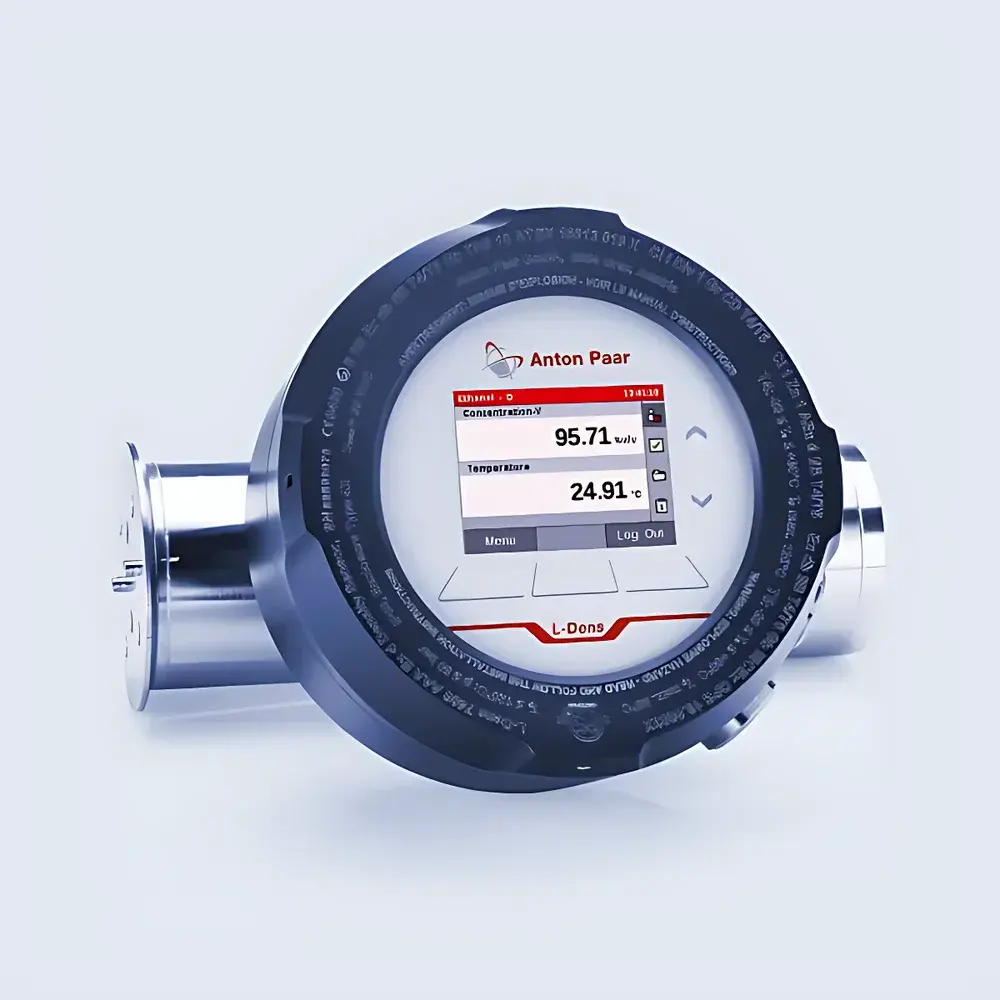
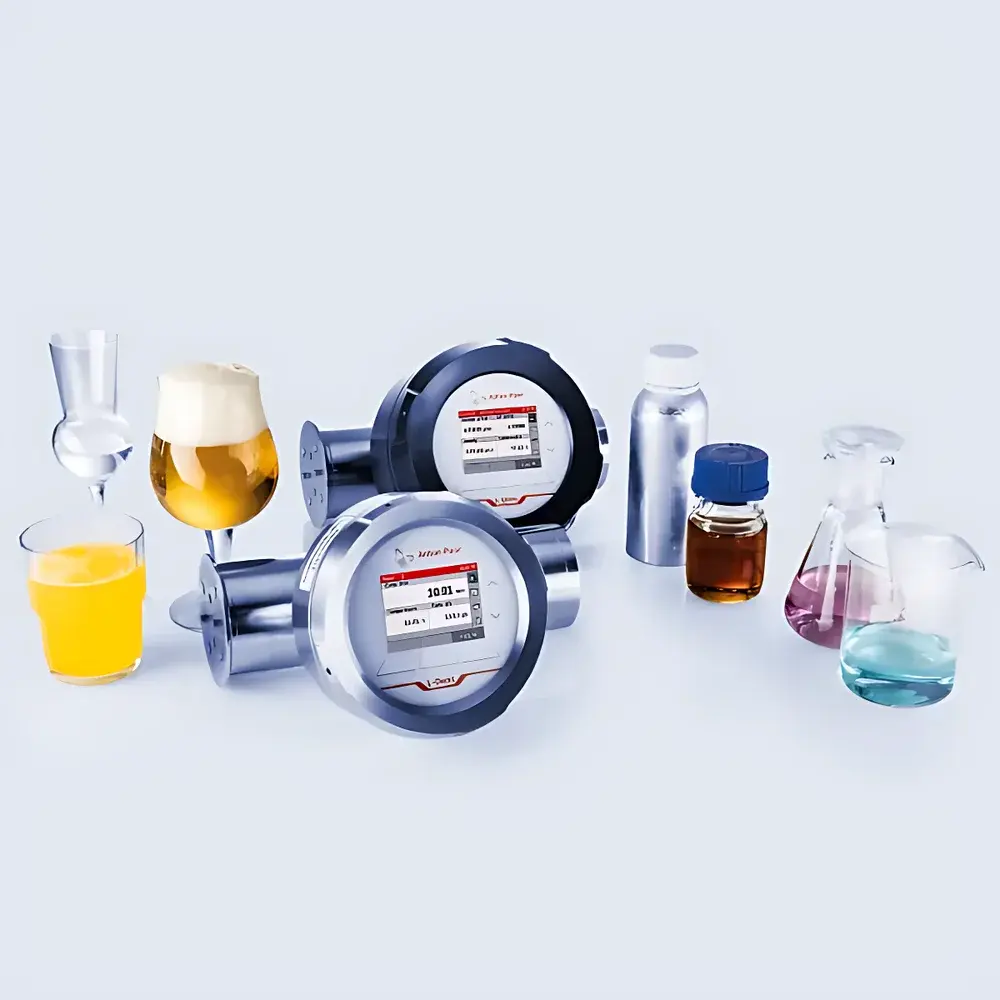
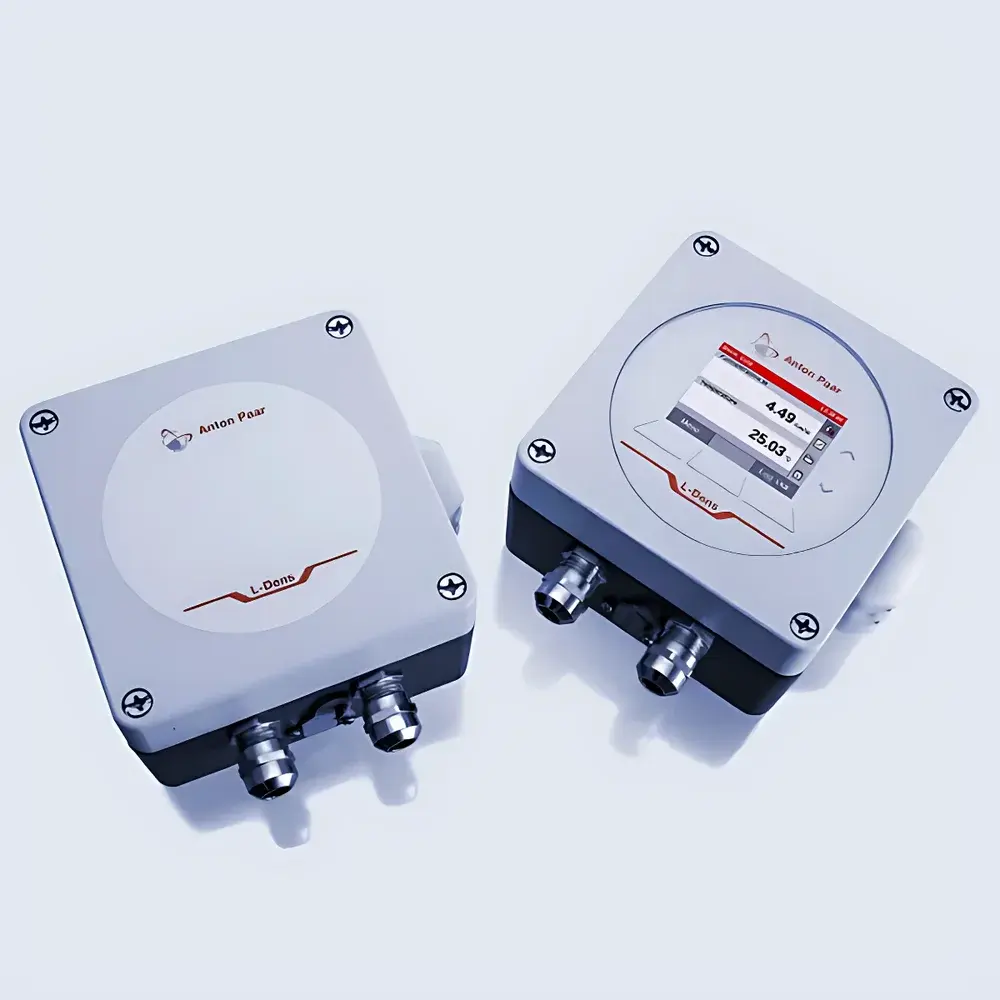
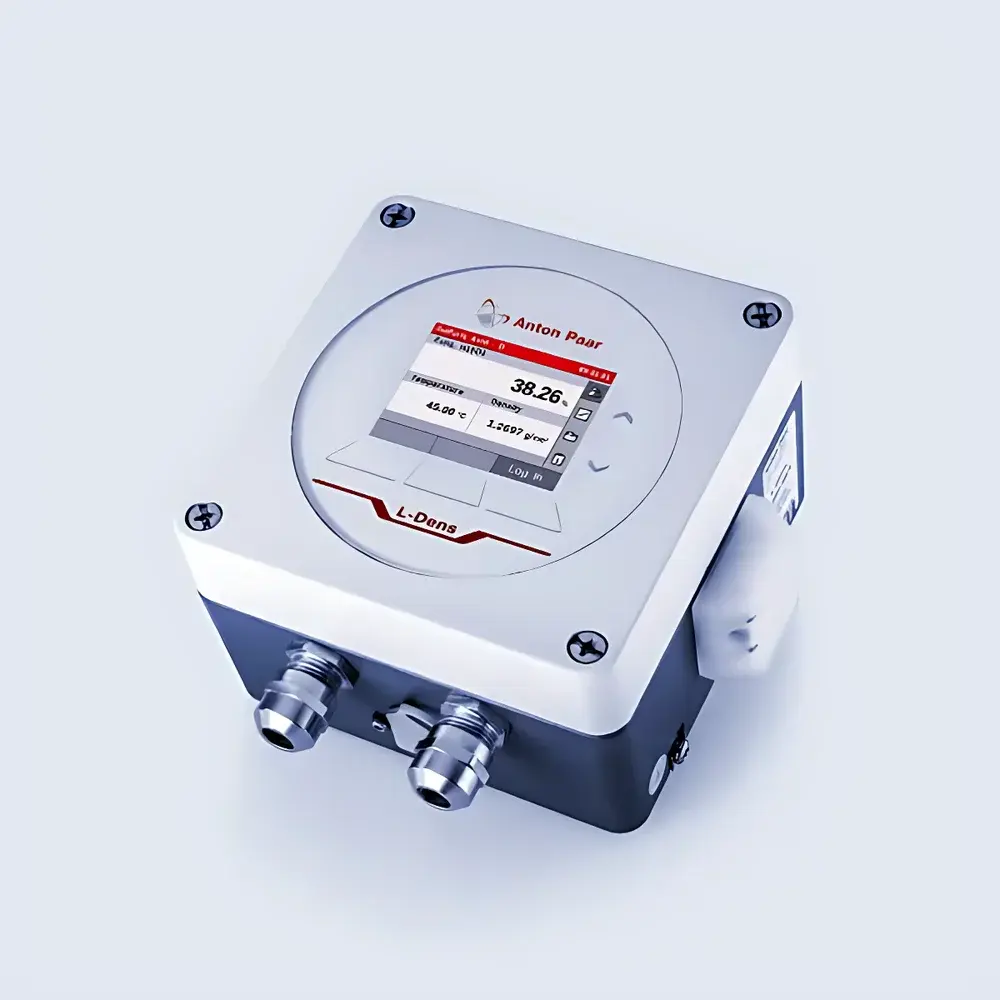
Anton Paar L-Dens Online Density Sensor
| Brand | Anton Paar |
|---|---|
| Origin | Austria |
| Manufacturer Type | Manufacturer |
| Origin Category | Imported |
| Model | L-Dens |
| Pricing | Upon Request |
Overview
The Anton Paar L-Dens online density sensor is a U-tube oscillating densimeter engineered for continuous, real-time density and concentration monitoring in industrial process streams. Based on the fundamental principle of oscillating U-tube metrology—where the resonant frequency of a filled, vibrating U-shaped tube correlates inversely with the mass of the fluid—the L-Dens delivers traceable, SI-traceable density measurements under dynamic process conditions. Unlike laboratory-based benchtop densimeters, the L-Dens series is purpose-built for harsh, unattended operation in chemical, pharmaceutical, food & beverage, petrochemical, and bioethanol production environments. Its core architecture eliminates moving parts in the wetted path, ensuring long-term stability, zero drift over extended calibration intervals, and compliance with process safety requirements including hazardous area classifications (ATEX, IECEx, cQPSus). The sensor operates independently or integrates seamlessly with Anton Paar’s mPDS 5 evaluation unit or Pico 3000 smart transmitter—enabling direct conversion of raw density into concentration values via user-defined or pre-validated calibration models.
Key Features
- True inline measurement with no sample extraction or bypass loops required—minimizing dead volume and response lag
- Modular design supporting multiple wetted materials: stainless steel (1.4571/1.4404), borosilicate glass (GLS), PVDF, Kalrez®, Viton®, Alloy C-276, Incoloy 825, and tantalum—enabling compatibility with aggressive media including concentrated sulfuric acid, caustic soda, and hydrocarbon solvents
- Integrated micro-pump option (L-Dens 7×00 series) for stable flow control in tank or low-flow applications; pump operation is fully synchronized with density acquisition to eliminate flow-induced uncertainty
- Wide operating temperature range: up to +125 °C (short-term to +145 °C) and down to –40 °C, depending on model and wetted material selection
- Pressure-rated variants available up to 180 bar (HP version), certified for ASME B16.5, EN 1092-1, JIS B2220, and Tri-Clamp® installations
- Factory pre-configured with application-specific density-to-concentration algorithms—reducing commissioning time and eliminating field calibration errors
Sample Compatibility & Compliance
The L-Dens accommodates Newtonian and mildly non-Newtonian liquids across a broad density spectrum (500–3000 kg/m³), with model-specific ranges optimized per industry use case: L-Dens 3300 for general-purpose applications (e.g., cleaning solutions, ethanol blends); L-Dens 7300 Petro for refinery streams; L-Dens 7400/7500 for high-pressure, high-temperature chemical synthesis. All variants meet ISO 12084 (density determination by oscillating U-tube), ASTM D4052 (standard test method for density of petroleum products), and USP <841> (density and specific gravity). For regulated environments, the system supports audit-ready data logging compliant with FDA 21 CFR Part 11 when paired with mPDS 5 or Pico 3000 RC transmitters—including electronic signatures, change tracking, and secure user access levels. Explosion-proof versions carry ATEX II 1G Ex ia IIC T6 Ga, IECEx ia IIC T6 Ga, and INMETRO certifications.
Software & Data Management
Density data acquisition and conversion are managed through Anton Paar’s proprietary mPDS 5 software platform or embedded firmware in Pico 3000 transmitters. mPDS 5 provides GLP/GMP-compliant data handling: timestamped raw frequency readings, automatic temperature compensation (via integrated Pt100 sensor), linear/nonlinear calibration curve management, and export to CSV, Excel, or OPC UA servers. Users may import custom polynomial or lookup-table-based concentration models—or request Anton Paar’s Application Support Team to develop validated equations based on customer-supplied reference data (e.g., refractometric or titrimetric standards). Communication interfaces include 4–20 mA analog output, RS-232/RS-485 (Modbus RTU), relay outputs, and optional Ethernet/IP or PROFIBUS DP integration.
Applications
- Real-time concentration control in caustic scrubbers, amine gas treating units, and sulfuric acid alkylation reactors
- In-line monitoring of ethanol/water blends during fermentation and distillation—supporting yield optimization and regulatory reporting (e.g., TTB, EU excise duty compliance)
- Quality assurance in pharmaceutical active ingredient (API) crystallization and solvent recovery loops
- Density-based interface detection in multiphase separator vessels and pipeline pigging operations
- Continuous Brix monitoring in juice concentration and syrup blending without sugar-specific reagents
- Concentration verification of cleaning-in-place (CIP) solutions in dairy and biopharma facilities
FAQ
What is the minimum required flow rate for accurate measurement?
For straight-through installation, the recommended flow range is 10–80 L/h (L-Dens 3300 SST) or 100–500 L/h (L-Dens 7400/7500); lower flows are supported using the integrated micro-pump or tank-mounted configurations.
Can the L-Dens measure slurries or suspended solids?
No—L-Dens is designed exclusively for homogeneous liquids. Particulates >50 µm may obstruct the U-tube or dampen oscillation; filtration upstream is mandatory for slurry applications.
How often does the sensor require recalibration?
Under stable process conditions and proper installation, recalibration intervals exceed 12 months; Anton Paar recommends annual verification against NIST-traceable reference fluids per ISO/IEC 17025 quality systems.
Is remote firmware update supported?
Yes—via RS-485 or Ethernet connection using mPDS 5, enabling seamless deployment of algorithm updates, security patches, and new compliance features without onsite service visits.
What documentation is provided for validation in regulated industries?
Each unit ships with Factory Acceptance Test (FAT) report, material certificates (EN 10204 3.1), explosion-proof certification copies, and IQ/OQ templates aligned with GAMP 5 guidelines.
Related Products